Tag Archives: Eric Robert Nolan

A short review of “The Belko Experiment” (2016)

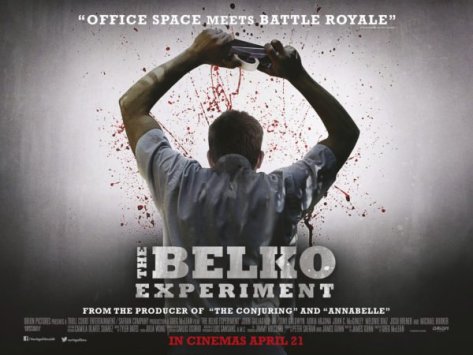
“The Belko Experiment” (2016) is a fairly gut-wrenching and potent horror film.  I was going to describe it as “Battle Royale” (2000) meets “The Office” (2005 – 2013).  But, from the looks of the poster, somebody more or less beat me to it.

As you can imagine, there is a sequence of blood-curdling events after the workers of an entire office building are forced to fight one another to the death.  It’s made all the more horrifying (and a bit sad) by a surprisingly effective early montage that shows these people are indeed likable and relatable.

I’m not sure how I feel about the ending.  There’s a twist that is nicely satisfying, I’ll grant the movie that.  But there was far too little exposition, and a closing shot that was a little too ambiguous and open-ended … maybe even abstract.  I’d be happier if the person doing the talking told us a lot more.  If you think about it, they mostly just reiterated what various characters had hypothesized earlier.

This film has a couple of “I swear I know that guy” actors.  These include Tony Goldwyn, who I last remember from 1990’s “Ghost.”  Turns out he’s a damn fine actor (in addition to being one of those people who weirdly appear to age little or not at all).  They also include John C. McGinley, Owain Yeoman and Michael Rooker.  And if you think you can recall the gentle giant played by Abraham Benrubi, the actor is none other than “Big Mike” from the classic “The X-Files” episode, “Arcadia.”

I was going to rate “The Belko Experiment” a 9 out of 10; it was exceptionally good.  But I was just too nonplussed by that rushed ending, and I think I’ll settle on an 8.


the-belko-experiment-600x450


“Dreams … light up dark rooms, or darken light ones …

“Thus fortified I might take my rest in peace. But dreams come through stone walls, light up dark rooms, or darken light ones, and their persons make their exits and their entrances as they please, and laugh at locksmiths.”

― Joseph Sheridan Le Fanu, “Carmilla,” 1872


dark_corridor_4676385338

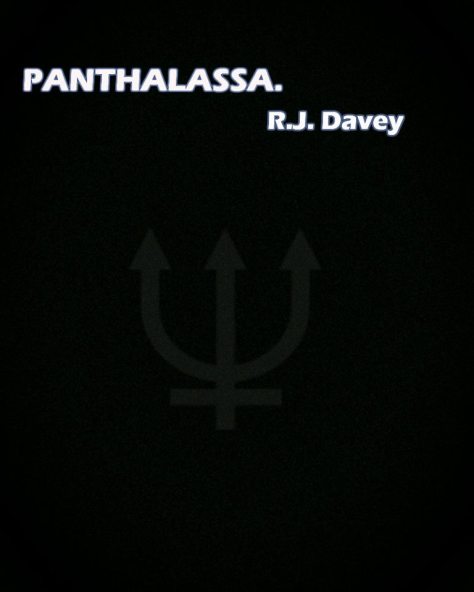
A review of R. J. Davey’s “Panthalassa”

R. J. Davey’s “Panthalassa” is an excellent read for both new and veteran readers of poetry, as the author’s direct and authentic poetic voice makes it easily enjoyable for either. Davey’s writing has an unaffected quality that makes his first published collection here stand out among books by freshman authors. And it makes “Panthalassa” easy for me to recommend.

There are 15 poems comprising this short volume, and some of the poems are themselves brief.  They feel … unencumbered.  There isn’t a trace of pretense or pedanticism about Davey’s work.  There are occasional classical or biblical references, but none that weigh the poems down, and none that are self-indulgent.  There is almost no archaic language, either.  (I will say that I had to Google the book’s title – “Panthalassa” is the name for the primordial sea encircling the prehistoric “super-continent” of Pangea.)

Nor does Davey imitate other poets, either consciously or unconsciously.  This isn’t a prospective new author trying to impress an editor.  This is Davey talking.  And he employs a simple, direct voice to share his thoughts.  He uses unassuming language, however ambitious the targets his muse has set for him may be.

That makes these poems accessible to anyone.  It was refreshing for me to sit down with a short book of new poetry that I could easily understand, and that I could share with just about anyone I knew.   A dear friend of mine, for example, recently commented to me on a drive through the Virginia mountains that she felt that the poetry she read was often frustratingly oblique: “If they want to say something, I’d rather they just say it.”  I think that this would be a great collection to lend to her.

Davey’s poems have an unusual conversational tone – it gives them the uncommon resemblance of a thoughtful discussion with a friend.  An ironic example, I suppose, would be the poem, “Cigarettes,” which depicts exactly such an exchange between friends:

“we drank and conversed,
“musing upon the eternal:
“attempting to bring some meaning
“to this life …”

The result is an unexpected kind of trust.  The poems feel “true.”  Their directness gives them a sense of honesty.

Maybe my reaction here is because I am positioned to identify personally with the author; I suspect we are at similar stages in life, and I believe we have similar outlooks.  (Davey is a friend, and has long been a quite valued colleague of mine.)  Or maybe it is because Davey’s easy, ingenuous style better invites eisegesis.  Either way, I’m impressed indeed by any poem that seems to perfectly describe something that I myself have felt.

But don’t misunderstand – despite his poetry’s informal qualities, Davey can employ poetic devices to great effect.  The two examples that spring to mind are my two favorites in the collection: “In Her Eyes” and “A Love Like Cocaine.”  Each piece explores a single simile throughout.  The poetic comparison drawn by “In Her Eyes,” a particularly painful piece, is inventive and downright haunting.  (I think I love these two poems because I identify with the speaker for each.)

I suggest that “Panthalassa’s” poems should be read aloud by the author himself – the way their conversational quality would be best appreciated.  I hope Davey will consider an online platform like SoundCloud or YouTube, so that I we hear these in his own voice.  I would like to listen specifically for the “beat poetry” quality that I think they have.  And I think I would enjoy hearing them at a small reading at a bar – they just have that sense about them.

Again, I recommend this collection.  (And, as of this writing, its Kindle edition is only 99 cents at Amazon.com, and it’s free to subscribers to Kindle Unlimited.)

I have an electronic copy of “Panthalassa,” but intend to print it out.  I’d like to have it handy along with a few other poetry books by colleagues of mine, so that I can browse through a physical copy, the old-fashioned way.  These are the kind of poems that I enjoy talking over with friends, much in the manner I remember from the long-ago, pre-internet days when I was an undergraduate, and reading poetry in the dorms and downtown bars.

I hope you enjoy these as much as I did.
 

Panth


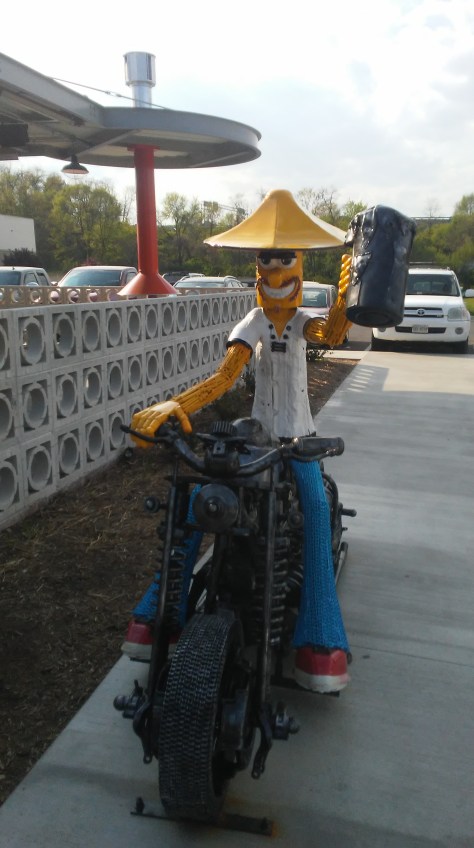
The Mellow Mushroom, Roanoke, Virginia

It’s the psychedelic pizza joint with the life-sized Transformer out back.

That’s an unusual marketing strategy.


20170414_171537

20170414_171508

20170414_171403

20170414_171309

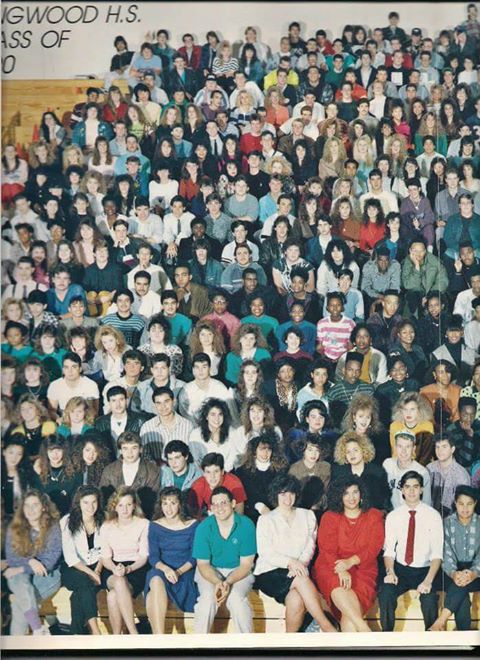
Throwback Thursday: the Longwood High School Class of 1990!

This was our class picture.  It was really making the rounds a couple of months ago when one of my classmates uploaded it to Facebook.


16998989_10208582549427210_1424562674028240431_n

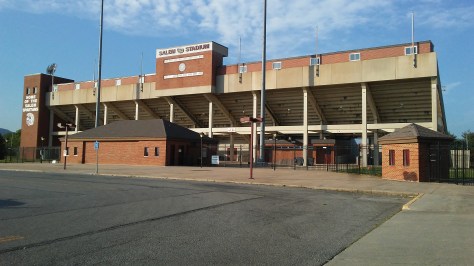
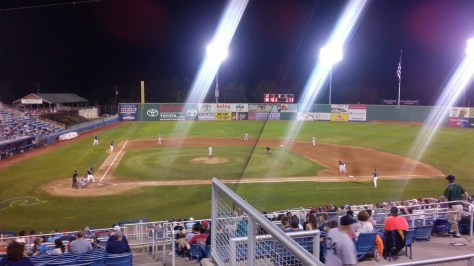
The Salem Red Sox vs. the Potomac Nationals at the Salem Civic Center.

The Salem Red Sox vs. the Potomac Nationals, April 28th at the Salem Civic Center.


20170428_183217

20170428_183953

20170428_190728

20170428_190737

20170428_185401

20170428_200504

20170428_204954

Do not see “Tank 432” (2015)

[WARNING: THIS POST CONTAINS A MINOR SPOILER FOR THE FILM.]  “Tank 432” (2015) is alternately boring and confusing.  To be fair, its surreal story aspects are necessary to the plot, but I don’t think that redeems the movie much.

Don’t let the poster’s image of the tank and the soldier fool you — there’s a little bit of action as the film opens, but most of the movie takes place inside the titular abandoned tank, which remains stationary throughout most of the story.  (The protagonists are trapped inside it by a jammed door. )  Thereafter, the unease and claustrophobia they feel are soon felt by the audience.  Maybe that suggests skilled film-making on a certain level, but it certainly doesn’t make for an entertaining viewing experience.

The film is quite slow.  Furthermore, writer-director Nick Gillespie appears to assemble the components of several mysteries as subplots, and then leaves those smaller mysteries with little in the way of an explanation.

I’d rate this movie a 1 out of 10, and that’s only because Rupert Evans is a very good actor.


tank-432

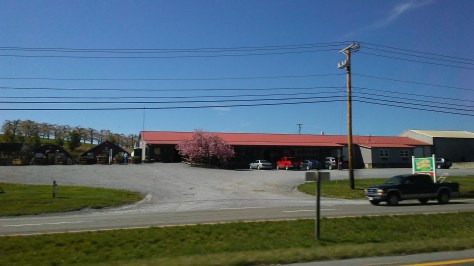
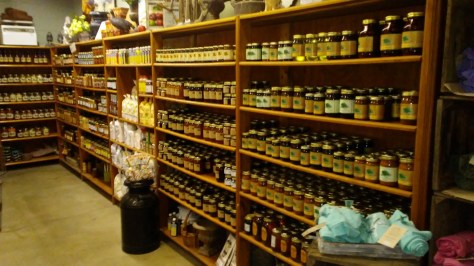
Ikenberry Orchards, Daleville, Virginia

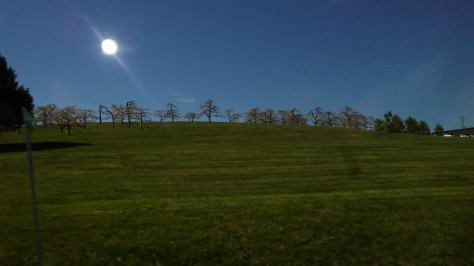
Botetourt County.  Those trees you see in the last photo are apple trees.


20170409_154235

20170409_154120

20170409_153750


20170409_153129

20170409_153144

20170409_154708

Publication notice: Eric Robert Nolan to be featured via the “Poems-For-All” project.

I’m honored today to share some terrific news — four samples of my writing will be featured via Richard Hansen’s unique “Poems-For-All” project in California.  As the video below shows, Mr. Hansen produces miniature “books” of poetry that are about the size of business cards.  They can then be distributed randomly.

Here’s the description on the Facebook page for Poems-For-All: “They’re scattered around town — on buses, trains, cabs, in restrooms, bars, left along with the tip; stuffed into a stranger’s back pocket. Whatever. Wherever. Small poems in small booklets half the size of a business card. To be taken by the handful and scattered like seeds by those who want to see poetry grow in a barren cultural landscape.”

The poems selected were “Consciousness Haiku” and the first stanza of “Confession.”  (Mr. Hansen suggested it worked fine as a standalone poem.)  “Confession” first appeared at Dead Beats Literary Blog in 2013, and was then featured last year by Peeking Cat Poetry Magazine.

In addition, Mr. Hansen selected my 100-word horror story, “There in the Bags,” as well as my entries for the popular online Six-Word-Sci-Fi Story Challenge.  (He also publishes micro-fiction in the “little book” format.)

This is such a cool, unique project, and I’m grateful to be able to participate.

For more information on Poems-For-All, check out the video below.  Or you can visit the blog for the project here: https://poems-for-all.com/.


(They’re generally more congenial anyway.)

When I want an intelligent answer on a national security question, do I trust Sean Spicer?

I’d rather trust the Spice Girls.