Tag Archives: Eric Robert Nolan

“SARAH CONNOR???” “Yes?”

So this is a little strange …

A woman who I do not know on Google + is “adding” and following every single man she can find with any variation of the name “Eric Robert.”  (Google + remains the poor man’s Facebook, despite its designers’ ambitions.  “Adding” is a lot like following someone on Twitter.)

So I am being monitored along with no fewer than 31 other guys named “Eric Robert,” “Eric Roberts” or “Eric Robert” with a following surname.  I won’t state her name here … for all I know there is a perfectly logical reason for somebody monitoring every Eric Robert on the Internet.  (Is there such a thing as an Eric-fetish?  Or is this maybe an online “bot” programmed to locate a lost sibling?)

All I can think of is the Terminator finding every “Sarah Connor” in the phone book, and then acting like the most inconvenient door-to-door salesman ever.  (If the gender reversal for this analogy is consistent, does that mean that Summer Glau will knock on my door, and Lena Headey must then barge in and fight to save me?  Because I am more or less on board with that.)

A quick review of “Poltergeist” (2015)

“Poltergeist” (2015) is an unnecessary and generally lackluster remake of the 1982 classic; I’d give it a 5 out of 10.

I wouldn’t recommend seeing this movie out of curiosity about how modern special effects might update the story.  They’re good, but not great.  The 80’s practical effects of the original worked far better.

I also wouldn’t recommend seeing this movie because you’re a Sam Rockwell fan.  The guy is amazing, but the script here doesn’t let him shine.  He’s miscast as a vaguely ineffectual and somewhat unlikable Dad.

I just can’t recommend paying the ticket price for this movie at all, if you’ve got the original lying around on DVD — the first film offered far more charm and spooky fun.

poltergeist_1sht_vera1_large

My buddy Len met Max Brooks at Phoenix Comicon!!!

At this point, I more or less consider my college alum Len Ornstein as an official correspondent for this blog, even though I hesitate to guess if he’d even care for such a distinction.  Just about anything you see here that is newsworthy or current owes to Len’s helpful vigilance and his e-mails.  (Recall, please, that I recently provided a helpful review of Season 1 of “The X Files.”  Also, I haven’t been able to watch “Gotham” or “Daredevil” because I am lately getting too into “The Lone Gunmen” from 2001.  Seriously.)

Anyway, Len attended the Phoenix Comicon this past weekend, and helpfully shared the experience with those less cool.  And he was fortunate enough to meet the one and only MAX BROOKS.  You guys know that Brooks is the author of the seminal, maybe even genre-redefining zombie apocalypse novel, “World War Z.”  (And if you don’t know that, then get off my blog and go read about Louisa May Alcott or something.)  Brooks is pictured at left below, Len is at right.

I am such a fan of the book that I’ve read it at least three times.  It was like George A. Romero meets Tom Clancy, and it is one of the most fun books I’ve ever read.  Its predecessor (and de facto prologue, I’d suggest) was “The Zombie Survival Guide.”

Len says that Brooks talked about the widespread criticism of the putative film “adaptation” of “World War Z,” namely how it had nothing in common with his book (although Brooks also did say it was entertaining and lucrative).  The author said he couldn’t really claim that Hollywood butchered his novel, because so little of the novel had been used.  After he sold the rights, he had no creative input for it.

I humbly opine that the movie gets just a little too much bad press.  Visit any Internet message boards about it, and you might get the impression that its more commonly accepted title is “The Brad Pitt Zombie Movie That Sucked.”  I myself am a die-hard fan of the original book, but I still loved the movie.

It wasn’t a Romero film, and it wasn’t “The Walking Dead.”   (And it certainly wasn’t the book.)  But … that’s just fine, in my opinion.  It was different.  It was a bangin’, epic, global monster war movie with some amazing action set pieces.  I think the siege of the walled Jerusalem (a subplot that actually WAS from the book), was alone well worth the price of a ticket.  Not every zombie movie has to have the same tone and narrative as Romero’s work or Robert Kirkman’s work.  Arnold Schwarzenegger’s recent “Maggie” film showed us, for example, that very different zombie movies can still be incredibly good.

My only real criticism of the “World War Z” movie was that its plot resolution seemed … pretty damned risky.  Isn’t there a pretty obvious danger connected with the defense employed by Pitt’s character?  Maybe I missed something.

Thanks for checking in with us, Len!!

1907742_1136036069756701_467294712973705578_n

world-war-z-579850     51a8a710d5814_51a504e52d98b_world_war_z_poster03

Publication Notice: Aphelion Webzine to feature “Iphigenia’s Womb.”

The good folks over at Aphelion Webzine informed me today that my poem, “Iphigenia’s Womb,” will appear soon in its upcoming June issue.

Thanks to Poetry and Filk Editor Iain Muir for another great opportunity to share my writing with fans of fantasy and mythology!

I’ll post a link when the piece appears.

That girl WAS Debbie Harry, right?

If everybody could stop Facebooking and blogging about “Videodrome” (1983), that’d be just fine.

I will never understand this movie.  It has been described as “postmodern,” and that is a word I cannot understand, despite looking it up and having friends explain it to me.  (Seriously.  And that somehow makes the intellectual emasculation I feel by “Videodrome” even worse.)

I still insist that this “classic” is unpleasant and incomprehensible.  The following is all that I can glean:

1)  There are televisions.  The televisions are bad.

2)  People join a cult or something.

3)  James Woods loses his everlovin’ MIND, and starts shouting … political tirades?  He … wants to start a revolution?  But whose side is he on?  IS HE FOR OR AGAINST THE TELEVISIONS?

4)  This movie makes VHS tapes more disturbing than, say … the “VHS” horror movies.

5)  Debbie Harry is in there somewhere.  Debbie, what’s a nice girl like you doing in a place like this?  Sing me “Rapture,” Debbie.

6)  That girl WAS Debbie Harry, right?

poster

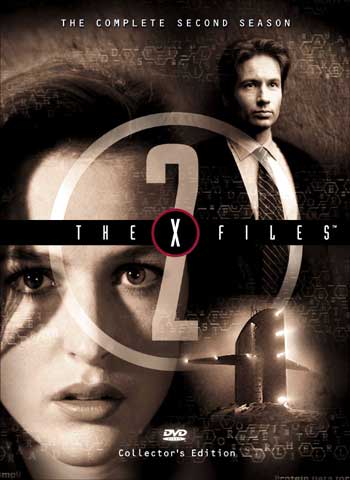
My slightly disappointed review of “The X Files” Season 1.

I am blogging my past TV reviews from Facebook; this was my surprisingly unenthusiastic reaction to “The X Files” Season 1.  Yes, this review is dated, as it makes no mention of the show’s impending return.  (Hooray.)

**********

I love ‘The X Files.” And I mean I REALLY love “The X Files.” It’s possibly my favorite television show of all time, running neck and neck with shows like “24,” Battlestar Galactica” and “Mystery Science Theater 3000.” So I was very surprised at my own disappointment when, via Netflix, I was able to watch Season 1 in its entirety for the first time. Taken together, I think its 24 episodes deserve a 5 out 0f 10. And bear in mind – that’s coming from a diehard fan.

I first fell in love with this show as its fourth or fifth season was currently airing. This was long before Netflix streaming, and I’m pretty sure it was before DVD’s were even a thing. (I’m old.) What few episodes I’d seen of Season 1 were from syndication and purchased VHS tapes. So I’ve been proclaiming my love for the show (which had a nine-year run) for years without ever having seen much of the early seasons.

Some great TV shows can get off to a rough start. “The Simpsons,” “MST3K” and even “Family Guy” were less than stellar when they first began. Shows like “24” and “Star Trek: The Next Generation” were good, but got much better. “The X Files” was surprisingly average.

The first nine episodes were, frankly, poor. There was little of the suspense, mystery and characterization that would eventually make the show great, with Mulder and Scully being flat, and even annoying characters that were thinly scripted and awkwardly played by David Duchovny and Gillian Anderson. Duchovny, early on, was just bad. His wooden line delivery made him seem like a Fox Network intern who was standing in for a sick professional actor. Anderson was better, but could only do so much with the clunky and simplistic dialogue.

Episodes like “Ghost in the Machine” and “Ice” seem clearly like ripoffs of sci-fi classics (“2001: A Space Odyssey” and John Carpenter’s “The Thing,” respectively), though “Ice” still manages to be fun. One episode, “Space,” was so boring that it was painful to watch. “Squeeze,” which is a favorite for many longtime fans, was good, but even it hasn’t aged all that well. I’m surprised the show lasted.

As mysteries or police thrillers, these early episodes also failed. Eager witnesses cheerfully and conveniently present themselves early on to volunteer clues and exposition. The underlying reveals seemed like elements thrown together with little exposition. And Duchovny looks like he’d never held a gun in his life. (I’m pretty sure you’re not supposed to wave it around like that.) I can’t remember the episode but, at one point, Mulder (a supposedly brilliant Oxford-trained criminal psychologist) actually confuses schizophrenia with MPD (multiple personality disorder). Sigh.

Then there was a shift in tone and quality. “Eve” is one of the all-time greats. (And it was here where the dark themes and complex overarching plotlines were truly established that would later define the show.) “Beyond The Sea” saw Anderson shine, along with the writers and directors. It was simply fantastic … even unforgettable (thanks in no small part to amazing guest actor Brad Dourif).

“Darkness Falls” and “Born Again” established their creators’ abilities to make great standalone, scary mysteries. Duchovny just seemed to … get better. He settled into the role, became more natural, and the writers seemed to begin giving Mulder the endearing quirks and idiosyncrasies that eventually grew him into an attractive, three-dimensional character that so many people would grow to love.

And the final episode, “The Erlenmeyer Flask,” clinched it. Here the show seemed to reach the greatness that I remember, with a great story with humor, pathos, creepiness, tension and seemingly plausible twists and mysteries. It was wonderful, and a great precursor of the greatness we would see in later seasons.

Don’t get me wrong. I love the show. And Season 1 was really more average than flat out bad. I’m just saying that the first season compares poorly with what longtime fans remember from the next eight years.

The-X-Files-Season-1

“BURN, BABY, BURN.”

“Age appears to be best in four things; old wood best to burn, old wine to drink, old friends to trust, and old authors to read.”

— Francis Bacon

Certain forward-thinking friends of mine are chopping and stacking wood this summer so that they can burn it in autumn.  They’re even posting pictures of their woodpiles on Facebook.  (You see what rural Virginia does to transplanted New Yorkers?)

Keep at it, I say.  I don’t have a fireplace myself, but one of my favorite things about fall in Virginia is walking down the street and detecting the scent of burning oak.

Francis_Bacon

My review of “The Following” Season 3.

Yeah, okay, I get it.  My love for “The Following” should be considered a guilty pleasure, and not anything that would distinguish me as a connoisseur of great television.  Smarter friends than I am have repeatedly pointed out the newly cancelled program’s flaws; I myself have been able to notice weaknesses such as redundant story arcs, predictable plot points and occasionally spotty acting.

I’ve still got to give this show a 9 out of 10, simply because I enjoyed it so much — and I know one or two others who enjoyed it as well.  I’d be lying if I gave a negative review to a TV show if I kept counting the days until the next episode.

I still think this show really shined sometimes, and served up a fast-paced battle between FBI agents and serial killers that was great, episodic, horror-thriller fun.  As far as I am aware, there really wasn’t anything else on television that was quite like this.

I thought Season 3 began in a lackluster fashion.  Kyle and Daisy were flat and uninteresting characters; Mark was growing stale with his overdone split-personality shtick.  (I really missed Lily Gray and Emma from past seasons.)  Too much dialogue focused on these characters squabbling.  It did little to advance the story, and the show lacked momentum.  Yet again, the show resorted to melodramatic dialogue that beat us over the head with the news about a new big-bad being THE MOST HORRIFYING SERIAL KILLER YET.  (That well is one to which they returned a little too often.)

Then … things quickly got better.  Kyle and Daisy started taking shape; their tension with Mark became interesting.  The new villain actually became … the most horrifying serial killer yet, in some ways, as the show seemed to promise.  “Box-Man” still freaks me out, and I am surprised at the pathos that the writers must have called upon to invent his modus operandi.  The pacing improved immediately, and the screenwriters returned to doing what they had a pretty good track record for — portraying interesting and sometimes frightening bad guys.

The last major big-bad that we get to know was expertly played by Michael Ealy.  The character of Joe Carroll, by this point, had grown into a foppish caricature, which is a shame, because he was a great antagonist at first.  I blame the screenwriters for overdoing his dialogue, but I still think some blame should go to the otherwise wonderful James Purefoy’s overacting.  Where Carroll became an effete oaf, Ealy’s new villain was a controlled, calculating bad guy that seemed like a KGB agent right out of a Tom Clancy novel.  It was a game changer that really made the show great in Season 3’s later episodes.

It was also great seeing an ostensibly nerdy African American computer programmer portrayed as a master serial killer.  Here the writers were playing against type.  I was taught as an undergraduate that most identified serial killers are white males with less education (a major exception being the Atlanta Child Murderer), although this might be due to less diligent investigation and reporting by law enforcement agencies.

The ultimate arrival of the character of Iliza revealed a possible story arc reminiscent of the terrific “Hostel” horror movies.  Maybe that’s derivative, but it could still be great fun — especially considering key choices made by one main character in the last episode.  It’s a bummer that “The Following” was cancelled before we could see how that played out.

hqdefault

Wolverine does not practice safe sex.

Think about it.  He suffers from chronic nightmares, awakens in a panic attack, and then gets all stabbity-stabbity towards whichever woman happens to be closest to his bed.  We saw this in “The X-Men” (2000), but thankfully Rogue’s plot convenient powers saved her.  No mention is made of this to Mariko in “The Wolverine”  (2013).  Should he be … kinda sorta responsible for informing any women he spends the night with about his sleep disorder?

Anyway, I am blogging my past movie reviews from Facebook.  This was my take on “The Wolverine.”  I didn’t despise this movie the way so many others did, but my response was somewhat tepid for a lifelong fan of the character.

**********

I understand what the filmmakers were trying to do with “The Wolverine” (2013) – I really do. They were trying to make an X-Men movie with less flash and more substance. And it was a good plan – taking a “gritty” and clichéd dark character and humanizing him with a lot of introspective character study. Which should have been the ingredients for a great movie.

This was an average film, though – I’d give it a 7 out of 10. For one, it was a bit slow and chatty at times for an “X Men” movie. For another, some of the action sequences and villains were just too cheesy. Silver Samurai reminded me constantly of the 1980’s “Voltron” cartoon, and Viper was really just a poor man’s Poison Ivy with unimpressive powers.

This movie does do a really nice job in upgrading an old action movie trope – fighting on the roof of a moving train. That was fun.

Can anyone explain to me how Wolverine got his claws back? How the hell did that happen?!

Also … is he mortal now? That would explain the “older” Wolverine we see in the posters for “X-Men: Days of Future Past.”

2750262-coverimage

TAP THAT ASK.

Everybody.  PLEASE.  This is my formal request to the world to stop using the word “ask” as a noun.  (“I have a new ask.”)  PLEASE only use “ask” as a VERB.  Merriam Webster Dictionary agrees:

http://www.merriam-webster.com/dictionary/ask

The word you are reaching for is “REQUEST.”  (Please see the first paragraph.)  I have no idea why this bothers me so much, but … it DRIVES ME NUTS.  Seriously.  I even think that hearing the mispronounced “axe” is less unsettling.

The “ask-noun” happened all the time in New York, it seems mercifully absent among Virginia’s population.  The ask-noun is still around, however.  (Hint: notice how it rhymes with “ass-clown?”)

It has gained currency in TV-Land.  The latest offender is “The Following” (This season’s episode 13, I think.)

Anyway, if you DO use “ask” as a noun, then just LOOK at the shame and disappointment it has caused poor Kevin Bacon after it was used on his program.

I SAID *LOOK* AT HIM, DAMN YOU.

The-Following-Season-3-Episode-12-2-0088