
I don’t imagine this needs to be said, but this June 16th article should be difficult to read for anyone in the Mary Washington College community who knew Ms. Mann personally. It describes witness testimony about the homicide’s discovery, and details of the crime scene:
Tag Archives: Mary Washington College
“Bumblebee,” by Eric Robert Nolan
There has simply been way too much pathos of late among the blogosphere’s poets. In the past few days, our own little online circle has labored to describe houses full of empty picture frames (Dennis Villelmi), nightmare airports (me), sick children (Anna Martin), and even Old Yeller (SAZL).
It’s summer. Let’s lighten the mood. “Bumblebee” was first published by Every Day Poets in September 2013.
It’s a poem about a bee. No, the bee is not a metaphor for childhood guilt or lost loves, and, no, it does not attack the narrator like one of Cthulhu’s minions. (I’m not always such a surly duck.)
Anyone who catches the Kevin Smith reference in this blog post will be made an honorary correspondent. And that’s a coveted distinction. Just ask Len Ornstein about his newfound fame and renown.
**********
“Bumblebee,” by Eric Robert Nolan
Bumbling along a bit close to me
Is busy Mister Bumblebee
He inventories dandelions
With prodding, plush black legs.
I inventory carcinogens
With unfiltered cigarettes,
My legs, in bluejeans, lazily
Crossed in the grass.
He buzzes, I puff.
A mute truce transpires
I won’t stomp if he won’t sting.
Just two fellas
Mindin’ their own business.
© Eric Robert Nolan 2013

Photo credit: “Bee In a Dandelion,” Busangane, own work, via Wikimedia Commons.
“hens staring upward,” by Eric Robert Nolan
I wrote this a few months back; today it is my third entry for the 5-Day Poetry Challenge. [EDIT: the formatting is fixed!!]
“hens staring upward,” by Eric Robert Nolan
Please
stop
fleeing me so frequently at Atlantic City.
It happens every night now.
I
look
over at the slot machine you occupied and only see
some strange man, finer than I am, and industrious.
All the ringing bells announce
his inauguration.
All the flashing lights
strobe his sharper features.
It makes me wake and makes me
artlessly craft a
hard discordant poetry.
Remember Atlantic City?
We took a flight despite its easy drive.
It’s a funny word, “flight.”
It can mean
to seize the sky as the cardinal might
and the hen cannot –
the conquest, the flashing red ascent to sky and space.
Or it can mean departure,
as one escapes from another.
Just
about
three times a week
I am at that strange and nameless airport in my sleep
where the planes will not take flight.
High white walls vault up.
The hangars all are locked and vacant.
Clocks speed backward.
Incoherent porters
clutch and curse at suitcases.
The bathrooms smell like beer.
Other would-be passengers
harbor nascent aneuryisms.
Children chatter like hectic apes.
Their fathers all are drunk, their mothers
suffer black and scandalous sudden miracles in the airport lounge,
each reaching orgasm
at the taste of stale sandwiches.
Convulsing, their eyes roll back
Their slow moans hasten into screams,
Their slim arms raised, but
Indolent husbands with rictus grins
will only clutch at their jackets,
at hidden iron flasks.
All the long lines lead
only to exits.
All the flight announcements
are harshly lit in dead and inscrutable languages:
strange Aramaic,
or Latin’s various precursors:
embittered early Germanic and
jumbled Etruscan.
Only two words are clear:
“DEPARTURES HERE.”
I need to fly to you.
I need to see you in person but
the attendants in my nightmare all
are comatose at the counters.
Sleeping pilots sag in chairs.
In an airport bar,
the dead slouch over snifters.
A bartender is bones.
Down a white corridor
A stewardess in sing-song voice
will wrongly remember a verse and reduce
Dante to gibberish.
Shakespeare is made as profane
as a syphilitic kiss.
On her lips, Eliot
becomes a barking dog.
My ticket is illegible –
its scrawled words
read like the bray of an ass,
or my own words.
You left me once.
Now stay
in the various safe and certain places free of sadness found
in the attention of better men.
Please, Audrey.
Please.
It was human for you to leave me once
But cruel for you to do so
over and over and over in my dreams.
Upon waking I can only console
myself with stilted meter
and the misspelled names of cities.
I
am
unsaved by my similes,
mere alliteration and unmeasured verse in an amateur’s awkward
clutch of unkempt metaphors,
the thinly veiled and even conscious
failed emulation of Auden,
the maudlin, the guttural hen
aspiring to such song as only the cardinal is capable.
Your
last
words to me are now familiar nocturnes.
Stars will nightly light your verbs.
Every waning moon will arc
over your exact nouns and careful platitudes,
Your eloquence in leaving me,
The precision in “goodbye.”
The flashing rebuke in the narrowing blue
of your eyes is concise.
The blue-black and deepening, freezing dark violet
of heaven will always observe your departure,
your ordered logic.
Its witness is the vacuum.
Its witness is the endless expanse of space.
I
write
but my words
are only hens with dull black eyes –
hens staring upward –
beholding the sky and its occasional
darting scarlet of cardinals in flight.
I
love
but my words
are only untidy, unmannered motifs –
as devoid of hope or order as
feral children in the snow, starving in a March forest.
(c) Eric Robert Nolan 2015

Photo credit: “Helsinki-Vantaa Airport departure hall 2, international terminal,” self-published work by Antti Havukainen, via Wikimedia Commons
**********
“You’re a Broken Phonograph,” by Eric Robert Nolan
Let’s try this again … after wrestling with formatting issues, I have somewhat better presented my first entry into the 5-Day Poetry Challenge:
“You’re a Broken Phonograph,” by Eric Robert Nolan
You’re baggage.
You’re a scratched penny on a gravel street.
Your memory is a cheap souvenir from an ill-advised journey that is wished forgotten. You were purchased drunk on a mercilessly hot noon at a roadside stand. The vendor resembled Browning’s “hoary cripple” — all eager eyes and veiled laughter. His smile is frequented by gold teeth — intermittent shining sentries on a rampart grin. His front pockets are stuffed with bills, like twin plump denim ticks; their fangs are dollars’ corners. Your overpriced bauble shines at midday, but every additional dusk renders it lower into dulling shades of deep sepia. The paint flakes off — it falls to the windowsill now like the dead wings of moths. The wise advise its removal; the paint is toxic.
Your image is the aged face of a staid statesman on a stamp, an unremembered lawmaker.
You’re a broken phonograph.
You’re a photo of a burned out building.
Your presence is a preening blackbird at the lawn.
You’re quick to open your legs, but slow to close your mouth.
You’re easy sex, but difficult company.
You’re a cheap date, but a costly acquaintance.
No matter where and when another man will lie beside you, you’re alone.
Your future is all awkward mornings, sunsets that are calls to arms, disenchanted midnights, men misunderstood,
“friends of friends,” “friends” instead of lovers, men recommended, men paid for,
their loins emptied first, their hearts emptied after, both by your mouth,
men slipping out, at sunrise, stealthily before you wake, like cats smelling better breakfast elsewhere.
(c) Eric Robert Nolan 2015

Photo credit: “Musee Baud,” 2015, by Rama, via Wikimedia Commons
Dang it, people are talking about “Watership Down” and now I want to go watch it again.
Thanks, ANNA MARTIN.
“Come back you fools!! DOGS AREN’T DANGEROUS!!”
And it’s past midnight!!
I remember the film adaptation’s voiceover saying near the end that “General Woundwort’s body was never found.” I’m not scared. I have a certain rapport with the truly most terrifying fictional “rabbit” of all time, Donnie Darko’s “Frank.” (He appears in my mirror from time to time.) That tall prognosticating hare would PWN Woundwort and his entire Owsla.

Pictured: BROMANCE.

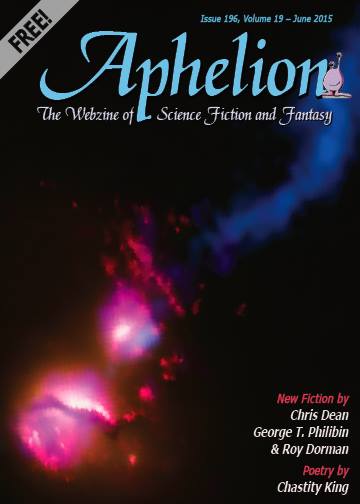
Aphelion Webzine features “Iphigenia’s Womb.”
I’m quite happy to say that the good folks over at Aphelion Webzine today featured my poem, “Iphigenia’s Womb,” in their wonderful free online magazine for fantasy and science fiction fans. The poem can be found here:
http://www.aphelion-webzine.com/poetry/2015/06/IphigeniasWomb.html
“Iphigenia’s Womb” was first published over in Dead Snakes in January 2014. I am grateful to Poetry and Filk Editor Iain Muir for allowing me to share it today in Aphelion, as it might now be enjoyed greater numbers of fans of Greek mythology.
The piece is an allegory to the death by burning of Iphigenia, daughter of Agamemnon. He sacrificed her to the Gods to appease them after an offense, as the deities had sent strong winds to beach the Greek warships ready to set sail against Troy. (Of course, the poem is also about other things.)
If the imagery of the burning girl bothers you, then consider this — there are various versions of the story. In one, a giant bird appears from the heavens to dive down and rescue young Iphigenia clean away. It’s the kind of deus ex machina we occasionally see from winged saviors in fantasy; think of both the eagles in J.R.R. Tolkien’s “The Lord of the Rings,” as well as the wayward seagull in Richard Adams’ “Watership Down.” (“WHERE’S YOUR WHITE BIRD, *NOW*, BIGWIG?!?!”)
Thanks again to Mr. Muir and the Aphelion community! 🙂
My buddy Len met Max Brooks at Phoenix Comicon!!!
At this point, I more or less consider my college alum Len Ornstein as an official correspondent for this blog, even though I hesitate to guess if he’d even care for such a distinction. Just about anything you see here that is newsworthy or current owes to Len’s helpful vigilance and his e-mails. (Recall, please, that I recently provided a helpful review of Season 1 of “The X Files.” Also, I haven’t been able to watch “Gotham” or “Daredevil” because I am lately getting too into “The Lone Gunmen” from 2001. Seriously.)
Anyway, Len attended the Phoenix Comicon this past weekend, and helpfully shared the experience with those less cool. And he was fortunate enough to meet the one and only MAX BROOKS. You guys know that Brooks is the author of the seminal, maybe even genre-redefining zombie apocalypse novel, “World War Z.” (And if you don’t know that, then get off my blog and go read about Louisa May Alcott or something.) Brooks is pictured at left below, Len is at right.
I am such a fan of the book that I’ve read it at least three times. It was like George A. Romero meets Tom Clancy, and it is one of the most fun books I’ve ever read. Its predecessor (and de facto prologue, I’d suggest) was “The Zombie Survival Guide.”
Len says that Brooks talked about the widespread criticism of the putative film “adaptation” of “World War Z,” namely how it had nothing in common with his book (although Brooks also did say it was entertaining and lucrative). The author said he couldn’t really claim that Hollywood butchered his novel, because so little of the novel had been used. After he sold the rights, he had no creative input for it.
I humbly opine that the movie gets just a little too much bad press. Visit any Internet message boards about it, and you might get the impression that its more commonly accepted title is “The Brad Pitt Zombie Movie That Sucked.” I myself am a die-hard fan of the original book, but I still loved the movie.
It wasn’t a Romero film, and it wasn’t “The Walking Dead.” (And it certainly wasn’t the book.) But … that’s just fine, in my opinion. It was different. It was a bangin’, epic, global monster war movie with some amazing action set pieces. I think the siege of the walled Jerusalem (a subplot that actually WAS from the book), was alone well worth the price of a ticket. Not every zombie movie has to have the same tone and narrative as Romero’s work or Robert Kirkman’s work. Arnold Schwarzenegger’s recent “Maggie” film showed us, for example, that very different zombie movies can still be incredibly good.
My only real criticism of the “World War Z” movie was that its plot resolution seemed … pretty damned risky. Isn’t there a pretty obvious danger connected with the defense employed by Pitt’s character? Maybe I missed something.
Thanks for checking in with us, Len!!


Support “Next Steps!”
My fellow Mary Washington College alumnus Russell Morgan is developing what promises to be an outstanding Fredericksburg-based television drama: “Next Steps.” Please stop by his (rather well done) Indiegogo page here, and read up on his ambitious plans for a unique television show:
http://igg.me/at/Next-Steps/x/10747104
Yes, I may be somewhat biased here, as Russ is an actor and screenwriter who also happens to be a very dear old friend. But if you get acquainted with “Next Steps” at the page linked above, you’ll see that it really is an ambitious project benefiting from visible talent and great commitment.
As Russ says, please support “Next Steps” financially, if you can. But if you’re not in a position to do that, then please help spread the word and share this Indiegogo page.
I am especially looking at YOU, MWC grads! Please share the link, and support a determined classmate’s very creative vision.

Publication Notice: Aphelion Webzine to feature “Iphigenia’s Womb.”
The good folks over at Aphelion Webzine informed me today that my poem, “Iphigenia’s Womb,” will appear soon in its upcoming June issue.
Thanks to Poetry and Filk Editor Iain Muir for another great opportunity to share my writing with fans of fantasy and mythology!
I’ll post a link when the piece appears.
“Now I am become Death, the destroyer of worlds.”
— Oppenheimer quoting the Bhagavad Gita. I most recently heard this recited in the excellent new science fiction film, “Ex Machina.” I had one of my own characters quote him when a new weapon was revealed in my novel. This photo was floating around in my downloads folder, for some reason.
I always thought he invoked the quote after the first atomic bomb was successfully tested in New Mexico in 1945, right there at the site. Now I am reading that he recited it afterward?
Look at the photo. The guy had the face of a thoughtful, boyish, soft spoken poet. Then consider his invention.
God has bizarre sense of irony.