Tag Archives: review

“Hannibal” Season 3 was a Kafkaesque, blood-soaked passion play with psychedelic music and 70’s-tastic visual flourishes.

I think that it’s tremendously difficult to write a spoiler-free review of the third and final season of “Hannibal.”  (No, I am no longer hopeful that the show might return via a different network or an Internet-based provider.)  But I need to try to keep this review spoiler free … this really is a suspense thriller and, indeed, the second season ended in cliffhanger after which viewers were unaware of even which major characters survived.  So … this will be pretty vaguely worded and a little tough to write.

I loved Season 3; anyone reading this blog could have guessed that, given that I’ve visibly been such a rabid fan of the program.  I do think that it was the best show on television, and it easily beat out “The Walking Dead,” “Daredevil,” “Family Guy” and “The Strain” as my favorite.  When it was good (which was most of the time) it was simply incredible.  When I didn’t enjoy it as much as I did past seasons, it was because of deliberate creative and stylistic choices, my reaction to which I’m sure are mostly subjective.  There were things I loved and things I didn’t love.  All things considered, however, the shameless fanboy in me won out over the critic.  I’d rate this season at a 9 out of 10.

First, here’s what I loved.  The script, directing, acting, sets and musical score were as strong as ever.  For a show that sometimes really struggled with dialogue in its first season, the writing in Season 3 was fantastic.  I am referring to the story, characterization and dialogue across the board, but especially the key interchanges between characters: our main protagonist facing off against Hannibal Lecter, Bedelia du Maurier, and Rinaldo Pazzi.  The performances here were simply fantastic, especially considering the complex, nuanced, but also mysterious characters the show’s writers have skillfully developed.  Our surviving heroes were played with extraordinary skill.

Mads Mikkelsen was also predictably perfect, even given that Season 3 required a broader range, as Hannibal’s past and his adversaries humanized him this season in a manner we haven’t seen before.  The script finally allowed Gillian Anderson to be a less stoical — her later monologue concerning a wounded bird was stunning.  And the surprise standout here was Fortunato Cerlino as Pazzi — this secondary character could have been a one-note buffoon, but Cerlino and the writers turned him into such a “real” (and extremely interesting) character that I actually thought the show would depart from the source material and make him a hero of the story.

Scenes between certain survivors of the Baltimore massacre also beg for specific mention, but I just can’t do that without revealing who lived through it.  The actors playing those “good guys” who are still alive did great jobs.  (More on why that term is in quotation marks just a little later.)  And they generally had well written character arcs.  One character’s agenda at the beginning of Season 3 was actually genuinely touching, considering how ruthless this story’s characters typically are.  (He or she arrives in Florence, where Hannibal has secreted awayy, merely to safeguard another.)  Far more touching is the exposition of one character who did not survive Baltimore; it surprises the viewer with astonishing sadness.

Bear in mind — I obviously loved the dialogue, but, like the show, it actually won’t be to everybody’s taste.  (No, for once that is not a deliberate pun.)  It is overly stylized, and rarely naturalistic.  This isn’t an extremely well scripted show in the manner of those like “M*A*S*H,” “LOST,” or “The West Wing,” and it isn’t a sit-com.  Our heroes and villains often just really don’t sound like real people.  It takes a greater degree of willing suspension of disbelief just to accept them.  Yes, I was a nut for this TV show.  But if somebody told me that they didn’t like it simply because the characters “talk funny,” I’d really understand that.  I personally loved it, because a universe where super-smart criminals and investigators are squaring off against each other, and verbally ribbing their opponents to psychologically undermine them (when they’re not getting all stabbity-stabbity, taht is), appeals to me.  Given the anti-intellectualism I’ve seen a lot in our culture, it’s refreshing to see an unabashedly intellectual TV show, with powerful characters, both good and bad, who are educated and beautifully articulate.

And … if you’re a horror hound, as I am?  The show delivers.  Season 3 was the most macabre.  And with the introduction of the “Red Dragon” storyline, it became the most brutally violent.  Generally, we no longer see the aftermath of gory murders, but see them in action.  Remember a key scene near the end of Season 2, when the mutilation of a major character is understated, because he is seen mostly in shadow?  That … kinda wasn’t a thing in Season 3.  And it was frightening.  A certain switcheroo the show pulled toward the end of the Mason Verger storyline was gut wrenching, really.

This show was brilliant, making its departure all the more bittersweet.

As for what I didn’t love?  These were intentional changes and creative risks that might appeal just fine to another viewer.  And showrunner Bryan Fuller actually advertised them in advance.  He promised fans that the show would be far more surreal and would farther push the boundaries.

I have no doubt that many fans loved what he did.  But considering Season 3 in its entirety, I’d rather he simply followed the maxim of “if it ain’t broke, don’t fix it.”  For me, Season 2 was perfect, and these bold changes had slightly less satisfying results.

For me, the show became too surreal beginning it its second act, the Mason Verger storyline.  Yes, the most striking images and sequences of the prior seasons were the surreal visions, dreams and thematic visuals.  But these worked, in part, because of their stark contrast with the “real world.”  They were one of the best parts of the show.  But I didn’t want to see the entire program become something akin to a Terry Gilliam movie.  I first got acquainted with Thomas Harris’ source novels with “The Silence of the Lambs” (both the book and the film) in 1991.  That was a kind of “real world” police procedural, albeit with a principal villain that seemed larger than life.  (For moviegoers, whether Lecter or Jame Gumb was the story’s main antagonist depends largely on your personal interpretation.)

A police thriller was Harris’ intention for most of his books, I think, with the only possible exception being 2000’s novel, “Hannibal,” with its lamentable, nutty ending.  (I and other readers wanted to tear out the final pages of that book after we read it.)  Harris examined criminal psychology and behavioral profiling in some of the same manner that Tom Clancy examined military technology and intelligence-gathering.

Yes, it’s amazing what Fuller was able to explore and accomplish with his departure from Harris’ books in the first two seasons.  And horror-thriller fans really didn’t need another cop show.  (The first half of Season 1 maybe relied a little too heavily on standard cops and robbers, and the seemingly perpetual stalemate between an anonymous villain and the good guys.)  But, for me, the Mason Verger story arc was rendered in a style that was just too … far out.  All those red visuals and baldfaced gore and references to inevitable death!  It seemed like something penned by Franz Kafka, by Clive Barker, or maybe by Edgar Allan Poe on acid.  A plot point involving livestock was just … too weird for me.  I immediately was taken out of the story when I stopped to wonder whether such a freaky thing was even medically possible.

None of those things are bad (except for maybe the acid).  But none of them are Thomas Harris either.  None of them are “Hannibal,” for me, anyway.  For an absolutely perfect treatment of the Mason Verger storyline, please see Ridley Scott’s 2000 film adaptation of the book.  It’s one of my favorite films of all time, and I enjoy it far more than “The Silence of the Lambs” (1991).  I find these characters so compelling that I want them to be real (or … y’know, at least the good guys, anyway).  But for that to happen, they have to inhabit the real world, not some blood-soaked passion play with psychedelic music and 70’s-tastic visual flourishes.

As far as tone and content … I can’t believe I am actually writing this, but Season 3 might have gone too far for my tastes.  Do you remember the death of a key investigator in Season 2?  With the crime scene being the observatory?  That was gruesome enough for a major protagonist with whom the viewer is asked to identify.  Yes, as a horror movie fan, I’ve seen countless zombie and slasher films, but those stories’ victims are often throwaway characters with whom we spend only the running time of a feature film.  This is a not-quite-primetime television show with characters we visit every week.  The gory victimization here, for me, was just too much.  Those who’ve seen Season 3 know I’m talking about one assailed character in particular.  I’m also referring to another scene in which one character’s face was peeled off in closeup.   I cringed.  The movies managed to scare us without this stuff.  If I’d wanted a “Hellraiser” movie, I’d have watched a “Hellraiser” movie.  (See my disclaimer above … again, this is all purely subjective.)

The protagonists themselves became too dark for me.  Yes, I know an ongoing theme here is that everyone under “the devil’s” influence is corrupted by him.  But … my favorite TV show suddenly began to seem like a story with no good guys.  Remember “The Silence of the Lambs?”  Much of its emotional resonance resulted from Clarice Starling, who retained her innocence and nobility despite the horrors she’d faced, including her incidental, bizarre kind of intimacy with the caged Lecter.

We don’t have that here.  We’ve got moral ambiguity, and character complexity that makes for great storytelling.  But do we have a clear hero to root for?  Often, no.  One character distinguishes him- or herself by being morally heroic in the season’s first act … only to commit the same ethical mistake as in past seasons in the third act.  One character (who I liked a hell of a lot in the prior seasons) went so “dark” that he or she was unrecognizable.  And the script did little too support this character change, beyond the obvious fact that he or she was traumatized and was affected neurologically as well.  (Bone marrow in a person’s blood can do that?)  Margot Verger was great in the past as a righteous victim; here she seemed like a compliant turncoat.  As far as I can tell, the only remaining characters who are unambiguously “good guys” are Jimmy and Brian, the goofy lab techs who appear only seldom for necessary exposition and rare comic relief.

The bad guys, too, seemed different.  Mason Verger is played by a quite capable, but very different, actor.  He seems far more controlled and intelligent in Season 3, and the unfortunate result is that he seems to have been replaced.  Actor Michael Pitt brilliantly gave us a manic sexual deviant that was reminiscent of the comics’ incarnation of The Joker.  Joe Anderson’s calmer Verger seems like … his Dad, maybe.

I was unhappy with key plot points here and there.  Simply put, more people should have died at the Baltimore massacre at the end of Season 2.  It was great seeing the characters I liked so much return, but it certainly made Hannibal seem like a surprisingly bloodless killer, and temporarily undermined him as a threat.

Hannibal’s major decision at the last supper in Florence is baffling, considering what we’ve seen throughout the length of the show.  Then a crucial intervention here is made by characters who are tertiary and clownish — should those asshats really have been the ones to save the day (even if only temporarily)?  The manner of Hannibal’s arrival at the Baltimore State Hospital for the Criminally Insane is unsatisfying, and robs the viewers of an emotional payoff (although it is lampshaded quite cleverly in the final episode).  And Hannibal’s vicious threats in the final episode are too terrifying even for him, given the character’s well established … sense of “decorum.”

Oh, well.  I realize that my criticisms above are detailed.  But it’s only because I loved the show so much — not to mention the universe originally established by Harris in his books.  I have since I was 19.  Starling (who of course hasn’t appeared in Fuller’s universe) is one of my all time favorite heroes.  Think of my nitpicks above as analogous to those of a die-hard Trekkie criticizing stardate continuity errors.  (As bizarre as my own favorite fictional universes may be, Star Trek s an obsession that I will never truly understand).

“Hannibal” still really was the best show on television.  I’m sad to see it go.

HANNIBAL-SEASON-3-1-600x860

“Fear the Walking Dead,” but Crave the Next Episode!

The pilot of AMC’s prequel to its little known zombie tv show was just great!  I’d give it a 9 out of 10.

It looks as though “Fear the Walking Dead” will be a smartly scripted horror drama with relatable, realistic, three-dimensional characters — something I think “The Walking Dead” has often stumbled with.  (Other fans strongly disagree, of course.)  The cast was quite good across the board — but especially Frank Dillane, whose performance as a heroin addict with tragic recognition was just outstanding.   And “Fear” shows fans of the zombie horror sub-genre exactly what the vast majority of movies fail to examine — what happens when an epidemic is in its infancy.  No, there are none of the zombie “swarms” that are the bane of Rick Grimes and company, but the “slow burn” horror here delivers nicely.

I am on board with this.

Hey … when Dillane’s addict character starts screaming at the character of “Gloria” in the abandoned church, am I the only one who started humming Laura Branigan’s “Gloria?”

fear2

A review of “Extinction” (2015)

I’d give “Extinction” (2015) a 6 out of 10; it’s a fairly average postapocalyptic horror movie.  And that’s kind of sad, as it seemed to have the ingredients for a great one.

We open with a delightfully scary nocturnal ambush on two school buses crowded with fleeing refugees.  The scene isn’t perfect.  (The soldiers here are both too stoical and too stupid.)  But it’s effective thanks to its claustrophobic setup.  The assailants actually aren’t zombies or “undead” — they’re vicious, fast-moving mutants that are far more interesting.  (Their monsteryness is contagious and catches quickly, a la 2002’s “28 Days Later.”  This predictably spells disaster for the busses’ passengers.)  The animalistic albino baddies actually reminded me a lot of the creatures from “Mutants” (2009).

Then we jump ahead nine years, where two men and a nine-year-old girl suspect that they are the last of the world’s survivors.  But three people are enough for conflict, human nature being what it is.  There is a creatively conceived and fresh idea for a particularly dark end-of-the-world drama.  Jeffrey Donovan and Matthew Fox are both very good; yet the incredibly talented young Quinn McColgan outshines them both.  (Seriously, that little girl is off the hook.  Her performance might be the best thing about the film.)  The makeup effects for the monsters (here only referred to as “they” or “them”) are surprisingly fantastic for what seems like a low-budget film.  And you can tell that a nice amount of thought went into this movie, even if its understanding of Darwin is a little puzzling.  (Why would blindness be an adaptive trait for the monsters?)

I’m just not sure why this movie didn’t work so well for me.  Its formula sure as hell worked for “28 Days Later” and “Maggie” (2015).

Here’s what I think the problem was — the conflict between the two men was a plot that just never advanced.  One hates the other.  We eventually find out why, and it’s a compelling plot point, rendered fairly well in flashback.  But … it’s a static situation that just doesn’t proceed anywhere.  I actually got bored.

The monsters often did little to advance the tension.  They are usually offscreen, absent entirely, or even (in much of the movie’s beginning) presumed extinct.  My attention really did wander.

Finally, the extremely cheesy musical score detracted greatly from the tension that the movie does manage to establish.  This horror movie sounded like a Lifetime Channel movie-of-the-week.  That is not a good thing.  If only those violin players had been victims of the initial apocalypse.

Oh, well.  This is still a fairly good end-of-the-world tale.  And the creepy-crawlies were nice, when we got to see them.

extinction art

New Website “The Horror Within” is Reviewing My Favorite Horror Films and Doing a Wicked Cool Job of It.

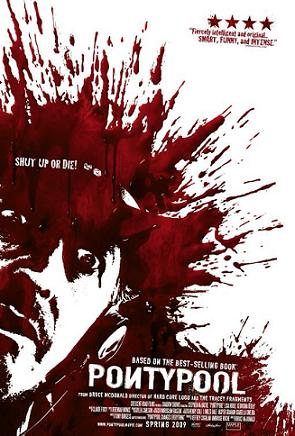
They’ve had great takes on “Wolfen” (1981) and “C.H.U.D.” (1984); this is Gena Radcilffe’s review of 2008’s fantastic “Pontypool.”

I’ve been mentioning this lesser known low-budget independent film ever since I saw it in New York City four years ago.  I hesitate to name it as a “zombie movie,” because that might turn off people who aren’t fans of the particularly gory subgenre.  And it kinda isn’t … there are no undead or cannibalism here, and little gore; this really has more in common with certain other sci-fi-horror classics that I will not name for fear of spoilers.

I never liked the title.  It merely names the town where the thriller takes place, and does nothing to inform the listener about the story’s content, unless I’m really missing something.

But it’s a damn fine flick.  If you really like the silken voiced Stephen McHattie, as I do, then you might also enjoy his role in the “Civil War zombie film,” 2011’s “Exit Humanity.”  [EDIT: McHattie had a particularly badass turn in the classic 1995 “X Files” story arc, “Nisei”/”731.”  He threw Fox Mulder a more brutal ass-kicking than any monster or demon ever did.  And it paved the way for one of David Duchovny’s best deadpan one-liners in the series: “You know, Scully, it’s true what they say.  You haven’t seen America until you’ve seen it from a train.”]

Read the review of “Pontypool” at “The Horror Within” right here:

http://thehorrorwithin.com/streaming-screams-pontypool/

Finally … read the site’s review of “Wolfen” too.

Pontypoolposter

A very short review of “Cockneys vs. Zombies” (2012).

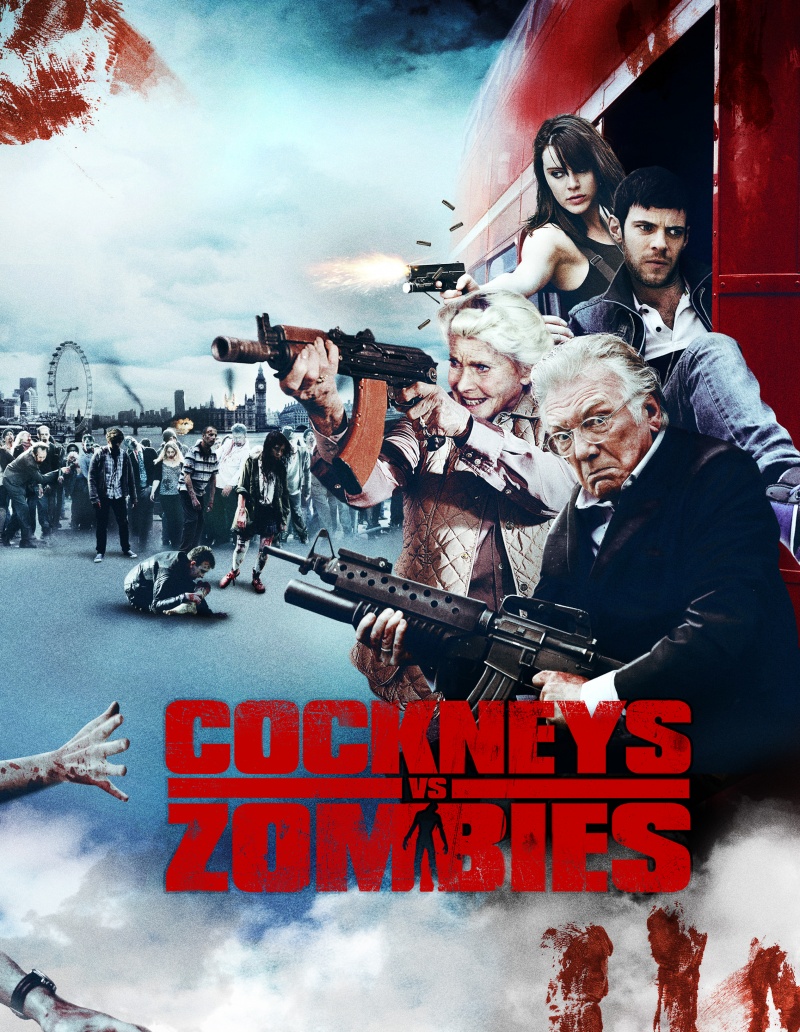
“Cockneys vs. Zombies” (2012) began with such promise — with cool, funny characters; capable comedic actors; an attempt at a decent story; and dry, witty British dialogue.  It looked like it could be a cool unauthorized companion film to “Shaun of the Dead” (2004).

Sadly, then, it didn’t pan out.  The offbeat, character-driven banter gave way to a lot of slapstick that didn’t really work for me.  And problems with pacing and tension prevented this from being an effective horror film.

I’d give this a 4 out of 10.  Oh well.

I have two questions after this film about British slang, with which I try to stay current.  (What can I say?  Some great horror movies come out of Britain.  I love it when Frank tells the crow in “28 Days Later” to “get out of it.”)

  1.  When someone gets mad at another, they call him a … mop-head?  Moppet?  Muppet?  They always say that word so fast.
  2.  If somebody says something stupid, you call them a “plum?”
kinopoisk.ru
kinopoisk.ru

A review of “Sinister” (2012). (With a caveat.)

It’s easy to see why “Sinister” (2012) came so highly recommended; this is a startlingly scary horror movie to which I’d give an 8 out of 10.  I was tempted to give it a 9, but some subjective personal tastes prevent me from giving this unusually disturbing film a higher rating.

It’s frightening.  The design of the supernatural Big Bad is quite good, despite its simplicity.  This film succeeds in giving us an intimidating bogeyman.  Far worse is his choice of victims and his modus operandi.  I won’t say much here … this is a movie where we learn about the story’s antagonist because the protagonist is an investigator — true-crime writer “Ellison Oswalt,” wonderfully played by Ethan Hawke.  I also won’t go into precisely how the baddie operates, because it’s just a little too dark to contemplate here.

It’s shot and scripted quite well … there are a number of nice touches, and the basic story is unsettling even by horror movie standards.  A late twist about how the violence is perpetrated is telegraphed in advance, but it still gets under your skin.  The directing by Scott Derrickson is spot on — the “jump moments” are cheap, but they still work.  Derrickson’s and C. Robert Cargill’s script is smartly unnerving — especially with respect to how these crimes are perpetrated.  (Yeesh.)  And the use of unusual and disturbing music is quite effective.  This film was the result of a lot of thought and effort.

Still, a few things suggested to me that this falls short of being a perfect horror movie:

  1.  Common tropes abound.  The most tired, to me, was the use of a horror writer as an ironic protagonist.  That’s an overused device.  The master himself, Stephen King, for example, has used this in no fewer than four novels and their subsequent film treatments, by my count.  (Yes, Hawke here is a nonfiction writer instead of a novelist, but the principle is the same.)
  2. Hawke’s protagonist, as scripted, is pretty damned unlikable.  “Deputy So-and-So” is his most important source, not to mention someone who shows him compassion when things get really tough.  Yet he sticks with that insulting appellation, and even screens his calls, throughout the entire movie.
  3. The bestselling nonfiction writer here has no idea how to cultivate a source.  (See above.)  I’ve been a writer, in some capacity, for my entire adult life, and I started out as a paper jockey.  You treat every source as important, even the crazy ones.  It’s both good manners and proper professional conduct.  And when you deal with any police officer, you’re especially conscientious if you’re smart — people in law enforcement are often (understandably) very sensitive about how they are portrayed in writing.
  4. Ellison Oswalt feels the need to move into a home where a multiple homicide was committed, in order to write about the crime?  That’s just nuts, even by eccentric writer standards.
  5. He chooses not to tell his wife?  I have never been married, but I know from both my personal and professional life that women get really, really pissed off when you neglect to tell them things that they think are important.
  6. Is Oswalt’s wife a Luddite who never googles anything?  I moved to Virginia a year ago, and I STILL google my address because I keep forgetting my zip code.
  7. Oswalt expects no neighbors to share such information with his wife?  (This is lampshaded a bit, as a child brings home the information from his school.)

Finally, there is one subjective matter that kept me from loving this movie — and it is admittedly a matter of taste.  Even as a devoted lover of dark stories, my enjoyment is sometimes affected by films in which children are victimized.  (I am referring here to the children depicted in the 8 MM (“Super 8”) film strips that are discovered by the main character.)

Yes, these are horror movies, and they are intended for adults, and we ourselves should be adult enough to recognize fiction as such.  (Otherwise we can buy a different ticket or click elsewhere among Netflix’ options.)  And plenty of great horror films feature imperiled children.  “28 Weeks Later” (2007) immediately springs to mind for me, probably because it is a favorite.  I think most other genre devotees would point to the universally recognized “The Exorcist” (1973).  But in those films and most others, things were depicted … differently.  (I’m being vague here for fear of spoilers all around.)

I’m a veteran horror-hound; I’ve routinely enjoyed films in which zombies or vampires wipe out humanity.  But what I saw in “Sinister” was too dark even for my taste.  This sort of reaction is rare on my part, but not unprecedented.  “The Devil’s Rejects” (2005) and “Wolf Creek” (2005) both took violence against the innocent too far for me to really enjoy or recommend them.  (Strangely, 1980’s legendary “Cannibal Holocaust” affected me little.)  Yes, zombie apocalypses tend to be gory affairs, but they are almost always faced by grownups, who are unbound, and armed, and generally able to fight back.

I would really  think twice recommending this to the casual filmgoer without a spoilerish hint about its content.  Your mileage may vary.

Hey … if you really want a scary story, check out The Internet Movie Database’s trivia section for “Sinister” after you see the movie.  Read how the “Pool Party” scene was filmed.  That’s … that’s nuts.  Nobody wants a director that committed.  Somebody should have called OSHA.  Seriously.

And here’s a joke for you.  Given the “Super 8” films we see in this movie, wouldn’t it be blackly funny if this film were  sequel to Steven Spielberg’s heartwarming “Super 8” (2011)?  It’s all about the kids, right?

Sinister

A review of “Grendel Omnibus Volume 1: Hunter Rose”

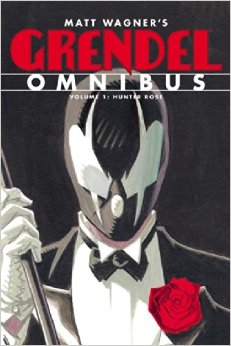
Matt Wagner created a world for “Grendel” that is brutal, violent, tragic and sad. It’s also home to some of the best comic book stories ever created. “Grendel Omnibus Volume 1: Hunter Rose” is as close to perfect a collection as you can get, in my humble opinion. It deserves a 10 out of 10.

Commemorating the 30th Anniversary of the creation of Hunter Rose, this is a comprehensive collection of all the iconic arch-criminal’s tales, presented as chronologically as possible. (After the death of this character, the various “Grendel” comic books focused on other characters who subsequently adopted the name and identity … it’s a little hard to explain.)

It begins with “Grendel: Devil by the Deed,” which is a great summary of biopic of the title character, and then moves on to more than 40 other stories, all penned by Wagner and illustrated by various other artists. It ends with the fantastic “Grendel: Behold the Devil,” illustrated by Wagner.

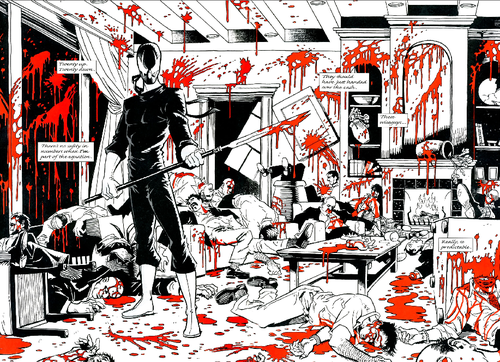
These comics are as difficult to describe as they are amazingly good. On the surface, this is a noir crime-story collection, about a masked mastermind who overruns the East Coast mobs. He’s pursued by the “Argent the Wolf,” the closest this series comes to presenting a hero.
But the “Grendel” identity (both here and in Wagner’s later incarnations) is really more of an abstract force, like aggression or amorality. When you look at both Hunter Rose and his successors, you do realize that Wagner seems to be tackling nothing less than the nature of evil. (This becomes more evident in Wagner’s later “Grendel” personas.) If you enjoy these comics (as I obviously have), that’s fine. But if you empathize with the main character (I’m not even sure he’s a protagonist), you ought to worry.

He isn’t an antihero, or even a sympathetic villain like Dr. Doom or Venom. He’s evil. He murders countless people, both innocent and guilty – all merely to provide his supergenius mind with “challenge,” to achieve “focus,” and to gain “dominance and subjugation” over every human being he encounters.

Nor are we often presented with many other “good” major characters. Argent, the ostensible hero, brutally slaughters even low-level criminals, with the tacit approval of a desperate and morally shaky New York City Police Department. Both Grendel and other characters opine that he isn’t much better than the villain.

Does Wagner succeed in creating a three-dimensional character? That’s hard to say. He really seems more archetypal when compared with a more complex, fully realized characters in comics (as Bruce Wayne often is, in the hands of the right writer). Wagner does explain his transformation and motivations, but to me they seem incomplete. Still, Hunter Rose damned compelling and fascinating to follow. Wagner has a beautiful command of the English language, and I do think that Hunter Rose is the most eloquently voiced comic book character I’ve ever read.

Wagner’s (varying) style is also a little hard to describe. When I first started reading his stuff way back in the 1990’s, I tried to explain to other comic fans that his stories were “experimental.” These books were rarely similar to what you would read from DC or Marvel, or even Dark Horse. They’re written, structured and drawn in a variety of ways – often, for example, using lots if text that makes the books “prose-heavy.” You sort of have to read the books to “get it.” If you’re a serious comic book fan, it’s worth checking out Wagner’s work just to see the different kind of things he can do with the medium.

The art is unique and beautiful. I know very little about art in general, but I do think there’s an art deco influence, and Wagner’s illustrations actually kind of remind me of Walt Disney’s classic work.

All in all, this is a fantastic collection. I strongly recommend it.

5109aP8pISL._SY344_BO1,204,203,200_

3030175-scan+57

grendel3

argentgrendel2

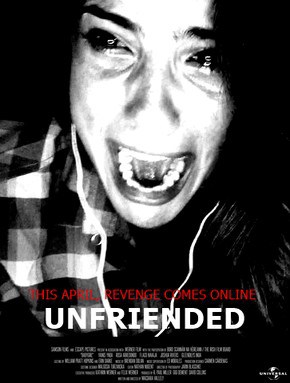
A review of “Unfriended” (2014)

“Unfriended” (2014) is a low-budget independent horror film that took enormous risks — and boy, did they pay off nicely.  This is an outstanding and truly creative entry into the found-footage horror sub-genre that deserves a 9 out of 10.

This movie is unique, as far as I’m aware — it is seen almost entirely through the computer screen of one of five friends terrorized by a vengeful ghost — a classmate who commit suicide after a humiliating video of her was posted online.  But the term “vengeful ghost” probably doesn’t do justice to Laura Barns; the antagonist here brutally turns the story into a kind of slasher film.  It’s surprisingly well done.  Screenwriter Nelson Greaves attacks the script with darkly ingenius flair, as Laura sadistically and psychologically torments each victim before dispatching them.

The movie was shot in a single long take, and the actors actually performed in different rooms of the same house.  Except for its final shot, it takes place exclusively on Skype, Facebook, and Youtube, I think.  It makes me wonder … did the filmmakers get permission from those websites?  I doubt it.  Or are screenshots of global, publicly accessible forums like those not protected by copyright?

The only real quibbles I had reflect “Unfriended’s” limited budget.  The character deaths vary greatly in realism.  One is terrifying, another is slightly less so. One is scary but also puzzling, given its modus operandi.  One is scary only if you are susceptible to a predictable jump scare.  And one is so obviously staged that it seems like something you or I might better portray with a $4 prop from a novelty store.

I should note also that this is a particularly dark film, even without the horror elements.  Its portrayal of teenage life during the Internet age is ugly, to say the least.  Suppose there were no homicidal ghost in this story — it would still be a disturbing film even if every character besides the suicidal Laura survived.

Unfriended-poster

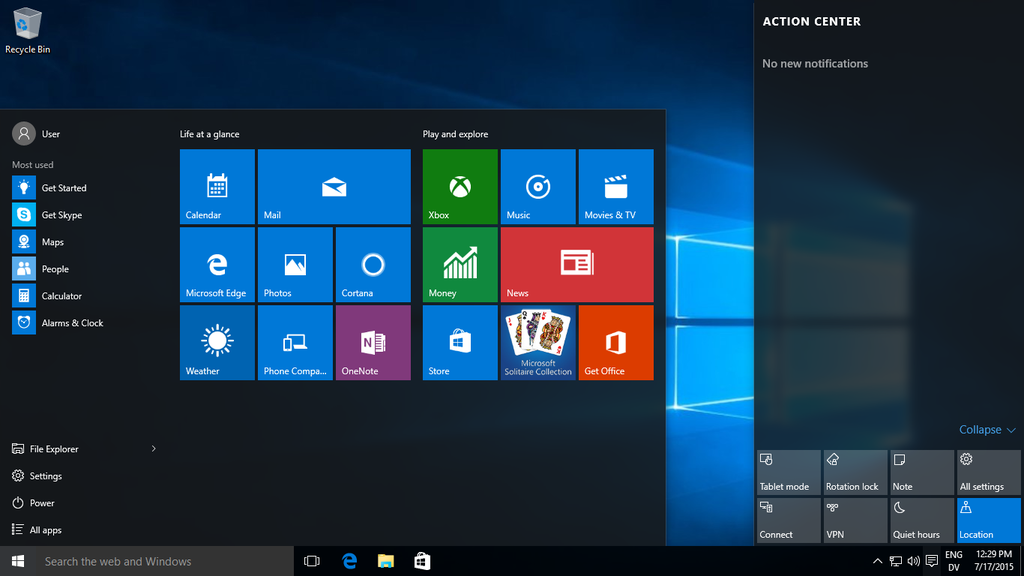
Windows 10 gets a passing grade from me …

… even if I won’t be using most of these advanced features or syncing across devices.

It’s smoother, faster and easier.  The “Task View” function makes managing open windows and programs a hell of a lot easier.  It’s easy to download, even if it takes a while.

The nicest feature, of course, is the return the “Start” menu at bottom left.  I have no idea what possessed Microsoft to abandon this most basic and needed of system features for Windows 8.  That bizarre … spread of tile icons for 8 seemed as though it were suggested by an angry imbecile who hated the very concept of organization.  (I actually used to have to keyword search for “Settings” during the brief period when I was using 8.)

Nolan approves.

Windows_10_build_10240_(RTM)

Photo credit: “Windows 10 build 10240 (RTM)” by Source (WP:NFCC#4). Licensed under Fair use via Wikipedia.

A tiny review of “Pixels” (2015)

It’s true what they say about “Pixels” (2015) — it just wasn’t great.  It’s a pretty brainless movie, despite the fact that its sci-fi-comedy premise is actually pretty clever and funny.

I’d grudgingly give it a 6 out of 10, which is better than what many other people are saying.  It was fun, it made me laugh a couple of times, and the special effects were actually quite good.  If you were an 80’s kid, seeing Pac-Man and Donkey Kong brought to life is just too fun not to enjoy.

[UPDATE 7/29:  I am learning now via Cracked.com that the plot is a ripoff of an episode of “Futurama?”  Thanks, Wednesday Lee Friday!]

pixels_movie-wide