Tag Archives: X-Men

A review of “Logan” (2017)

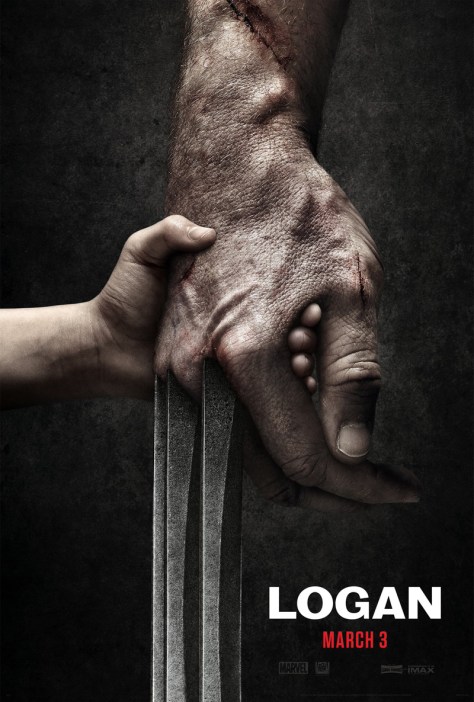
I’m not sure I agree with quite all of the accolades that “Logan” (2017) has been receiving.  (It’s being compared with Christopher Nolan’s “The Dark Knight,” for example, as well as Frank Miller’s medium-altering 1986 graphic novel, “The Dark Knight Returns.”)  It’s still a damn good movie, though, and easily among the best of Fox’s “X-Men” series.  I’d give it a 9 out of 10, and I’d firmly recommend it.

This absolutely doesn’t feel like a “comic book movie.”  It feels more like a brutally violent, sometimes introspective, road-trip drama — though all of the comic book elements are still there.  I’d caution comic book fans that “Logan” was actually much darker than I expected — and, no, it wasn’t just because of the visceral violence that could only be afforded by this movie’s unusual “R” rating.  There was a lot more that went on here that got under my skin … I just can’t say more for fear of spoilers.

There is one thing I can tell you — there is none of the escapism of past “X-Men” films.  (C’mon, for being about a supposedly oppressed group, those movies always made being a mutant look fun as hell, and even glamorous.)  This film follows an aging, ailing Wolverine, and an even worsely afflicted Professor X — subsisting in secret in the Mexico desert.  What’s more, they and their aging friend, Caliban, appear to be among the last of their kind, thanks to an unexplained, decades-long absence of new mutant births.  And what little exposition is given about the other X-Men suggests that they are dead.  If you’ve been a fan of these iconic characters for a long time, then seeing Wolverine and Professor X being so painfully not larger than life is jarring, and even sad.  No matter what is the outcome of its story, this movie’s plot setup alone can make an “X-Men” fan a little despondent.

The action is damned good.  The movie surprised me by how smart it was, too.  Its examination of violence and its consequences is unflinching.  Also, we’ve been instructed through so many “X-Men” movies that humans should not seek to contain the mutants out of fear … yet “Logan” adroitly and subtly questions such one-sided moralizing.  The acting, across the board, is extremely good — predictably from Hugh Jackman and Patrick Stewart, and surprisingly from 11-year-old Dafne Keen.  She’s perfect as the young, imperiled, yet ferocious Laura.

My complaints with “Logan” were minor.  One thing that irked me was my own confusion about whether it was “canon.”  Are we to assume that this takes place in the “X-Men” movies’ “main continuity?”  Or is this a parallel universe or a different timeline?  The feel of this film is so radically different that I found it difficult to imagine it following the previous films (although the post-credits sequence in 2016’s “X-Men: Apocalypse” seems to set up “Logan.”)  I thought that this was based on Marvel Comics’ “Old Man Logan” storyline … wasn’t that an alternate universe story?

Maybe adding more to my confusion, “X-Men” comic books actually exist in the universe of this film.  Laura carries a bunch of them, and they are a minor plot point.  Does this mean that the humans in this universe have finally accepted mutants, enough to create comic books about them being heroes?  How did that come about?

My second criticism of “Logan” is that the character of Laura is thinly rendered.  Saving her is the plot device for the entire film, and Keen is absolutely talented.  Shouldn’t we know more about her, and about her relationship with Logan and Charles?

All in all, this was a superb film, though — with an unexpected tone and a surprisingly sober, risk-taking approach to Jackman’s avowed last appearance as Wolverine.  If you like the “X-Men” movies at all, then you should definitely see it.


logan

A review of “Deadpool” (2016)

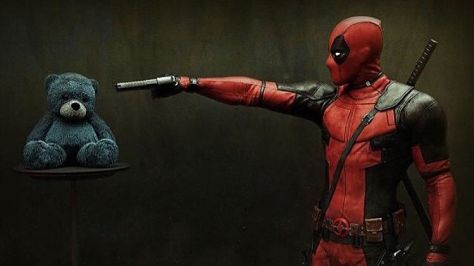
I’ve never read a single “Deadpool” comic book, but that didn’t stop me from enjoying the movie.  It’s  a fun, creative and …  unconventional entry into the “X-Men” film  franchise that actually made me laugh out loud a few times.  I’d give it an 8 out of 10.

It isn’t high art.  It’s got a thin story based on a rickety plot device, nearly no exposition, and it includes some cartoonish action that I thought was just too over the top, even by comic book movie standards.  (Our hero dodges bullets and survives a stab to the brain.)

It helps to bear in mind this movie’s real purpose — fan service for the infamous niche character’s evident legions of followers.  “Deadpool” isn’t meant to be densely plotted, like “X2: X-Men United” (2003), or genuinely cinematic, like the Christopher Nolan “Batman” films.  It’s a long awaited, R-rated feature film to please loyal fans of this profane, adult-oriented antihero, who would be out of place and necessarily bowlderized in a mainstream superhero-teamup flick. (And I kinda get that — I loved the “Wolverine” comics when I was a kid, and, trust me, his film incarnation is tame compared to its source material.)

“Deadpool” is damn funny.  The movie succeeds by making us laugh.  And combining a raunchy comedy with an “X-Men” film gives it a weird, cool, subversive vibe.  It makes you wonder if Stan Lee would approve of this sort of thing … until you see Lee himself in a cameo at the story’s strip bar.  It’s fun to know that dirty jokes indeed do exist within the “X-Men” movie universe.

The lowbrow jokes made me cringe one or twice (“baby hand.”)  But you’ve got to give the movie credit for delivering its bathroom-wall humor if that’s what the original character is about.  (Are the comics like this?)  Ryan Reynolds is genuinely funny, and his deadpan delivery is perfect.  The film might not have even worked at all with out him.

By the way, this movie actually reminded me a hell of a lot of a long-ago flick that I absolutely loved, but which I’m guessing is largely forgotten — Andrew Dice Clay’s “The Adventures of Ford Fairlane” (1990).  That movie also had a foulmouthed, lone, maverick antihero who often broke the fourth wall, and that also made me laugh like hell.  I know it sounds like a strange comparison, but they’re very similar films.

Finally, I’d like to think that the Wade Wilson we see here actually IS a version of the Wade Wilson that we first met in the widely lamented “X-Men Origins: Wolverine” (2009).  (And how can he not be, if that movie is canon?)  If “X-Men: Days of Future Past” (2014) rebooted the timeline, then the Deadpool we’re rooting for here was never recruited, corrupted and experimented upon by William Stryker.  So you can have your cake and eat it, too.


new-deadpool-promo-images-offer-hints-movie-s-unconventional-tone-492440

“It Follows.” (It’s great!!)

[WARNING: THIS REVIEW CONTAINS MILD SPOILERS FOR “IT FOLLOWS” (2014).]

A smaller budget doesn’t hurt this great indie horror film; I’d give “It Follows” a 9 out of 10.

It’s smart, surreal, creepy and atmospheric, and it’s beautifully shot.  Maybe it has some similarities with “The Ring” series, and also the little known excellent horror film, “From Within” (2008), but it’s still darkly creative and original.

It’s damn scary too — it’s terrific what this film accomplished with what looks like minimal CGI.  For some reason, a certain shot of a rooftop really got under my skin.  So, too, did a sequence depicting friends unable to warn a major character, because they’re unable to see “It” approach.

I have always had a weird thing about dopplegangers.  Other people hate clowns; I get creeped out by shapeshifters.  I’m frightened by any monster that can masquerade as allies or loved ones.  It’s part of the reason that the Alien Bounty Hunter worked so well for me as an antagonist on “The X Files” (1993), and why the T-1000 scared me in “Terminator 2: Judgement Day” (1991).  Even Mystique, “The X-Men” franchise’s anti-hero, could be a little unsettling every once in a while.  (An attack on Wolverine BY Wolverine?  Leaving his confused teammates unable to help?  That’s a little creepy.)

There are a bunch of themes served up by “It Follows” that you could walk away discussing with your friends; online critics are quick to point out sexually transmitted disease.  (A little on the nose, don’t you think?)  They also pointed out mortality — this was something that I actually missed, despite the fact that it was helpfully hinted at by one character who periodically reads Dostoyevsky aloud.

I personally thought the film tapped into a bunch of sexual taboos and anxieties — especially incest.  Consider the conversation about one character kissing a sibling, a face we see in a framed photograph toward the end, and the way “It” attacks another major character.  I also saw victimization — as with “The Ring,” the victims of the monster here are presented  with a tremendous moral quandary about how they might save themselves or at least forestall an attack.

Is water a motif?  Much screen time is devoted to characters entering pools or the ocean; one person also begs for water during an attack.

And what about wealth?  Much seems to be suggested by characters traveling from an affluent neighborhood to a poor one.  And all those sweeping shots (and excellent long tracking shots) of the protagonists’ beautiful neighborhood really stayed with me.  I kept thinking about how much I’d like to live there.

I’d love to know more about the origin and modus operandi of “It.”  There is a sequel planned, according to Wikipedia; that’s one of its possible plots.

This is a terrific scary movie!  Watch it tonight!

it-follows-main