“Industrial Revolution,” by Eric Robert Nolan
1.
Did Leonardo Da Vinci
Endlessly dream of machines?
Not his own baroque creations, those
Wood and wire winged artworks
That hung over his study:
Alate and ordered, latticed contraptions,
Each a suspended symmetry,
Gargoyles in geometry.
Did he dream of machines to come?
I picture him up late,
Poring over his own illustrations first, then
Ushered into Euclidean sleep
By soothing mathematics —
The soft and ordered blossoms of
His own woodwork designs
Were flower-petal angles in his brain.
Could he, asleep, have foreseen
The assembly line, Ford’s
Ant-like Model T production?
Did he have an artist’s abhorrence
For its linear, dull, and utilitarian order?
Was it a nightmare for him?
2.
How did farmers feel
In the Industrial Revolution?
Staid agrarian men, their disapproving eyes
On the newfangled factories
Lining the horizon.
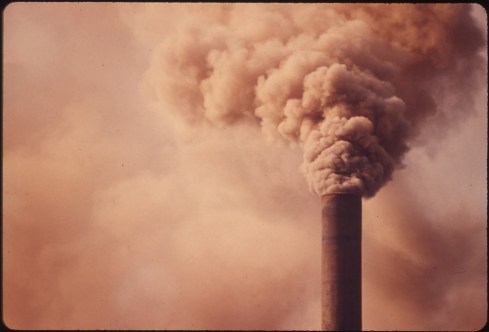
A rising scent of sulfur announces an age —
The new ripe stink
Of an advancing century.
The lined and coal colored fortresses,
Of an impregnable era.
Were castles for the Barons
In a new, feudal America —
Only burning – their smoke
Seeding a virgin sky
Up from the wide black loins and the lined, cracked skin
Of a newly darkened Earth.
Did they resent or marvel at
The New Century’s soot Aesthetic –
The black castles of iron?
A lined and ordered Hell —
Souls among the smokestacks,
And bellies full of conflagrations?
To the later observers of old photographs,
The blackening symmetry
At ninety-degree angles might
Resemble the rise of circuits.
Can you imagine farmers
Having prescient dreams?
What would one have thought, all tucked under
A homespun quilt at dark
Resenting advancing fortunes?
Might even one, once, in his antipathy
Have predicted, asleep,
The microchip’s square face?
I know no etymology
For the word, “Revolution.”
Is its root “revolt?”
To rise up against?
Or “revolve,” as in a circle?
“Revolve” as in “return?”
3.
Could Edison or Tesla
Have envisioned television – its great glass eye
Like Homer’s Cyclops,
Dull and full of vulgar visions,
Its mood made capricious
With changing channels?
We ought to pluck it out, or, at least,
Turn away at dinner.
We should cling to the books of our childhoods
Like the bellies of great sheep.
But we are not as sly
As Odysseus.
4.
During the old Cold War
In my 1980’s childhood
My father said he believed
Machines could prevent The End.
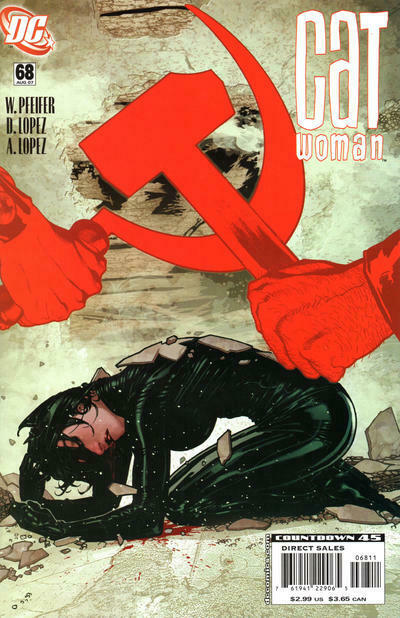
The Communist Revolution,
The Bolshevik revolt,
Had made its rising Bear
America’s enemy, in
A Nuclear Exchange, but Reagan
Marshaled forth our own machines in greater numbers.
I feared them —
The ICBM’s —
As a boy I imagined them
Rising in the sky in perfect symmetry
To make the new, black backcloth
Of the Atomic Age.
At the age of 13
I wrote a poem describing
Their blossoming explosions.
In my childhood dreams
Their interlocking contrails
Looked like lattice work
Or angled flower petals.
In nightmares they are prescient
The warheads already know
The name of every child turned to soot.
My father, however, envisioned
Devices on all our wrists
Connecting us all – we’d know
That distant Russian farmers
Were no Politburo.
Finally realizing
That we were all the same
We’d be reluctant to push
The Button.
Before the 90’s advent
Of The Internet
Was this a kind of prescience?
My father was a poet too.
Today, in his absence,
After I write this
I’ll share it with Eugene, my friend,
In Russia.
5.
My mother’s best machine
Is a tablet on her lap
Looking ironically like
Half the Christian commandments.
She asks me how I am.
I lie and say I’m fine.
In my heart, I am a farmer
Tucked under a quilt.
Circuits rise in the East;
In the West,
Missiles rise and arc at dusk.
My own machine
(with which I write this now)
Is full of distant visions:
The new and chic and sinful interests —
Zooey Deschanel and Richard Dawkins,
The New Girl and the erudite Briton,
Lust and apostasy in Windows.
Someday will there be
Prescient machines?
(Now, about the present, they’re omniscient.)
My favorite TV program
Shows monotheistic machines,
And an embittered robot
Has a nuclear suitcase.
The hunted warn one another,
“The Cylons look like us now.”
Elsewhere, seen
By my machine
An internet flame war
Turns NUCLEAR.
A nationalistic ugliness ensues
Stoked along the coals of the global circuitry.
My screen is the glass face
Of a monster hurling stones.
Maybe this, instead, is Homer’s Cyclops.
My laptop “hibernates”
When left alone too long
Once I imagined it dreaming
Of a better owner.
So unlike Da Vinci’s,
The asymmetric gargoyle
Of our own uncertain future
Hangs over our heads
Like a Sword of Damocles.
Its lopsided face
And lack of proper geometry
Is still our own design.
6.
I’m almost 41 and miss the girl I love.
She had a Revolution — rising in her cheeks
Flush red when
I tickled her tummy in public
That time in Virginia Beach.
Hailing from The South, we’d joke
She was a “farmer’s daughter.”
In her last words to me, she said
She couldn’t know the future.
(She isn’t prescient, after all.)
“A lot needs to happen.”
And now I need to be
Industrious.
When people ask me what I dream
I say that I do not.
Besides, I’d rather not.
Not when the red flush rises yet again in her high white cheeks
Like twin sudden gardens full of roses.
And I endlessly dream of machines.
I dream that I am one.
My face is the same, except
A bright-hot piston heart
Replaces soft aorta,
Hardened steel instead of red tissue,
And my mind
Is a reliable hard drive
Holding balanced equations.
This would be easier.
I want a world of heuristics.
Algorithms instead
Of red flush memories.
I want a Revolution.
I want the world to change.
If I see my Love again,
I will hold flowers
And angle in for a kiss.
“My heart is a machine now,” I’ll tell her.
I’ll brightly peel back
The soft, pale imperfect flesh and say,
“I’m stronger. Look, I’ve changed.
“Look at my heart. Look.
“See the steel here.
“Feel these steel angles, these veins are now only
“Piano-wire lattice work,
“Taut and tightly strung.
“Feel how the hardened symmetry
“Forms a perfect circuit.
“My heart is a bird-machine –
“It has Da Vinci’s wings.
“My heart is a latticed contraption.
“My heart for you is NUCLEAR.
“My heart is a prescient machine that sees our future.”
“My heart beats
“Its new and hardened life
“At angles.”
Her fingertips will be as soft
As flower petals.
I want a Revolution.
I want the world to change.
But if I meet my Love again
Will her eyes return to me?
Revolt?
Or turn away?
[Dedicated to Robert J. Nolan]
© Eric Robert Nolan 2013
Originally printed in Dead Snakes: http://deadsnakes.blogspot.com/2013/11/eric-robert-nolan-poem.html