Tag Archives: 1992

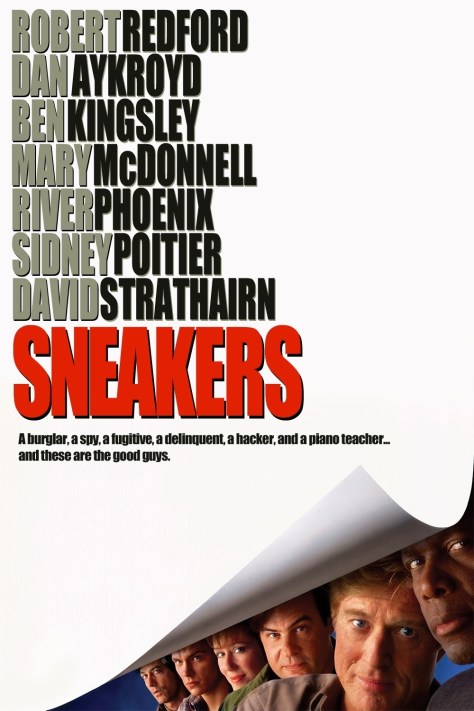
Poster for “Sneakers” (1992)

It’s funny how fallible memory is.  I love this flick, but could have sworn that this was a late-80’s movie that I saw in high school.

I have no doubt that cryptology will always be the world’s most important information technology issue.  (Unless the singularity gives us terminators, that is.)  But it’s funny how the screenwriters here couldn’t have anticipated how hyper-partisan websites, “fake news,” “bots,” “troll farms,” spies and social media could influence democracies.

By the way, I absolutely hate the childish appellation, “fake news,” which I am now seeing thrown out by people on the left as well.  The word we are all reaching for is “propaganda,” isn’t it?  I know I sound like a pedant here, but “fake news” sounds like something a  kindergartener would say — or maybe Orwellian “newspeak.”


sneakers

Cover to “Eclipso: the Darkness Within,” Bart Sears and Mark Pennington, 1992

DC Comics.

Eclipso-Darkness-Within-01-00-669x1024

Cover to “Marvel Comics Presents” #112, Steve Lightle, 1992

Wolverine and Typhoid Mary.


d4eda7fd7625d1de0c2695ede44a8fc1--marvel-series-comic-covers


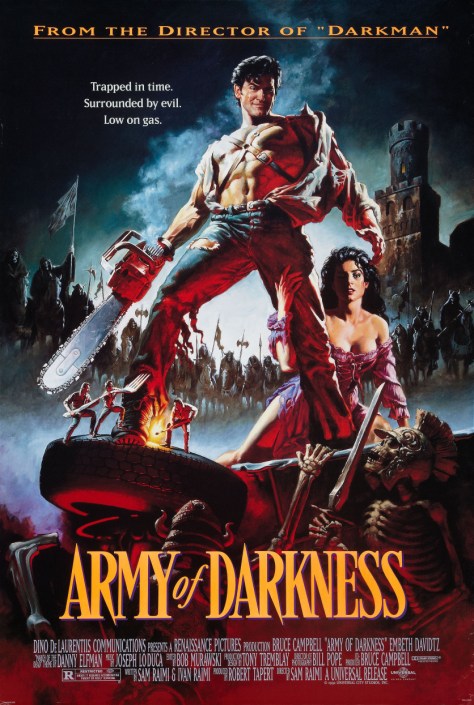
Poster for “Army of Darkness,” 1992

“This was our generation’s Harry Potter … and it was glorious.” — Mike Rocha


army_of_darkness_poster

Cover to “Green Lantern Corps” #22, Pat Broderick, 1992

46d71dc5b5d063f7c7e798ee70d6f4d1

Mary Washington College, Fredericksburg, VA, June 2017 (2)

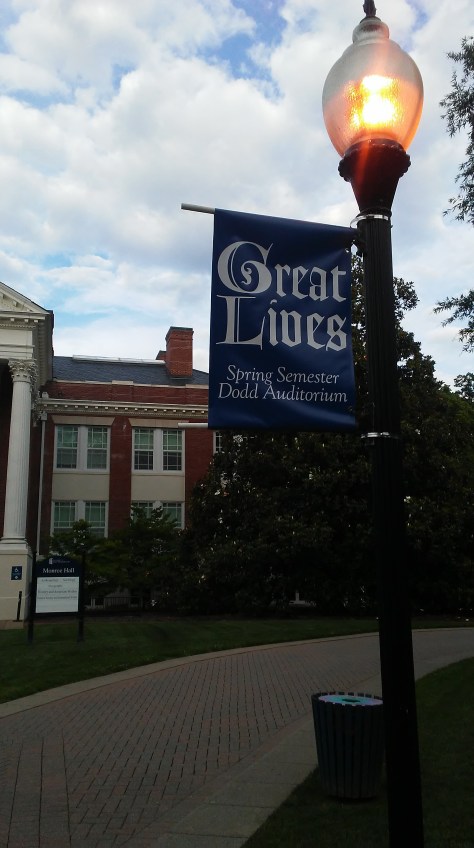
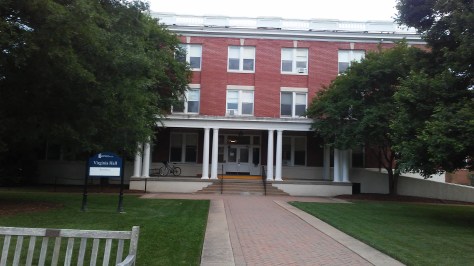
Pictured are Monroe Hall, Virginia Hall, Campus Walk, Lee Hall, and Trinkle Hall.

*****

The Mary Washington College Campus looked as beautiful as ever last week — it was only marred by the occasional sign bearing an embarrassing misprint.  (They perplexingly refer to the misnomer “University of Mary Washington.”)

At first I hesitated to visit the campus during my stop in Fredericksburg, Virginia on my way to Washington, D.C.  I asked my Alumbud if two men in their 40’s would look suspicious there, given the increased security on today’s college campuses.  He told me to relax — people would assume we were two fathers scouting the school for their respective offspring.  That made me feel really, really old.


Monroe Hall and The Fountain.  When I went to school at MWC, that fountain was occasionally doused with either detergent or dye as a prank.

20170606_191016

20170606_191038


Virginia Hall.  In the early 1990’s, this was a dorm exclusively for freshmen girls; I don’t know if that’s still the case today.
20170606_191031


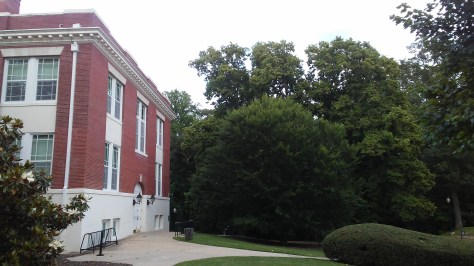
You can’t see it here, but beyond that hedge and beside Monroe is Campus Drive, curving down past the amphitheater to Sunken Road.  The long hill is still entirely wooded, and is still arguably the prettiest part of campus.
20170606_191114


Campus Walk and Lee Hall.

20170606_191156

This is cute.  I’m guessing it was a product of the recent remodeling?  But which way to Winterfell?  Metropolis?  Which way is Caprica City?  I have tickets for a Buccaneers game next week.

20170606_191215

20170606_191228

Here is where the College Bookstore used to be (beside the Campus Police Station in the lower part of Lee); I’m told now that it’s in a vastly larger space upstairs.

And The Underground has returned!  It closed after my freshman year in 1990-91.  I met a lot of good friends there, and I heard my first live blues at The Underground, too, performed by Saffire, The Uppity Blues Women.  (I only just now learned that Saffire’s Ann Rabson sadly passed away in 2013.)

[Update: an alumna just told me that she can remember when The Underground was called “The Pub.”]

20170606_191310


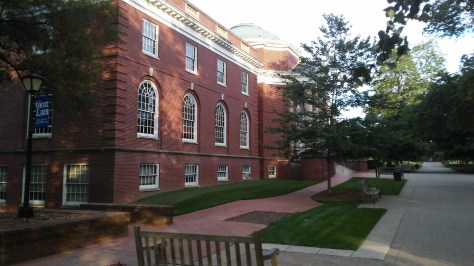
Campus Walk and Trinkle Hall.  My Alumbud reminded of what seemed like a big issue back in the day — the students’ desire to have a 24-hour study hall.  They successfully petitioned the college administration for it, and at some point toward the end of my college career, Trinkle began staying open all night.  If that sounds incredibly nerdy, it was.  But it was also a pretty big quality-of-life issue for the dorms.  A lot of people needed a place to go to cram before finals, in order to keep the peace with a sleeping roommate.

The “computer pods” were also located here, downstairs, in a basementish-type space that was air-conditioned to the point where it felt freezing.  You always had to bring a jacket or sweater to do your work there.
20170606_191334

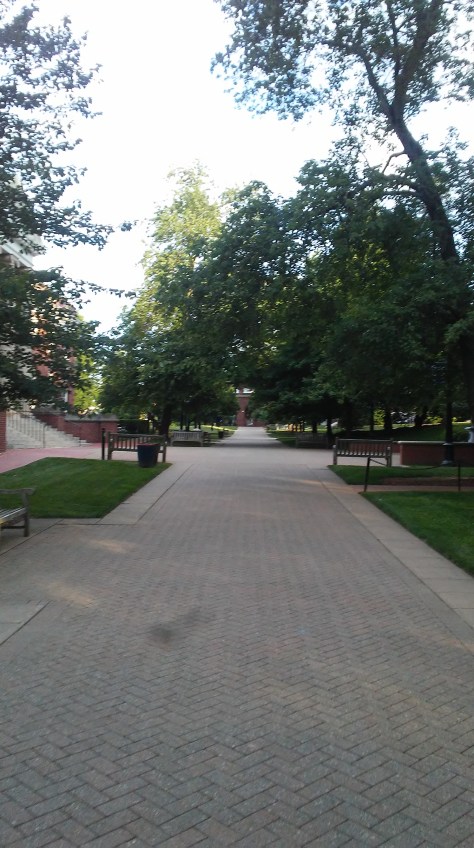
Looking south on Campus Walk, you can just barely make out the Bell Tower, a product of the campus remodeling.  You used to be able to see Bushnell Hall, my freshman-year dormitory.
20170606_191342

20170606_191405

The bust of Dr. James L. Farmer, Jr. that the school erected opposite Trinkle Hall in 2001.  He was one of the nation’s foremost leaders in the Civil Rights movement, founding the Congress on Racial Equality (CORE) and organizing the “Freedom Rides” to desegregate interstate bus travel.  Dr. Farmer was my Civil Rights professor in 1992, and he was universally admired by his students.

Some weird old guy wandered into the photo here — sorry about that.

20170606_191436


Cover to “Grendel: War Child” #7, Matt Wagner, 1992

Dark Horse Comics.


616525

Cover to “X-Men Annual,” Jim Lee, 1992

“Shattershot” Part 1.  I had this one!

eb9dc885a56122b9b62761a427e56152

Throwback Thursday: the Launch of Image Comics (1992)

I talked about Todd McFarlane’s “Spawn” in last week’s Throwback Thursday post; these are some very early issues of a few of Image Comics’ other titles when the company launched in 1992.  I remember snapping them up in earnest when I was 19 years old — as I said last week, it was exciting for a comics fan to see a new company challenge the “Big Two,” Marvel Comics and DC Comics, with a new superhero universe.

I and other ambitious collectors also grabbed these off the shelves because we naively expected they all would one day be very valuable.  (Investing in comic books is a little more complicated than that — they’ve generally got to be in extremely good condition to fetch high prices.)

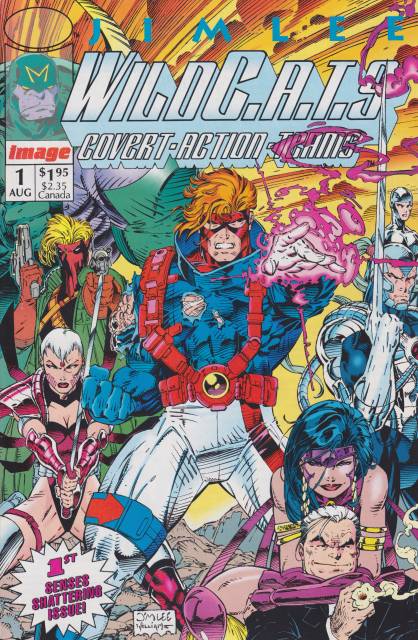
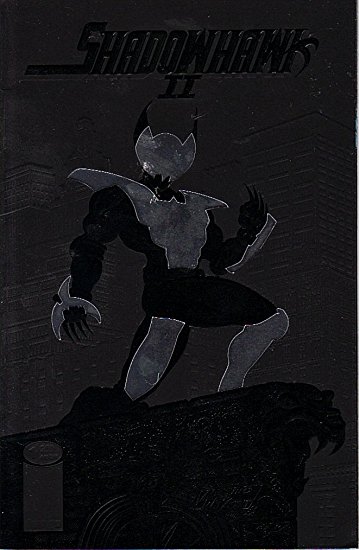
The first Image comics were a mix of good and bad.  If memory serves, Jim Lee’s “WildC.A.T.s” was very good; Rob Liefeld’s “Youngblood” was less so, but was at least interesting.  The art and writing for Jim Valentino’s “Shadowhawk” was truly mediocre.  That didn’t stop me from buying a few issues, though — the novelty of these new books just gave them too much appeal.

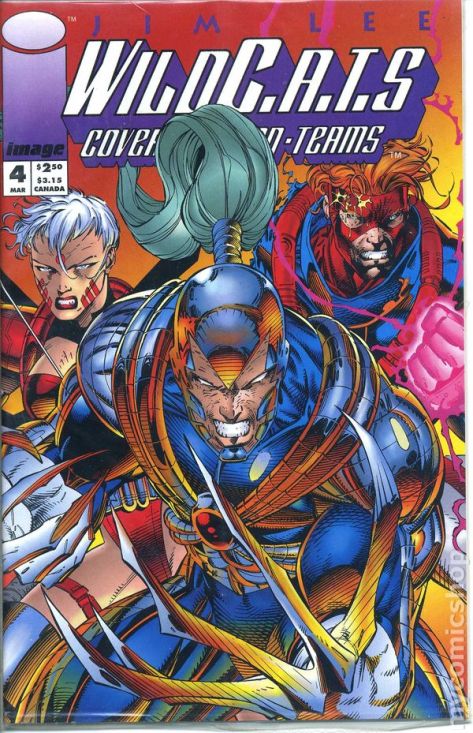
There were a lot of creative things going on with early Image titles.  Some of the new characters were pretty neat.  I remember being partial to Youngblood’s “Diehard” for some reason, along with the WildC.A.T.s’ “Grifter.”  (The former has the red, white, and blue full bodysuit; the latter has the trenchcoat and pistols.)  And I definitely liked WildC.A.T.s’ “Warblade.”  He’s the guy below with the ponytail and the shape-changing, liquid-metal hands.  He was a favorite of mine despite the fact that he seemed to borrow a trick or two from the newly iconic liquid-metal terminator.  (“Terminator 2: Judgement Day” had hit theaters a year earlier.)

Image comics were quite different than those produced by Marvel and DC.  (As I explained last week, Image was formed by artists who revolted against their prior employers’ unfair, work-for-hire payment policies — their new company gave them complete creative control over their characters.)  Despite the popularity of Image’s new books, however, they sometimes appeared to have been developed without some needed editorial oversight.

The violence and gore was often far more graphic.  And Image’s creative decisions ranged from the inspired to the strange to just being in questionable taste.  (It all depended on your disposition, I guess.)  WildC.A.T.s, for example, portrayed Vice President Dan Quayle as being possessed by an unearthly “Daemonite.”  (Damn, those Daemonites were wicked-cool bad guys, and Lee Illustrated them beautifully.)  Shadowhawk’s signature move was breaking the spines of criminals.  He was also HIV-positive, the result of some gangsters’ reprisal — they captured him and injected him with infected blood.  The character thereafter spent some of his history trying in vain to locate a cure for AIDS.  (This was 1992, just after the epidemic became fully entrenched in the public’s anxieties in the 1980’s.)

My interest in these titles eventually waned, though I did still pick “Spawn” up when I had the money.  The Image universe was densely crowded with new characters, and it was just too much information to sustain my interest.  (Seriously, look at the first couple of covers below.)  I spent far more money on DC’s various “Batman” and “Green Lantern” titles.  And if I wanted edgy comics, I had discovered the various incarnations of Matt Wagner’s “Grendel” that were available through Dark Horse Comics.  Those boggled the mind.

But Image comics did burgeon into a great success, even if these early titles have since been retired.  “Spawn,” of course, is still being produced.  And today the company’s wide range of books includes Robert Kirkman’s “The Walking Dead.”  It’s hard to imagine either of the Big Two picking up Kirkman’s gory epic masterpiece … so I suppose we have Image to thank for the TV show.

1618179-wildcats_covert_action_teams__1992__01a

ibc25b64d2961mh92d73z

726109

559443

shadowhawk1992series3

61zpMu6Im+L._SY550_

Throwback Thursday: the Debut of “Spawn” Comics (1992)

I remember greedily snapping up the first two issues of Todd McFarlane’s “Spawn” comic in the spring of 1992.  Comics fans were excited about it — it was the de facto flagship title of the newly created Image Comics, which was bringing its own ambitious interconnected comic book universe to the shelves to compete with “the Big Two,” Marvel and DC.

There already was a competitive third major comic publisher — Dark Horse Comics.  But it had no successful superhero titles or shared universe; it instead was known for science fiction and horror comics.  I also remember seeing comics back then from the short-lived Valiant here and there — or maybe it was mostly ads in the Comic Shop News.  I didn’t know a single soul who read them, though.

McFarlane was nothing short of famous in the comic book fan community, after his broadly popular work on “Spider-Man.”  (I still love his unique style.)  And “Spawn” had an absolutely subversive flavor to it.  Its title anti-hero was nothing less than an agent of hell, and the comic revolved around hell, sin, damnation and various demons.  There was also far more violence and gore.

“Spawn” felt subversive, too, because of the impetus behind its creation.  Image Comics was launched by a group of artists who were unhappy with Marvel’s failure to grant them creative control over their work (or, according to the artists, proper merchandising royalties).  They included McFarlane, and fan-favorite artists Rob Liefeld, Jim Lee and Marc Silvestri, among others.

I don’t pretend to know how justified their complaints were, as I was only a fan and not an industry insider.  But they sound right … I’ve always heard that major comic companies have historically screwed over their creative talent with restrictive “work-for-hire” payment arrangements.  (This is why Stan Lee, creator of so many of Marvel’s first heroes, is not absurdly wealthy.)  The start of Image seemed to fans like their favorite artists rebelling against the status quo, and that was kind of exciting.

Some of McFarlane’s acrimony with Marvel was pretty overtly expressed in the pages of “Spawn.”  There was a weird, slightly confusing plot digression early on in which McFarlane editorialized heavily about creator-owned characters … Spawn actually visited a kind of purgatory where various leading Marvel and DC heroes were imprisoned.  It seems in retrospect like a labored and self-indulgent metaphor, and it detracted from the title’s story.  But the college kids then reading “Spawn” had never seen anything like it.  It was interesting at the time.  (Bear in mind, please, that this was before the Internet.)

I started picking it up regularly.  I was going to the comic shop that was on … George Street, I think, in downtown Fredericksburg, Virginia.  There were only two comic shops in the downtown area in the early 1990’s — this one, and a seedy shop across from the Hardee’s on northern Princess Anne Street, in a tiny corner of a ramshackle, abandoned hotel.  There was a categorically unpleasant, batshit-insane woman staffing the latter – she was nasty to everyone who entered, and accused them of touching the merchandise.  (That part of Princess Anne Street has since been improved – I think the huge hotel building has since been renovated.)

As the “Spawn” title progressed, its fandom became firmly entrenched.  The art truly was fantastic, and of course it remains an incredibly successful group of comic properties today.  Over time, McFarlane’s critics also grew in number … no matter how gifted he was as an artist, fans said he wasn’t a terrific writer.  (And I do get what they’re saying.)  I will say this — the “Spawn” comics I was reading were a thousand times better than that weird movie adaptation in 1997.  I’ve only seen bits and pieces of that, but they were terrible bits and pieces.

I still think I’d have a great time perusing my back issues.


Spawn-1

41xEvucyk-L._SL500_SX319_BO1,204,203,200_

7df869d110ee2fcf1af64d8f9f1fa8a4

aad31586d7576e942f6eafba618445f4