Tag Archives: 2014

A short review of “The Good Neighbor” (2016)

“The Good Neighbor” (2016) generally didn’t work for me.

My first problem was its premise.  Two teenage aspiring filmmakers play an elaborate high-tech prank on an elderly neighbor by installing hidden cameras in his home and then manipulating his environment: causing his lights and TV to malfunction, causing his windows to break, and even adjusting his thermostat to plunge the temperature so he’s forced to cope with the bitter cold.  They plan to mimic a haunting, and they rationalize it because he actually is a horrible person, well portrayed by James Caan in an understated performance.

Here’s what doesn’t make sense — what the teens are doing is against the law, and they know it.  (One explicitly states it at least once mid-way through the film.)  I count trespassing, criminal mischief and unlawful surveillance to start with, and I’m willing to bet they’d face charges for harassment too.  Yet they fully intend to makes themselves “famous” via the Internet with this cruel prank/documentary.  They shoot lengthy footage of themselves narrating the construction and implementation of their project; this is intended as part of the documentary.

But why would they upload detailed, inclusive evidence of their crimes to the Internet?  If they truly become “famous” with thousands of “hits” for their video, wouldn’t that mean countless people could bring them to the attention of the police?  (And, truthfully, even if they tried to remain anonymous, I’m sure any competent investigator viewing their video would at least count them as suspects.  One lives right across the street from Caan’s character.)

For much of its running length, “The Good Neighbor” actually succeeds at being a serviceable horror-thriller — if you can get past that hole in the premise.

But then we come to the second problem with this movie.  Towards its end, it takes an unexpected dramatic turn.  It stops being a thriller, and simply becomes a particularly sad drama.  I don’t want to say to much for fear of spoilers, suffice to say it’s a real downer.  But it isn’t frightening at all — or even terribly entertaining.

The only part near the end that pleased me was the movie’s final shot.  It was ambiguous, but it suggested a nice new level of character depth.  I thought it was neat.

Oh well.  Maybe others will enjoy this film more than I did.  I myself can’t recommend it, and I’d give it a 5 out of 10.

Postscript: you can have some fun here trying to figure out where you’ve seen these teenage actors before.  They’re both veterans of horror.  The mild-mannered one is Keir Gilchrist, who horror fans will recognize from “It Follows” (2014).  The meaner, more manipulative of the pair is Logan Miller, who played the goodhearted Benjamin in this past season of “The Walking Dead.”  It’s so weird seeing him play such different characters.


good_neighbor

A baffled review of “Lucy” (2014)

Everything you’ve heard about “Lucy” (2014) is correct — it’s exactly as trite and nonsensical as its multitude of unfavorable reviews have described it.  Maybe this was intended as some sort of weird, meta, inside joke by writer and director Luc Besson … after all, it’s a movie about increased “brain capacity” that is, ironically, really dumb.

I can’t imagine why Scarlett Johansson and Morgan Freeman would sully their reputations by starring in this film.  Although, sadly, even the wonderful Johansson is not at her best here.  She seems to try to portray increased intelligence by delivering some of her lines like a robot.  (Seriously, she reads some of her lines like a speedy automaton, and it’s a bad creative decision for her performance.)

I could go on and on about the silly things in this movie.  So could you, if you’ve seen it.  But it’s a lot more fun listening to the surly wise-asses over at Cinema Sins.  Their trademark “Everything Wrong With” video for “Lucy” is particularly harsh.  At one point they call it “an aggressive dickhead of a movie.”  Here’s the link:

https://www.youtube.com/watch?v=i3rZmnJ66Po

There is one overriding problem I need to address myself … and that’s how its premise seems to relate so little to the events of the story.  We begin by understanding that the titular Lucy is affected by a drug that increases her brain capacity.  Before the movie reaches its halfway mark, she appears to gain omniscience.  (She doesn’t need to actually learn anything — she simply knows virtually everything already.  This is evinced by her ability to translate foreign languages instantly, with no books or instruction at all.)  She also appears omnipotent by the film’s end.  Her powers become literally godlike.  And I’m not talking about Thor or Odin from the Marvel Cinematic Universe — we’re talking the all-powerful,  Old Testament God of Abraham.

Why?  Why should increased intelligence, no matter how incredibly vast, give her power of matter, space and even time?  If she were as smart as a thousand Stephen Hawkings, she still shouldn’t be able to do the things she does in the movie.

Believe it or not, I’d rate this movie a 4 out of 10.  (That’s far kinder than the other reviews I’ve read.)  I managed to have fun with this movie by rewriting some of it in my head while I watched.  Instead of Lucy benefiting from a drug that increases her brain capacity (which borrows a bit from 2011’s excellent “Limitless,” anyway), I pretended that I was watching a movie in which Scarlett Johansson became God.  (Think of 2003’s “Bruce Almighty.”)  Honestly.  I swapped out the plot device in my head, and imagined a different movie.  That made it fun — watching Scarlett Johansson as a wrathful God was strangely satisfying, especially when she wreaks havoc on the bad guys.

And speaking of bad guys … that is actually one thing that this otherwise clueless movie manages to get right.  No, I’m not kidding — the Taipei gangsters that serve as the story’s antagonists were performed to perfection by their actors.  The villains were repulsive and terrifying, and they aroused more interest in me than the good guys.  Min-sik Choi was terrific as the homicidal patriarch of the Taiwanese crime syndicate.  Even better, though, was Nicolas Phongbeth as the cherubic-faced, vaguely androgynous, sociopathic lieutenant.  If they were vanquished in this brainless movie, it’d be nice to see them resurrected in a James Bond film or a season of Fox’s “24.”  It’s weird seeing a movie so bad do one important thing so successfully.

There are really only two reasons why anybody should see “Lucy.”  One is morbid curiosity.  Two is if they are a learning to be a screenwriter, and are looking for a feature-length example of what NOT to do.


Lucy_(2014_film)_poster

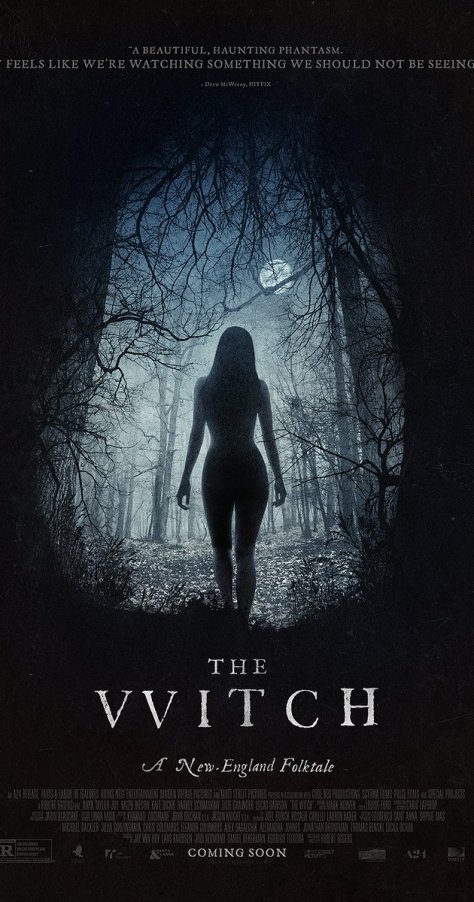
A quick pan of “The Witch” (2015)

I’ve read that renowned horror author Brian Keene criticized the popular audience backlash against 2015’s “The Witch,” saying that “90 percent of the people in the theater … will be too stupid to understand” it.  Well, maybe I am among the stupid 90 percent.  I’d name this movie as the most disappointing horror film in recent memory, and I’d rate it a 2 out of 10.

I … think I understand it.  I just didn’t like it much.  It is alternately boring and sad.  It is boring far more often than it is sad.  When it is sad, it isn’t the cathartic, meaningful, artistic “sad.”  It’s just kind of a grimace-inducing downer.  There are problems with pacing, tension and story structure.  The movie only gets interesting during its closing several minutes.

These problems, however, are overshadowed by the movie’s biggest flaw — most of the (literal) Puritans populating this period story are so unlikable that you’d care little about what happens to them.  They are verbosely, tiresomely God-obsessed.  I myself might strike a deal with the devil if he’d silence the two creepy tots, and maybe the shrewish, hysterically shrill mother (Kate Dickie), too.  He wouldn’t have to kill them or anything — muting them would suffice.

Yes, the film does succeed somewhat in establishing mood and tone.  But the result is still nothing to write home about.  This isn’t “It Follows” (2014).

The film has two things going for it.  One, as other reviewers have noted, it achieves authenticity quite well.  The sets, costumes and dialogue were so meticulously developed that I actually did believe we were in 17th Century New England.  Two, Anya-Taylor Joy wonderfully performs the role of young Tomasina.

Those two things do not redeem the film, however.  I’d skip this.


MV5BMTY4MTU2NjMyNV5BMl5BanBnXkFtZTgwMzUwMDk4NzE@._V1_UY1200_CR90,0,630,1200_AL_

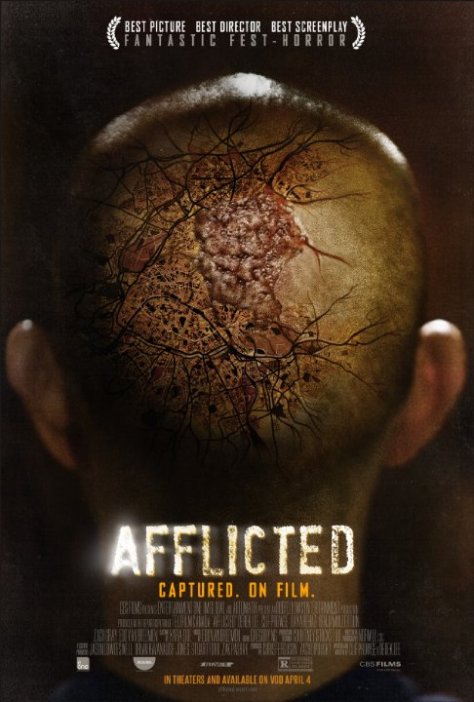
A very short review of “Afflicted” (2014)

First, a clarification — there appear to be maybe a half dozen films or shorts entitled some variation of “Afflicted;” I am referring here to the outstanding 2014 found-footage vampire film.

Second, some advice — if you skip this because of an aversion to found-footage horror movies, you’re cheating yourself.  This was fantastic.  I’d give it a 9 out of 10.

It’s a creative tour-de-force for young filmmakers Clif Prowse and Derek Lee, who not only wrote and directed the movie, but also starred (quite capably) as its two leads.

It begins well, but not with brilliance.  It’s too reminiscent, at first, of a similar recent found-footage film in which affable young men develop superpowers with frightening consequences — 2012’s wonderful “Chronicle.”  Also, certain plot points are predictable.  (Gasp! Derek is suddenly burned by sunlight!)

Then we get an unexpected plot turn, and the film gets much, much better.  I won’t say much for fear of spoilers, but this is a fresh, entirely fun take on the vampire genre, with some special effects and action sequences that are pretty impressive for a low budget film.

And do watch through the entire credits.  There is both a mid-credits scene and a post-credits scene that are absolutely worth it. The latter casts the story in a completely new light.

Check this out, horror fans.  You won’t be disappointed.


MV5BMjEzOTczNzA0NF5BMl5BanBnXkFtZTgwMTgwNTYyMTE@._V1_SX640_SY720_

Another movie poster ripoff.

SyFy’s (reportedly quite bad) “400 Days” poster shamelessly resembles that of 2014’s big-budget “The Signal.”

Now that I know this is a thing, I’m going to start spotting these everywhere …


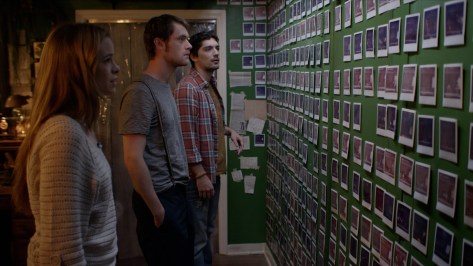
A very quick review of “Time Lapse” (2014)

Despite it being highly recommended, I almost stopped watching “Time Lapse” (2014) after a few minutes.  But I’m glad I stayed with it — it’s a smart, damn fun and unexpectedly dark time-machine tale that transcends its microbudget to become edgy and entertaining.  I’d give it an 8 out of 10.

It begins weakly.  A few strictly average actors perform what seems like a weak script right out of a sitcom doomed to cancellation.  Its premise seems cheesy — three friends discover a mysterious camera that can take pictures of its subject as it will be 24 hours into the future.  Its plot sounds trite and unwieldy.  (They send themselves photographed notes containing advice from their future selves.)  Even the film’s minimalist set (the movie appears to have only two of them) seems to betray the threadbare budget of an earnest-but-average film school project.

But, damn, was I pleasantly proven wrong.  The script turns out to be quite strong, inviting the viewer down a progressively frightening and maddening rabbit hole alongside its characters.  The acting improves, as George Finn settles into his role as the greedy, impulsive and least stable of the trio.  (Trust me, this isn’t just a cliche sci-fi morality tale about greed; the movie has far more to offer than that.)  Then Jason Spisak arrives and masterfully almost steals the entire movie, chewing the scenery as a fabulously frightening bad guy.

The last shot of this movie is absolutely killer.

Seriously, check this film out.  It deserves its positive press, and I guarantee it’ll at least surprise you with how good it becomes.


Time-Lapse-Still

A few quick words about “Last Shift” (2014)

“Last Shift” (2014) came highly recommended.  It didn’t quite meet my consequent expectations, as aspects of it seemed amateurish — I felt there were problems with plotting, pacing, structure and even sound editing.  (I just couldn’t always discern what was said by the voice on the phone.)

But it was still good enough for me to rate it a 7 out of 10, thanks primarily to an interesting premise, a solid lead actress, and some genuinely scary moments.  Juliana Harkavy does just fine as a rookie cop working alone on her first shift — on the titular last shift of a police station being shuttered after a new facility opens elsewhere.  She carries the movie well as demonic shenanigans ensue at the haunted site, even if, at times, it seems she needed better direction about her character’s mood and reactions.

And the scares were there, which means this does qualify as a successful horror movie.  One, for example, results from an extended sequence involving a dropped flashlight — it’s creative and effective despite its simplicity.  Another scare results from what seems to be a direct homage to “Poltergeist” (1982) — but it might be even creepier here.

This is a decent enough fright flick; it’s worth checking out.


last-shift

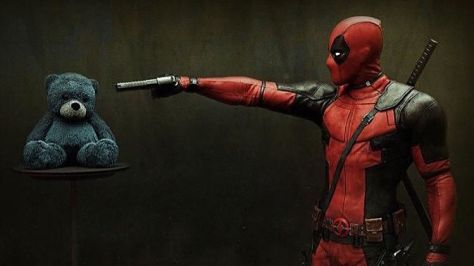
A review of “Deadpool” (2016)

I’ve never read a single “Deadpool” comic book, but that didn’t stop me from enjoying the movie.  It’s  a fun, creative and …  unconventional entry into the “X-Men” film  franchise that actually made me laugh out loud a few times.  I’d give it an 8 out of 10.

It isn’t high art.  It’s got a thin story based on a rickety plot device, nearly no exposition, and it includes some cartoonish action that I thought was just too over the top, even by comic book movie standards.  (Our hero dodges bullets and survives a stab to the brain.)

It helps to bear in mind this movie’s real purpose — fan service for the infamous niche character’s evident legions of followers.  “Deadpool” isn’t meant to be densely plotted, like “X2: X-Men United” (2003), or genuinely cinematic, like the Christopher Nolan “Batman” films.  It’s a long awaited, R-rated feature film to please loyal fans of this profane, adult-oriented antihero, who would be out of place and necessarily bowlderized in a mainstream superhero-teamup flick. (And I kinda get that — I loved the “Wolverine” comics when I was a kid, and, trust me, his film incarnation is tame compared to its source material.)

“Deadpool” is damn funny.  The movie succeeds by making us laugh.  And combining a raunchy comedy with an “X-Men” film gives it a weird, cool, subversive vibe.  It makes you wonder if Stan Lee would approve of this sort of thing … until you see Lee himself in a cameo at the story’s strip bar.  It’s fun to know that dirty jokes indeed do exist within the “X-Men” movie universe.

The lowbrow jokes made me cringe one or twice (“baby hand.”)  But you’ve got to give the movie credit for delivering its bathroom-wall humor if that’s what the original character is about.  (Are the comics like this?)  Ryan Reynolds is genuinely funny, and his deadpan delivery is perfect.  The film might not have even worked at all with out him.

By the way, this movie actually reminded me a hell of a lot of a long-ago flick that I absolutely loved, but which I’m guessing is largely forgotten — Andrew Dice Clay’s “The Adventures of Ford Fairlane” (1990).  That movie also had a foulmouthed, lone, maverick antihero who often broke the fourth wall, and that also made me laugh like hell.  I know it sounds like a strange comparison, but they’re very similar films.

Finally, I’d like to think that the Wade Wilson we see here actually IS a version of the Wade Wilson that we first met in the widely lamented “X-Men Origins: Wolverine” (2009).  (And how can he not be, if that movie is canon?)  If “X-Men: Days of Future Past” (2014) rebooted the timeline, then the Deadpool we’re rooting for here was never recruited, corrupted and experimented upon by William Stryker.  So you can have your cake and eat it, too.


new-deadpool-promo-images-offer-hints-movie-s-unconventional-tone-492440

Illustration 14 for Edgar Allan Poe’s “The Raven,” by Gustave Dore, 1884

Paul_Gustave_Dore_Raven14

Photo credit: By Gustave Dore (dore.artpassions.net/) [Public domain], via Wikimedia Commons.

A very short review of “The Hobbit: The Battle of the Five Armies” (2014)

I think that “The Hobbit: The Battle of the Five Armies” (2014) is the best of Peter Jackson’s prequel trilogy, and not only because of its predictably terrific climactic battle.  I’d give this movie a 9 out of 10.

First, it’s less cartoonish and far more adult than its predecessors, in everything from its themes to its fight choreography.  (Compare the beautifully staged final melees here, for example, with that Warner Brothers-esque sequence in the second film, in which the dwarves dance across barrels and river rapids to repel their orc pursuers.)

It also seems like a better peek at a larger fantasy universe, with different races, armies and cultures working at cross purposes before needing to align, and with more than one protagonist’s real failings factoring in to that.

And … HOT DAMN!  That’s GOTTA be the greatest depiction of a dragon I’ve ever seen.  One small quibble I’ve had throughout all of Jackson’ Tolkien films was that the stories’ antagonists sometimes seemed too silly and clownish to be truly menacing.  (The orcs, trolls and goblins seemed cartoonish and are too easily defeated by beings sometimes half their height; only the Nazguls and the Uruk-Hai hybrids managed to impress.)  Jackson’s depiction of Smaug ravaging Laketown makes dragons look like Middle Earth’s equivalent of a goddam nuclear device.

[Edit: I just realized that in both this film and NBC’s “Hannibal,” the amazing Richard Armitage costars with a “Red Dragon.]

hobbit_the_battle_of_the_five_armies_ver21_xlg_large