Tag Archives: 2015

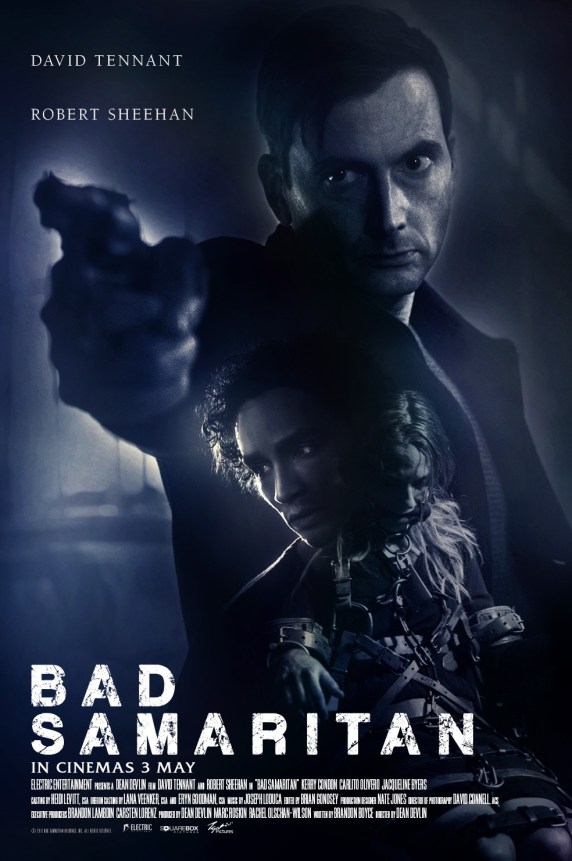
A short review of “Bad Samaritan” (2018)

As I believe I may have mentioned, I have a love-hate relationship with David Tennant’s onscreen performances.  I find him inexplicably, positively grating whenever he plays a protagonist.  (See 2011’s “Fright Might” remake, or his cringe-inducing stint as “Doctor Who.”)  But it seems to me that the man is absolutely fantastic when he plays a bad guy.  (See his frightening and hilarious role as Kilgrave the first season of “Jessica Jones” in 2015.)

“Bad Samaritan” (2018) thankfully presents us with the latter Tennant.  He musters an intensity with his eyes and his voice that are incongruous counterpoints to his innocent-looking face, and this makes him a damned good antagonist in a thriller.  (He is a highly organized, sociopathic kidnapper in this film.  I don’t think that’s much of a spoiler, as all of the film’s marketing make it clear.)  He’s a hell of a lot of fun to watch — and listen to.

With that said, “Bad Samaritan” is an average movie — not altogether bad, but not awesomely good, either.  (I suppose I’d rate it a 7 out of 10.)  It benefits a lot from another very good actor in Robert Sheehan as its anti-heroic young protagonist.  (The plot setup here is interesting — a mild-mannered burglar discovers a psychopath’s captive while in his house, then struggles with how he can help the terrified victim of a far worse criminal than he is.)  The movie’s biggest sin seems to be that it borrows heavily from comparable genre-defining works from the likes of Thomas Harris and James Patterson.  But it’s still an enjoyable enough movie in its own right.

There’s someone else here that’s great fun to watch too — Kerry Condon as the kidnapee.  Her voice is amazing, and she’s a superb actress; I think she’s strong enough to carry another movie like this.  I just knew she looked familiar … it turns out she played Clara, the really weird woman that Rick found in the woods during Season 3 of “The Walking Dead.”  (He asks her the show’s signature “three questions.”)

She is also to voice of F.R.I.D.A.Y., Tony Stark’s on-board A.I. in several of Marvel’s “Avengers” movies.  Didn’t see that one coming.  Weird world.
 

bad_samaritan_ver2_xlg

Cover to “Outcast” #8, Paul Azaceta and Elizabeth Breitweiser, 2015

Image Comics.

A_Vast_and_Unending_Ruin

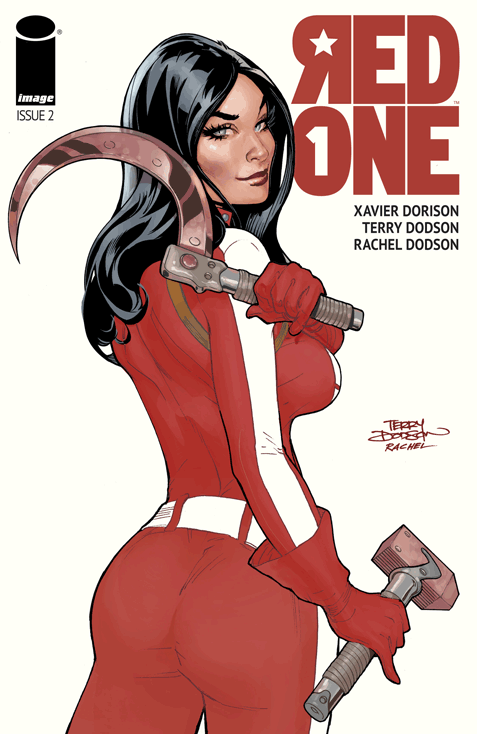
Cover to “Red One” #2, Terry Dodson, 2015

Image Comics.

RedOne_02-1

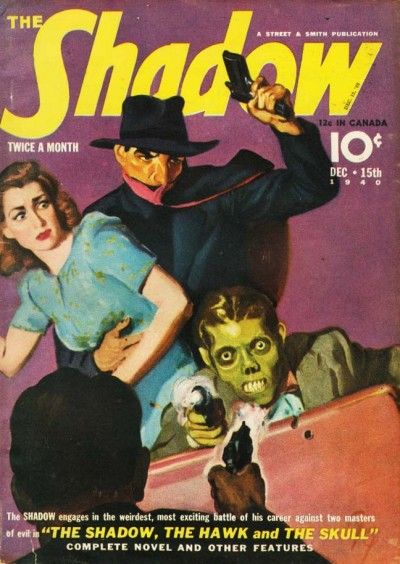
“Who knows what evil lurks in the hearts of men? THE SHADOW KNOWS!”

The weed of crime bears bitter fruit.  Crime does not pay.

Dabbling in old time radio inevitably brought me to “The Shadow” — a character I’d heard about periodically when I was growing up.  My Dad had been a fan of the radio program and film serials when he was a kid, and he was fond of rattling off that tagline you see in this blog post’s headline.  (The radio shows were broadcast in to the mid-1950’s, long after they started in 1937.)  I also remember the character from the truly unfortunate 1994 feature film with Alec Baldwin, which I actually saw in the theater with my college girlfriend.  (The less said, the better.  About the movie, I mean.)  The Shadow is also cited periodically as an influence in the creation of my own favorite iconic dark detective, Batman.

The Shadow has a loooooooong, varied and occasionally confusing history – spanning radio, pulp magazines, comic books, television and film.  He’s still being portrayed in comics.  DC Comics released a crossover with Batman last year that looks interesting, and the incomparable Matt Wagner produced a couple of books in 2015 and 2016 that I’d love to get my hands on.  (He fights Grendel!!!)

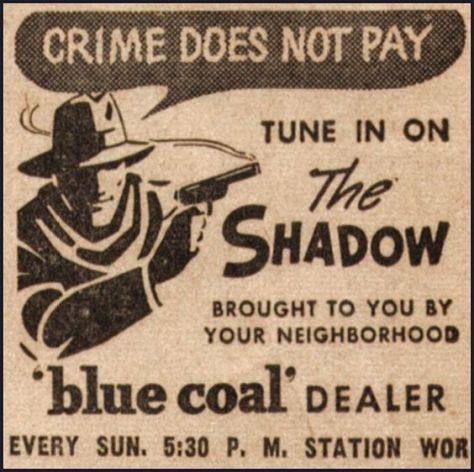
The radio shows are a lot if fun, just like the antique horror and mystery programs that I’ve linked to here at the blog.  And, just like those, they’re easily found on Internet.  (How my Dad might have marveled at that!)  They’re definitely more campy.  And I suppose that makes sense, as they seem aimed at children, whereas the horror shows seem intended for general audiences or just adults.  The period commercials for Blue Coal are a weird glimpse into the past, too.  If I had to name one thing that I found annoying about all of the old time radio shows I’ve found, it’s the omnipresence of that damned organ music.  (Was it just a cultural staple of the time?)

If “The Shadow’s” stories are a bit hokey, the show’s voice acting and production are just terrific.  I particularly like the actor performing The Shadow for the episode in the first link below — “Death is a Colored Dream” (1948).  I believe it is Bret Morrison.  (And I was surprised to learn that the famous Orson Welles only voiced the character for a year or so a decade earlier.)

But what’s most interesting is the character’s inception.  He didn’t start out as a character in a story at all … “The Shadow” was simply the name of the generic host for a series of unrelated mystery stories comprising “The Detective Story Hour” in 1930.  After a surprising fanbase developed around the creepy-sounding host (voiced at the time by Frank Readick, Jr.), people started asking for stories featuring “The Shadow” at the news stand.  Street & Smith commissioned writer Walter B. Gibson to write up some tales featuring a supernatural detective; the first came out in 1931.  The iconic character was just sort of made-to-order for confused customers who might have thought he already existed.  That “Shadow” later arrived at the airwaves in 1937, with Welles voicing him.

Seriously, though, I totally need to get my hands on “Grendel vs. The Shadow.”


https://www.youtube.com/watch?v=BUK7vo92qUU&list=PLPuoJYDB2zqHvxCRKrEYE_53Nle9okozN


https://www.youtube.com/watch?v=ZJ0X-E-PFHc


65abeb7e5ce5ea7298ae9cf177524b71

CareysSaltRingAd-47-03-28

56ef5b24ef0bfc25d46cca42c5574a28

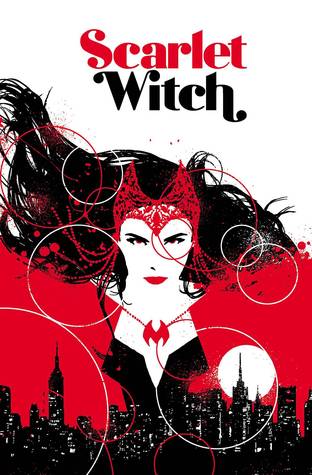
Cover to “Scarlet Witch” #1, David Aja, 2015

Marvel Comics.

26129273

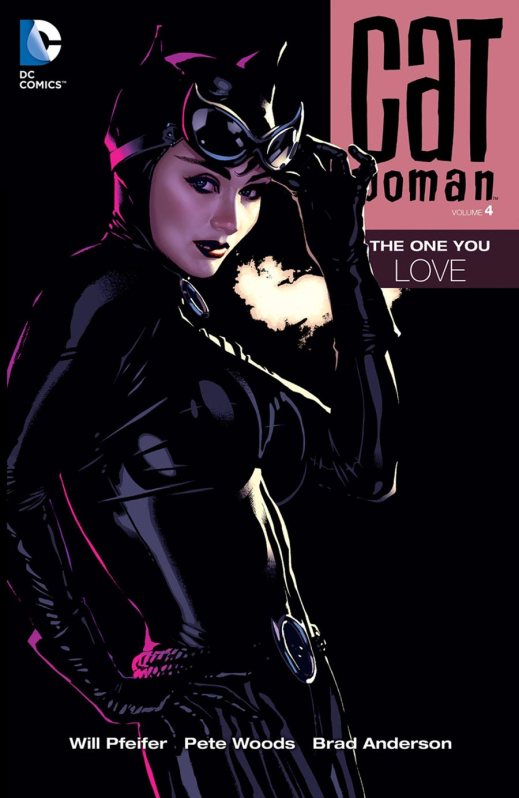
Cover to “Catwoman: the One You Love,” Adam Hughes, 2015

DC Comics.

Catwoman_The_One_You_Love

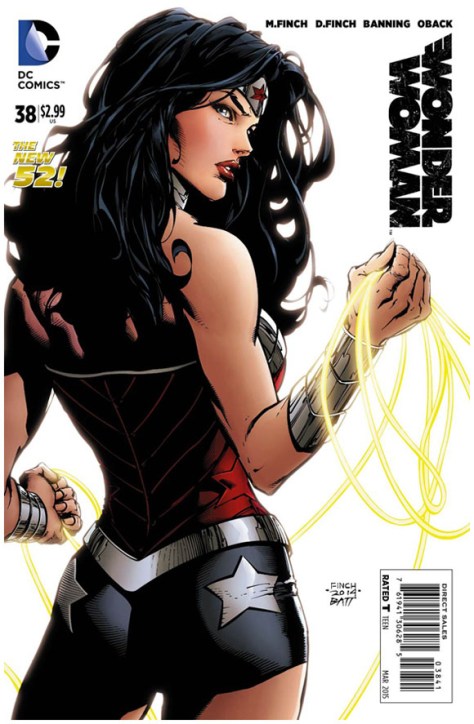
Cover to “Wonder Woman” #38, David Finch and Matt Banning, 2015

DC Comics.  Retailer incentive variant cover.

WonderWoman38-1in100

A very short review of “Guardians of the Galaxy” (2014)

I had fun with “Guardians of the Galaxy” (2014).  I’d rate it an 8 out of 10, if a little grudgingly.  For me, it started quite strong with its introduction of Chris Pratt’s roguish space antihero; I actually had no idea he could be this funny.  (I’ve only seen him once before, weighed down by the failed comedic scripting of 2015’s “Jurassic World.”)

I’m sorry to say that my interest in “Guardians of the Galaxy” waned just a bit as it subsequently unfolded as a cartoonish, relatively tame, family-friendly adventure — complete with a heartwarming value-of-friendship lesson.  That’s fine, I guess — it’s cool and it makes sense that the Marvel Cinematic Universe should offer films more appropriate for younger viewers.  Can you imagine, however, how hilarious this movie would be if it truly deserved its (befuddling) PG-13 rating, and really pressed the envelope?  Between Pratt’s wit and these offbeat character concepts, it would be amazing.

I still had fun with this, though, thanks mainly to the action and the impressive special effects.  I’d recommend it, and I’m planning on seeing the sequel.

Postscript — people are saying that this is the MCU’s answer to “Star Wars,” and I suppose it could be.  But I had a lot more fun thinking that the movie was channeling Harry Harrison’s priceless science fiction book series featuring criminal-antiheroes — the “Stainless Steel Rat” adventures.


MV5BMTAwMjU5OTgxNjZeQTJeQWpwZ15BbWU4MDUxNDYxODEx._V1_SY1000_CR0,0,674,1000_AL_

A short review of “Star Wars: The Last Jedi” (2017)

I’ll never be able to love “Star Wars” the way its lifelong fans do.  After the unexpected magic of the first three films, the subsequent movies almost always seemed to me to be just space fantasies for kids, formulaically developed to hit all the right notes and sell licensed merchandise.  (The exception would be last year’s generally excellent “Star Wars: Rogue One,” which uniquely felt like a genuine, human story that a creator wanted to tell, rather than something brainstormed until consensus in a corporate writers’ room.)  With that said, I’ll happily report here that “Star Wars: The Last Jedi” was actually very good — as someone with little favorable bias toward the franchise, I’d rate it an 8 out of 10.

The movie simply got more right than it got wrong.  It’s still a marketing-oriented space opera developed for mass appeal, but it managed to rise above that because its many elements included more hits than misses.

If I had to pick one thing that made this movie succeed for me, it’s the balance it struck between its epic war story and its narrower sword-and-sorcery central plot thread.  I like how the film began with an interstellar war — it had ordinary, mortal, relatable human characters fight and make sacrifices.  Anyone can relate to characters like that because they are interchangeable with people fighting a war in our world.  (It was also excellently rendered, in terms of fantastic visuals and some creative ideas.)  Only afterward does the movie layer in the far-out Jedi stuff, which contrasts the war story and adds complexity to it.

The second thing I liked about it was its terrific special effects — I’ve never seen a “Star Wars” movie without them, even if the prequels had a more cartoonish, toylike quality to what they depicted.

The third, I think, was the return of Mark Hamill’s Luke Skywalker.  Hamill is actually quite a good actor, and his skilled turn here was alternately funny and dramatically convincing.  I found myself more nostalgic after watching Luke’s return to the franchise than after Han Solo’s return in “Star Wars: The Force Awakens” (2015).  (And I love Harrison Ford just as much as everyone else in the universe.)

Is there a lot to nitpick?  Sure.  In addition to some plot holes, the character of Rose was rather annoying.  (Spunky young idealists can grate on the nerves if they’re too cutesy and seem to ingratiate themselves to the viewer.)

But a far larger weakness is that “the force” has become more of a deus ex machina than ever before.  I can’t be specific here because I want to avoid spoilers, but both the Jedi and their Sith counterparts employ incredible new powers in the movie that are absolutely unprecedented.  It isn’t explained at all, and it isn’t consistent with any prior “Star Wars” movie.  And it feels like a cheat that is both sweeping and … a little strange.

Still, I’d recommend this movie — even if you didn’t love every “Star Wars” movie you’ve seen in the past.

I’ll end with a quick note about the “porgs” — those little penguinesque aliens that are supposedly dividing longtime fans into opposing war-camps.  I loved the damn things.  It makes perfect sense that Luke’s hideaway planet would have local fauna.  And I read that the filmmakers actually did include them for an understandable reason.  The island shooting location’s landscape was inhabited by puffins.  It made more sense to overwrite them with CGI stand-ins than to digitally remove them altogether.


the-last-jedi-theatrical-blog

I hated “The Hateful Eight” (2015)

“The Hateful Eight” (2015) might be the first Quentin Tarantino film that I entirely disliked.  I’d rate it a 3 out of 10 for being an overlong, overwrought story inhabited almost exclusively by irritating, overly stylized characters who are constantly shouting.  It was alternately boring and grotesque.  It even managed to occasionally be glumly depressing, given the violence it depicts against defenseless innocents.

And I’m surprised, because this movie was highly recommended to me by my college-aged nephew — he’s a smart kid whose judgment I trust.  I certainly hope that he has seen Tarantino’s classic “Reservoir Dogs” (1992), as that movie seems to be this one’s direct inspiration.  Throughout “The Hateful Eight’s” lengthy running time (it clocks in at just over three hours), I kept thinking that this was a failed effort to transplant “Reservoir Dogs'” story setup to the old west.

That probably was the director’s strategy here.  You see an attempt to recreate all of the story elements that made the earlier movie a success: quirky characters; idiosyncratic dialogue; unexpected violence; tragedy; and black humor.

Regrettably, it just didn’t work.  The movie was so long — and so loud — that it even made priceless performers like Kurt Russell, Samuel L. Jackson and Tim Roth come off as annoying.

For me, the movie’s sole bright spot was Jennifer Jason Leigh’s damned terrific portrayal of the plot-driving, brutal gangster, Daisy Domergue.  I had no idea that Leigh had such incredible range (not to mention some Vaudeville-style comic timing).  Her performance isn’t enough to redeem the movie, but it surprised me and easily stole the show.

Look — if this is the first Tarantino movie you’ve seen, then please don’t let it dissuade you from seeing the man’s other work.  Seriously, go watch “Reservoir Dogs,” “Pulp Fiction” (1994) or “From Dusk Till Dawn” (1996).


MV5BMjA1MTc1NTg5NV5BMl5BanBnXkFtZTgwOTM2MDEzNzE@._V1_UY1200_CR90,0,630,1200_AL_