Tag Archives: 2018

Sundress releases its 2018 Best of the Net Anthology.

Hey, gang — Sundress Publications has released its 2018 Best of the Net Anthology, and you can find it at the link below:

The Best of the Net 2018

Although I was lucky enough to have a short story nominated for the collection, it wasn’t ultimately selected.  (The editors of The Bees Are Dead nominated my science fiction-horror  story, “At the End of the World, My Daughter Wept Metal.”)

Congratulations to all of the writers whose work was selected!  I look forward to reading it!


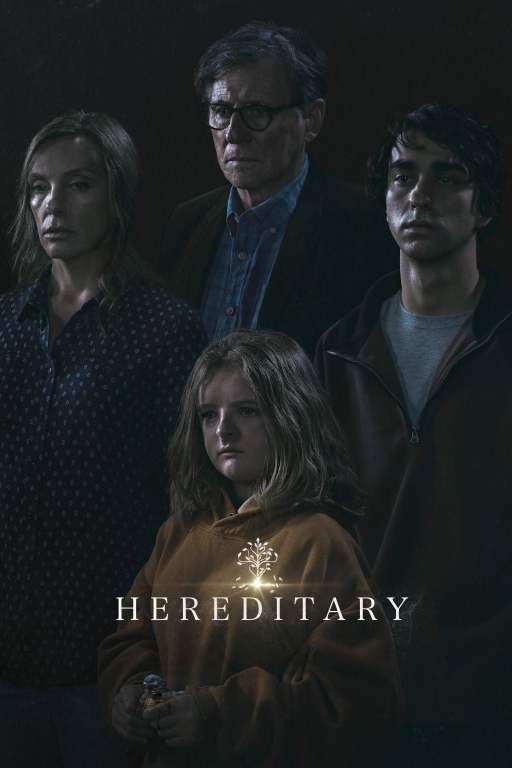
“Hereditary” (2018) is an expert horror film that I’m not sure you should see.

“Hereditary” (2018) is a difficult movie to review.  It’s an exceptionally well made horror film, enough for me to rate it at least a 9 out of 10.  But its content is so disturbing that I’m not sure that I can actually recommend it to others.

From a technical standpoint, the movie is almost perfect.  It’s an astonishingly good first feature film for writer-director Ari Aster, it’s gorgeously shot in the hills and deserts of Utah, and it’s masterfully directed.  The performances are uniformly perfect.  If I were to name each actor who hands in a fantastic performance, I’d simply be reading its cast list.  I can’t remember the last time I watched a feature film in which every single major performance was exemplary.  And “Hereditary” gets damned scary in its third act.   (Seriously, give it time.)

The only flaws that I can think of are extremely minor.  The pacing isn’t perfect.  (The story occasionally seems to slow when events should be accelerating.)  I had problems with the way that one key character was portrayed, and there was one plot point that gave me trouble.  (I can’t say more for fear of spoilers.)  But these things are so forgivable that they hardly merit a mention here.  You simply can’t argue that this movie was expertly assembled.

Yet I didn’t always enjoy “Hereditary.”  I’d be lying by omission if I didn’t state that.  I shut it off more than once, and then came back to it when I felt more able to stomach the brutal events it depicted.

“Hereditary” is more than a “dark” movie; it’s gut wrenching.  Even if you have read its reviews and you’ve seen the movie’s marketing, then you still aren’t anticipating what will transpire on screen.  (I’d even go so far as to say that the film’s marketing was misleading, but I can’t specify why here.)  Yes, there’s a obvious “Rosemary’s Baby” (1968) vibe, and it’s sometimes reminiscent of “The Exorcist” (1973), but the movie pushes well past the boundaries of those films, and it does so fairly early on.  If I, a lifelong horror fan, was turned off by this, then I’m willing to bet that it would also be too much for a lot of casual film goers.  (And indeed, while critics loved this film, audiences last year generally hated it.)

I’m closing with a little bit of trivia.  Toni Collette gives a tour-de-force performance here as the troubled mother.  If she looks familiar to you, that might be because she’s also the mom in another well known supernatural horror film — M. Night Shyamalan’s “The Sixth Sense” (1999).


p9fmuz2Oj3HtEJEqbIwkFGUhVXD-0

A review of “Solo: A Star Wars Story” (2018)

Was “Solo: A Star Wars Story” (2018) really quite as bad as everyone said it was?

Yes, I do understand why it’s so maligned by “Star Wars” purists.  Han Solo has arguably been the entire franchise’s most memorable protagonist since his debut in its very first film in 1977.  (When we were kids and playing “Star Wars” in the street, how many of us wanted to be Luke Skywalker and how many of us wanted to be Han?)

Disney missed an opportunity to serve up what fans undoubtedly wanted — an edgy origin story that took risks to portray this famously wily criminal anti-hero.  What the studio gave us instead is a generally toothless, safe-for-primetime fable that even managed to become saccharine at times.  (You could argue that Luke’s origin story was far darker — he discovered the burned bodies of murdered aunt and uncle.  Then he studied magical martial arts with the mysterious mystic samurai-hermit who once fought wars with his absent father.)  “Solo” feels too much … like a Disney movie.

There are other problems too … its narrative is unfocused, it’s cluttered with too many characters, and, yes, it slavish attention to origin-story details is annoying.  (The how-Han-Solo-got-his-surname bit, for example, is indeed a big misfire.)

But “Solo” felt far more like an average film to me, instead of one that was truly terrible. I’d rate it a 6 out of 10 for being an acceptable, passably entertaining “Star Wars” entry.  It’s got a few things going for it.

It’s well cast, for one.  I was actually very surprised at how well actor Alden Ehrenreich captures the character of a young Han Solo.  They guy has natural charisma, and he seems to absolutely channel the character without once mimicking Harrison Ford.  You could do a lot worse.  Ehrenreich also has great chemistry with Chewbacca (Joonas Duotamo), and with Donald Glover, who equally shines in the role of a young Lando Clarissian.  If you put the three of them in a sequel with a leaner, darker screenplay aimed firmly at adults, it could be a truly great movie.  (Consider how lame the first “Captain America” movie was in 2011, and how its far darker 2014 sequel was so unexpectedly great.)

“Solo” also has great visual effects.  (All the newer “Star Wars” movies have come a long way from the clumsy, heavy handed CGI of the prequels.)  The Kessel Run sequences were especially good, and I’m still enough of a kid at heart to love those kind of dazzling set-pieces, even when they punctuate a lackluster script.

“Solo” was the sixth most expensive film ever made, at $392 million, and it was a complete commercial failure.  So I doubt we’ll ever see these versions of the characters again in theaters.  But what about television?  What about streaming services?  I, for one, would keep an open mind about whether Disney could do better with this film’s ingredients.


Solo-Movie

Cover to “Britannia: Lost Eagles of Rome” #1, Cary Nord, 2018

“Cover A.”  Valiant.

BRIT3_001_COVER-A_NORD

A review of “The Purge” Season 1 (2018)

“The Purge” franchise continues to defy expectations after its move to television.  It still isn’t high art, and it probably can never fully transcend the high-camp trappings of its premise.  (I suppose it’s hard to script a truly grounded horror property about people in Halloween costumes murdering one another with impunity on a designated “holiday.”)  But, like the movies preceding it, the USA Network’s new dystopian horror show is still a bit smarter and more interesting you’d expect from its bizarre central plot conceit.

The 10-episode first season, which aired with seemingly little fanfare last fall, generally succeeds — I’d rate it an 8 out of 10, and I’ve spoken with a couple of other horror fan who were as happy with it as I was.  The people who recommended it to me are also big fans of AMC’s “The Walking Dead” (which has radically improved this season), and that makes sense.  Although “The Purge” has an entirely different feel than “The Walking Dead,” it also has a lot of common elements — both shows are milieu-type horror stories with a large, diverse group of characters negotiating a sprawling setting with innumerable deadly antagonists.

A surprising amount of thought went into this show.  There’s a nice degree of world-building and detail, with various characters embracing, rejecting or remaining ambivalent about the titular “Purge.”  The screenwriter here tries hard to round out the twisted America in which The Purge annually takes place, with a lot of creative and blackly cynical story elements.  (I’m not clear if the writer here is James DeMonaco, who wrote and directed the first three of the four “Purge” movies.)  We see, for example, a cult whose brainwashed members offer themselves up as willing murder victims, as well as anti-Purge revolutionaries who exploit the night to target the fascist oligarchical government which created the brutal holiday.  There are a lot of surprises in terms of plot, character and setting that I will not spoil here.

The gore and violence were surprisingly high for network television.  (Again, this show may be taking its cues from “The Walking Dead,” which always pushes the boundaries.)

Some of the acting is quite good — William Baldwin is absolutely superb, Lee Tergesen is always fun to watch, and the beautiful Hannah Emily Anderson is another talented standout.  I swore I recognized Fiona Dourif’s distinctive looks and mannerisms.  (She portrays the cunning cult leader who entices young people to sacrifice themselves, and I’ll be damned if she doesn’t totally look and sound the part.)  But, upon Googling her, I realized I’d never seen her before — she just reminds me of her father, who also plays a lot of bad guys — the amazing Brad Dourif.

Some of my enthusiasm for “The Purge” waned just a little as the season wound down toward its conclusion.  After Season 1’s unsettling ideas were left fully explored, the show did start to feel more like conventional television — right down to a standard good-guys-vs.-bad-guys shoot-em-up at its climax.  (If the show had fully sustained its tension until the end, I would have rated it a 9 out of 10.)  And the final minutes of Season 1 consist of a coda among three characters that is forced and preposterous … I’m surprised it made it past the editing stage.  But this still wasn’t enough to spoil the fun.

I should also note here that not everyone enjoyed “The Purge” as I and my friends did.  Critical and popular reaction to it is definitely mixed.  (As of this writing, the show has only a 42% rating from critics on Rotten Tomatoes, with just 63% of audiences liking it.)

Postscript — I could almost swear that the auditorium we see towards the end is the very same shooting location used for Thomas Smith’s school in “The Man in the High Castle.”  You can tell by the establishing shots.  It’s even lit the same way.


Purge_TV

A short review of “The First Purge” (2018)

“The First Purge” (2018) isn’t the best horror-thriller I’ve ever seen, but it certainly isn’t the worst, either.  I thought that I would be all purged out by now, but this fourth entry in the film series is a solid prequel — I’d rate it an 8 out of 10.  (There is also a TV show set in “The Purge” universe, which USA has renewed for a second season, and I’m told that it’s pretty good.)  I suppose this is a durable franchise because its premise could be explored through countless different characters.

The movie has some weaknesses.  The pacing is off, and you could argue that the political theme of “The Purge” films, though compelling, is getting redundant by now.  (There are some specific jabs this time out at Donald Trump and his following; they’re heavy-handed, but they’re fun to spot.)

But “The First Purge” is still a suspenseful and disturbing dystopian horror film.  It’s got a terrific bad guy in Rotimi Paul’s “Skeletor” psychopath and some surprisingly damned good action sequences.  There is another difference here, too — this “Purge” is far less campy than the second and third films.  There are fewer plot twists, fewer over-the-top characters, and far fewer trippy visuals — it feels more like a straight horror film instead of a zany one.  Depending on your preferences, you might find it superior.

One more thing — given its obvious love for Staten Island, this film would make a great double-feature with “Bushwick” (2017), another thriller which seems like a love letter to its own setting in Brooklyn.  And they are both urban neighborhood thrillers with a similar storytelling style.


purge3-1068x1691

Variant Cover to “The Walking Dead” #7 –15th Anniversary Edition, Daniel Warren Johnson, 2018

Image Comics.

4787244

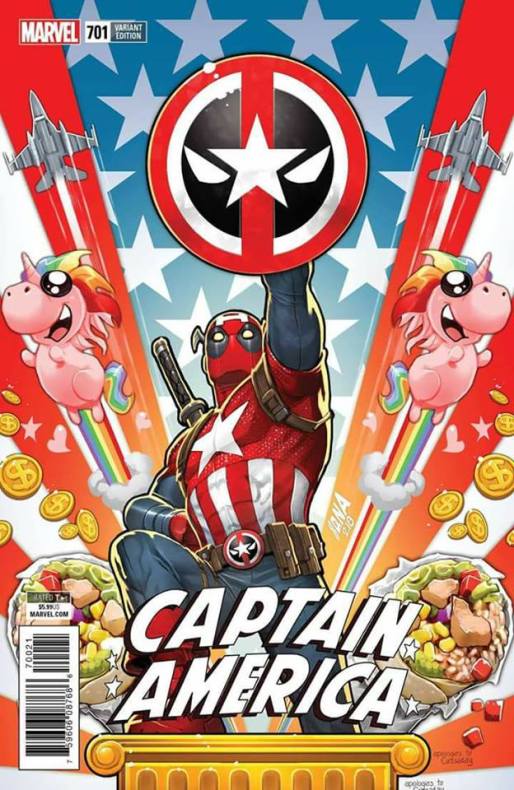
Variant cover to “Captain America” #701, David Nakayama, 2018

(Deadpool variant.)  Marvel Comics.

30261095_628587317473485_5683540539308244992_n

My poetry, 2018

Care to peruse some of the poetry I’ve published in 2018?

You can find it here at the blog at the My poetry, 2018 page.


OLYMPUS DIGITAL CAMERA

Here is the irony of “Bird Box’s” (2018) plot device.

The (entirely invisible) creatures need incredible illusions to provoke their prey to kill themselves, and the creatures never exhibit any physical prowess of their own. (Their victims are never so much as scratched or bitten by the monsters themselves.)

Maybe that’s because they have no teeth, claws, strength, etc. Maybe they’re as fragile as baby fawns, which is why they must rely on such a unique method of attack.

It would be nuts if a future film or book sequel saw a single immune human just kicking them over like a drunk college kid out tipping cows.

Even better would be if someone suffered a traumatic brain injury during the chaos of the invasion — harming their visual cortex, and rendering them unable to process any visual information. They’d have huge vulnerabilities resulting from this new disability, but also a practically messianic power to save everyone.

(I think too much about movies when I need to do laundry, in other words.)


DSC04279.CR2