Tag Archives: Hannibal

“Hannibal” Season 3 was a Kafkaesque, blood-soaked passion play with psychedelic music and 70’s-tastic visual flourishes.

I think that it’s tremendously difficult to write a spoiler-free review of the third and final season of “Hannibal.”  (No, I am no longer hopeful that the show might return via a different network or an Internet-based provider.)  But I need to try to keep this review spoiler free … this really is a suspense thriller and, indeed, the second season ended in cliffhanger after which viewers were unaware of even which major characters survived.  So … this will be pretty vaguely worded and a little tough to write.

I loved Season 3; anyone reading this blog could have guessed that, given that I’ve visibly been such a rabid fan of the program.  I do think that it was the best show on television, and it easily beat out “The Walking Dead,” “Daredevil,” “Family Guy” and “The Strain” as my favorite.  When it was good (which was most of the time) it was simply incredible.  When I didn’t enjoy it as much as I did past seasons, it was because of deliberate creative and stylistic choices, my reaction to which I’m sure are mostly subjective.  There were things I loved and things I didn’t love.  All things considered, however, the shameless fanboy in me won out over the critic.  I’d rate this season at a 9 out of 10.

First, here’s what I loved.  The script, directing, acting, sets and musical score were as strong as ever.  For a show that sometimes really struggled with dialogue in its first season, the writing in Season 3 was fantastic.  I am referring to the story, characterization and dialogue across the board, but especially the key interchanges between characters: our main protagonist facing off against Hannibal Lecter, Bedelia du Maurier, and Rinaldo Pazzi.  The performances here were simply fantastic, especially considering the complex, nuanced, but also mysterious characters the show’s writers have skillfully developed.  Our surviving heroes were played with extraordinary skill.

Mads Mikkelsen was also predictably perfect, even given that Season 3 required a broader range, as Hannibal’s past and his adversaries humanized him this season in a manner we haven’t seen before.  The script finally allowed Gillian Anderson to be a less stoical — her later monologue concerning a wounded bird was stunning.  And the surprise standout here was Fortunato Cerlino as Pazzi — this secondary character could have been a one-note buffoon, but Cerlino and the writers turned him into such a “real” (and extremely interesting) character that I actually thought the show would depart from the source material and make him a hero of the story.

Scenes between certain survivors of the Baltimore massacre also beg for specific mention, but I just can’t do that without revealing who lived through it.  The actors playing those “good guys” who are still alive did great jobs.  (More on why that term is in quotation marks just a little later.)  And they generally had well written character arcs.  One character’s agenda at the beginning of Season 3 was actually genuinely touching, considering how ruthless this story’s characters typically are.  (He or she arrives in Florence, where Hannibal has secreted awayy, merely to safeguard another.)  Far more touching is the exposition of one character who did not survive Baltimore; it surprises the viewer with astonishing sadness.

Bear in mind — I obviously loved the dialogue, but, like the show, it actually won’t be to everybody’s taste.  (No, for once that is not a deliberate pun.)  It is overly stylized, and rarely naturalistic.  This isn’t an extremely well scripted show in the manner of those like “M*A*S*H,” “LOST,” or “The West Wing,” and it isn’t a sit-com.  Our heroes and villains often just really don’t sound like real people.  It takes a greater degree of willing suspension of disbelief just to accept them.  Yes, I was a nut for this TV show.  But if somebody told me that they didn’t like it simply because the characters “talk funny,” I’d really understand that.  I personally loved it, because a universe where super-smart criminals and investigators are squaring off against each other, and verbally ribbing their opponents to psychologically undermine them (when they’re not getting all stabbity-stabbity, taht is), appeals to me.  Given the anti-intellectualism I’ve seen a lot in our culture, it’s refreshing to see an unabashedly intellectual TV show, with powerful characters, both good and bad, who are educated and beautifully articulate.

And … if you’re a horror hound, as I am?  The show delivers.  Season 3 was the most macabre.  And with the introduction of the “Red Dragon” storyline, it became the most brutally violent.  Generally, we no longer see the aftermath of gory murders, but see them in action.  Remember a key scene near the end of Season 2, when the mutilation of a major character is understated, because he is seen mostly in shadow?  That … kinda wasn’t a thing in Season 3.  And it was frightening.  A certain switcheroo the show pulled toward the end of the Mason Verger storyline was gut wrenching, really.

This show was brilliant, making its departure all the more bittersweet.

As for what I didn’t love?  These were intentional changes and creative risks that might appeal just fine to another viewer.  And showrunner Bryan Fuller actually advertised them in advance.  He promised fans that the show would be far more surreal and would farther push the boundaries.

I have no doubt that many fans loved what he did.  But considering Season 3 in its entirety, I’d rather he simply followed the maxim of “if it ain’t broke, don’t fix it.”  For me, Season 2 was perfect, and these bold changes had slightly less satisfying results.

For me, the show became too surreal beginning it its second act, the Mason Verger storyline.  Yes, the most striking images and sequences of the prior seasons were the surreal visions, dreams and thematic visuals.  But these worked, in part, because of their stark contrast with the “real world.”  They were one of the best parts of the show.  But I didn’t want to see the entire program become something akin to a Terry Gilliam movie.  I first got acquainted with Thomas Harris’ source novels with “The Silence of the Lambs” (both the book and the film) in 1991.  That was a kind of “real world” police procedural, albeit with a principal villain that seemed larger than life.  (For moviegoers, whether Lecter or Jame Gumb was the story’s main antagonist depends largely on your personal interpretation.)

A police thriller was Harris’ intention for most of his books, I think, with the only possible exception being 2000’s novel, “Hannibal,” with its lamentable, nutty ending.  (I and other readers wanted to tear out the final pages of that book after we read it.)  Harris examined criminal psychology and behavioral profiling in some of the same manner that Tom Clancy examined military technology and intelligence-gathering.

Yes, it’s amazing what Fuller was able to explore and accomplish with his departure from Harris’ books in the first two seasons.  And horror-thriller fans really didn’t need another cop show.  (The first half of Season 1 maybe relied a little too heavily on standard cops and robbers, and the seemingly perpetual stalemate between an anonymous villain and the good guys.)  But, for me, the Mason Verger story arc was rendered in a style that was just too … far out.  All those red visuals and baldfaced gore and references to inevitable death!  It seemed like something penned by Franz Kafka, by Clive Barker, or maybe by Edgar Allan Poe on acid.  A plot point involving livestock was just … too weird for me.  I immediately was taken out of the story when I stopped to wonder whether such a freaky thing was even medically possible.

None of those things are bad (except for maybe the acid).  But none of them are Thomas Harris either.  None of them are “Hannibal,” for me, anyway.  For an absolutely perfect treatment of the Mason Verger storyline, please see Ridley Scott’s 2000 film adaptation of the book.  It’s one of my favorite films of all time, and I enjoy it far more than “The Silence of the Lambs” (1991).  I find these characters so compelling that I want them to be real (or … y’know, at least the good guys, anyway).  But for that to happen, they have to inhabit the real world, not some blood-soaked passion play with psychedelic music and 70’s-tastic visual flourishes.

As far as tone and content … I can’t believe I am actually writing this, but Season 3 might have gone too far for my tastes.  Do you remember the death of a key investigator in Season 2?  With the crime scene being the observatory?  That was gruesome enough for a major protagonist with whom the viewer is asked to identify.  Yes, as a horror movie fan, I’ve seen countless zombie and slasher films, but those stories’ victims are often throwaway characters with whom we spend only the running time of a feature film.  This is a not-quite-primetime television show with characters we visit every week.  The gory victimization here, for me, was just too much.  Those who’ve seen Season 3 know I’m talking about one assailed character in particular.  I’m also referring to another scene in which one character’s face was peeled off in closeup.   I cringed.  The movies managed to scare us without this stuff.  If I’d wanted a “Hellraiser” movie, I’d have watched a “Hellraiser” movie.  (See my disclaimer above … again, this is all purely subjective.)

The protagonists themselves became too dark for me.  Yes, I know an ongoing theme here is that everyone under “the devil’s” influence is corrupted by him.  But … my favorite TV show suddenly began to seem like a story with no good guys.  Remember “The Silence of the Lambs?”  Much of its emotional resonance resulted from Clarice Starling, who retained her innocence and nobility despite the horrors she’d faced, including her incidental, bizarre kind of intimacy with the caged Lecter.

We don’t have that here.  We’ve got moral ambiguity, and character complexity that makes for great storytelling.  But do we have a clear hero to root for?  Often, no.  One character distinguishes him- or herself by being morally heroic in the season’s first act … only to commit the same ethical mistake as in past seasons in the third act.  One character (who I liked a hell of a lot in the prior seasons) went so “dark” that he or she was unrecognizable.  And the script did little too support this character change, beyond the obvious fact that he or she was traumatized and was affected neurologically as well.  (Bone marrow in a person’s blood can do that?)  Margot Verger was great in the past as a righteous victim; here she seemed like a compliant turncoat.  As far as I can tell, the only remaining characters who are unambiguously “good guys” are Jimmy and Brian, the goofy lab techs who appear only seldom for necessary exposition and rare comic relief.

The bad guys, too, seemed different.  Mason Verger is played by a quite capable, but very different, actor.  He seems far more controlled and intelligent in Season 3, and the unfortunate result is that he seems to have been replaced.  Actor Michael Pitt brilliantly gave us a manic sexual deviant that was reminiscent of the comics’ incarnation of The Joker.  Joe Anderson’s calmer Verger seems like … his Dad, maybe.

I was unhappy with key plot points here and there.  Simply put, more people should have died at the Baltimore massacre at the end of Season 2.  It was great seeing the characters I liked so much return, but it certainly made Hannibal seem like a surprisingly bloodless killer, and temporarily undermined him as a threat.

Hannibal’s major decision at the last supper in Florence is baffling, considering what we’ve seen throughout the length of the show.  Then a crucial intervention here is made by characters who are tertiary and clownish — should those asshats really have been the ones to save the day (even if only temporarily)?  The manner of Hannibal’s arrival at the Baltimore State Hospital for the Criminally Insane is unsatisfying, and robs the viewers of an emotional payoff (although it is lampshaded quite cleverly in the final episode).  And Hannibal’s vicious threats in the final episode are too terrifying even for him, given the character’s well established … sense of “decorum.”

Oh, well.  I realize that my criticisms above are detailed.  But it’s only because I loved the show so much — not to mention the universe originally established by Harris in his books.  I have since I was 19.  Starling (who of course hasn’t appeared in Fuller’s universe) is one of my all time favorite heroes.  Think of my nitpicks above as analogous to those of a die-hard Trekkie criticizing stardate continuity errors.  (As bizarre as my own favorite fictional universes may be, Star Trek s an obsession that I will never truly understand).

“Hannibal” still really was the best show on television.  I’m sad to see it go.

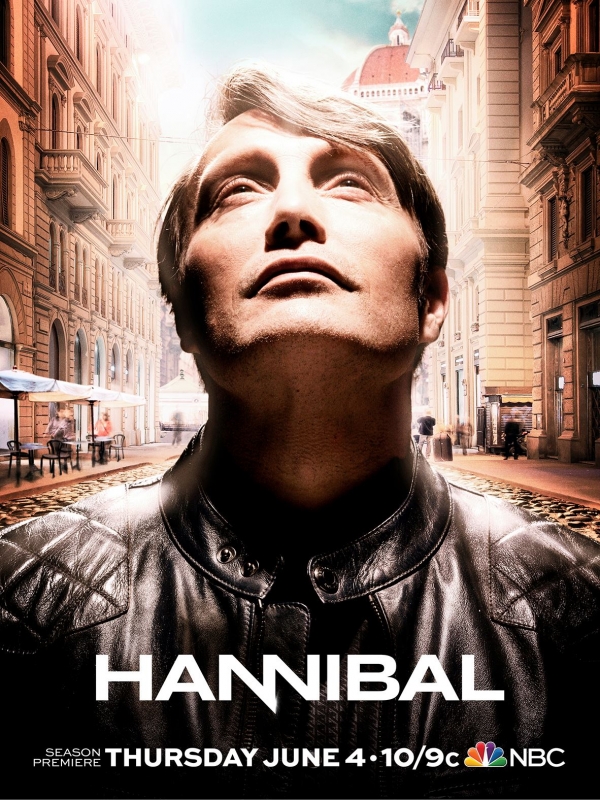
HANNIBAL-SEASON-3-1-600x860

“RIDE WITH ME. FOR MY PLEASURE.”

Most poorly crafted pickup line ever?

I might have stuck with the “Do you think I could have a plum?” approach he took when he first met Reba.  It was a surprisingly effective icebreaker.

And the dude only says “UHHHHHHHH” at the dinner table.  You could say he gets by on looks, but … she’s blind.

Also … THORIN GOT TALL.  And somehow even grouchier.

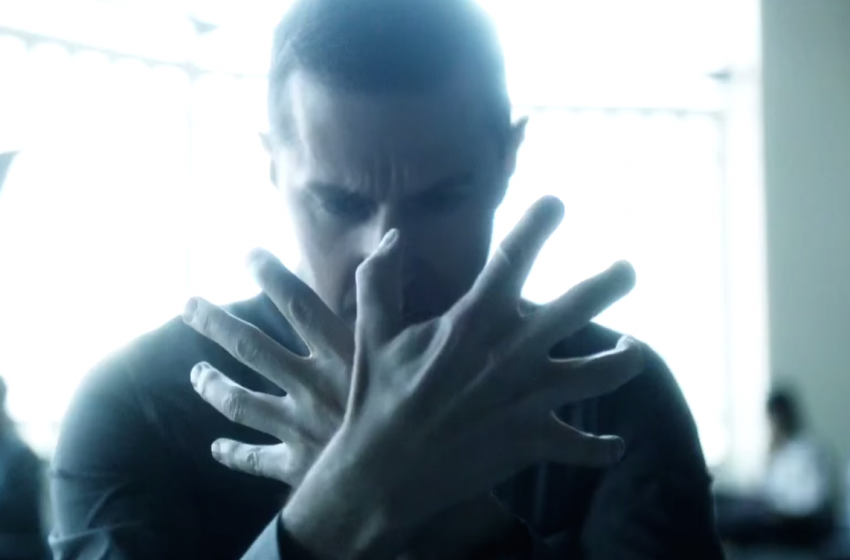
richard-armitage-as-francis-dolarhyde-on-hannibal-850x560

“Amazon and Netflix Won’t Be Saving Hannibal From Cancellation,” by Jethro Nededog, Business Insider

This sucks.

Although I absolutely love the name “Jethro Nededog.”  I’m tempted to change MY name to that.

http://www.businessinsider.com/hannibal-season-4-isnt-moving-forward-with-amazon-netflix-2015-7

SURVEY SAYS … That SUCKS.

“Hannibal” was cancelled after struggling for ratings for three seasons.

“Family Feud” has been on the air for 39 years.

Just think about that for a little while.

hqdefault

“Hannibal” was cancelled.

It looks as though this third season … MIGHT be its last.  There seems to be a lot of speculation out there about whether a fourth season may be possible via streaming services like Netflix or Amazon Prime.  I myself can’t tell if I should be optimistic … apparently if NBC cancelled the show early this season, the producers “have time” to shop for another carrier?

They say that the show has a fervent cult following, but no wide audience.  I’m forced to admit that this makes sense to me — the program’s gore probably turned off some viewers; its unexpectedly slow pacing (which allowed for a cerebral script) probably lost even more.

http://www.nydailynews.com/entertainment/tv/hannibal-canceled-nbc-seasons-article-1.2267674

NBC-Hannibal-213

Did NBC’s “Hannibal” reference Stephen King’s “The Dark Tower” series?!

[WARNING — THIS POST CONTAINS MAJOR SPOILERS FOR SEASONS 2 AND 3 OF “HANNIBAL,” AS WELL AS STEPHEN KING’S “THE DARK TOWER” SERIES.  READ AT YOUR OWN RISK.]

*

*

*

*

*

*

*

This could be overeager nerd eisigesis, but something jumped out at me immediately in the second episode of this summer’s “Hannibal.”

When Will Graham greets Abigail Hobbes at the beginning, he wonders about “some other world.”

The doomed young Abigail responds:  “I’m having a hard enough time dealing with this world.  I hope some of the other worlds are easier.”

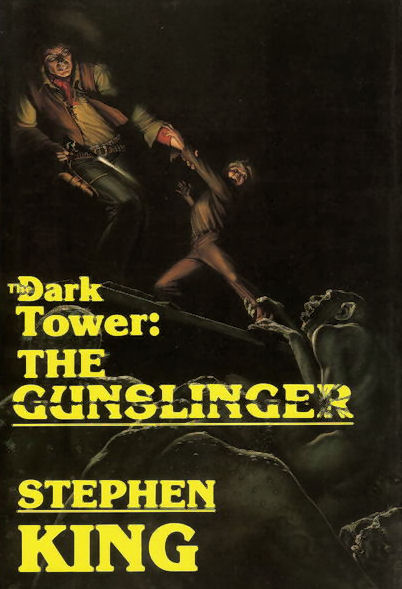
That’s “worlds,” plural — not “another world” or “the next world.”  It sounds a hell of a lot like the doomed Jake Chambers’ famous line towards the end of “The Gunslinger,” before he falls to his fate:  “Go then.  There are other worlds than these.”

Graham goes on the discuss string theory: “Everything that can happen, happens.”  This dovetails perfectly with the idea of the nearly infinite parallel universes that comprise different levels of “The Tower.”

Then other story parallels occurred to me:

1)  Both Abigail and Jake are children of surrogate fathers who are on a crusade (Graham’s pursuit of Hannibal Lecter, the Gunslinger’s quest for The Tower).

2)  Both are specialized, cold-blooded killers by training (Abigail’s bizarre tutelage by her serial killer biological father, Jake’s training by the Gunslinger).

3)  Both are willingly sacrificed by their surrogate fathers.  (NBC’s show makes it clear that Hannibal is also a father figure to Abigail.)

4)  Both characters were sacrificed by the show’s/book’s title character.

5)  The memories of both haunt the stories’ protagonists as a recurring motif.  Both appear to drive the heroes insane.

6)  Both characters are ostensibly dead at some point, and then are quasi-resurrected by a surprise plot device.  (Abigail has been secreted away by Hannibal; Jake is returned from a parallel universe to which he was consigned.)

7)  The loss of both characters are tied to themes of forgiveness.  (Jake forgives the Gunslinger for letting him fall; Graham explicitly forgives Hannibal for Abigail’s loss as part of the show’s overarching theme.)

It would be fun and perfectly viable to imagine that the show’s events transpire on a “level” of The Tower.  The differing continuities of the original books and feature films could even comprise other levels.  King makes it clear that “twinners” are character analogs living in different universes.

But I am probably just imagining things.  I also thought that Hannibal’s reference to his “person suit” in this season’s first episode was a reference to “Donnie Darko” (2001): “Why do you wear that silly man suit?”  And, in retrospect, that seems like a coincidence.

a80a802b2baea0ead4b2b8ce1e020d82          The_Gunslinger

When Academics Attack — A review of the Season 3 premiere of “Hannibal.”

If you catch up with “Hannibal” via DVR or NBC.com, I might actually suggest you begin with the amazing and beautiful second episode, and not the Season 3 premiere.  I enjoyed the season opener, but not quite as much as everyone else did.  (Seriously, guys, if you think I am alone in lauding this program, google a few reviews.)  The first episode falls firmly for me into the “good, but not great” category; I’d give it an 8 out of 10.

We’ve got an interesting basic story that pays very close attention to Thomas Harris’ source novels and Ridley Scott’s 2000 film treatment, and we’ve got great directing, cinematography and acting.  Gillian Anderson shines, outperforming even the terrific Mads Mikkelsen in the title role.

It was creative and different, with dramatic changes in point of view, tone and setting, as Hannibal absconds from Baltimore to Florence with the extorted Bedelia du Maurier.  It held some nice thematic surprises, as the script humanizes Hannibal unexpectedly — and this is helped by flashbacks in which we actually get to see Eddie Izzard’s bad guy from Season 2 get one up on him in some verbal sparring.  (I am entirely unfamiliar with Izzard’s comedy performances, but damn if he doesn’t make a sweet super-villain.  The guy’s got perfect diction and line delivery, and can be damned frightening when he wants to be.)

But, for me, this episode failed in terms of momentum and tension.  It does very little to move the overarching narrative forward — so little that I suggest it could be seen as ancillary material appropriate for a webisode or DVD extra.  (Yes, I do realize that Hannibal “missing” Will Graham is important in setting up themes and character relationships for the rest of the season, but … whatever.)  This is really a kind of … “milieu” episode that establishes his arrival in Europe and the means to arrive at his cover identity.  The fates of the victims of the Baltimore massacre?  They’re unknown to us.

We can’t feel too much tension — of Hannibal’s two murder victims, one is hardly known to us, and the other is flat out unlikable.  We can’t identify with them.  Nor can we take any pathological satisfaction in Hannibal’s modus operandi.  He kinda shows up and says “Bonsoir” a bit undramatically, and we cut to another scene.

I had the occasional nitpick as well.

1)  The viewer is asked to identify with Bedelia.  For some reason this character has never worked for me.  It certainly isn’t Anderson’s fault.  She’s fantastic.  Maybe the problem is me.

2)  I actually do really like Mikkelsen.  But his stoical approach to the character is nowhere near as satisfying as Anthony Hopkins’ iconic, nuanced, expressive, darkly charming take on the character.

3)  We live in an age of Google image search.  Does no one in Florence notice that “Dr. Fell” looks nothing like an online photograph?

4)  After the climax of Season 2, shouldn’t Hannibal be easily recognized as the world’s most infamous fugitive and alleged serial killer?  Is his image nowhere on CNN.com?

5)  What about facial recognition software?  If a photo of Faux Fell is ever uploaded, might Interpol or the FBI locate him at once?

6)  Seeing Dana Scully (sorry — BEDELIA) sexually harassed at the dinner table just makes me angry.  Fox Mulder needs to appear and kick some ass.  Actually … scratch that.  Send John Dogget.

7)  I don’t like seeing Hannibal appear with even a putative “spouse.”  He’s a lone wolf, to me, anyway.

8)  The dialogue, yet again, is occasionally too overly stylized for me.  Even ingenious people communicate prosaically in their everyday lives.  Do these people sound like Shakespeare when they say “Pass the salt,” or ask what time to set the alarm clock for the next day?

9)  Once or twice, the dialogue is just … bad.  Bedelia:  “Your peace is without morality.”  Hannibal:  “There is no morality — only morale.”  (You can’t call it Shakespeare if it’s trying too hard.)

10)  The symbolism and the references to the feature films are maybe a little too heavy-handed.  I’m talking the hand-on-the-shoulder during the lecture, and seeing one character bashed over the head with a bust of Aristotle.  (“When Academics Attack.”)

Don’t let my compulsive griping get to you if you are a fan of the show, however.  This wasn’t a bad episode, just not the best.  And the second episode of Season 3 is goddam PHENOMENAL.

mads-mikkelson

Can anyone spare a Dolarhyde? Because I’m a little short.

First look at “Hannibal” Season 3!!!

http://www.eonline.com/news/658888/it-s-a-completely-new-hannibal-season-3-preview-is-full-of-red-dragon-lots-of-gillian-anderson-and-more

I am depending on you people to watch this show, so that it remains on the air.  You guys already failed to come through for me on “The Following,” and now Ryan Hardy will no longer be able to save us from serial killers — which, in “The Following’s” universe, are about as common in the population as Justin Bieber fans (and even more terrifying).

I am sorry to gush so much like a fanboy for “Hannibal,” but if everyone else is going so bananas for “Star Wars,” I figure my ardor here is forgivable.  If it redeems me any, I was also a huge fan of the books.  So … y’know … literature and stuff.

Here are a few quick thoughts:

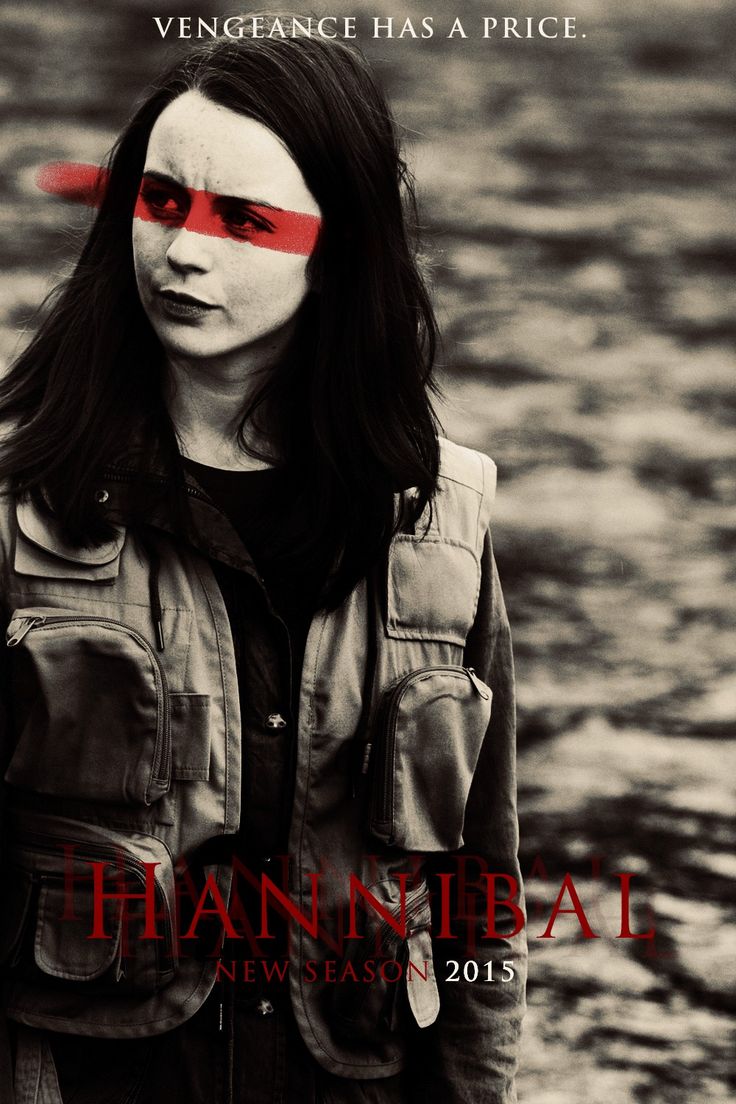
1)  The Season 3 preview looks great, but it IS rather heavy on spoilers regarding who survived the Baltimore massacre.  (Am I mistaken in thinking the second season finale meant to keep that a mystery?  ALL the advance press does this — including character posters.)

2)  I’m happy to see that Hannibal Lecter is NOT actually married to Bedelia (I won’t attempt to spell the remainder of her name), because that would contradict his character incredibly.

3)  It looks as though NBC shot on location in Europe.  Isn’t that really expensive for a TV show to do?

4)  I’m confused about whether the story takes place in Paris or Florence (as in Thomas Harris’ original novel).

5)  Seeing Will Graham speak in a British accent causes me cognitive dissonance.   I get the same thing whenever I see Andrew Lincoln or Hugh Laurie in interviews.  Because Rick Grimes should not sound like James Bond.

6)  It looks as though they are heavily (and wisely) referencing the novels again.  The line, “I’ve killed hardly anybody during our residence,” paraphrases Harris’ “Hannibal.”

7)  No Clarice Starling … and maybe not ever.  NBC does not own the rights to that character.

8)  Whether or not Bedelia condones or participates in Hannibal’s crimes is left ambiguous.  This is something that seems forced and implausible to me.  (Viewers should know if she’s dirty or not.)  This is despite the fact that Gillian Anderson  is a great actress with great delivery of ambiguous dialogue.  Yes, I do understand that both characters are supposed to be brilliant, and can trade cryptic comments and understand each other perfectly.  But would this happen all the time?  Wouldn’t Bedlia, just once, look over and say, “You know, I’m not on board with all this killing and stuff?”

9)  Shot for shot, the preview here is heavily reminiscent of Brett Ratner’s film, “Red Dragon” (2002).

10)  The “Red Dragon” storyline is indeed happening; we just won’t see it right away.  Actor Richard Armitage looks great.  They will return to Baltimore if Francis Dolarhyde is a baddie — this would also explain why we see actors portraying Baltimore residents in past seasons.

11)  No Inspector Pazzi, despite Florence being referenced.

12)  Mason Verger returns.  He looks different.  Because WHEN ANIMALS ATTACK.

13)  Some of my Mommy friends have young children who occasionally will lose a baby tooth.  I suggest that this is a great family-friendly program with which to introduce to them the story of “The Tooth Fairy.”

26532

Lecter’s next adversary?

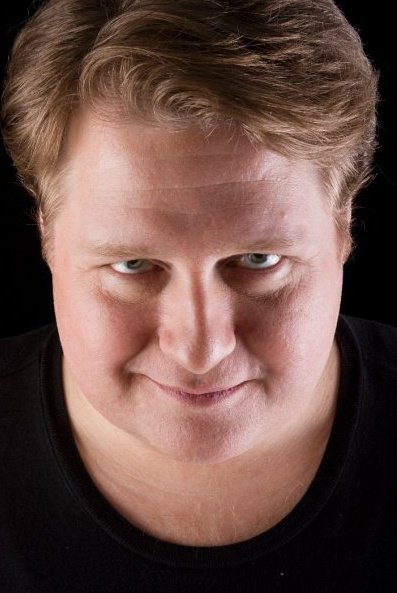
This is my big brother — actor and screenwriter Russell Morgan.  Look at that iconic face and that steady stare.

TELL ME THIS GUY DOESN’T DESERVE A GUEST-STARRING ROLE ON NBC’S “HANNIBAL.”

207752_10150162284952472_3683764_n

The “Hannibal” Season 3 trailer is up.

It looks good enough, if not overwhelming.  I’m reminding myself that Season 2’s trailer sucked, and that season was amazing.

We’re shown one (probably obvious) Baltimore survivor, with an allusion that at least one other has died.  You can also tell that they’re continuing themes from Season 2 and really plumbing the mythos established by the books and films — something the show has excelled at so far.

If someone can tell me what is in those square glass displays, I’d be grateful.

Oh!  Also … we’re in Europe!