Tag Archives: review

A short review of “Death Note” (2017)

True to its manga origins, Netflix’ “Death Note” (2017) seems cartoonish and sometimes intentionally silly.  That doesn’t stop it from being a lot of fun, though — this is the most original, offbeat horror tale I’ve seen in a while, and I’d rate it an 8 out of 10.

It’s definitely a genre-buster — it’s one part comic book, one part horror tale, one part eastern theological fantasy and one part dark teen romance.  It succeeds in part because it has an interesting supernatural story setup that seems reminiscent an episode of “The X-Files.”  (A magical notebook allows it owner to sentence anyone to death, simply by writing the victim’s name down, and describing how they die.)

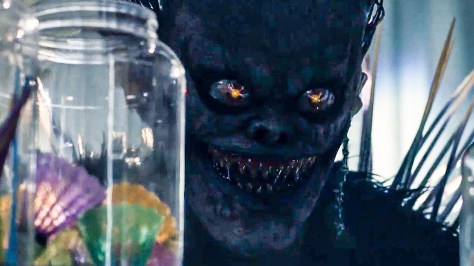
It also succeeds because it has a great bogeyman — a seemingly omnipotent demon named Ryuk.  His visual design is creative and wickedly creepy, and his character is menacingly voiced by none other than Willem Dafoe.

Finally, Shea Whigham is very good as the teen protagonist’s tough but likable dad.  I thought I remembered him only from his relatively minor role in this year’s “Kong Skull Island.”  But, as it turns out, he was actually the sympathetic escaped convict from 2008’s criminally underrated monster movie, “Splinter.”  He’s a great actor.

I really liked this.  I’d recommend it.


Death-Note-Light-Poster

maxresdefault

A few quick words on “Game of Thrones” Season 7 (2017)

After finishing its seventh season, I’ve reached the point where I’d name “Game of Thrones” as the best fantasy I’ve ever read or seen.  It’s also among the best television I’ve ever seen, period.  I’d cheerfully rate this penultimate season a perfect 10.

I do understand some of  the criticisms I’ve read from other fans.  Yes, this shorter, more eventful, seven-episode arc could seem a little rushed when compared with prior seasons.  And certain plot points in the last several episodes here are easy to nitpick.

But I can’t give less than a perfect rating to a show that I enjoyed this much.  Season 7 added great action and special effects, lots of momentum, frightening horror, and some long-awaited conclusions to story arcs that began back in Season 1.  And the show still has the best dialogue of any current television show that I’m aware of, usually supported by terrific acting.

I won’t say more for fear of spoilers.  But I obviously loved this season.


S07-Posters-FEAT


A very short review of the pilot for “Iron Fist” (2017)

They said that Netflix’ “Iron Fist” (2017) was bad.  They were … mostly right, at least as far as I can tell from the pilot.  I’d rate the first episode a 4 out of 10.

This episode was a thinly scripted collection of common tropes, cluttered with clunky exposition and weird, improbable plot points.  (A friendly homeless man helps the hero by googling key information for him on a stolen iPhone?)  The show even managed to be briefly boring in parts.

“Iron Fist” has the depth and hastily concocted story of an 80’s primetime action show.  But I don’t mean that in a fun, nostalgic way, I mean it in a bizarre, awkward way.  I was actually reminded of Mystery Science Theater 3000 lampooning 1984’s ninja groaner, “The Master.”  In fact … don’t “Iron Fist” and “The Master” have a similar story setup?  There are some weird parallels, if you think about it.

Look … it wasn’t all bad.  The fight choreography was actually damned good.  I don’t know if that was actor Finn Jones performing the Kung-Fu, or a stunt double.  But it was believable and a lot of fun to watch.  It was nicely shot, too — the vibrant visuals had an appropriate comic-book feel, and were better than those that I would expect from this show’s companion series, “Daredevil” and “Jessica Jones” (2015).

I also submit that Jones is great in the role of the titular hero.  He’s a decent actor, he’s well cast in the part, and I find Danny Rand to be a surprisingly likable protagonist.  I just hope that “The Defenders'” new team-up places him in the hands of a better set of writers.


iron-fist-netflix-serie

A review of Season 1 of “Jessica Jones” (2015)

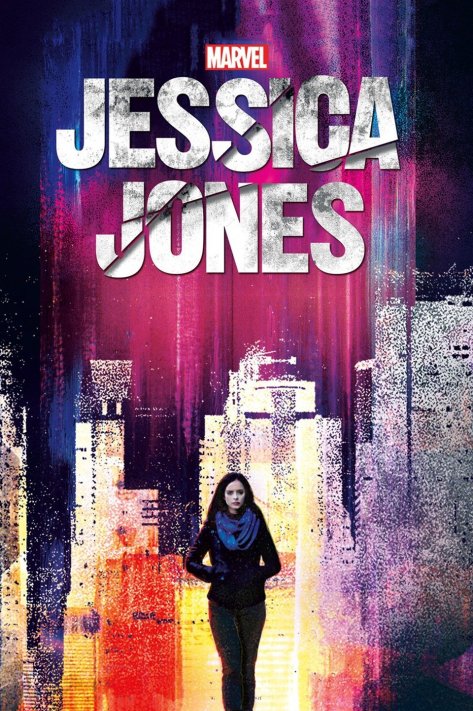
Netflix’ “Jessica Jones” (2015) is easily one of the best things in the Marvel Cinematic Universe; I’d rate it a 9 out of 10.  It’s smart, it’s funny and it’s extremely dark — I don’t want to spoil too much by revealing the modus operandi of Season 1’s villain, but his manner of destroying his victims is utterly disturbing.  (I’ve mentioned before how his powers seem like a plot device from a Stephen King novel.)  Although this series excellently retains a “comic book” feel (due in part to its episodic format), its story elements frequently feel like something out of a John Carpenter film.  And, although I know I’m repeating myself yet again, this Hell’s Kitchen niche of the MCU feels like its chosen stage for horror-thrillers.

The cast is excellent.  Krysten Ritter is perfect as the titular, hard-drinking, antihero private detective.  Mike Colter is nearly as good in the role of Luke Cage, another low-level hero in the Marvel universe.  Colter’s talent is evident by the fact that Cage could so easily come across as a one-dimensional character.  (And, Jesus, doesn’t the guy look the part?)

The story’s villain, Kilgrave, is played by fan-favorite David Tennant.  (Yes, the name “Kilgrave” is stupid and is lifted from the comic book source material.  Its silliness is lampshaded in the series several times by other characters making fun of it.)  Tennant is an actor I’ve abhorred in the past.  There was no logical reason for it — there used to be just something about his voice and his face that made me cringe.  It was a running joke for a while among me and my female sci-fi friends.  (Good Lord, how the ladies adore that man.)  My admittedly irrational dislike of the man even detracted from my enjoyment of the otherwise quite enjoyable 2011 “Fright Night” remake.

He’s phenomenal here.  He’s perfect for the part, as Ritter and Colter are for theirs, and he was alternately menacing and quite funny.  (He has perfect timing and line delivery, as Ritter often does.)  I really liked watching him.

“Jessica Jones” might succeed more than any other MCU property in terms of dialogue and character development — although the “Iron Man” and “Daredevil” series also do great work there.  (It’s a tough call.)  The show also seems to flesh out the MCU into a kind of “lived in” universe in a way that other Marvel properties usually haven’t — by creating detailed, three-dimensional protagonists out of characters that have no superpowers whatsoever.  They’re not “sidekicks” (a trope that the script that slyly winks at); they’re realistic characters that affect the plot.  When one or two actually appear to develop superpowers toward the end of the season, the consequences are unexpected and dire.  (There is a truly kickass Easter egg here that will please longtime readers of Marvel Comics.)  Furthermore, Jones, Cage and most of the other characters have power sets that pale in comparison to M.C.U. heavy hitters like Thor, the Hulk or the Vision. The result is that the MCU feels more … integrated and nuanced, with a blurrier line between superheroes and everyday people.  I liked that a hell of a lot.

The show is not entirely without its failings.  Despite what I said above about the show’s attention to ordinary characters, I still think it went a bit overboard here.  The character of Malcom (nicely portrayed by Eka Darville) began as a hugely interesting supporting character.  So, too, did other residents of the heroine’s apartment building.  It was a nice touch that expanded the show’s scope and depth … until the law of diminishing returns kicked in.  By the end of Season 1’s 13-episode arc, I felt that they’d received far too much screen time.  The support group that one character attends started out as an intelligent subplot, but then eventually grew tiresome.  (Again, I’m being necessarily vague here to avoid spoilers.)  Towards the finale, I actually felt that these minor characters were padding the plot and dragging down the narrative.

Which brings me to another criticism — the narrative’s length.  This is yet another show that I felt could be edited down a bit.  As much as I loved Tennant here and found Kilgrave to be an interesting villain, I’m not sure that Jones’s conflict with him warranted 12 52-minute episodes.  This could have been abridged to eight or ten, I think.

Another criticism I had of “Jessica Jones” was its fight choreography.  For a show that succeeds on so many levels, the action sequences were sometimes surprisingly poor.  Why do brawls between superpowered individuals include so much polite (and bloodless) grabbing and throwing?  Especially when a single punch or kick could easily kill or incapacitate an opponent?  The answer, of course, is that those kinds of melees are easy to film, with minimal training for the actors.  It’s especially noticeable here because this show’s sibling, “Daredevil,” has fight choreography that is some of the best I’ve ever seen.  (If you’re curious, then search for “Daredevil stairwell fight” on Youtube sometime.)

The rudimentary effects were usually even poor when depicting the title character’s “jumping” scenes.  (She has super strength, so she can virtually “fly” short distances by literally jumping.)  These shots looked like something out of a primetime 80’s action show.

All in all, though, this was indeed a great show.  Don’t shy away from it, as I initially did, because you’re unfamiliar with the title character.  It’s among the best that Marvel has to offer.


maxresdefault

A review of the pilot for Stephen King’s “Mr. Mercedes” (2017)

With all of the (frequently quite poor) buzz about the arrival this summer of “The Dark Tower” and “The Mist,” “Mr. Mercedes” might be the Stephen King adaptation that has slipped under the radar.  And that’s a shame, because the pilot episode suggests it might be one of the best King adaptations ever.  I’d rate it a 9 out of 10.

It really is that good.  The show’s first episode begins what looks to be an intelligent horror-thriller that is surprisingly faithful to King’s outstanding novel.  David E. Kelley’s script is excellent.  After a brutal prologues that sets its plot in motion, the story proceeds with three-dimensional, likable characters who are well played by their performers — especially Brendan Gleeson in the role of the grumpy, retired-cop anti-hero who is harassed by a mass murderer.  (Yes, that is indeed the Dad from 2002’s “28 Days Later.”)  Gleeson is just great — even though I found myself wondering why a retired Chicago cop should have a heavy U.K. accent.

The script even surprises us by being incongruously sweet during its odder moments.  Like its source material, the show effortlessly sets up characters that are easy to like.  (An exchange between Gleeson some kids playing hockey outside his house, for example, was truly inspired.)

The story’s plot-driving horror elements are disturbing, too — both in terms of its grisly violence and its sexual taboos.  This is not a show for the faint of heart.

This also seems like it could be a King adaptation that could easily appeal to people outside his usual fanbase.  There are no supernatural elements to this story, or any tangible connections to King’s sprawling, interconnected “Dark Tower” multi-verse.  (The original novel seemed to show us King trying his hand at a Thomas Harris-type serial killer tale.)

The only reservation I might have about “Mr. Mercedes” is what I am guessing about its pace.  The original novel was quite slow, despite being an engaging read.  After its gut-wrenching mass murder is depicted in graphic detail, the plot moves forward rather lethargically.  The one-hour pilot episode here seemed to mirror that, in its apparent loyalty to its source material.  I predict that viewers turning to “Mr. Mercedes” for a fast-paced horror tale will be disappointed.

I think that’s probably a subjective quibble on my part, though.  I’d still enthusiastically recommend this.


A review of Season 1 of “The Exorcist” (2016)

I liked the Fox’s take on “The Exorcist;” I just didn’t love it the way that I thought I would.

It has a lot going for it.  It’s easily the most intelligent horror show on television — its characters and plotting are detailed, thoughtful and well developed.  It actually occupies the same universe as the classic 1973 and 1990 horror films.  (We won’t mention the 1977 abomination here.)  And, like those movies, this is a skilled, methodical screen adaptation of the universe imagined in William Peter Blatty’s source material.  (This show establishes its continuity with the movies in ways that are interesting and surprising, too.)

The script takes archaic theology and otherworldly events and makes them seem plausible in its real-world setting.  It also succeeds in giving a distinct and frightening voice and personality to its demon.  I was impressed — I’ve seen a lot of movies with this plot device, but I’ve never seen this kind of antagonist so fully realized into a distinct character.  This owes a lot to Robert Emmet Lunney’s outstanding portrayal as the demon personified.

The rest of the cast is also roundly excellent.  Geena Davis shines as the mother of the afflicted girl; I had no idea that she was this good of an actress.  So, too, does Alan Ruck, who stars as her kindly father who is affected by a traumatic brain injury.  Ben Daniels is also very good as the experienced half of the duo of priests who serve as the story’s heroes.  By the end of this first season’s ten-episode arc, both priests seemed like three-dimensional characters that I could like and root for.  I was impressed again — priests in stories like this usually tend towards stock characters, and I can only imagine that it would be challenging for a screenwriter to make them relatable to the average viewer.

Why didn’t I love “The Exorcist?”  First, the show’s story elements felt too familiar.  Once again, we have a possessed young girl, a desperate mother beseeching the church for help, and a pair of priests, one of whom is experienced and one of whom requires instruction.  Once again, we see that the personal lives and the metaphorical demons of both clergymen can be used against them.  Once again, we find the girl secured to a bed while the story’s protagonists pray and shout at her possessor.  I do realize that these tropes are to be expected.  (This is “The Exorcist,” after all.  Do we really expect the writers to not depict an exorcism?)  I can’t deny, however, that my attention wandered.

Second, it was sometimes too slow for me.  I do understand that the show’s creators are probably being faithful to the storytelling pace and style originally established by Blatty, as well as William Friedkin, the director of 1973’s “The Exorcist.”  (Blatty actually wrote the screenplay for that seminal film, two years after his novel was published.)  The tension sometimes builds slowly in its realistic milieu, and events gather momentum over the course of the story.  The show also goes to great lengths to offer us more than its boilerplate exorcism story.  (There are some major demon-related events happening elsewhere in its troubled setting of Chicago.)

Still … I again found my attention wandering.  I might have enjoyed this more if it were edited down to six episodes instead on ten.  And I can’t write a glowing review for a show for which my interest occasionally waned.  (Admittedly, I have a terrible attention span when it comes to TV shows.)

All things considered,  I would rate “The Exorcist” an 8 out of 10 for being a smart, grown-up horror series, even if its slower pace and familiar story elements detracted slightly from my enjoyment of it.  I would recommend this show — especially to those who enjoyed the better “Exorcist” movies.


ordoguzo-1evad-kritika-1

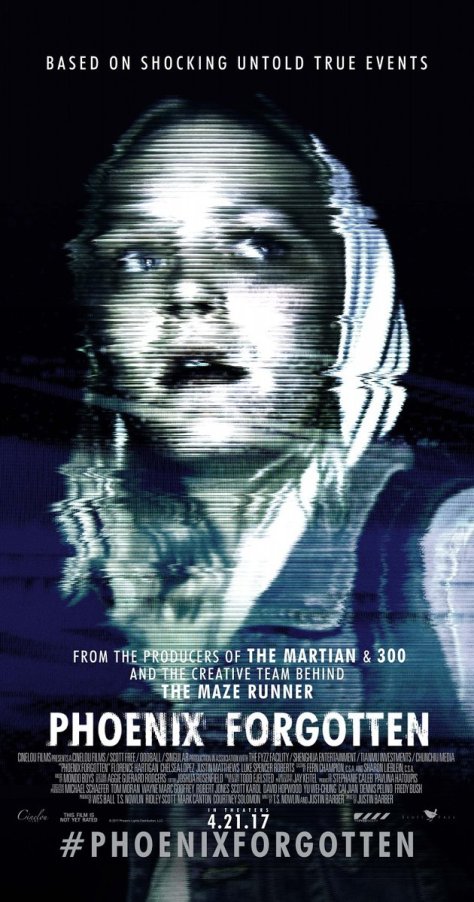
“Phoenix Forgotten” (2017) is a found-footage horror film that didn’t pan out.

“Phoenix Forgotten” (2017) has a couple of things going for it.  The first is its use of real events as the MacGuffin for its found-footage horror story — the 1997 mass UFO sighting in Arizona known as “The Phoenix Lights.”  The second is the young Chelsea Lopez in a lead role.  She appears to be a gifted young actress, and she’s … astonishingly good here.  (The script, too, does succeed in painting her adolescent protagonist as likable and identifiable.)

Those two things, however, do not save “Phoenix Forgotten” from being a mediocre movie.  It’s sometimes slow and occasionally even boring, despite the fact that it picks up quite a bit in its closing minutes.

It also feels far too much like a beat-for-beat remake of 1999’s “The Blair Witch Project.”  Yes, it’s a different sub-genre, with a science fiction plot device instead of a supernatural threat, and a desert setting instead of the Maryland forest.  But its story, its conclusion and even its closing shots parallel that superior film very closely.

I’d rate this a 4 out f 10.


MV5BMTUxODEyNjEzNl5BMl5BanBnXkFtZTgwMDQyMTM2MTI@._V1_UY1200_CR90,0,630,1200_AL_

“You call her Doctor JONES, Doll!”

God damn, Netflix’ “Jessica Jones” (2015) looks like a great show.  I finally got around to watching the complete pilot episode, due to my interest in the upcoming “The Defenders,” which features the character.  And “Jessica Jones” was frikkin’ terrific.  I’d rate the first episode a 9 out of 10.

At first, there were aspects of the pilot that annoyed me.  We’re told virtually nothing about the origin of the title character’s superpowers, and not much about the powers themselves.  They’re also a fairly generic power set, as far as I can tell.  She has enhanced strength and agility and … that’s it?  So she’s a low-grade Superman or Spider-Man, more or less?  We also learn somewhat little about what looks to be the series, antagonist, Kilgrave, played by David Tennant.  We see Kilgrave only briefly, in flashbacks that seem reminiscent of post-traumatic stress disorder.  (These are sometimes weirdly delivered, for a show that is otherwise well directed.)  He has mind-control abilities that resemble the “push” ability seen in Stephen King’s “Firestarter,” as well as my favorite short story of all time, “Everything’s Eventual.”

But … hell, this was just an extremely good show.  For starters, Krysten Ritter is perfect as the wisecracking anti-heroine.  She’s funny; she’s got great, dry line delivery; and she’s a decent actress.  (I know that the Marvel Cinematic Universe’s more powerful heroes rarely visit Hell’s Kitchen, but I’d love to see her trade quips one day with Tony Stark.  She couldn’t beat him, but she’d come closer than anyone else.)

The script is good enough to make her a likable character, and the story itself is scary and compelling.  Considering the plot-driving capability of the show’s villain this … looks like it could become a King-style horror thriller.  Between this show and “Daredevil’s” bloody second season (2016), I’m starting to understand that Hell’s Kitchen might be the MCU’s stage for more horror-type stories.  And I’m fine with that.


p12123988_b_v8_aa

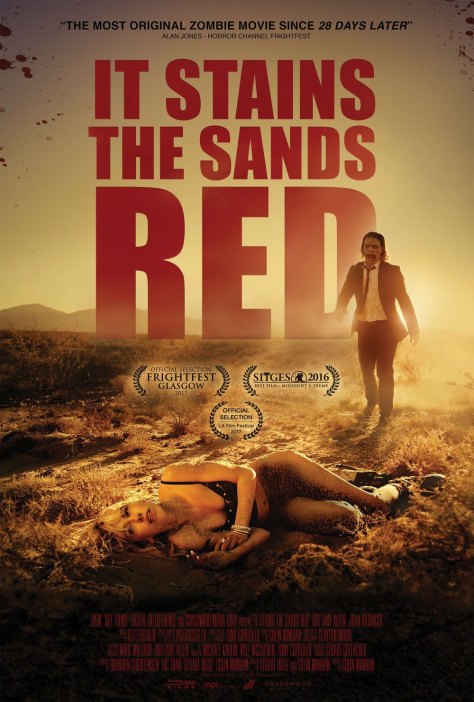
A short review of “It Stains the Sands Red” (2017)

“It Stains the Sands Red” (2017) is a pretty decent zombie film; I’d rate it an 8 out of 10.

The fun starts with a truly impressive aerial shot of Las Vegas in the midst of a full blown zombie apocalypse — it’s great special effects work, and it’s almost enough to compensate entirely for the limited scope of the story that follows it.  (This film focuses largely on one stranded woman being pursued by one zombie antagonist through the Nevada desert.)

Although much of the film might be too slow for some horror fans, it’s actually surprisingly intelligent.  The movie focuses on things often neglected in survival horror scenarios like this one — factors like exhaustion, the elements, firearms proficiency, the availability of basic utilities and even the availability of addictive drugs.  There’s more to admire too — there’s a plot twist late in the game that I thought was skillfully executed.  (I won’t spoil it here.)  Finally, our ostensibly addle-brained anti-heroine does a couple of things that I never would have thought of in order to survive.

It also boasts an incongruously beautiful setting.  (This was shot in Nevada’s “Valley of Fire.”)

“It Stains the Sands Red” isn’t perfect.  There are a couple of stupid parts, particularly near the end of the story.  (Were these otherwise talented screenwriters just running out of steam?)  And there is one surprise plot development that will be sure to have some genre fans rolling their eyes and groaning.

Also, the makeup effects for the monster were good enough, but not stellar.  (Like many longtime fans of zombie horror, I think I’ve been spoiled by the genius of Greg Nicotero and Tom Savini.)

I ‘d still name this as a good movie, however, and I’d recommend it.


ISTSR_poster

A short review of “War for the Planet of the Apes” (2017)

Like the two films preceding it, “War for the Planet of the Apes” (2017) is an intelligent, well rounded science fiction thriller.  The newest “Apes” series has been leagues ahead of the campy late-1960’s original films, and of course Tim Burton’s bizarre 2001 remake.

There is more going on here than a simple “apes vs. humans” tale.  Nor does it engage in simplistic moralizing, in which the innocent animals must escape from their human oppressors.  There’s a hell of a lot of moral complexity — something noted by the many positive reviews for the film.  One of the things that I liked the most was a compelling new surprise plot element, even though it approaches deus ex machina territory.  I won’t spoil it here, but it’s bleak, it’s frightening, and it makes you think.  Given the new information one character explains to another … it’s hard to say who is the bad guy, isn’t it?  How this plot element plays out is damned effective too.

This movie also superbly renders non-human characters — both in terms of its smart script and its special effects (a combination of both CGI and human actors).  I was greatly impressed at the detailed and lifelike facial expressions.

The action sequences were well executed, too, and the film had an epic feel.  (Although this would be a decent conclusion to a trilogy, filmmakers Matt Reeves and Martin Bomback have gone on record stating they wouldn’t be averse to future sequels.)

Still, I must confess that my attention sometimes wandered.  I think the pacing was a bit off.  It also didn’t help much that the conclusion of the final action set piece was spoiled by one of the film’s trailers.  (What the hell were they thinking?  Who makes these decisions?  Was there any backlash from fans who didn’t want advance knowledge of the film’s ending?)

Although this was an exceptionally well developed film, I just can’t give an unusually high rating to a movie that didn’t always hold my interest.  I believe, therefore, that I’d rate this an 8 out of 10.


war-for-the-planet-of-the-apes-poster-380x600