Tag Archives: review

Episode 1 of “Black Summer” (2019) looks quite promising.

The hectic first episode of “Black Summer,” Netflix’ new zombie series, looks like ambitious stuff — it plays like a hybrid of “28 Days Later” (2002), “Pulp Fiction” (1994) and “24” (2001-2014).  While it seems unlikely that this show can emulate the greatness of those classics, “Black Summer” still gets off to a damned good start.  I’d rate the first episode an 8 out of 10 for being a pretty lean and mean start to a decent zombie series.

Part of the episode’s appeal is its frantic vibe and format — something that seems like a deliberate contrast to “The Walking Dead’s” slowly placed, methodical epic.  The viewer is plopped down into the middle of a heartland neighborhood evacuation effort, three weeks into a zombie epidemic.  With a series of lengthy, real-time tracking shots, we race beside a collection of unconnected characters who are desperately trying to reach United States Army pickup point.

The zombies are few in number.  But they are the “high-speed zombies” that most modern horror viewers associate with Danny Boyle’s film, so the arrival of even one imperils the fleeing families.  The makeup effects are good, the transformation process is effectively rendered, and the show is satisfyingly scary.  The show makes this even more interesting by filming each character’s dash individually, and then showing them as discrete vignettes that are out of chronological order.  

The story is weakest when it slows down enough to allow its characters to talk.  The dialogue is truly bad, even if the quick action sequences make up for it.  (Has there ever been a more generic bribery offer, for example, then the one we see here?)  But this weakness doesn’t much affect the overall quality of an episode that follows so much action.

I was even more surprised that the episode works when I googled “Black Summer.”  The Netflix series is produced The Asylum, the film company notorious for “mockbusters” like “Dead Men Walking” (2005), “Snakes on a Train” (2006) and … sigh … “Transmorphers” (2007).  What’s more, “Black Summer” is intended as a prequel series to  The Asylum’s “Z Nation,” the lamentable horror-comedy zombie series that ran for three seasons on SyFy.  (It was so bad I couldn’t get through a single episode.)

It’s a weird world.


black-summer

A short review of “Predestination” (2014)

Blog Correspondent Pete Harrison has been recommending “Predestination” to me for a couple of years now.  It took me the longest time to get around to it — I knew that the Spierig brothers’ mindbending science fiction film would be challenging, and I wanted to wait until I was in just the right mood to take it in.

It turns out Pete’s recommendation was a damned good one.  (Followers of this blog know he is our resident horror expert; turns out he knows his sci-fi too.)  “Predestination” is a grim, moody, well directed time travel movie, beautifully performed by Sarah Snook, Ethan Hawke and Noah Taylor.  The storytelling style reminded me so much of Christopher Nolan’s work that I had to check the credits again to make sure he wasn’t at the helm.  (Coming from me, that’s high praise.)  I’d rate “Predestination” a 9 out of 10.

I don’t think this movie is for everyone.  It’s hard-core sci-fi, adapted from a short story by Robert Heinlein called “– All You Zombies –,” and its stranger story elements will challenge the viewer instead of of pleasing them emotionally.  (This would be a very confusing choice for a date movie, for example.)

And there is a major plot element here that requires so much suspension of disbelief that I think many viewers will be put off by it.  (It doesn’t involve the plot-enabling time travel tehcnology.)  I truly enjoyed this film, and even I struggled with this element’s plausibility.  I feel certain it was easier for Heinlein to get across on the page than for any filmmaker to show on screen.  (Would any of us react the way these characters do if we were in the same situation?  I don’t think the human heart works quite the way the story suggests it does.)

Still, this was a very good movie for a science fiction fan.  If you are in the mood for something dark, different and demanding, then give it a chance.


predestination

A review of “Pet Sematary” (2019)

“Pet Sematary” (2019) is an unnecessary remake, but still a decent one.  I personally prefer the flamboyant 1989 film adaptation of Stephen King’s novel; it was more garish and stylish, if a little campy.  (And its flashback sequences involving one character’s deceased sister are priceless horror fare.)  But this sleeker, more restrained update is nonetheless still made and sometimes pretty scary.  I’d rate it an 8 out of 10.

The writing and directing are generally good, even if certain jump scares were so heavy-handed that they were nearly laughable.  (The script wisely capitalizes on the universal, existential dread of mortality, as the first film did.)  There are few new bells and whistles here; the 2019 film instead tries to distinguish itself with a key variation in the plot of King’s eponymous 1983 book.  (I won’t describe it here, as I’m not certain whether it is a spoiler.  But this change isn’t “shocking,” as The New York Times’ headline proclaims; it’s simply a basic story alteration.)

The cast is roundly quite good.  A surprise standout for me was Amy Seimetz, who plays the mother of the story’s troubled Creed family with surprising power and nuance.  She’s a damned excellent actress.  And I was surprised to learn that I failed to recognize her as one of the doomed spacefarers  from 2017’s “Alien: Covenant” — another role that required her to portray apprehension and panic.

There were two possible nitpicks that occurred to me as I watched “Pet Sematary,” but these probably aren’t the fault of the filmmakers, as they likely stem from the literary source material.  (I read the book several times, but I was a young teenager when I did so.)  As an adult, I am only a fuzzy on two story elements:

  1. How is the character of Victor Pascow (played here by Obssa Ahmed) able to offer help to the troubled Creed family?  Can anyone in his circumstances do so?  Might others step forward as well?  Why should Pascow be uniquely motivated?  (I am again trying to keep this review spoiler free.)
  2. Why is the mother’s traumatic childhood a factor in the story’s present?  It’s … mostly tangential, right?  It is a compelling character element, and portrayed beautifully by Seimetz.  But I don’t fully understand how it seems to affect what transpires before us.

One final note — I’ve seen a few people on the Internet compare John Lithgow’s performance to that of Fred Gwynne in the 1989 film.  (They both play the character of Jud, the family’s elderly neighbor.)  Lithgow is predictably wonderful here — especially when Jud is showing kindness to the young daughter (played charmingly by Jete Laurence).  But Gwynne was better, because he was so perfectly cast.  It was a role that he was born to play.


MV5BMjUyNjg1ODIwMl5BMl5BanBnXkFtZTgwNjMyOTYzNzM@._V1_SY1000_CR0,0,640,1000_AL_

A few quick words on “The Walking Dead” Season 9 (2019)

I won’t go on at length here about how “The Walking Dead” has so vastly improved.  I’ve already bored a couple of friends of mine to tears by practically evangelizing to them about how they should start watching the show again after having given up on it.

But now that Season 9 has concluded, I at least need to mention here that I loved it — enough to rate it a 9 out out of 10.  There were some narrative problems, some of which were avoidable and some of which weren’t.  (It’s always hard to smoothly script around the departures of major characters.  This instance must have been especially tough.)   But Season 9 is so radically improved in terms of its pacing, plotting and characterization that it might as well be an entirely different TV show.  Not only does it move along at a nice, brisk pace, it also paints a fairly broad post-apocalyptic epic on a broad canvas.  And it’s scary again, too — owing largely to the arrival of “The Whisperers,” who are among the best villains the show has ever offered.  (Only the residents of Terminus come close to being creepier.)

If you’ve given up on the show, I understand that.  The overall story has stagnated for years, most notably when it was mired in the static, over-long and depressing story arc in which our heroes were subjugated by Negan.  But I recommend you sit down with Season 9 and at least give it a chance.  You’ll be happy you did.


fgedrUi

A short pan of “Velvet Buzzsaw” (2019)

Sorry, but for me “Velvet Buzzsaw” (2019) was a bust.  I’d rate it a 3 out of 10 for being an interesting and ambitious Netflix horror film that nevertheless failed to hold my interest.

My interest was piqued along with everyone else when I first saw the trailer for this earlier this year.  It looked amazing.  It was a high-concept supernatural horror film with great visual effects and a cast that included Jake Gyllenhaal, Rene Russo and John Malkovich.  (The cast also includes Toni Collette, who I’ve recently come to understand is a damned good actress.)  It looked funny too.

But “Velvet Buzzaw” fatally suffers from the characters that it depicts.  All of the above actors portray profoundly irritating characters, and not even their formidable talents make these characters any fun to watch.  The movie takes place in the Miami Beach art world, and the major characters are artists, critics, or gallery owners and employees.  (The plot device here is a collection of haunted paintings that kill their owners.)  With the exception of Malkovich’s artist (“Piers”), these characters are so cloying, trite and pretentious that seeing them on screen is nearly nerve rattling.  You don’t care much that they’re imperiled.  You just want to see them die, so that the movie will be over.

This would have been a far better movie if screenwriter Dan Gilroy chose to depict its events mostly from Piers’ point of view.  I suppose that would have been difficult; he isn’t central to the plot.  But it would have been worth it.

There are some things to like.  Malkovich and Russo re always fun to watch, a lot of the special effects are quite good, and the final demise in the film is actually very well rendered.  (Given the mediocrity of the movie as a whole, I was surprised at how clever and unsettling this was.)  A college buddy of mine with excellent taste in horror actually liked “Velvet Buzzsaw” quite a bit.  So maybe this is just a matter of taste.

I can’t recommend this, though.


velvet_buzzsaw-829687870-large

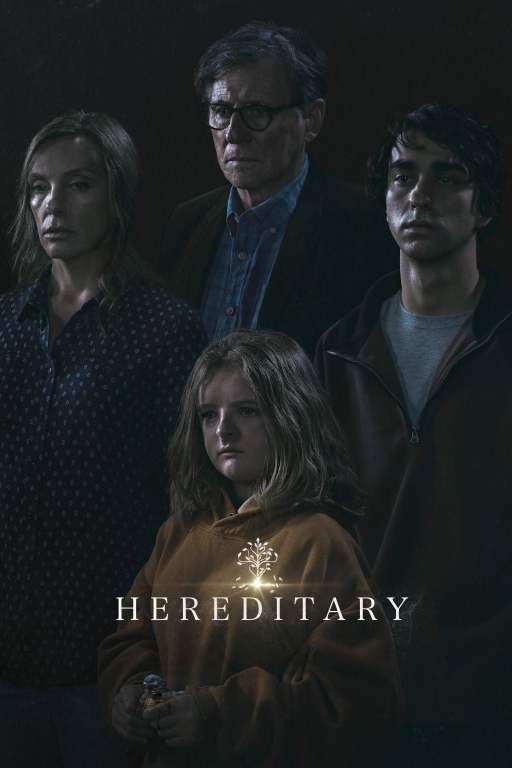
“Hereditary” (2018) is an expert horror film that I’m not sure you should see.

“Hereditary” (2018) is a difficult movie to review.  It’s an exceptionally well made horror film, enough for me to rate it at least a 9 out of 10.  But its content is so disturbing that I’m not sure that I can actually recommend it to others.

From a technical standpoint, the movie is almost perfect.  It’s an astonishingly good first feature film for writer-director Ari Aster, it’s gorgeously shot in the hills and deserts of Utah, and it’s masterfully directed.  The performances are uniformly perfect.  If I were to name each actor who hands in a fantastic performance, I’d simply be reading its cast list.  I can’t remember the last time I watched a feature film in which every single major performance was exemplary.  And “Hereditary” gets damned scary in its third act.   (Seriously, give it time.)

The only flaws that I can think of are extremely minor.  The pacing isn’t perfect.  (The story occasionally seems to slow when events should be accelerating.)  I had problems with the way that one key character was portrayed, and there was one plot point that gave me trouble.  (I can’t say more for fear of spoilers.)  But these things are so forgivable that they hardly merit a mention here.  You simply can’t argue that this movie was expertly assembled.

Yet I didn’t always enjoy “Hereditary.”  I’d be lying by omission if I didn’t state that.  I shut it off more than once, and then came back to it when I felt more able to stomach the brutal events it depicted.

“Hereditary” is more than a “dark” movie; it’s gut wrenching.  Even if you have read its reviews and you’ve seen the movie’s marketing, then you still aren’t anticipating what will transpire on screen.  (I’d even go so far as to say that the film’s marketing was misleading, but I can’t specify why here.)  Yes, there’s a obvious “Rosemary’s Baby” (1968) vibe, and it’s sometimes reminiscent of “The Exorcist” (1973), but the movie pushes well past the boundaries of those films, and it does so fairly early on.  If I, a lifelong horror fan, was turned off by this, then I’m willing to bet that it would also be too much for a lot of casual film goers.  (And indeed, while critics loved this film, audiences last year generally hated it.)

I’m closing with a little bit of trivia.  Toni Collette gives a tour-de-force performance here as the troubled mother.  If she looks familiar to you, that might be because she’s also the mom in another well known supernatural horror film — M. Night Shyamalan’s “The Sixth Sense” (1999).


p9fmuz2Oj3HtEJEqbIwkFGUhVXD-0

A short review of “Captain Marvel” (2019)

“Captain Marvel” (2019) has a couple of weaknesses, but mostly rises above them in its second half to become an entertaining big-budget popcorn movie.  It generally succeeds, and I had a lot of fun with it.  I’d rate it an 8 out of 10.

At first, the movie comes off as a mild disappointment — a boilerplate, made-to-order space opera with a thin script, simplistic dialogue and sometimes average acting.  (I personally don’t think that Brie Larson has the most depth or range of any actress in Hollywood.)

But the movie has a few surprises for us, both in terms of its story and its ability to win us over with humor and its sense of escapist, comic book fun.  Larson does have a lot of onscreen presence and charisma, and she does fine conveying anger and urgency.  She also has great deadpan comic line delivery.  After seeing the film, it’s difficult for me to picture anyone else in the role.

The special effects were nothing short of fabulous.  I didn’t expect to see a Marvel film with a space battle that could compete with those of the “Star Wars” franchise.  The fan service and the continuity with other Marvel films is also terrific.  Speaking of fan service — the Stan Lee tributes were genuinely touching.  One of them was a threefold reference to Lee, Kevin Smith and the 1990’s, when the story is set.  Talk about understanding how to please your target audience.

I’d recommend this.


MV5BMTE0YWFmOTMtYTU2ZS00ZTIxLWE3OTEtYTNiYzBkZjViZThiXkEyXkFqcGdeQXVyODMzMzQ4OTI@._V1_SY1000_CR0,0,675,1000_AL_

A review of “Solo: A Star Wars Story” (2018)

Was “Solo: A Star Wars Story” (2018) really quite as bad as everyone said it was?

Yes, I do understand why it’s so maligned by “Star Wars” purists.  Han Solo has arguably been the entire franchise’s most memorable protagonist since his debut in its very first film in 1977.  (When we were kids and playing “Star Wars” in the street, how many of us wanted to be Luke Skywalker and how many of us wanted to be Han?)

Disney missed an opportunity to serve up what fans undoubtedly wanted — an edgy origin story that took risks to portray this famously wily criminal anti-hero.  What the studio gave us instead is a generally toothless, safe-for-primetime fable that even managed to become saccharine at times.  (You could argue that Luke’s origin story was far darker — he discovered the burned bodies of murdered aunt and uncle.  Then he studied magical martial arts with the mysterious mystic samurai-hermit who once fought wars with his absent father.)  “Solo” feels too much … like a Disney movie.

There are other problems too … its narrative is unfocused, it’s cluttered with too many characters, and, yes, it slavish attention to origin-story details is annoying.  (The how-Han-Solo-got-his-surname bit, for example, is indeed a big misfire.)

But “Solo” felt far more like an average film to me, instead of one that was truly terrible. I’d rate it a 6 out of 10 for being an acceptable, passably entertaining “Star Wars” entry.  It’s got a few things going for it.

It’s well cast, for one.  I was actually very surprised at how well actor Alden Ehrenreich captures the character of a young Han Solo.  They guy has natural charisma, and he seems to absolutely channel the character without once mimicking Harrison Ford.  You could do a lot worse.  Ehrenreich also has great chemistry with Chewbacca (Joonas Duotamo), and with Donald Glover, who equally shines in the role of a young Lando Clarissian.  If you put the three of them in a sequel with a leaner, darker screenplay aimed firmly at adults, it could be a truly great movie.  (Consider how lame the first “Captain America” movie was in 2011, and how its far darker 2014 sequel was so unexpectedly great.)

“Solo” also has great visual effects.  (All the newer “Star Wars” movies have come a long way from the clumsy, heavy handed CGI of the prequels.)  The Kessel Run sequences were especially good, and I’m still enough of a kid at heart to love those kind of dazzling set-pieces, even when they punctuate a lackluster script.

“Solo” was the sixth most expensive film ever made, at $392 million, and it was a complete commercial failure.  So I doubt we’ll ever see these versions of the characters again in theaters.  But what about television?  What about streaming services?  I, for one, would keep an open mind about whether Disney could do better with this film’s ingredients.


Solo-Movie

A review of “The Purge” Season 1 (2018)

“The Purge” franchise continues to defy expectations after its move to television.  It still isn’t high art, and it probably can never fully transcend the high-camp trappings of its premise.  (I suppose it’s hard to script a truly grounded horror property about people in Halloween costumes murdering one another with impunity on a designated “holiday.”)  But, like the movies preceding it, the USA Network’s new dystopian horror show is still a bit smarter and more interesting you’d expect from its bizarre central plot conceit.

The 10-episode first season, which aired with seemingly little fanfare last fall, generally succeeds — I’d rate it an 8 out of 10, and I’ve spoken with a couple of other horror fan who were as happy with it as I was.  The people who recommended it to me are also big fans of AMC’s “The Walking Dead” (which has radically improved this season), and that makes sense.  Although “The Purge” has an entirely different feel than “The Walking Dead,” it also has a lot of common elements — both shows are milieu-type horror stories with a large, diverse group of characters negotiating a sprawling setting with innumerable deadly antagonists.

A surprising amount of thought went into this show.  There’s a nice degree of world-building and detail, with various characters embracing, rejecting or remaining ambivalent about the titular “Purge.”  The screenwriter here tries hard to round out the twisted America in which The Purge annually takes place, with a lot of creative and blackly cynical story elements.  (I’m not clear if the writer here is James DeMonaco, who wrote and directed the first three of the four “Purge” movies.)  We see, for example, a cult whose brainwashed members offer themselves up as willing murder victims, as well as anti-Purge revolutionaries who exploit the night to target the fascist oligarchical government which created the brutal holiday.  There are a lot of surprises in terms of plot, character and setting that I will not spoil here.

The gore and violence were surprisingly high for network television.  (Again, this show may be taking its cues from “The Walking Dead,” which always pushes the boundaries.)

Some of the acting is quite good — William Baldwin is absolutely superb, Lee Tergesen is always fun to watch, and the beautiful Hannah Emily Anderson is another talented standout.  I swore I recognized Fiona Dourif’s distinctive looks and mannerisms.  (She portrays the cunning cult leader who entices young people to sacrifice themselves, and I’ll be damned if she doesn’t totally look and sound the part.)  But, upon Googling her, I realized I’d never seen her before — she just reminds me of her father, who also plays a lot of bad guys — the amazing Brad Dourif.

Some of my enthusiasm for “The Purge” waned just a little as the season wound down toward its conclusion.  After Season 1’s unsettling ideas were left fully explored, the show did start to feel more like conventional television — right down to a standard good-guys-vs.-bad-guys shoot-em-up at its climax.  (If the show had fully sustained its tension until the end, I would have rated it a 9 out of 10.)  And the final minutes of Season 1 consist of a coda among three characters that is forced and preposterous … I’m surprised it made it past the editing stage.  But this still wasn’t enough to spoil the fun.

I should also note here that not everyone enjoyed “The Purge” as I and my friends did.  Critical and popular reaction to it is definitely mixed.  (As of this writing, the show has only a 42% rating from critics on Rotten Tomatoes, with just 63% of audiences liking it.)

Postscript — I could almost swear that the auditorium we see towards the end is the very same shooting location used for Thomas Smith’s school in “The Man in the High Castle.”  You can tell by the establishing shots.  It’s even lit the same way.


Purge_TV

A short review of “The First Purge” (2018)

“The First Purge” (2018) isn’t the best horror-thriller I’ve ever seen, but it certainly isn’t the worst, either.  I thought that I would be all purged out by now, but this fourth entry in the film series is a solid prequel — I’d rate it an 8 out of 10.  (There is also a TV show set in “The Purge” universe, which USA has renewed for a second season, and I’m told that it’s pretty good.)  I suppose this is a durable franchise because its premise could be explored through countless different characters.

The movie has some weaknesses.  The pacing is off, and you could argue that the political theme of “The Purge” films, though compelling, is getting redundant by now.  (There are some specific jabs this time out at Donald Trump and his following; they’re heavy-handed, but they’re fun to spot.)

But “The First Purge” is still a suspenseful and disturbing dystopian horror film.  It’s got a terrific bad guy in Rotimi Paul’s “Skeletor” psychopath and some surprisingly damned good action sequences.  There is another difference here, too — this “Purge” is far less campy than the second and third films.  There are fewer plot twists, fewer over-the-top characters, and far fewer trippy visuals — it feels more like a straight horror film instead of a zany one.  Depending on your preferences, you might find it superior.

One more thing — given its obvious love for Staten Island, this film would make a great double-feature with “Bushwick” (2017), another thriller which seems like a love letter to its own setting in Brooklyn.  And they are both urban neighborhood thrillers with a similar storytelling style.


purge3-1068x1691