Tag Archives: Season 3

Poster for “Black Mirror” Season 3, 2016

Endemol Shine UK, Netflix.

MV5BMDRmOTZlOTEtNDdkMS00Yjg4LWJlYjgtZjA2NzkwZjMyNTk2XkEyXkFqcGdeQXVyMjYwNDA2MDE@._V1_

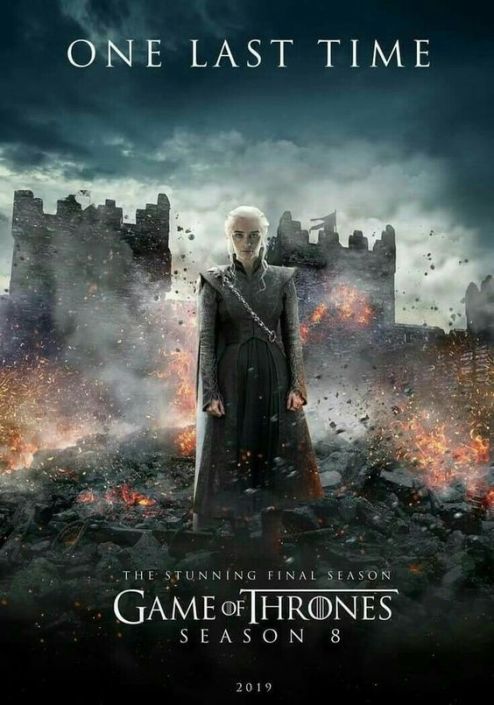
“Game of Thrones” Season 8 (2019) was a Greek tragedy. And I’m fine with that.

I’ve read and heard so many of the popular complaints about Season 8 of “Game of Thrones.”  Most of them are understandable.  A couple I agree with.  But I’m not on board with panning this six-episode final season.  Even with my own reservations about it, I still loved enough to rate it a 10 out of 10.

By far and away, of course, the part of Season 8 that has people up in arms is a major story development in its final two episodes.  (You almost certainly know what it is; because fans are complaining about it everywhere.  I’m not sure why I am trying so hard to keep this review spoiler-free.)  It was a bombshell, and it was damned saddening, and even I’ll admit that it affected my enjoyment of everything that transpired until the credits rolled for the last time.

But I made peace with it quickly.  (Granted, the character who figured the most prominently here was not my favorite, so it was a little easier for me to do so.)

I think it boils down to a matter of taste — specifically what you wanted out of “Game of Thrones.”  I like tragedies.  I love pathos in stories, whether they’re books, movies or television shows.  Stories that end badly aren’t bad stories.  One of the things that excited me about “Game of Thrones” since its second season was how it so often took the traditional elements of fantasy and fairy tales and turned them on their head with a brutal, unexpected (yet reasonable) conclusion to a story arc.  (I wasn’t fanatical about the show during Season 1, which overwhelmed me with exposition and plotting.)

The show has always tried to give us stories that were complex or ambiguous in terms of character, theme, setting and resolution.  One of the things that I tell people who have never watched the show is this — it is almost never as simple as “the good guys vs. the bad guys.”  Instead, it parallels human interaction in the real world — there are disparate groups and individuals fighting and aiding one another out of self-interest or philosophy.  The character turns and story turns that we saw in the last two episodes … somewhat parallel what we’ve seen in and heard on this show before.  As Ramsay Bolton said back in Season 3, “If you think this has a happy ending, you haven’t been paying attention.”

“Game of Thrones” was a Greek tragedy.  This last season’s classical plot resolution was arguably perfect for the show’s sweeping fantasy epic masterpiece.  The ending didn’t make me happy.  But it impressed me and affected me and made me think.  This was a fantasy show for adults.  It was an edgier, less predictable, more provocative alternative to “The Lord of the Rings” in all of that epic’s incarnations.  I far prefer the ending I saw to a pandering, cookie-cutter “happily ever after.”

And the show has indeed hinted at the outcomes we see in the final two episodes.  It’s been doing so for years, not just with major events but also with obvious dialogue.  I kept asking one other fan in particular, “Are you seeing what I’m seeing?”  But he didn’t.  Maybe a lot of fans didn’t.

If you tell me that a certain character decision was made too abruptly, with insufficient buildup, I hear you.  But, in the real world, I’m inclined to think that the internal processes we witness in the penultimate episode are often completely invisible.

If I had any complaints about Season 8, they lay elsewhere.  I simply cannot understand why this was six episodes instead of 10.  The two major battles we see each occupy one episode.  Why?  Even with a longer running time for each episode, this season felt rushed and truncated.  It still bothers me, even as I write this.

I had the same quibble as everyone else about the Battle of Winterfell being difficult to follow, but I’m willing to accept that this was a deliberate stylistic choice.  (And although I loved both major battles this season, I think the show’s three prior major land engagements were superior.  The Massacre at Hardhome, the Battle of the Bastards and the Attack on the Rose Road were all so well choreographed and scored that they were just too difficult to surpass.)  I even had my own disappointments for the outcomes we see for various characters.

I consequently almost rated the eighth season a 9 out of 10, instead of a perfect 10.  But I couldn’t.  I loved Season 8 too much.  It wasn’t perfect, but it was … still so damned riveting and enjoyable.  It was still “Game of Thrones,” with all of the attention to story and detail and performances that I’d come to love.  It was still the best thing on television.


7266820ea23a32cfa984e7be5e1450f0

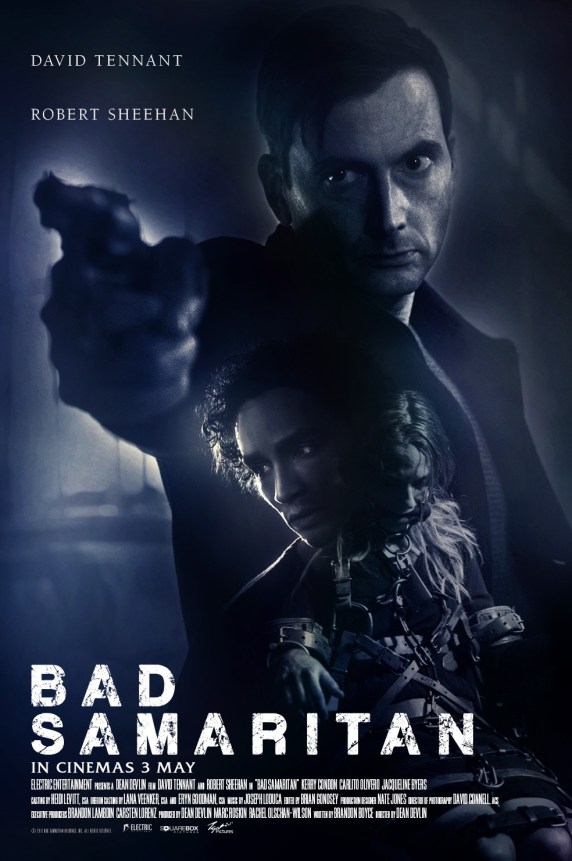
A short review of “Bad Samaritan” (2018)

As I believe I may have mentioned, I have a love-hate relationship with David Tennant’s onscreen performances.  I find him inexplicably, positively grating whenever he plays a protagonist.  (See 2011’s “Fright Might” remake, or his cringe-inducing stint as “Doctor Who.”)  But it seems to me that the man is absolutely fantastic when he plays a bad guy.  (See his frightening and hilarious role as Kilgrave the first season of “Jessica Jones” in 2015.)

“Bad Samaritan” (2018) thankfully presents us with the latter Tennant.  He musters an intensity with his eyes and his voice that are incongruous counterpoints to his innocent-looking face, and this makes him a damned good antagonist in a thriller.  (He is a highly organized, sociopathic kidnapper in this film.  I don’t think that’s much of a spoiler, as all of the film’s marketing make it clear.)  He’s a hell of a lot of fun to watch — and listen to.

With that said, “Bad Samaritan” is an average movie — not altogether bad, but not awesomely good, either.  (I suppose I’d rate it a 7 out of 10.)  It benefits a lot from another very good actor in Robert Sheehan as its anti-heroic young protagonist.  (The plot setup here is interesting — a mild-mannered burglar discovers a psychopath’s captive while in his house, then struggles with how he can help the terrified victim of a far worse criminal than he is.)  The movie’s biggest sin seems to be that it borrows heavily from comparable genre-defining works from the likes of Thomas Harris and James Patterson.  But it’s still an enjoyable enough movie in its own right.

There’s someone else here that’s great fun to watch too — Kerry Condon as the kidnapee.  Her voice is amazing, and she’s a superb actress; I think she’s strong enough to carry another movie like this.  I just knew she looked familiar … it turns out she played Clara, the really weird woman that Rick found in the woods during Season 3 of “The Walking Dead.”  (He asks her the show’s signature “three questions.”)

She is also to voice of F.R.I.D.A.Y., Tony Stark’s on-board A.I. in several of Marvel’s “Avengers” movies.  Didn’t see that one coming.  Weird world.


bad_samaritan_ver2_xlg

A short review of “Black Mirror” Season 3

“Black Mirror” (2011) remains the best science fiction show on television; I’d rate the six-episode third season a perfect 10.  The show continues to succeed at every level with its story concepts and their execution.  And I think it’s actually getting better.

It’s getting darker and harder hitting, too.  I’d guess that this season’s blackmailing-hackers episode (“Shut Up and Dance”) would be the one that the majority of viewers find the most disturbing.  For some reason, the man-vs.-monster story of “Men Against Fire” is the one that really got under my skin.

I was surprised to learn that nearly all of “Black Mirror’s” episodes are penned by series creator Charlie Brooker.  I’m still surprised at how many clever ideas and lean, smart scripts could spring from one writer.  I was so impressed that I looked Brooker up on Wikipedia — but was surprised to discover I’m unfamiliar with nearly all of his other work.  The one exception is “Dead Set” (2008) — the truly fantastic British zombie horror miniseries that I’ve been recommending to friends for ages.  That makes sense.

Anyway, I am fully and happily converted to “Black Mirror’s” cult following, and I enthusiastically recommend it to people who ask about it.  (The show’s popularity is still growing — I believe it appeals to the same kind of fans as those who flocked to the various iterations of “The Twilight Zone” and “The Outer Limits” of generations past.)  But I might actually suggest that newcomers begin with the second or third season, rather than the first.  Season 1 is terrific, but it’s three episodes are more subtle and thematic, while the latter seasons follow a more conventional story structure that might better appeal to more mainstream audiences.  (They have more satisfying twists and emotional payoffs, too.)

And a quick caveat — I’ll reiterate that this show is indeed dark.  There is a strictly human element to most of “Black Mirror’s” twists that is intended to surprise the viewer by provoking anxiety or dread.  For a show that relies on technological story devices, it succeeds even more with its old fashioned psychological horror.


1_m1

A few quick words on “Fear the Walking Dead” Season 3 (2017)

For my money, “Fear the Walking Dead” is the best zombie show on television.  Yes, it has its share of stupid parts — sometimes the writers seem to throw in some incredibly implausible story points only to test viewers’ credulity.  (My favorite this season was the occupants of a heavy truck throwing a beeping keychain from a horde-infested highway — the zombies are attracted to the sound of the keychain, but not the rumble and movement of the truck that sneaks past them.)

On other levels, “Fear the Walking Dead” can be a relatively smart show — at least more so than its more famous progenitor, “The Walking Dead.”  I’m talking about being smart in terms of character, dialogue and themes.  Sometimes I think of it as “The Walking Dead for Grownups.”  The characters are … often more three-dimensional and compelling than their counterparts on the flagship show.  Not being based on a comic series, they’re not bound by the medium’s character tropes, the way that Rick Grimes and company always seem so inescapably tethered.   They feel more like real people, and not the disposable inhabitants of Robert Kirkman’s (admittedly excellent) comic series.   That makes the show scarier, because the characters are more identifiable.

The dialogue and story logistics are far more thoughtful.  The stories themselves are more expansive, more quickly paced and farther reaching.  Consider the three major locales covered this season — the ranch, the dam and the bazaar.  Two out of three of those settings are explored in depth — along with the characters inhabiting them. (I’d like to see more of that bazaar.)  Now consider how slowly “The Walking Dead’s” major plot-lines move.  It would take the latter at least three seasons to cover the major stories covered in a single season of “Fear the Walking Dead.”

I know this show has its share of detractors, but I’d rate Season 3 a 9 out of 10.


 - Fear the Walking Dead _ Season 3, Key Art - Photo Credit:  AMC

“Storming New Caprica,” Bear McCreary, 2007

Original score for Season 3 of “Battlestar Galactica.”  It was a damn terrific episode, too.


A short review of the Season 3 premiere of “The Strain.”

“The Strain” is zany, over-the-top, serialized comic book horror that often veers too close to high camp.  I keep waiting for either “South Park” of “Family Guy” to lampoon it.  It’s  sometimes pretty brainless, and it often seems like the product of a group of hyperactive 14 year old boys sitting down to imagine a vampire apocalypse.

But what the hell?  The damn thing works.  It isn’t as smart or as grown up as the moody “The Walking Dead,” “Fear the Walking Dead” or “Stranger Things.”  But it’s got a fast pace, a kinetic energy and an unpredictability that all of those shows lack.  It’s just … more fun.  I’d be lying if I said I didn’t love it.  And, as my interest in slow-moving zombie dramas starts to wane, this might become my favorite horror show currently on television.

It’s damned ambitious.  The writers here desperately want to show a full scale monster armageddon, and they don’t seem to care much that they’ve got a limited budget or a finite number of extras.  (We are told, now, that the vampire plague is spreading throughout the country, and is no longer confined to New York City.)

And it’s still scary.  Guillermo del Toro’s screeching, leopard-fast vampire baddies are still unnerving.  They’re goddam albino apex predators and they’re repulsive.  And I think their appeal is surprising after two seasons of audience exposure.  I predicted a while back that this show’s horror elements would lose their momentum, and I’ve pleasantly been proven wrong.  (Hey, if you’re a horror fan who loves monsters, you eventually crave story antagonists other than doomed, pitiful zombies.)

Last night’s Season 3 premiere offered little that was new.  But it did offer Navy Seals fighting vampires in the NYC sewers, and that was frikkin’ sweet.  I’d give it a 9 out of 10.


Image result for the strain season 3

A few quick words on “Game of Thrones” Season 3

To avoid spoilers, my review of “Game of Thrones” Season 3 will be necessarily brief, dependent as this show so often is on the key betrayals that affect its plot.  In short, I loved it, and I’d give it a 10 out of 10.  I don’t know why I’ve felt so reluctant to do that … maybe because I used to view it as too mainstream, given its zealous and seemingly universal fandom?  This would be a dishonest review if I didn’t admit that I was hooked on the show I used to make fun of.

It has some of the best acting and dialogue in recent memory.  The show might be worth watching for Peter Dinklage and Charles Dance’s verbal sparring, alone, for example.  Now, in this third season, Jon Snow and Daenerys finally evolved into heroes that I could actually root for.  (They seemed a bit thinly rendered up until now.)  I actually cheered when she wiggled that deal to purchase “The Unsullied” slave army.  And there was just more … fun stuff — dragons, White Walkers, melees, surprise attacks, etc.

At times the show feels slow to me — its is still pretty chatty, and neither the White Walkers nor Daenerys’ forces will ever win a war by moving swiftly.  After three years of the show, they’re … still moving south and north, respectively.  Rommel would have routed them easily.

And, at times, “Game of Thrones” is too dark even for me.  The scenes of torture and the bloody betrayals among allies’ sometimes make me think that the writers (or George R. R. Martin himself) simply wish to depress their audience.

Those things can’t prevent me from being just as hooked on this as everyone else, though.  Great stuff.


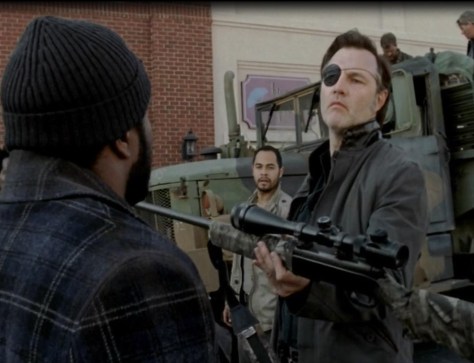
It’s why they call him “The Governor” and not “The General.”

AMC’s “The Walking Dead” marathon helpfully reminds us tonight that people will be really stupid in a zombie apocalypse.

I have no military experience whatsoever, but I know that an invading force should disperse, seek cover and to try to present an opposing force with moving targets instead of stationary targets.

I also have a pretty good idea that I would not send the entirety of my forces through a single entrance and down a single corridor, and then congregate them in what looks like one enclosed space.

However, I could never make an eye-patch (or batshit crazy, for that matter) look as good as he does.


twd

ScreenShot011

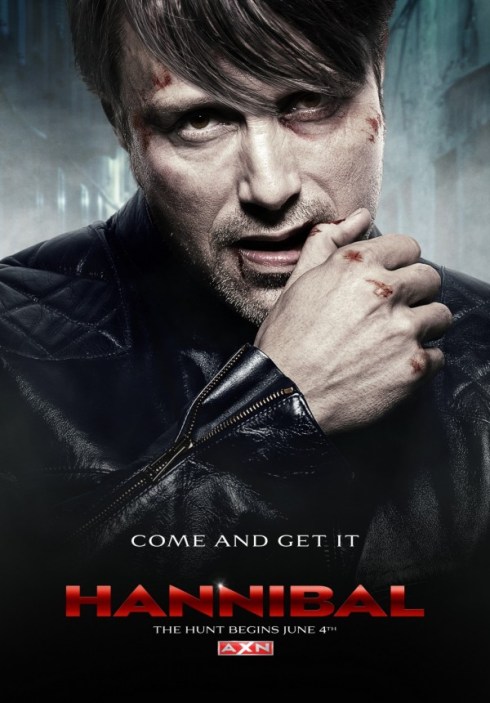
“Hannibal” Season 3 was a Kafkaesque, blood-soaked passion play with psychedelic music and 70’s-tastic visual flourishes.

I think that it’s tremendously difficult to write a spoiler-free review of the third and final season of “Hannibal.”  (No, I am no longer hopeful that the show might return via a different network or an Internet-based provider.)  But I need to try to keep this review spoiler free … this really is a suspense thriller and, indeed, the second season ended in cliffhanger after which viewers were unaware of even which major characters survived.  So … this will be pretty vaguely worded and a little tough to write.

I loved Season 3; anyone reading this blog could have guessed that, given that I’ve visibly been such a rabid fan of the program.  I do think that it was the best show on television, and it easily beat out “The Walking Dead,” “Daredevil,” “Family Guy” and “The Strain” as my favorite.  When it was good (which was most of the time) it was simply incredible.  When I didn’t enjoy it as much as I did past seasons, it was because of deliberate creative and stylistic choices, my reaction to which I’m sure are mostly subjective.  There were things I loved and things I didn’t love.  All things considered, however, the shameless fanboy in me won out over the critic.  I’d rate this season at a 9 out of 10.

First, here’s what I loved.  The script, directing, acting, sets and musical score were as strong as ever.  For a show that sometimes really struggled with dialogue in its first season, the writing in Season 3 was fantastic.  I am referring to the story, characterization and dialogue across the board, but especially the key interchanges between characters: our main protagonist facing off against Hannibal Lecter, Bedelia du Maurier, and Rinaldo Pazzi.  The performances here were simply fantastic, especially considering the complex, nuanced, but also mysterious characters the show’s writers have skillfully developed.  Our surviving heroes were played with extraordinary skill.

Mads Mikkelsen was also predictably perfect, even given that Season 3 required a broader range, as Hannibal’s past and his adversaries humanized him this season in a manner we haven’t seen before.  The script finally allowed Gillian Anderson to be a less stoical — her later monologue concerning a wounded bird was stunning.  And the surprise standout here was Fortunato Cerlino as Pazzi — this secondary character could have been a one-note buffoon, but Cerlino and the writers turned him into such a “real” (and extremely interesting) character that I actually thought the show would depart from the source material and make him a hero of the story.

Scenes between certain survivors of the Baltimore massacre also beg for specific mention, but I just can’t do that without revealing who lived through it.  The actors playing those “good guys” who are still alive did great jobs.  (More on why that term is in quotation marks just a little later.)  And they generally had well written character arcs.  One character’s agenda at the beginning of Season 3 was actually genuinely touching, considering how ruthless this story’s characters typically are.  (He or she arrives in Florence, where Hannibal has secreted awayy, merely to safeguard another.)  Far more touching is the exposition of one character who did not survive Baltimore; it surprises the viewer with astonishing sadness.

Bear in mind — I obviously loved the dialogue, but, like the show, it actually won’t be to everybody’s taste.  (No, for once that is not a deliberate pun.)  It is overly stylized, and rarely naturalistic.  This isn’t an extremely well scripted show in the manner of those like “M*A*S*H,” “LOST,” or “The West Wing,” and it isn’t a sit-com.  Our heroes and villains often just really don’t sound like real people.  It takes a greater degree of willing suspension of disbelief just to accept them.  Yes, I was a nut for this TV show.  But if somebody told me that they didn’t like it simply because the characters “talk funny,” I’d really understand that.  I personally loved it, because a universe where super-smart criminals and investigators are squaring off against each other, and verbally ribbing their opponents to psychologically undermine them (when they’re not getting all stabbity-stabbity, taht is), appeals to me.  Given the anti-intellectualism I’ve seen a lot in our culture, it’s refreshing to see an unabashedly intellectual TV show, with powerful characters, both good and bad, who are educated and beautifully articulate.

And … if you’re a horror hound, as I am?  The show delivers.  Season 3 was the most macabre.  And with the introduction of the “Red Dragon” storyline, it became the most brutally violent.  Generally, we no longer see the aftermath of gory murders, but see them in action.  Remember a key scene near the end of Season 2, when the mutilation of a major character is understated, because he is seen mostly in shadow?  That … kinda wasn’t a thing in Season 3.  And it was frightening.  A certain switcheroo the show pulled toward the end of the Mason Verger storyline was gut wrenching, really.

This show was brilliant, making its departure all the more bittersweet.

As for what I didn’t love?  These were intentional changes and creative risks that might appeal just fine to another viewer.  And showrunner Bryan Fuller actually advertised them in advance.  He promised fans that the show would be far more surreal and would farther push the boundaries.

I have no doubt that many fans loved what he did.  But considering Season 3 in its entirety, I’d rather he simply followed the maxim of “if it ain’t broke, don’t fix it.”  For me, Season 2 was perfect, and these bold changes had slightly less satisfying results.

For me, the show became too surreal beginning it its second act, the Mason Verger storyline.  Yes, the most striking images and sequences of the prior seasons were the surreal visions, dreams and thematic visuals.  But these worked, in part, because of their stark contrast with the “real world.”  They were one of the best parts of the show.  But I didn’t want to see the entire program become something akin to a Terry Gilliam movie.  I first got acquainted with Thomas Harris’ source novels with “The Silence of the Lambs” (both the book and the film) in 1991.  That was a kind of “real world” police procedural, albeit with a principal villain that seemed larger than life.  (For moviegoers, whether Lecter or Jame Gumb was the story’s main antagonist depends largely on your personal interpretation.)

A police thriller was Harris’ intention for most of his books, I think, with the only possible exception being 2000’s novel, “Hannibal,” with its lamentable, nutty ending.  (I and other readers wanted to tear out the final pages of that book after we read it.)  Harris examined criminal psychology and behavioral profiling in some of the same manner that Tom Clancy examined military technology and intelligence-gathering.

Yes, it’s amazing what Fuller was able to explore and accomplish with his departure from Harris’ books in the first two seasons.  And horror-thriller fans really didn’t need another cop show.  (The first half of Season 1 maybe relied a little too heavily on standard cops and robbers, and the seemingly perpetual stalemate between an anonymous villain and the good guys.)  But, for me, the Mason Verger story arc was rendered in a style that was just too … far out.  All those red visuals and baldfaced gore and references to inevitable death!  It seemed like something penned by Franz Kafka, by Clive Barker, or maybe by Edgar Allan Poe on acid.  A plot point involving livestock was just … too weird for me.  I immediately was taken out of the story when I stopped to wonder whether such a freaky thing was even medically possible.

None of those things are bad (except for maybe the acid).  But none of them are Thomas Harris either.  None of them are “Hannibal,” for me, anyway.  For an absolutely perfect treatment of the Mason Verger storyline, please see Ridley Scott’s 2000 film adaptation of the book.  It’s one of my favorite films of all time, and I enjoy it far more than “The Silence of the Lambs” (1991).  I find these characters so compelling that I want them to be real (or … y’know, at least the good guys, anyway).  But for that to happen, they have to inhabit the real world, not some blood-soaked passion play with psychedelic music and 70’s-tastic visual flourishes.

As far as tone and content … I can’t believe I am actually writing this, but Season 3 might have gone too far for my tastes.  Do you remember the death of a key investigator in Season 2?  With the crime scene being the observatory?  That was gruesome enough for a major protagonist with whom the viewer is asked to identify.  Yes, as a horror movie fan, I’ve seen countless zombie and slasher films, but those stories’ victims are often throwaway characters with whom we spend only the running time of a feature film.  This is a not-quite-primetime television show with characters we visit every week.  The gory victimization here, for me, was just too much.  Those who’ve seen Season 3 know I’m talking about one assailed character in particular.  I’m also referring to another scene in which one character’s face was peeled off in closeup.   I cringed.  The movies managed to scare us without this stuff.  If I’d wanted a “Hellraiser” movie, I’d have watched a “Hellraiser” movie.  (See my disclaimer above … again, this is all purely subjective.)

The protagonists themselves became too dark for me.  Yes, I know an ongoing theme here is that everyone under “the devil’s” influence is corrupted by him.  But … my favorite TV show suddenly began to seem like a story with no good guys.  Remember “The Silence of the Lambs?”  Much of its emotional resonance resulted from Clarice Starling, who retained her innocence and nobility despite the horrors she’d faced, including her incidental, bizarre kind of intimacy with the caged Lecter.

We don’t have that here.  We’ve got moral ambiguity, and character complexity that makes for great storytelling.  But do we have a clear hero to root for?  Often, no.  One character distinguishes him- or herself by being morally heroic in the season’s first act … only to commit the same ethical mistake as in past seasons in the third act.  One character (who I liked a hell of a lot in the prior seasons) went so “dark” that he or she was unrecognizable.  And the script did little too support this character change, beyond the obvious fact that he or she was traumatized and was affected neurologically as well.  (Bone marrow in a person’s blood can do that?)  Margot Verger was great in the past as a righteous victim; here she seemed like a compliant turncoat.  As far as I can tell, the only remaining characters who are unambiguously “good guys” are Jimmy and Brian, the goofy lab techs who appear only seldom for necessary exposition and rare comic relief.

The bad guys, too, seemed different.  Mason Verger is played by a quite capable, but very different, actor.  He seems far more controlled and intelligent in Season 3, and the unfortunate result is that he seems to have been replaced.  Actor Michael Pitt brilliantly gave us a manic sexual deviant that was reminiscent of the comics’ incarnation of The Joker.  Joe Anderson’s calmer Verger seems like … his Dad, maybe.

I was unhappy with key plot points here and there.  Simply put, more people should have died at the Baltimore massacre at the end of Season 2.  It was great seeing the characters I liked so much return, but it certainly made Hannibal seem like a surprisingly bloodless killer, and temporarily undermined him as a threat.

Hannibal’s major decision at the last supper in Florence is baffling, considering what we’ve seen throughout the length of the show.  Then a crucial intervention here is made by characters who are tertiary and clownish — should those asshats really have been the ones to save the day (even if only temporarily)?  The manner of Hannibal’s arrival at the Baltimore State Hospital for the Criminally Insane is unsatisfying, and robs the viewers of an emotional payoff (although it is lampshaded quite cleverly in the final episode).  And Hannibal’s vicious threats in the final episode are too terrifying even for him, given the character’s well established … sense of “decorum.”

Oh, well.  I realize that my criticisms above are detailed.  But it’s only because I loved the show so much — not to mention the universe originally established by Harris in his books.  I have since I was 19.  Starling (who of course hasn’t appeared in Fuller’s universe) is one of my all time favorite heroes.  Think of my nitpicks above as analogous to those of a die-hard Trekkie criticizing stardate continuity errors.  (As bizarre as my own favorite fictional universes may be, Star Trek s an obsession that I will never truly understand).

“Hannibal” still really was the best show on television.  I’m sad to see it go.
HANNIBAL-SEASON-3-1-600x860