People on the “I Found This Online” Facebook page are joking about this weird faux-wood paneling from the 1980’s. (It got 96,000 “likes.”) There is even a Reddit page about them! These walls were everywhere in my rural/suburban New York neighborhood.
I love them! Sure, you couldn’t hang anything up because you couldn’t get a thumb-tack in. But they’re dark and rustic, and they take me right back to the 1980’s. Gimme a basement with these walls, a plush rug, a television, an Atari 2600 and a stack of 80’s horror films on VHS ands I’ll be very happy. (Hopefully the movies will include 1986’s “Aliens” and 1982’s “The Thing.”)
Better yet, leave out a couple of liters of soda and some chips, and let me invite a couple of Longwood High School friends over.
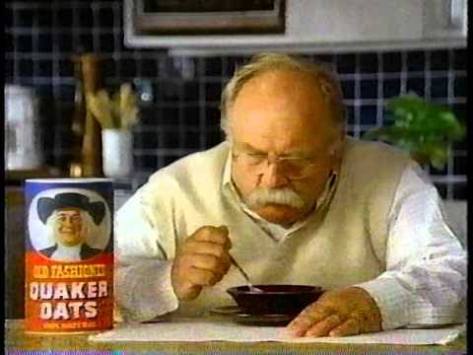
Yeah, I challenge you to name ONE person who was actually persuaded to eat Quaker Oats because of those weird appeals by Wilford Brimley. This was the weirdest ad campaign ever.
“It’s the right thing to do.”
Was it a f***ing moral dilemma?
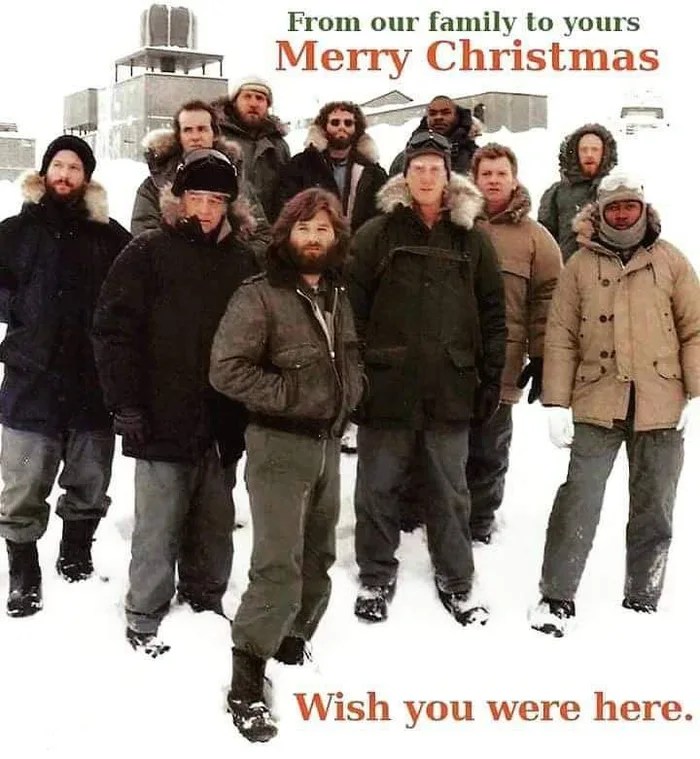
Postscript: no disrespect to the actor himself; Brimley was a sublime thespian. He was a key part of what is arguably the greatest science-fiction horror film of all time — John Carpenter’s 1982 masterpiece, “The Thing.” (I was actually unaware until writing this that he passed away back in 2020. ) THAT AIN’T FUCHS.
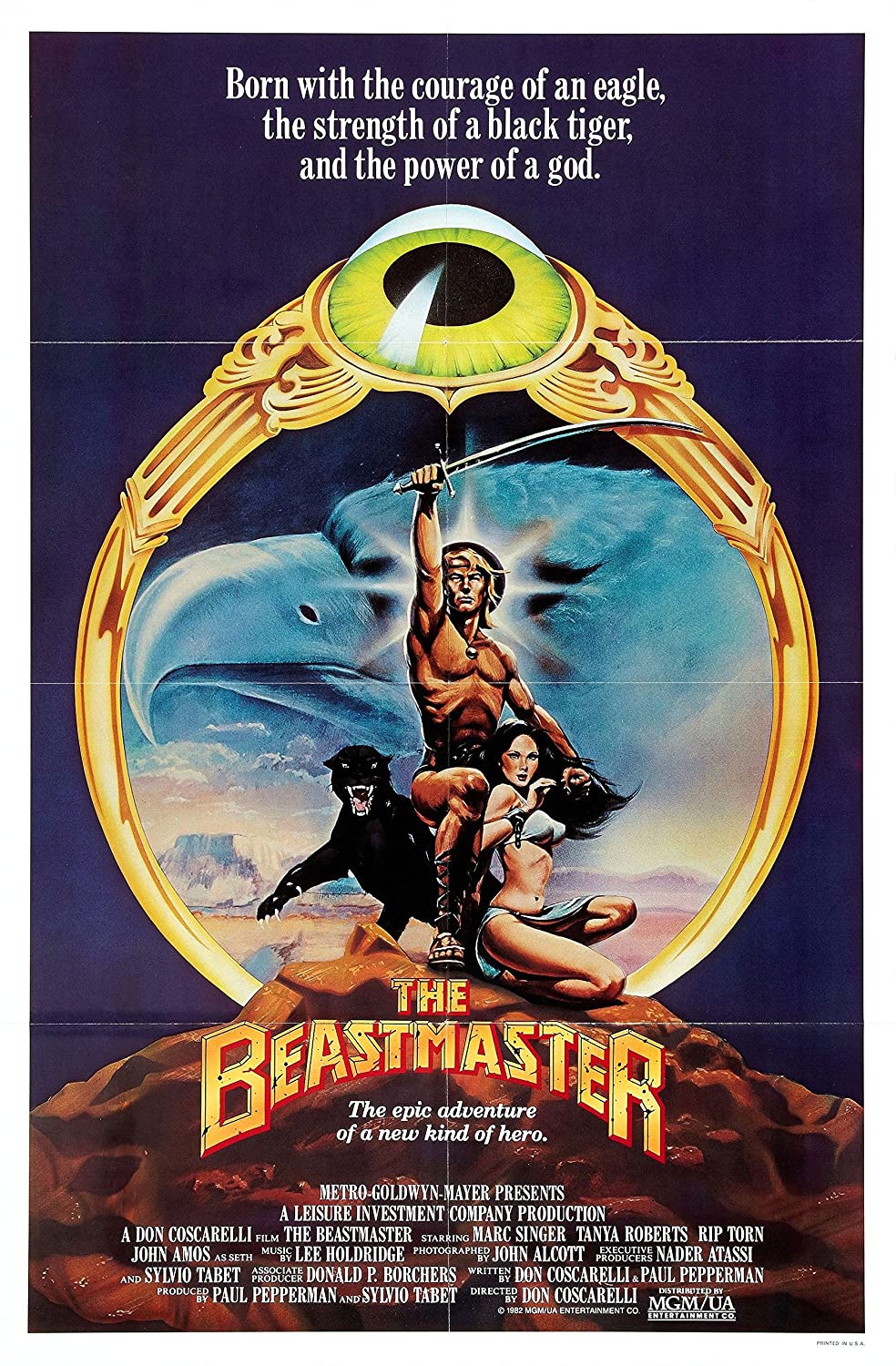
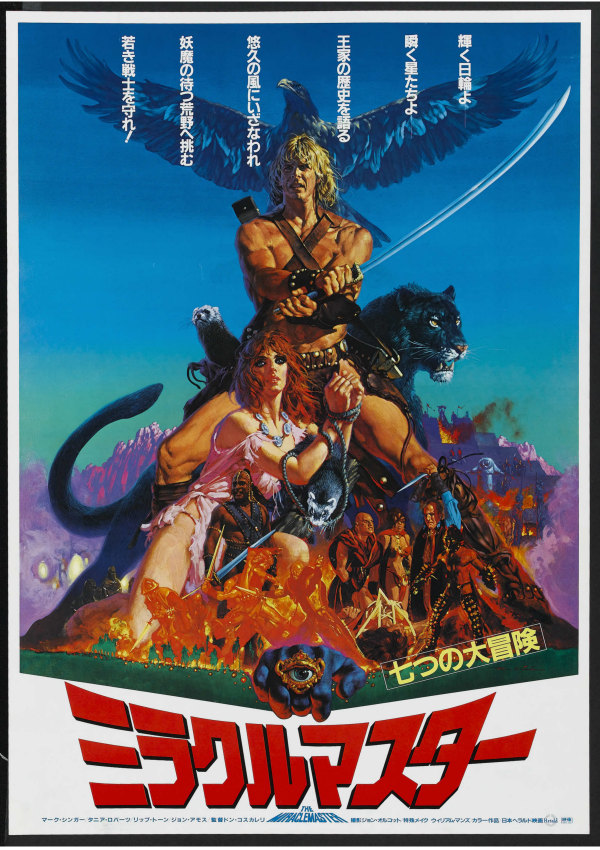
“The Beastmaster” (1982) was THE movie that captured the imaginations of grade-school boys in the 1980’s. There were summer afternoons when this was the single biggest topic of conversation.
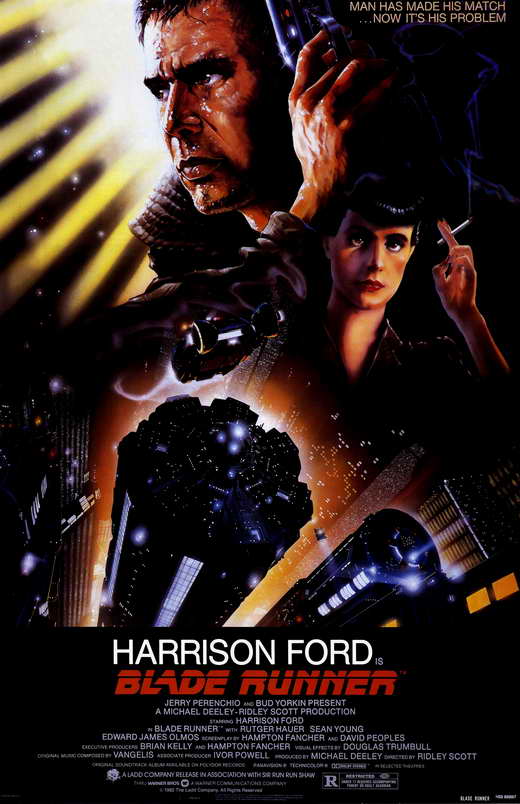
I almost wrote here that the movie was an obvious knockoff of the far-better-remembered “Conan the Barbarian;” that is how I’ve always remembered it. But the Internet informs me that they hit theaters only months apart. Wikipedia also informs me that “The Beastmaster” was actually a commercial failure, and that its two sequels and its television adaptation (all in the 1990’s) were aimed at a subsequent cult following spawned by the original movie’s appearance on 80’s TV. (I’m pretty sure that’s how my friends and I saw it.) What the hell was wrong with 1982 audiences, anyway? Was it something in the water? “Blade Runner” and John Carpenter’s “The Thing” were also flops that year — and those were some the best science fiction movies of all time. Talk about pearls before swine.
Anyway, please understand — “Conan the Barbarian” was inarguably the better film. No matter how much it polarized critics and audiences, that dour, violent, R-rated movie was intended as a serious adaptation of Robert E. Howard’s literary source material.
“The Beastmaster,” on the other hand, was campier stuff that was firmly aimed at kids. (I was surprised to learn that it had its own literary source material, but its B-movie wackiness only followed those books very loosely.) It had a PG rating and was jam-packed with garishly grotesque monsters that would thrill a fourth grade boy — the animalistic berzkers were what really got under my skin; my friends were more unnerved by the … bat-people. (There is a simple but quite effective 80’s-era practical effect that show how these baddies digest a victim alive. You kinda have to see the movie to know what I mean.) Hell, even the witches were a little creepy, and witches were not high on our list of things that were scary. I honestly think the film’s success owes a lot to its successful incorporation of horror movie elements designed to impress the younger set.
“The Beastmaster” starred Marc Singer, who went on to star in another 80’s phenomenon, television’s “V” series. (I might have loved “V” even more than “The Beastmaster.”) The movie also starred Tanya Roberts, who was another quite popular topic among gradeschool boys in the 80’s. John Amos starred in a supporting role, and he did a really good job of it. A lot of my older friends will remember him as the grouchy Dad in the “Good Times” (1974-1979); 80’s kids might point him out as the owner of “McDowell’s” in 1988’s “Coming to America.”
I really am curious to find out how well “The Beastmaster” has held up over time. I was surprised to discover that there is a great copy of it here on Youtube. (Thanks, VHS Drive-In.) You can bet that I’m watching it this weekend.
If you see an abundance of “The Thing” or “Blade Runner” posts today, it’s because both films opened in theaters 38 years ago today.
We … need a holiday or something. But “Thing/Blade Day” sounds too much like “Sling Blade Day.”
Anyway, both films resonate just fine in 2020 America. “The Thing” is predicated on paranoia about those around you. “Blade Runner” is technically about cruelty to illegal immigrants — and how “human” we all are depending on our reaction to that.
Hey … let’s not even get started on (the overrated) fan favorite “Tron,” also released in 1982. If you want to talk about a movie about a guy trapped in a virtual world and its parallels to the social media age, then I’m gonna need some more coffee.
I had genuine, serious, grownup responsibilities to meet yesterday.
And I was up sleepless at 2:21 AM the prior evening pondering what would happen if a group of Terminators fought John Carpenter’s “The Thing.”
I am 47 years old, people.
And I’ve got two more for you:
What would happen if The Blob fought The Thing? I suppose it all boils down to which has the fastest, most successful cellular-level method of attack. What about the baddie from Dean Koontz’ “Phantoms?”
And what would happen if the vampires from “30 Days of Night” fought the infected from “28 Days Later?” Sort of a … “30 Days of Night Later” kinda scenario?
There needs to be a name for this disorder I have. There needs to be hope for a treatment.
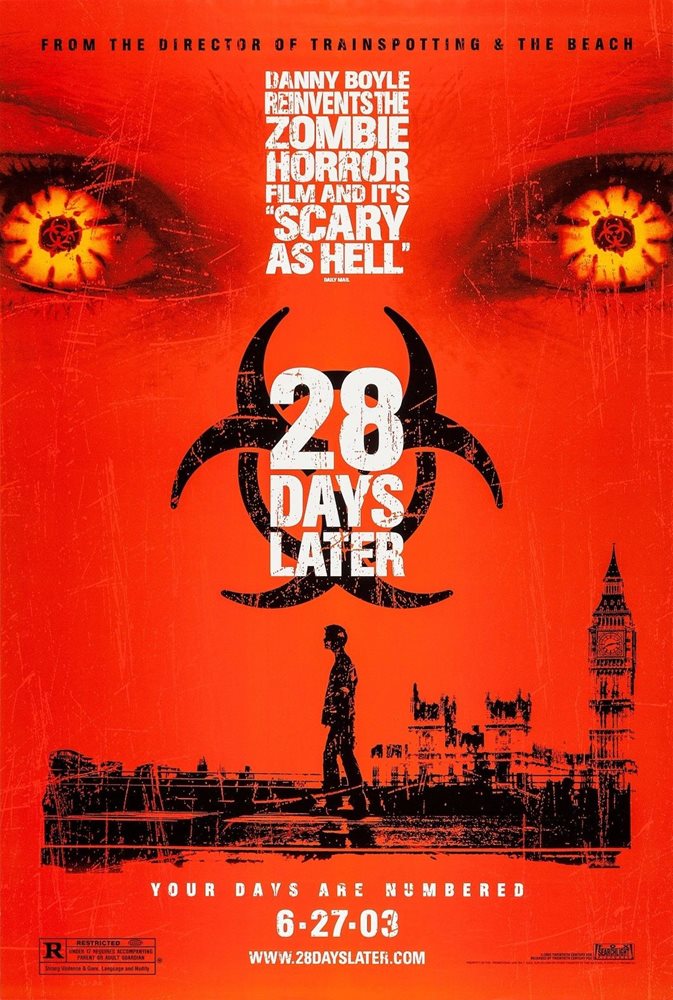
So I’m introducing a dear friend tonight to “28 Days Later” (2002). It is possibly my favorite horror film of all time, maybe even narrowly beating out “Aliens” (1986), “Alien 3” (1992), John Carpenter’s “The Thing” (1982), the Sutherland-tacular 1978 version of “Invasion of the Body Snatchers,” and George A. Romero’s first three “Dead” films (1968, 1978, 1985). (Whenever “Star Wars” fans refer to their “Holy Trilogy,” I muse inwardly that those last three are its equivalent for zombie horror fans.)
My friend thinks it’s funny that I refer to “28 Days Later” as “my sacred cow.” I’ll be crestfallen if she does not like it, and I told her as much. And that’s weird for me … I usually don’t feel let down when someone doesn’t enjoy the same books, movies or music that I do. Not everything is for everyone. Art would lose its mystique if it weren’t subjective. If all art appealed to all people, it would lose all its appeal altogether.
Part of me feels, unconsciously perhaps, that “28 Days Later” is the kind of film that “redeems” the horror genre (even though no genre needs such redemption — if art is well made or if it affects people, then it’s just fine).
Most comic book fans of my generation can tell you how people can occasionally roll their eyes at their favorite medium. (Comics have far greater mainstream acceptance today than when I started reading them in the 1990’s.) For horror fans, it’s sometimes worse. Horror is a genre that is easily pathologized — and sometimes with good reason, because a portion of what it produces is indeed cheap or exploitative. I wish I could accurately describe for you the looks I’ve gotten when acquaintances find out that I’m a horror fan. They aren’t charitable.
“28 Days Later” and movies like it are so good that they elevate horror to a level that demands respect from the uninitiated. It is an intrinsically excellent film — it just happens to have a sci-f-/horror plot setup and setting. It’s beautifully directed by Danny Boyle, it’s perfectly scored and it’s masterfully performed by its cast — most notably by Cillian Murphy and Brendan Gleeson.






 Eric Robert Nolan, Author