All posts by Eric Robert Nolan

Eric Robert Nolan graduated from Mary Washington College in 1994 with a Bachelor of Science in Psychology. He spent several years a news reporter and editorial writer for the Culpeper Star Exponent in Culpeper, Virginia. His work has also appeared on the front pages of numerous newspapers in Virginia, including The Free Lance – Star and The Daily Progress. Eric entered the field of philanthropy in 1996, as a grant writer for nonprofit healthcare organizations. Eric’s poetry has been featured by Dead Beats Literary Blog, Dagda Publishing, The International War Veterans’ Poetry Archive, and elsewhere. His poetry will also be published by Illumen Magazine in its Spring 2014 issue.

A few quick words on “The Rogue Cut” of “X-Men: Days of Future Past”

If you are a die-hard “X-Men” fan, then I do recommend checking out Bryan Singer’s non-canonical “The Rogue Cut” of “X-Men: Days of Future Past.”  You might enjoy it just for its novelty — it actually is a very different version of the original movie.  It has a lot of scenes that are either entirely new or shot and edited quite differently.  (The most notable difference, obviously, is an entire subplot concerning the rescue of Anna Paquin’s Rogue, which was deleted from the 2014 theatrical release.)

I get the sense that this will come across as a better film to “X-Men” purists.  There is greater attention to a multitude of characters, far more character interaction, and greater detail about the apocalyptic future segments.  (I myself was happy to finally figure out why the dystopian mutants were housed in such a strange looking building.  It turns out they were hiding in a Chinese temple as part of an ongoing global evasion strategy.)  “The Rogue Cut” also has greater continuity with more of the prior films — it feels integral to the films’ ongoing mythos, and less like a standalone adventure.

But “The Rogue Cut” might not be better at pleasing general audiences.  It clocks in at just under two and a half hours, and the overall result did feel far slower to me.  There is a reason why movies are edited down — their unabridged versions have problems with pacing that really can affect the average viewer’s enjoyment.

I will also point out that this version of the film fails to rectify what I’ll reiterate is the theatrical version’s biggest story flaw — why would the shape-shifting Mystique be the key to developing the Sentinels power-stealing technology.  Why not the power-stealing Rogue herself?

Anyway … speaking of what is canon and what is not, there is a damned interesting fan theory floating around about the “X-Men” movies following this year’s release of “Logan.”  That movie stood out for many reasons, but two in particular are relevant here.  The first is the radical change in its tone and storytelling, which makes it feel like it takes place in “the real world.”  The second is its odd, apparently meta-fictional inclusion of the “X-Men” comics themselves within the story.  (Copies of the comic books are discussed by the characters, and even serve as an important plot element; Wolverine complains that they are horribly inaccurate.)

Many fans are having fun wondering if there has, in fact, been only one canonical “X-Men” movie — and that is “Logan” itself.  The brutal, subdued reality of “Logan” alone is “the real world” of the X-Men; all of the fantastical prior films (which occasionally contradict one another anyway) are merely the stories inside the last movie’s comic books.  I thought that was pretty damned clever.


newcut2_by_joseelizondo-d901c11

Cover art for “Captain America: Civil War” #7, Steve McNiven, 2007

61uXUoa78EL

“A Republic, if you can keep it.”

Happy Independence Day, all!  Enjoy any celebrations you might attend, and please be safe.

The quote above is attributed to Benjamin Franklin.  Upon exiting the Constitutional Convention in 1787, he was asked by a bystander what form of government the delegates had created:

“Well, Doctor, what have we got—a Republic or a Monarchy?”

“A Republic, if you can keep it.”

His reply was documented by Dr. James McHenry, the delegate from Maryland.

The imperative implied in Franklin’s words is the same as what Thomas Jefferson expressed when he warned us that “The price of freedom is eternal vigilance.”


120504-M-IX426-237

Photo credit: By U.S. Department of Defense Current Photos (120504-M-IX426-237) [Public domain], via Wikimedia Commons.

“Flowers for Alnolan”

If you haven’t read Daniel Keyes’ outstanding novella, then check out Cliff Robertson in its excellent film treatment, “Ricky.”


20170703_142225

20170703_142406

“Zwei Hexen,” Hans Baldung, 1523

Two Witches

A short review of “Mr. Jones” (2013)

Right up until its final act, “Mr. Jones” (2013) amazed me by how good it was.  Here was a creative, thoughtful and extremely frightening found-footage horror movie.  It was so damned good that I was surprised that I hadn’t heard about it before.

The story idea was fresh and interesting — a young couple moves to an isolated forest cabin, only to discover that a mysterious neighbor is “Mr. Jones,” a legendary anonymous folk artist.  This hermit produces grotesque artworks — “scarecrows,” totems and dreamcatchers that he then mails to apparently random recipients around the world.  Not all of them are pleased with their macabre gifts, and their benefactor’s identity and motivations become the stuff of urban legends.  (Try to imagine H.R. Giger with a modus operandi like Banksy.)  There is a lot more going on here than a cliche yarn about a supernatural bogeyman.

The script is smart, the story is well developed, and the tension builds slowly and effectively as the tale unfolds for our two protagonists.  My only quibble is that the couple does incredibly stupid things, and are cheerfully curious about discoveries that should scare the hell out of them.  But that is a failing of so many horror films that I decided not to let it bother me.

Then the movie loses its way.  I’m disappointed to share here that this otherwise great film suffers because of its disjointed, meandering and consequently frustrating climax.  It’s too long, it’s too confusing, and it spends far too much time repeating redundant shots and scare-moments.

We see one character, for example, pursued by multiple adversaries … repeatedly.  Well, these adversaries stop being scary when the viewer eventually arrives at the conclusion that either A.)  they can’t catch this person or B.)  they can’t hurt this person.

At another point, a character must do something urgent, but receives contradictory instructions from different sources.  This plot development could have been damned unnerving in the context of our story, but it’s nearly lost in a confusing barrage of repetitive images and sounds.  Writer-director Karl Mueller strives to immerse the viewer in a kind of surreal “nightmare.”  But he makes a mistake that is common for surreal horror films — portraying confused and disoriented characters does not always require the viewer to be confused and disoriented.  A shorter, sparser, cleaner script would have saved what might have been a classic.

Oh, well.  This movie was still fun enough.  Again … much of it is quite excellent.  And another viewer might not be as turned off by its conclusion as I was.  I still recommend “Mr. Jones,” if a little reluctantly.  I’d rate it a 7 out of 10.


Mr-Jones-Poster1

“PEOMS: The Poetry of Dyslexia”

Coming soon from Eric Robert Nolan.

Advance copies available via proerder at Amazoc.nom.


Bee there or bee square.

There’s been some truly terrific new poetry published over at The Bees Are Dead; please stop by to enjoy a few dark or dystopian visions in verse.

The site is hosting both Paul Brookes’ “Telehaptic Love” and Wayne F. Burke’s “Bomber.”

You can also find what is a first for B.A.D. — Alastair Gambling’s “tone-poem,” entitled “A Certain Period.”  From the B.A.D. Facebook page: “Gambling is a musician/music teacher by trade and this composition is a feat of technical brilliance. Experimenting with minimalism, unconventional time-signatures and discordant harmonies, ‘A Certain Period’ builds-up gradually creating a wonderfully evocative soundscape of paranoia and timelessness with an appropriately sci-fi aesthetic – very dystopian!”


British_bee_journal_and_bee-keepers_adviser_(1908)_(20408064772)

Photo: Taken from British Bee Journal & Bee-Keepers Adviser, 1873.  By Internet Archive Book Images [No restrictions], via Wikimedia Commons.

Illustration of a hydra, from Conrad Gessner’s “Historia Animalium,” circa 1551

From Wikipedia: “Gessner was a medical doctor and professor at the Carolinum in Zürich, the precursor of the University of Zurich.  The “Historia Animalium” is the first modern zoological work that attempts to describe all the animals known, and the first bibliography of natural history writings.  The five volumes of natural history of animals cover more than 4500 pages …

“There was extreme religious tension at the time Historia Animalium came out.  Under Pope Paul IV it was felt that the religious convictions of an author contaminated all his writings, and as Gessner was a Protestant, it was added to the Catholic Church’s list of prohibited books.”


Hydra_04

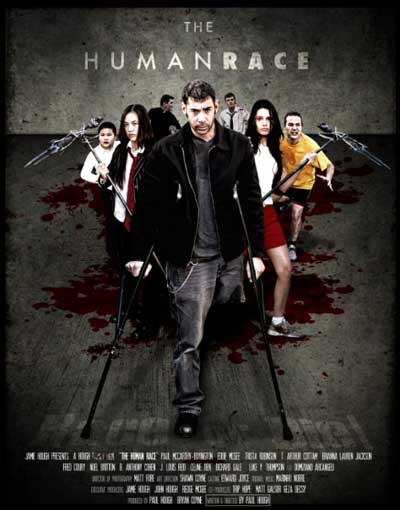
A short review of “The Human Race” (2013)

“The Human Race” (2013) isn’t really the under-recognized gem that I was led to believe it was — it’s actually mediocre in some ways.  The dialogue is downright bad, the acting is mostly below average, and the limited special effects budget definitely shows.

It … still held my attention, though, thanks to a devilish story concept and some brutal plot turns.  (Eighty diverse strangers are mysteriously transported to an isolated location, where powerful unseen entities force them to eliminate one another in a “race” to the death.)  I do realize that there have been a spate of low-budget, “Saw”-inspired movies like this, and that this kind of story device should be familiar to horror movie fans by now.

But there is some pathologically wicked story development here — consider, for example, that contenders include an elderly man, a pregnant woman and a veteran who has had a leg amputated.  And while several contenders make heroic choices, several others take a sociopathic glee in eliminating their opponents.  Writer-director Paul Hough might be terrible at writing dialogue, but he does know how to craft a surreal horror story with some horrific and unexpected turns.  (Yeesh.)

There is also a standout performance by Trista Robinson as a secondary character.  (She is the more tenacious half of a deaf couple who are teleported and forced to compete.)  In a film with little admirable acting, she still plays her role with skill and intensity.  This is a talented actress.

All in all, this is a flawed low-budget film that is still decent fare for a horror fan.  I’d rate it a 7 out of 10.


The-Human-Race-2013-Movie-Paul-Hough-8