All posts by Eric Robert Nolan

Eric Robert Nolan graduated from Mary Washington College in 1994 with a Bachelor of Science in Psychology. He spent several years a news reporter and editorial writer for the Culpeper Star Exponent in Culpeper, Virginia. His work has also appeared on the front pages of numerous newspapers in Virginia, including The Free Lance – Star and The Daily Progress. Eric entered the field of philanthropy in 1996, as a grant writer for nonprofit healthcare organizations. Eric’s poetry has been featured by Dead Beats Literary Blog, Dagda Publishing, The International War Veterans’ Poetry Archive, and elsewhere. His poetry will also be published by Illumen Magazine in its Spring 2014 issue.

Season 1 of “Westworld” was fantastic.

The premise for HBO’s “Westworld” sounds like a bad situation comedy — robot cowboys entertain the rich at a futuristic theme park.  There are showdowns and shootouts, and hilarity ensues when the guests fall in love with the coy robot ladies.

But “Westworld” is an arguably brilliant serial science fiction thriller, far transcending its gimmicky central plot contrivance.  It is occasionally weighted down by some challenges with pacing, story structure and exposition.  But I still loved it enough to get hooked on it immediately, and I’d give it a 9 out of 10.

I think it’s the smartest science fiction show I’ve seen in a long time.  Its brilliance doesn’t stem from its kitsch premise.  (I haven’t seen the original 1973 film based on Michael Crichton’s screenplay, but I’ve seen it lampooned at least once.)  It generally doesn’t extend from the show’s many twists and surprises, however well executed they are.  Nor does it stem from the show’s ambitious discussions of the nature of consciousness.

Its brilliance, in my opinion, stems from its nuanced and surprisingly disturbing depiction of human evil.  Of course there’s the obvious — the theme park exposes human depravity by allowing people to rob, rape and murder lifelike human surrogates with impunity.  But there is far more that the show has to say.  To get a sense of it, you have to watch the entire 10-episode season, and see several key character arcs reach completion.  One of these arcs was so dark and cruelly contemplative that it’s stayed with me long after I watched the final episode.

The show is well made at every level.  It’s gorgeously shot, at locations throughout California, Utah and Arizona.  The special effects are great.  Anthony Hopkins is characteristically perfect as the park’s patriarch, and Jeffrey Wright is terrific as his well meaning right hand.  (That actor is starting to grow on me.)  The entire cast is quite good — even those in relatively minor roles, like the two hapless technicians (nicely portrayed by Leonardo Nam and Ptolemy Slocum) who become entangled in the events connected with the park’s malfunctions.

Ed Harris, however, consistently steals the show as “the Man in Black,” a park guest who vacations as a brutal rapist and murderer (and who we learn has another agenda, as well).  He’s chilling.  I never really saw Harris as an amazing actor before, despite seeing him in many roles, including his memorable turn in “A Beautiful Mind” (2001).  But he was incredible here.

I wanted to give this show a perfect 10, but even someone who loves it as much as I do can see the weaknesses of this first season.  Overall, “Westworld” is sometimes too drawn out.  I feel the plot moves forward rather slowly, and I think Season 1 would be perfect if only it were carefully edited down from ten to maybe seven episodes.  I found myself getting a little frustrated by the the fifth episode, when we see two major characters follow arcs that seem redundant.  (I’m being intentionally vague here to avoid spoilers.)

The problem is compounded by the deliberately superficial nature of “Westworld’s” setting.  This is a theme park with stereotypical stock characters associated with Hollywood westerns.  Accordingly, its inhabitants have overly stylized speech and behavior.  Furthermore, these androids are programmed to follow the same “loops” repeatedly, as the same preconceived story “narratives” are reused to entertain new patrons of the park.

It gets annoying.  Yes, I know it makes perfect sense and is necessary in the context of the story.  But it can be grating to someone who tunes in to see a science fiction show, and not a cheesy western.  James Marsden is a decent enough actor, and he’s well cast as “Westworld’s” prototypical “good guy” cowboy.  But seeing this character’s shtick over and over was irritating.  So, too, were the sassy ladies at the brothel and some other minor characters.

Finally, I suggest that, for some viewers, “Westworld” may be hard to follow.  I occasionally found it that way.  There are twists that are wonderfully well crafted, gradually deciphered mysteries, and a very layered backstory.  Finally, the show’s discussions of things like consciousness, morality and artificial intelligence can sometimes border on the didactic.  (It helps a hell of a lot, though, when the actor delivering the exposition is the priceless Hopkins.)  It’s a lot to take in.  People tuning in should be prepared for some challenging, cerebral science fiction instead of easily digested, escapist fantasy.

All in all, this show was superb.  If you’re a science fiction fan, you need to at least give it a try.

Unnecessary postscript: actor Jimmi Simpson sure looks a hell of a lot like a young Christian Slater.


evan-rachel-wood-as-dolores-abernathy-ed-harris-as-the-man-in-black-c1


Norman Rockwell’s “April Fool, 1948”

One of his annual humorous covers for “The Saturday Evening Post.”

How many “foolish” things are depicted here?

Because I worked hard for that doctorate.

The off-brand knock-off of Dr. Pepper is named “Dr. Perky” and, for some reason, that is very, very sad.

One of my Mary Washington College alums suggested that “Dr. Pervy” would be a catchier name, but I’m already using that for my Match.com profile name.

Do I LOOK any perkier?  I’m feeling more chagrined that I bought a 12 pack of this, even if it was only $2.35.  It tastes like water, sugar, and just a touch of peppermint-flavored cough syrup.


20170331_200513


“Look on my works, ye Mighty, and despair!”

“Ozymandias,” by Percy Bysshe Shelley

I met a traveller from an antique land
Who said: Two vast and trunkless legs of stone
Stand in the desert. Near them on the sand,
Half sunk, a shatter’d visage lies, whose frown
And wrinkled lip and sneer of cold command
Tell that its sculptor well those passions read
Which yet survive, stamp’d on these lifeless things,
The hand that mock’d them and the heart that fed.
And on the pedestal these words appear:
“My name is Ozymandias, king of kings:
Look on my works, ye Mighty, and despair!”
Nothing beside remains: round the decay
Of that colossal wreck, boundless and bare,
The lone and level sands stretch far away.


Ozymandias

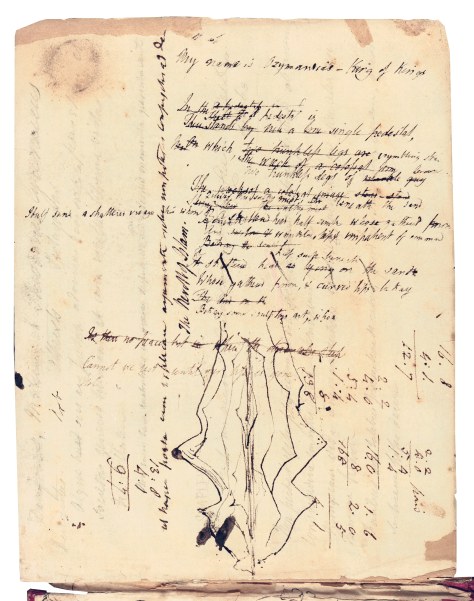
1817 draft of Ozymandias. Bodleian Library, Oxford.

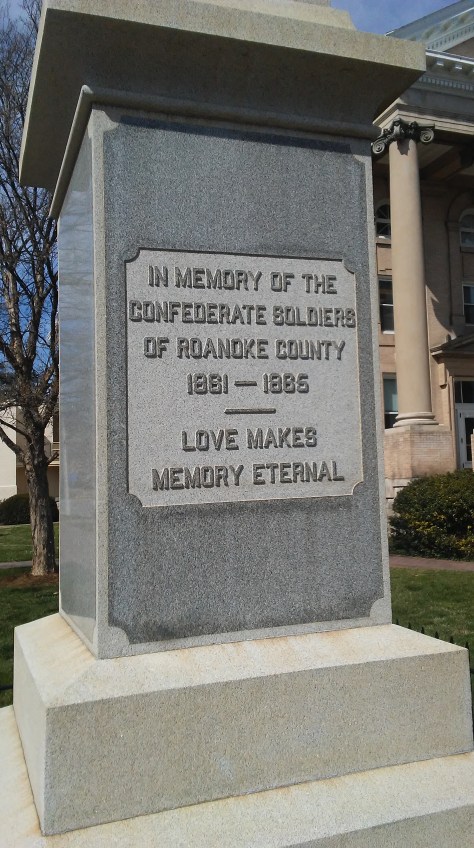
Confederate monument outside Roanoke College, Salem, Virginia.

Erected 1909, facing East Main Street.


20170323_152651

20170323_152618

“Life’s” a bitch.

Or at least it is to the astronauts who make an abortive attempt to escort it back to Earth.  (They realize that bringing a Martian organism home is a bad idea in this year’s surprisingly satisfying science fiction-thriller.)

I actually had more fun with this than I expected; the movie is much faster paced and scarier than the trailer made it look.  There are some real surprises and moments of genuine horror here, following a requisite plot setup that is relatively brief.  It’s a really nice monster movie that should please fans of the genre.

I actually didn’t prefer its ending, which is something for which other reviewers are praising it a lot.   I’m disinclined to say more, for fear of spoilers.  The movie’s marketing already spoiled enough.  (The ads infuriatingly show the fate of a main character.)

I will say what the movie is not, however.

One, it’s not a stealth prequel for Sony’s planned 2018 “Spider-Man” spinoff, “Venom” (though that’s such a clever idea, I wish I’d thought of it).

Two, it’s not a ripoff of Ridley Scott’s “Alien” (1979).  Yes, it’s got the same MacGuffin, and some story parallels that I noticed early on.  But I like to think of this as a more grounded contemporary thriller, where “Alien” was a futuristic fantasy creature feature.  Besides, if we criticize every “haunted-house-in-space” movie as an “Alien” imitator, we won’t get more of them.

I’d give this an 8 out of 10, and I’d recommend it.


life_ver2

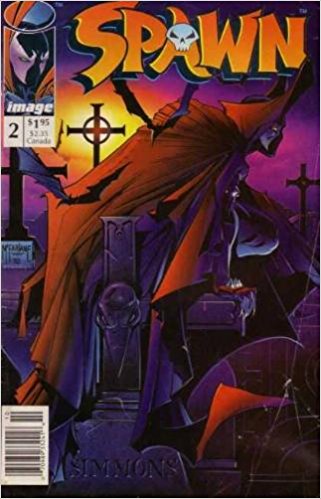
Throwback Thursday: the Debut of “Spawn” Comics (1992)

I remember greedily snapping up the first two issues of Todd McFarlane’s “Spawn” comic in the spring of 1992.  Comics fans were excited about it — it was the de facto flagship title of the newly created Image Comics, which was bringing its own ambitious interconnected comic book universe to the shelves to compete with “the Big Two,” Marvel and DC.

There already was a competitive third major comic publisher — Dark Horse Comics.  But it had no successful superhero titles or shared universe; it instead was known for science fiction and horror comics.  I also remember seeing comics back then from the short-lived Valiant here and there — or maybe it was mostly ads in the Comic Shop News.  I didn’t know a single soul who read them, though.

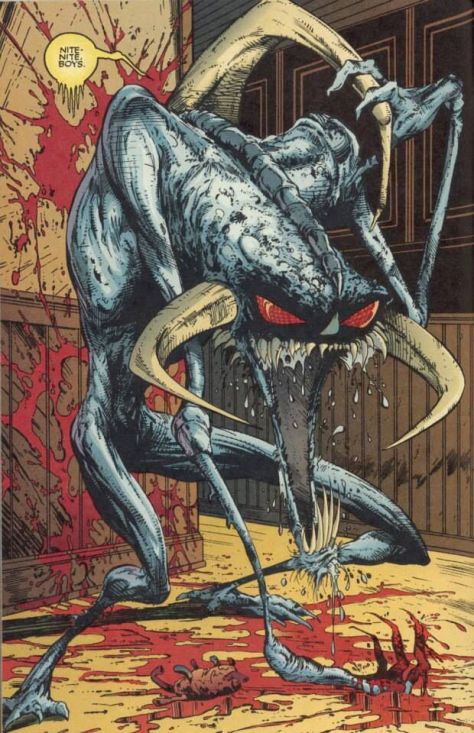
McFarlane was nothing short of famous in the comic book fan community, after his broadly popular work on “Spider-Man.”  (I still love his unique style.)  And “Spawn” had an absolutely subversive flavor to it.  Its title anti-hero was nothing less than an agent of hell, and the comic revolved around hell, sin, damnation and various demons.  There was also far more violence and gore.

“Spawn” felt subversive, too, because of the impetus behind its creation.  Image Comics was launched by a group of artists who were unhappy with Marvel’s failure to grant them creative control over their work (or, according to the artists, proper merchandising royalties).  They included McFarlane, and fan-favorite artists Rob Liefeld, Jim Lee and Marc Silvestri, among others.

I don’t pretend to know how justified their complaints were, as I was only a fan and not an industry insider.  But they sound right … I’ve always heard that major comic companies have historically screwed over their creative talent with restrictive “work-for-hire” payment arrangements.  (This is why Stan Lee, creator of so many of Marvel’s first heroes, is not absurdly wealthy.)  The start of Image seemed to fans like their favorite artists rebelling against the status quo, and that was kind of exciting.

Some of McFarlane’s acrimony with Marvel was pretty overtly expressed in the pages of “Spawn.”  There was a weird, slightly confusing plot digression early on in which McFarlane editorialized heavily about creator-owned characters … Spawn actually visited a kind of purgatory where various leading Marvel and DC heroes were imprisoned.  It seems in retrospect like a labored and self-indulgent metaphor, and it detracted from the title’s story.  But the college kids then reading “Spawn” had never seen anything like it.  It was interesting at the time.  (Bear in mind, please, that this was before the Internet.)

I started picking it up regularly.  I was going to the comic shop that was on … George Street, I think, in downtown Fredericksburg, Virginia.  There were only two comic shops in the downtown area in the early 1990’s — this one, and a seedy shop across from the Hardee’s on northern Princess Anne Street, in a tiny corner of a ramshackle, abandoned hotel.  There was a categorically unpleasant, batshit-insane woman staffing the latter – she was nasty to everyone who entered, and accused them of touching the merchandise.  (That part of Princess Anne Street has since been improved – I think the huge hotel building has since been renovated.)

As the “Spawn” title progressed, its fandom became firmly entrenched.  The art truly was fantastic, and of course it remains an incredibly successful group of comic properties today.  Over time, McFarlane’s critics also grew in number … no matter how gifted he was as an artist, fans said he wasn’t a terrific writer.  (And I do get what they’re saying.)  I will say this — the “Spawn” comics I was reading were a thousand times better than that weird movie adaptation in 1997.  I’ve only seen bits and pieces of that, but they were terrible bits and pieces.

I still think I’d have a great time perusing my back issues.


Spawn-1

41xEvucyk-L._SL500_SX319_BO1,204,203,200_

7df869d110ee2fcf1af64d8f9f1fa8a4

aad31586d7576e942f6eafba618445f4

I just watched the trailer for Stephen King’s “IT” (2017) …

… and I’l be damned if it didn’t give me the shivers.

Watch at your own risk:

20170327_081843

“As Zion’s Drawn,” by Dennis Villelmi

There is a dichotomy to Dennis Villelmi’s poetic voice.  His work is at once grotesque and baroquely alluring; his poems are beautifully crafted to describe appalling subjects.  I think that this is what makes me envy and return to his work, time and again — in addition to the facts that Dennis is a valued friend and that I enjoy dark poetry.  I think that if I had to sum up what attracts me to his poetry, it would be his apparently effortless mastery of juxtaposing elegant language with horrifying subjects.

His newly published “As Zion’s Drawn” is an excellent example.  (You can find it here over at The Bees Are Dead.)

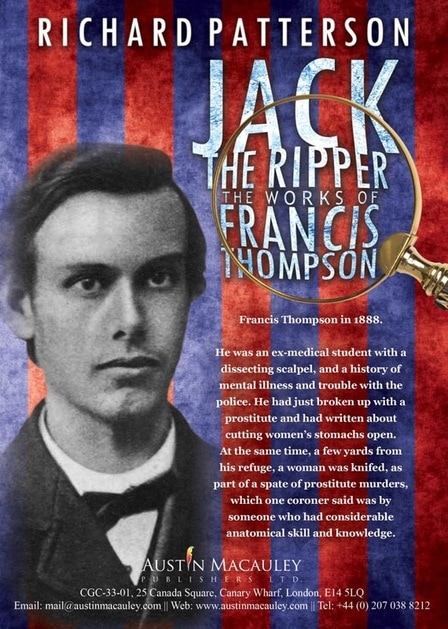
This is the second in Dennis’ series of poems inspired by the research and writing of Richard Patterson, who has traveled the world gathering historical evidence that Jack the Ripper was actually former medical student Francis J. Thompson.  (Mr. Patterson has graciously given his approval to Dennis and B.A.D. for this literary homage.)  For more information about Patterson’s startling body of work, visit his website here at http://www.francisjthompson.com/.

For the first installment in this series of poems, please see “The Hidden Player” at The Bees Are Dead.


book-poster