This is from the botanical gardens at Dumbarton Oaks in 2015.
I’ve always been a goofy looking mamajama, but damn if I wasn’t slimmer back then.


This is from the botanical gardens at Dumbarton Oaks in 2015.
I’ve always been a goofy looking mamajama, but damn if I wasn’t slimmer back then.
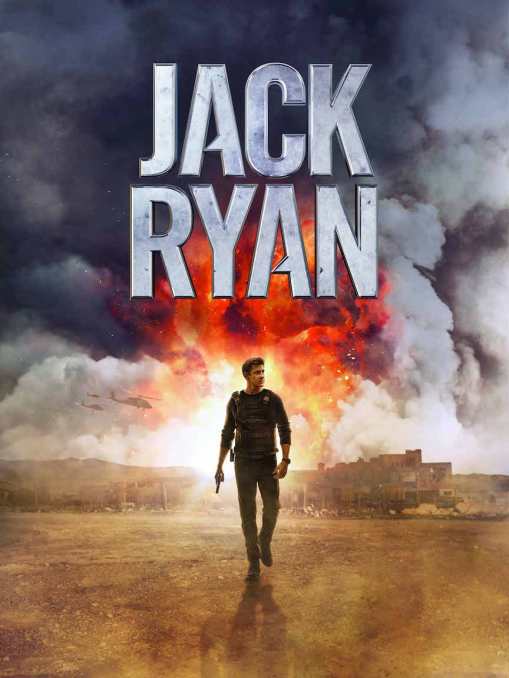
I didn’t quite love the first season of the “Jack Ryan” television series, but I still really, really liked it. It’s a decent adaptation of Tom Clancy’s source material, albeit a very loose one. (And that’s just fine — we already have a number of excellent films that closely adapt the events of the books; we don’t need another methodical retread of the author’s novels.) I’d rate this an 8 out of 10.
There are some narrative weaknesses, particularly in the show’s failure to sustain tension between its episodes. And there are some surprise plot developments that the show telegraphed a bit obviously. (I usually don’t pick up on these things, but even I saw the clues.) There is also a subplot involving a drone operator that is largely unnecessary … some viewers will find it interesting while others will not.
“Jack Ryan” also suffers just a little in comparison with the Audience network’s superior “Condor” (2018). That excellent show covered much of the same subject matter, with its own ordinary CIA-analyst thrust into deadly game with terrorists. Season 1 of “Condor” was better written, boasted an amazing cast, and was far more frightening.
John Krasinski does a good job as the title character. I’ve always thought that this character would be tough for an actor to play, simply because he is so consistently nondescript. (The whole character concept is that he usually appears to be an especially bright but otherwise ordinary civil servant … his background as a United States Marine and his patriotism and courage aren’t things that he advertises.) Krasiniski’s Ryan is closer to that of the books than the version we see in the Harrison Ford films. I love Ford as much as the next person, but his interpretation of the character was too a bit too meek and diffident for me. That wasn’t quite the Jack Ryan that Clancy created.
What’s strange about the show is that it truly shines when deviates widely from the source materiel — especially in the character of Jim Greer. He is played to perfection here by Wendell Pierce, and he is no longer the gentle, wizened father figure that we saw in his counterpart from the books and movies. Nor is he a minor character — Pierce’s Greer is a gruff, pissy operations man fresh off of an ominous and unfair demotion, who shoots and runs right alongside Ryan when the bad guys attack. It sounds preposterously stupid. But … it works — largely, I think, because of Pierce’s talent. He’s a good enough actor to sell the idea and he invests Greer with a kind of perpetually disgruntled, antisocial charm. I honestly would continue watching this show if it focused on him as the main character.
Teck Publishing.

I lived at West Egg, the – well, the least fashionable of the two, though this is a most superficial tag to express the bizarre and not a little sinister contrast between them. My house was at the very tip of the egg, only fifty yards from the Sound, and squeezed between two huge places that rented for twelve or fifteen thousand a season. The one on my right was a colossal affair by any standard … My own house was an eyesore, but it was a small eyesore, and it had been overlooked, so I had a view of the water, a partial view of my neighbor’s lawn, and the consoling proximity of millionaires — all for eighty dollars a month.
— from F. Scott Fitzgerald’s The Great Gatsby
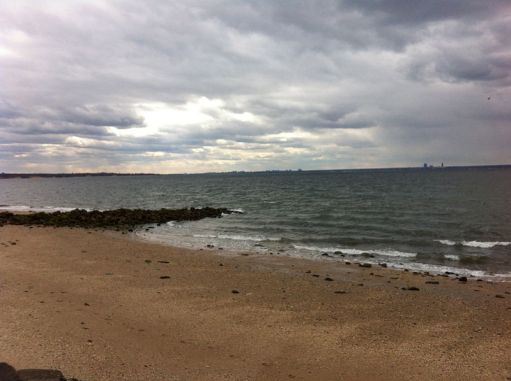
Welwyn Preserve Park in Glen Cove, New York. Photo credit: Michael Sean Gallagher [CC BY-SA 2.0 (https://creativecommons.org/licenses/by-sa/2.0)%5D
Today’s agenda — get rich quick by selling pirated copies of 1985’s “Ladyhawke” to millennials.
Tell them it’s a soon-to-be-released “Game of Thrones” prequel that was leaked from HBO.
HOUSE NAVARRE!!!!

HBO’s “Chernobyl” (2019) is … flawless, as far as I can tell. I can’t name a single criticism I have of its writing, directing or performances. It is among the best miniseries I’ve ever seen, and I don’t hesitate to rate it a 10 out of 10.
I can’t comment with any credibility about its historical accuracy, of course. I know that the character of Ulana Khomyuk (wonderfully played by Emily Watson) was a composite meant to represent a number of scientists responding to the world-changing 1986 nuclear disaster; HBO notes this in its closing notes of the last episode. But, to an average viewer like myself, the show certainly felt accurate — not once did I pause to remember that I was watching a TV show, and not getting a real-life glimpse into the closing days of the Soviet Union. There is an immersive authenticity to “Chernobyl” that underscores every second of the horrors it depicts.
The entire five-episode program is an exercise in balance. Screenwriter Craig Mazin deftly portrays terrifying events (including the effects of radiation exposure on average people nearby) without sensationalizing them.
The show does a masterful job of explaining the necessary technical information without overwhelming the viewer. I typically have some trouble following material like this, and I understood most of it. (The relationship between Jared Harris’ character and Stellan Skarsgard’s character helps quite a bit. The former is a leading nuclear scientist who explains things in layman’s terms for the latter, who is a high-ranking Soviet official supervising the disaster response.)
And the script is ultimately quite moving, without once approaching the threshold of melodrama. The character interaction and dialogue is a lot more restrained than you might expect for this subject matter. But I was surprised at the sense of sympathy for the Russian people that this engendered for me, and at the dismay I felt for the visceral technological horrors they faced. (The show admirably highlights how average Russians were very much like Americans in 1986, albeit under an oppressive government. It was ironic how some characters ominously referred to “The West,” with the same apprehension as people here in the 1980’s referred to “the Russians.”)
It’s a nuanced script too. By the times the miniseries concludes, the viewer comes to understand that the putative “bad guys” are scapegoats who are not fully and solely responsible for the disaster. (And the character arc for Skarsgard’s bureaucrat is a compelling redemption.) More troubling, though, is that some of the “good guys” we are rooting for are also not completely inculpable.
For me, though, Chernobyl succeeded mostly because of Harris and Skarsgard. They were both phenomenally good — perfect, in fact. They are accomplished actors who have the subtlety and restraint to play men from a stoical culture who must nonetheless have human reactions to tragedy.
I obviously recommend this.

Lithograph.

I mentioned last week when I wrote about “Mazes and Monsters” (1982) that the pre-Internet age still had its share of urban legends. They were definitely a part of 1980’s kid culture in my little stretch of New York suburbia. (Would they be suburban legends, then? Borderline-rural legends?) They were bandied about most often during the summertime — maybe because there were long, idle days when grade-school boys had little to do beyond swap the scary stories they’d heard.
A lot of it was predictable horror-movie fare — we’d all compared tales about prowlers who killed babysitters, or babysitters who killed their charges, or about a friend’s cousin’s neighbor’s classmate who’d discovered a razor blade in the their Halloween candy.
Some of the legends stemmed from our geographic area. There were the giant turtles, for example, that emerged from the Long Island’s waterways to stalk our neighborhoods — that one I actually believed (and still do). A fellow Cub Scout and his Scoutmaster father had both seen one, and if there’s one person you trust when you’re a Cub Scout, it’s another Scout and his Scoutmaster dad who backs up his story. And every kid had heard about the Amityville Horror house.
Another local myth was the “gangs” who tore through our imaginations as nefariously as we thought they tore through the region’s woods and marshes. (In addition to farmlands, Long Island has plenty of protected woodlands and wetlands.) There were definitely adults who went into the woods to break the law — I think it was primarily drug users and underage drinkers, and people who dumped cars illegally and then stripped them for parts. There were a few deep-woods graveyards, for example, of rusting white Volkswagen “Bugs.”
But in our fecund imaginations, the petty criminals who’d left them there were gangs of bikers and hippies and devil-worshippers and ruthless car thieves, who just might kill a few young kids if they found them playing army or going on a hike. (All of us occasionally ventured miles into the woods for such avocations, while we told our mothers that we were only going to the next block. If you were a boy in my neighborhood who didn’t lie to his mother to leave the area, you were considered a wimp.)
When you’re in the second or third grade, bikers and hippies and devil worshipers and car thieves all blended together in your mind into one single nebulous group. (As an adult today, if I ever met someone who was a biker, a hippy, a devil worshipper, and a car thief, I would be thrilled to interview them for this blog.) We’d found evidence. There were frequently peace signs spray-painted on or around the junked cars we liked to play on; it was just a motif of the prior decade that was still a popular graffito. One of our number gravely explained to the rest of us that it was actually a coded symbol for Satan — if you turned it upside down, the lines in the circle represented the head of a goat.
Continue reading Throwback Thursday: 1980’s urban legends on Long Island!
Jerry started to shell the beach at about 9 AM. Suddenly, all hell let loose.
The beach was under fire from shells, mortars and machine guns, we dived for cover. The sea was covered in blood and vomit and flies began to arrive by the thousands, which created another nightmare…
We continued all night and the following day without a break. Slowly, slowly we overcame all the nightmares …
There was no lack of humor. A soldier coming ashore asked, “Is this a private beach? I was promised a private beach. If not I am not staying.”
And we heard, “My mother told me not to travel by air, she thought it was much safer by sea.”
An army officer came ashore and instead of getting his men off the beach quickly, he stopped to consult his map. I approached him, “Sir, off this beach, now!” ‘
“And who are you?” he asked. “Sorry, no time for introductions.”
— David Teacher, No. 71 Royal Air Force Beach Unit, No. 2 RAF Beach Squadron and No. 2742 Squadron, RAF Regiment.
Today is the 75th Anniversary of the Normandy Invasion.

DC Comics.


