Throwback Thursday: the Indiana Jones “Find Your Fate Adventure” books!

Here’s another happy Christmas memory — the Find Your Fate Adventure  books featuring Indiana Jones.  I was happy indeed when Santa brought these.  They were first published by Ballantine Books in 1984 and 1985, and they were basically Choose Your Own Adventure books in which you teamed up with Indy in the same type of archeological adventure you saw in the movies or in his comic book series.

Like most series of this type, they were penned by different authors and tended to vary in quality.  The second book, “Indiana Jones and the Lost Treasure of Sheba,” was authored by Rose Estes, who wrote some terrific title in the Endless Quest series, TSR’s own excellent take on the format in the Dungeons & Dragons genre.  There also were several written by R.L. Stine, they were reprinted in the 90’s following his popularity with his Goosebumps series.

I had the first four that you see below.  I seem to remember one being kinda bad, but I’m not sure I remember which.  It might have been Andrew Helfer’s “Indiana Jones and the Cup of the Vampire.”  (It was whichever book portrayed the reader as Indiana Jones’ cousin, who he repeatedly addressed as “Cuz.”)  The other books were damned great fun, though.  I do remember Estes’ “Lost Treasure of Sheba” being quite good.

I never owned the fifth book you see below, and never read it.  I can’t resist including it here, though, simply because of its title — “Indiana Jones and the Ape Slaves of Howling Island.”  If that isn’t the most interesting title in the history of western literature, I don’t know what is.  I’m 45 years old, and I would snap that up right off the bookstore shelf if I saw it.  Somebody should have gotten a raise for that one.


5498531070_32460746c1_b

51bBnM5u8eL

IndianaJonesAndTheCupOfTheVampire

IndianaJonesAndTheCultOfTheMummysCrypt

IndianaJonesAndTheApeSlavesOfHowlingIsland


Cover to “Aliens: Hive” #4, Kelley Jones, 1992

Dark Horse Comics.  This series has apparently since been retitled “Alien: Harvest.”


alienshive4

To those rebutting my “Star Wars: The Last Jedi” review:

(Specifically my complaint that the near-godlike “Force” powers employed are neither supported by the script nor precedented in the prior films.)

The Force is the Force, of course of of course,
And no one can limit the Force, of course,
Unless, of course, they use the Force
As a shameless deus ex machina!!!

[sung to the tune of “Mister Ed”]


Warriors_Star_Wars_The_Last_Jedi_Swords_535028_716x1024

“How do we abolish the Electoral College?” (Robert Reich)

Interesting.

“Landscape Near Schilde,” Jean Pierre François Lamorinière, 1871

Oil on panel.

Jean_Pierre_François_Lamorinière_-_Loneliness._Landscape_near_Schilde

A short review of “Star Wars: The Last Jedi” (2017)

I’ll never be able to love “Star Wars” the way its lifelong fans do.  After the unexpected magic of the first three films, the subsequent movies almost always seemed to me to be just space fantasies for kids, formulaically developed to hit all the right notes and sell licensed merchandise.  (The exception would be last year’s generally excellent “Star Wars: Rogue One,” which uniquely felt like a genuine, human story that a creator wanted to tell, rather than something brainstormed until consensus in a corporate writers’ room.)  With that said, I’ll happily report here that “Star Wars: The Last Jedi” was actually very good — as someone with little favorable bias toward the franchise, I’d rate it an 8 out of 10.

The movie simply got more right than it got wrong.  It’s still a marketing-oriented space opera developed for mass appeal, but it managed to rise above that because its many elements included more hits than misses.

If I had to pick one thing that made this movie succeed for me, it’s the balance it struck between its epic war story and its narrower sword-and-sorcery central plot thread.  I like how the film began with an interstellar war — it had ordinary, mortal, relatable human characters fight and make sacrifices.  Anyone can relate to characters like that because they are interchangeable with people fighting a war in our world.  (It was also excellently rendered, in terms of fantastic visuals and some creative ideas.)  Only afterward does the movie layer in the far-out Jedi stuff, which contrasts the war story and adds complexity to it.

The second thing I liked about it was its terrific special effects — I’ve never seen a “Star Wars” movie without them, even if the prequels had a more cartoonish, toylike quality to what they depicted.

The third, I think, was the return of Mark Hamill’s Luke Skywalker.  Hamill is actually quite a good actor, and his skilled turn here was alternately funny and dramatically convincing.  I found myself more nostalgic after watching Luke’s return to the franchise than after Han Solo’s return in “Star Wars: The Force Awakens” (2015).  (And I love Harrison Ford just as much as everyone else in the universe.)

Is there a lot to nitpick?  Sure.  In addition to some plot holes, the character of Rose was rather annoying.  (Spunky young idealists can grate on the nerves if they’re too cutesy and seem to ingratiate themselves to the viewer.)

But a far larger weakness is that “the force” has become more of a deus ex machina than ever before.  I can’t be specific here because I want to avoid spoilers, but both the Jedi and their Sith counterparts employ incredible new powers in the movie that are absolutely unprecedented.  It isn’t explained at all, and it isn’t consistent with any prior “Star Wars” movie.  And it feels like a cheat that is both sweeping and … a little strange.

Still, I’d recommend this movie — even if you didn’t love every “Star Wars” movie you’ve seen in the past.

I’ll end with a quick note about the “porgs” — those little penguinesque aliens that are supposedly dividing longtime fans into opposing war-camps.  I loved the damn things.  It makes perfect sense that Luke’s hideaway planet would have local fauna.  And I read that the filmmakers actually did include them for an understandable reason.  The island shooting location’s landscape was inhabited by puffins.  It made more sense to overwrite them with CGI stand-ins than to digitally remove them altogether.


the-last-jedi-theatrical-blog

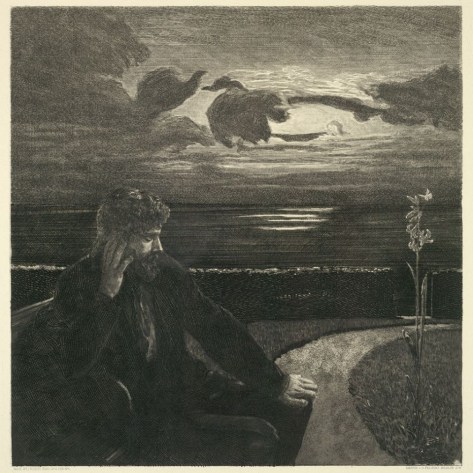
“Angelus,” Theodore Robinson, circa 1879

Oil on canvas.

Theodore_Robinson_-_Angelus

All I want for Christmas is a new Commander-in-Chief.

I know I’m addressing here what’s already appeared all over the news, but here are the seven words that the Trump administration has allegedly banned from appearing in The Center for Disease Control’s budget documents.  (In fairness to the administration, CDC Director Brenda Fitzgerald tweeted Sunday to dispute those claims, which first appeared in The Washington Post.  You can read about her response here.)


25299022_458467327880920_2898447825508834549_n

“Santa and Expense Book,” Norman Rockwell, 1920

Cover of The Saturday Evening Post, published December 4, 1920.

Cover-1920-12-04-Saturday-Evening-Post-Norman-Rockwell-cover-Santa-And-Expense-Book


I hated “The Hateful Eight” (2015)

“The Hateful Eight” (2015) might be the first Quentin Tarantino film that I entirely disliked.  I’d rate it a 3 out of 10 for being an overlong, overwrought story inhabited almost exclusively by irritating, overly stylized characters who are constantly shouting.  It was alternately boring and grotesque.  It even managed to occasionally be glumly depressing, given the violence it depicts against defenseless innocents.

And I’m surprised, because this movie was highly recommended to me by my college-aged nephew — he’s a smart kid whose judgment I trust.  I certainly hope that he has seen Tarantino’s classic “Reservoir Dogs” (1992), as that movie seems to be this one’s direct inspiration.  Throughout “The Hateful Eight’s” lengthy running time (it clocks in at just over three hours), I kept thinking that this was a failed effort to transplant “Reservoir Dogs'” story setup to the old west.

That probably was the director’s strategy here.  You see an attempt to recreate all of the story elements that made the earlier movie a success: quirky characters; idiosyncratic dialogue; unexpected violence; tragedy; and black humor.

Regrettably, it just didn’t work.  The movie was so long — and so loud — that it even made priceless performers like Kurt Russell, Samuel L. Jackson and Tim Roth come off as annoying.

For me, the movie’s sole bright spot was Jennifer Jason Leigh’s damned terrific portrayal of the plot-driving, brutal gangster, Daisy Domergue.  I had no idea that Leigh had such incredible range (not to mention some Vaudeville-style comic timing).  Her performance isn’t enough to redeem the movie, but it surprised me and easily stole the show.

Look — if this is the first Tarantino movie you’ve seen, then please don’t let it dissuade you from seeing the man’s other work.  Seriously, go watch “Reservoir Dogs,” “Pulp Fiction” (1994) or “From Dusk Till Dawn” (1996).


MV5BMjA1MTc1NTg5NV5BMl5BanBnXkFtZTgwOTM2MDEzNzE@._V1_UY1200_CR90,0,630,1200_AL_

Nurse Your Favorite Heresies in Whispers