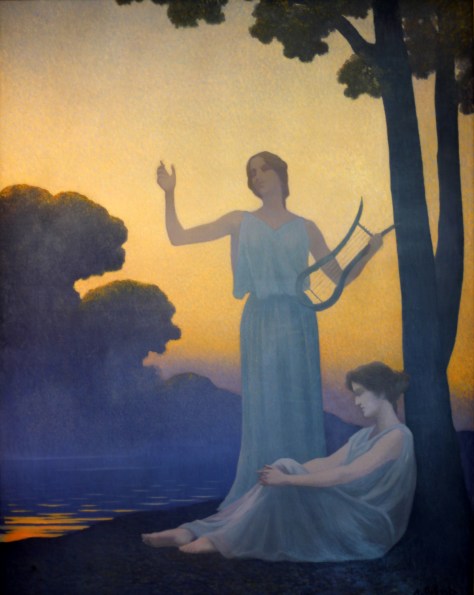
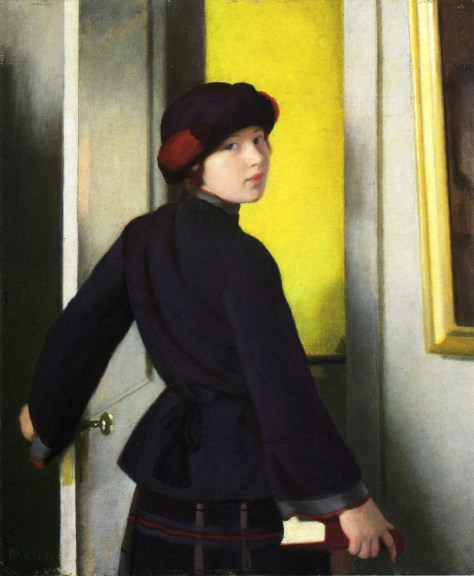
“Chant du Soir,” Alphonse Osbert, 1906

“Evening Song.”

Alphonse_Osbert_-_Chant_du_soir_1906

A short review of Season 4 of “The Strain”

The fourth and final season of “The Strain” was easily its weakest, but was still fun enough to merit an 8 out of 10.

Season 1 was a unique, detailed, methodically assembled techno-thriller crossbred with vampire mythology — you could tell that it was adapted from a pretty decent book series by Guillermo del Toro and Chuck Hogan.  The show’s subsequent seasons progressively meandered farther and farther into comic book territory … the fourth felt loosely and hastily plotted, with spotty and confusing exposition.  (I was considerably confused until late in the game about who deployed nuclear weapons in the war between vampires and humans, when they did so, and what their strategy was.)

But what the hell.  I still enjoyed this.  The writers here still know where their bread is buttered, and gave survival-horror fans more of the screwball guilty pleasures they were tuning in for.  There was plenty of blood and gore (even if it’s only the white, worm-infested vampire blood that I suspect was easier for the censors to approve). There were more of the show’s creepy, cringe-inducing monster effects.  And there was plenty of action — right up until a finale that was predictable but cool.  (If you’ve been following the show the way I have, do you not want to see machine guns, explosions, swords and severed vampire heads?)

Richard Sammel consistently outshined everyone in his role as the WWII Nazi turned vampire Himmler.  What an extraordinary villain.)  It’s a further testament to his talent that the man actually appears sublimely good-natured in real life.  (He interacts with his fans from time to time on Facebook.)

The show actually surprised me, too, by how attached I got to its characters.  It hasn’t always been a show that is strong on its characters, but … I’m going to miss them.  Vasily Fet (Kevin Durand) and “Dutch” (Ruta Gedmintas) were two in particular that I found myself surprisingly attached to — especially considering that Dutch was a superfluous character that seems to have been added only for sex appeal and romantic tension.  I was rooting for both of them.

So I’d still recommend “The Strain,” despite Season 4’s failings.  To quote Jack Nicholson’s Joker in 1989’s “Batman,” “I don’t know if it’s art, but I like it.”  (Yes, I do know that Walt Disney said it first.  Whatever.)


Season4Banner

The New York Times’ “Trump Poetry Contest”

Nicholas Kristof at the The New York Times is conducting a contest for poems about Donald Trump.  (And he is explicitly encouraging Trump supporters to share any creative work they might want to submit in the president’s defense.)  This is a partnership with the Poetry Society of America.

For more information, see Kristof’s September 15th column here.


Cover to “Weird Tales,” Margaret Brundage, March 1938

Weird_Tales_March_1938

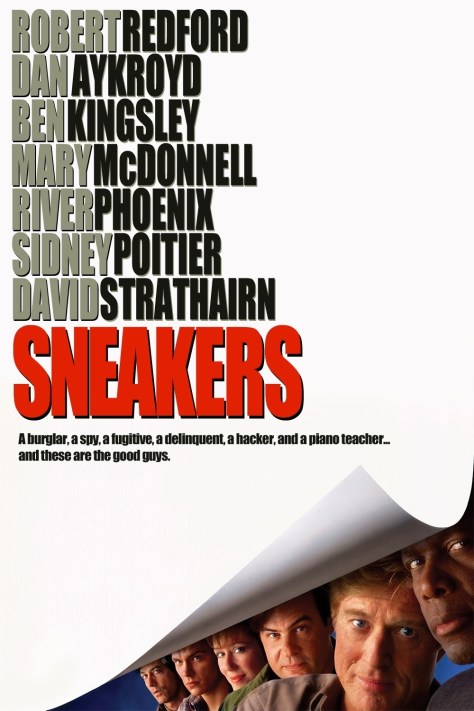
Poster for “Sneakers” (1992)

It’s funny how fallible memory is.  I love this flick, but could have sworn that this was a late-80’s movie that I saw in high school.

I have no doubt that cryptology will always be the world’s most important information technology issue.  (Unless the singularity gives us terminators, that is.)  But it’s funny how the screenwriters here couldn’t have anticipated how hyper-partisan websites, “fake news,” “bots,” “troll farms,” spies and social media could influence democracies.

By the way, I absolutely hate the childish appellation, “fake news,” which I am now seeing thrown out by people on the left as well.  The word we are all reaching for is “propaganda,” isn’t it?  I know I sound like a pedant here, but “fake news” sounds like something a  kindergartener would say — or maybe Orwellian “newspeak.”


sneakers

“Dark Sonnet,” by Neil Gaiman (“I Didn’t Write This” series)

I am linking here to another terrific poem interpretation from “I Didn’t Write This.”  The poet here is none other than Neil Gaiman.

You can check out the entire “I Didn’t Write This” series at Yulin Kuang’s Youtube channel here:

https://www.youtube.com/channel/UChiPJ3Nyc0shHi91fOE0r6A.


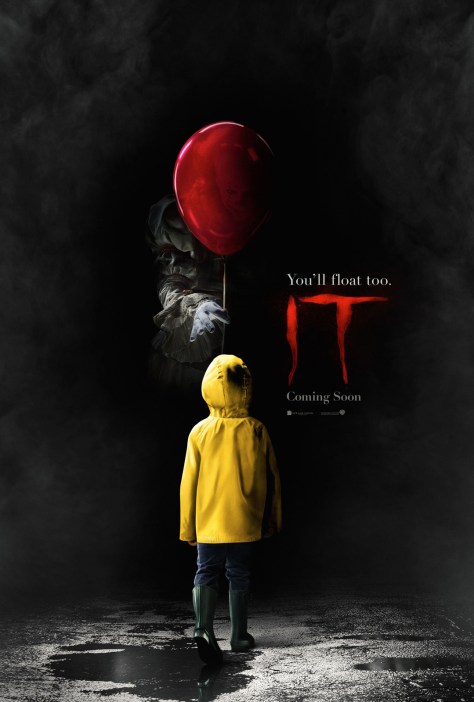
A short review of “It” (2017)

“It” (2017) succeeds on a number of levels; it’s both an excellent horror movie in its own right and a faithful adaptation of Stephen King’s incredible 1986 novel.  It’s rate it a 9 out of 10.

The movie works so well because it captures the book’s key juxtaposition of sweetness with horror.  There is a gentle innocence about the story’s circle of adolescent protagonists, who remain kind and good in King’s story — despite facing an incredibly powerful monster while being alienated by adults who are shifty, feckless, or monstrous themselves.  The screenwriters understand that juxtaposition, and successfully bring it to the screen.  The kids here feel real, three-dimensional, quirky and damned likable.  (My favorite was Eddie, the wisecracking hypochondriac, played by Jack Dylan Grazer.)  It adds great tension to the story.

And the monster itself is truly terrific, thanks to an inspired, menacing portrayal by Bill Skarsgard and startling visual direction that nicely summons summons both coulrophobia and grotesque (yet sometimes subtle) body horror.

The film might suffer just a little from something its makers couldn’t avoid — so many of its basic story elements are overly familiar tropes.  King wrote his novel more than 30 years ago.  “Scary” clowns are now omnipresent in popular culture.  (It’s something I’ll never understand.  Clowns are mysteriously and positively irritating to me.  They’re a lot like David Tennant before “Jessica Jones.”)  We’ve also seen more than a few alienated adolescents, period settings and shape-shifting monsters that impersonate our worst fears, in everything from “The X-Files” to “Stranger Things” to … other Stephen King adaptations.  We don’t want the filmmakers to neglect these key story components.  That would ruin the movie.  But they feel like overly common tropes in 2017.

Still, this was a great fright flick.  I can’t wait for Part 2.


333222

Cover to “Weird Tales,” Virgil Finlay, August 1939

Weird_Tales_August_1939

“Leaving the Studio,” William McGregor Paxton, 1921

Oil on canvasboard.

display_image (1)

Throwback Thursday: the Card Catalog

I remember learning to use the card catalog in grade school in the 1980’s.  It was intimidating for a young kid.  The teacher made a big deal out of it, and those long, light brown wooden cabinets looked positively monolithic.  They looked as though they were holding difficult math problems in their uniform, ordered little drawers, in the same manner as the mute Sphinx might hold impossible riddles.

And I still remember how surprised I was at how easy it was.  You only had to remember one of three things: author, subject or title.  And the alphabet took care of the rest.  Every kid knew the alphabet.  It was a bizarrely empowering experience for a young, nascent nerd.

No, we didn’t have the Internet.  Hell, we didn’t even have the Internet for research purposes when I was in college.  I remember driving with Tom (the other most befuddled member of Mary Washington College’s psychology program) an hour and a half to Charlottesville to research our term papers at the University of Virginia.  That was a long drive.


10850082_10152511029172338_7734498828637466805_n

Nurse Your Favorite Heresies in Whispers