Tag Archives: Eric Robert Nolan

Last Nolan on Earth

Last night’s post-apocalyptic dream: Last Man on Earth.

No zombies, no nukes, just literally the last man on earth, as everyone else has vanished.  A weeping willow, a waning sun, and a great red barn on the opposite bank of a slow moving river, like rippling black glass.

Fauna, fauna everywhere …

And not a camera to click.

Seriously, I can no longer leave home without my camera.  There is a veritable County-wide Inter-species Conference commencing right now at a single segment of my local creek.  (We need to give that creek a name at some point.)

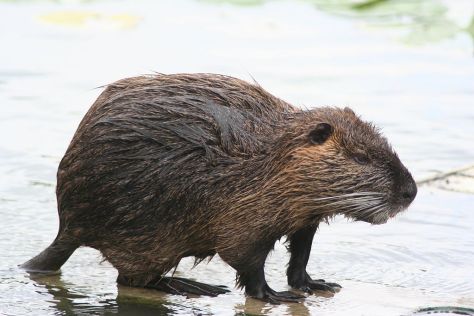
I saw a beaver for the very first time, and it was kind of a big deal to me, and if you crack the obvious joke, you’re a nine-year-old.  Beavers look a hell of a lot like groundhogs, as it turns out, except they’re flat-tailed swimmers, of course, and they’re slimmer and far more graceful.  A coffee-colored mama duck had marshaled forth her squabbling, fluttering, barely ordered brood on the opposite side.  They seemed as interested in the beaver as I was.  (Field trip?)

I endeavored to follow the beaver down the narrow waterway, trying to channel Meriwether Lewis without spilling the 7-Eleven “Double Gulp” Dr. Pepper that my doctor keeps telling me I shouldn’t have.  (Donald Trump has inspired me to drink them to honor the police and firemen at 7-Eleven.)

A couple of still, solitary, cranky-looking snapper turtles were sunning themselves, too. They launched themselves like lightning onto the water at the sound of my approaching footsteps.  A pissed-off bullfrog did the same, only very awkwardly, and while cursing me out with a “GROAK!”  (The preceding term is an example of onomatopoeia, by the way.  This is the only meaningful advice I will ever render to you as a writer.)

All of this was maybe 200 feet from that spot where I saw deer and heron commiserating a week ago.  I am precisely the kind of guy who gets lost in the woods, so I’m no naturalist.  (Seriously, that $+I+ happened when I went to New York in January, in the very same woods I grew up in.)  But even I am starting to understand that diverse animals will be drawn to wetlands.

I might just finally figure out my camera’s zoom function and stake that whole area out, on a lark, at some point before Virginia gets too hot.  If anything interesting transpires, I’ll post it here.

Donald Trump is an @$$+073.

What kind of name is “Meriwether,” anyway?  That guy must have caught some heat in gradeschool.

I think the sugar and caffeine in this “Double Gulp” is doing a number on me.


Angelo Badalamenti, Summer 1990

I’m relaxing with the “Twin Peaks” soundtrack this Sunday afternoon; it was a favorite for Kathleen Nolan.

Once upon a time, when she was preparing a quite difficult teenager in Lake-of-the Woods, VA, for college, it was one of the few things that we could agree on. (Another that year was Garrison Keillor’s “A Prairie Home Companion” on cassette tape.)

Click here:

“Twin Peaks” Soundtrack on Youtube


71TruxX5CrL._SL1215_

The National Gallery of Art, Washington, D.C., 4/22/16 (Photos)

These were among some finds at the National Gallery of Art in Washington, D.C. yesterday — they were taken by a very dear friend and my traveling companion.  She is not only extremely versed in art, but is also a far better photographer than me.  (Very few of my pictures turned out well.)

This Internet thingy, however, allows me to easily abscond with her work and then share it with you.  (I’ll run my inferior shots tomorrow.)


12107178_10204972487625735_2739834286968775170_n

13007190_10204972490865816_1747294608997464295_n

13012662_10204972487345728_5365796005166228645_n

13012742_10204972486305702_7336541089343342063_n

13012888_10204972487105722_3336764832105549233_n

13015314_10204972489585784_225444155070529194_n

13015676_10204972489505782_1258311295269328099_n

13043677_10204972489105772_2643759493212410839_n

13043688_10204972486545708_7597783686134428265_n

13062320_10204972487905742_4035811343337603912_n

13082536_10204972488025745_3138268337667253626_n

13082552_10204972490585809_4615322292304051335_n

13082558_10204972486865716_2484625322718834278_n

13092037_10204972488465756_1729459545428576333_n

13092070_10204972489185774_163833838022916153_n

13092043_10204972488745763_6894532666482637938_n

A quick review of “London Has Fallen” (2016)

“London Has Fallen” (2016) includes two very good action sequences.  The first is an establishing major action set piece in which a state funeral in London is the occasion of a major terror attack.  (SPOILER!)  The second is a finale that should really please action fans — it’s fun and exciting to watch; the first-person-shooter style of it actually works, rather than coming across as cheesy.

That’s probably about all the positive things I could say about it … as others warned me, it was a pretty brainless movie.  It’s a thin, poorly scripted story that isn’t nearly in the same league as 2013’s outstanding “Olympus Has Fallen.”  The dialogue is painful to hear.  And that’s especially sad considering that the film’s two fine lead actors (Gerard Butler and Aaron Eckhart) have terrific chemistry with each other.

The terrorists pull off an operation that is logistically incredible in this movie.  No exposition is given about how the @#%$ they accomplished what they did, and in so little time.  (Two years to put those assets in place?)

How does the entire population of London become invisible within minutes — even if they were told to stay indoors?  Why did this movie suddenly turn into “The Quiet Earth” (1985)?

Am I mistaken, or did a Butler’s Secret Service Agent actually tell the terrorists exactly where he and the president were, as part of a macho personal challenge?

And if Butler and Eckhart are alone and on the run on the streets of London, doesn’t it make sense to seek refuge in a random home or apartment?  The odds are astronomical that they person from whom they’d seek quarter would be in league with the bad guys.

I’d rate this movie a 6 out of 10.  Honestly?  I’d really recommend you wait until it comes out on DVD.  Then watch only the opening and closing set pieces, and imagine your own coherent story and engaging dialogue in between.  You’ll enjoy it more.


MV5BMTY1ODY2MTgwM15BMl5BanBnXkFtZTgwOTY3Nzc3NzE@._V1_SX640_SY720_

Vintage “Nosferatu” posters.

Just for fun, here are a few images of period-era posters for F. W. Murnau’s “Nosferatu: eine Symphonie des Grauens” (1922).

I’d love to have one (or more!) of these professionally framed.  Anyone aspiring to be my wealthy patron, get right on that.


c58bbb332f1aad79f96a96b66b1e37d0

3085359_640px

d42c384a26b54d84366a92ffda007484

nosfera1

nosferatu_1922_tall_poster1


“Blue Wolves Move In An Indigo Wood,” by Eric Robert Nolan

Blue Wolves Move In An Indigo Wood

               “Show me a sane man and I will cure him for you.”
                    — Carl Gustav Jung

All the colors are off —
Blue wolves move in an indigo wood
Their cobalt backs arrive, arising
Like coarse dorsal fins over
low-lying orange flora,
their beryl heads hung low — every
aquiline cerulean nose is angled down —
tracing the escape of a flaming hare —
their racing red rabbit has evaded them again.

Dreams leave all our long nights’ inner canvases
in singular tints and incongruous
strange iridescence.
Reason, here, is pariah.
Senses are its surrogates.
Vision its impostor
in the illogic’s ether:

Slow stars arc in scarlet.
Racing sable comets
make black wakes against
blinding white night.
A full moon rises in violet —
the fat and full and low-lying fruit of a
dark and overripe plum.

Yellow bucks bounce
high and away in the wolves’ wake —
sun-colored stags beat bright retreat
a running herd of burning gold —
all sunlit sinewed limbs and flashing hooves.

Flurries of green quail flutter,
flushed from fushia grasses —
alate bladed emeralds, blazing away.
The verdant birds burnish silhouettes —
angles on lunar lavender.

But ever all the blue wolves ignore the moon.
Each arrows forth in formation
ardently advancing —
oblivious to bucks and disregarding birds.
It’s the hare that they’re after —
its crimson prints
lure azure noses
and bait the ordered forward pace
of the great broad and blue padded paws.

In a surprising eloquence,
one predator’s head
rises and sonorously
sounds its disinterest.

“See, then, dreamer, see,
“what evades the lucid wit at dawn.
“The obvious moon is the obvious girl;
“your love is a glaring suggestion —
“as bare-faced and as common
“as a hundred thousand loves that came before — her face
“turning and facing away is as plain
“as a routine moonrise, but we,
“we are the Jungian Shadow.
“And our red hare is your red hare
“And hare for one and all.”

The predator’s head is an arrow —
its broad blue ears angle back
as its blue nose rises and scents.
And its voice is song.

“See then, dreamer, see
“what confounds the heart at noon.
“The stags to which we’re indifferent
“Are the heroes of your childhood.
“The flight of every bird is your every
“moment of loss, but we,
“we are the Jungian Shadow.
“And our red hare is your red hare
“and hare for one and all.”

Then the blue nose dips
to sniff the ground again
in the predator’s diligence. If
this wolf’s tones were physical,
they would be blue tears.

“See then, dreamer, see
“what escapes the brain at day, see,
“Arriving at your reservoir,
“that its pedestrian waters
“though shallow, still may drown
“in existential death, so rather
“hunt at its circumference
“the red of a Collective hope.
“We are the Jungian Shadow.
“And our red hare is your red hare
“and hare for one and all.”

Finally its eyes soften,
running from burning blue cobalt
to the warm sky-blue of hopeful new boyhood summers, and yet,
its sad irises reflect
a distant dancing red:
a spinning flame –a prancing hare.

“See, then, dreamer, see
“what renders your pain as prosaic —
“the racing red flame of the hare.
“It might have tempted Ovid once
“or pained the painters of caves,
“baiting them as their discovered fire
“first turned stone to a nocturnal
“canvas — the clay
“reddened their hands but they
“could only glimpse an inner quarry,
“as you glimpse it, now,
“turning away
“from your minutiae.”

“See, then, dreamer, see.
“See a universal grief
“and a shared catharsis
“rendered in red in your sleep:
“blood red, the color of prey,
“sunset red at end of day,
“flame, the color of pain
“and, yet, created light.

“See, then, dreamer, see.
“Hunt with us and hear our call.
“Our red hare is your red hare
“and hare for one and all.”

— (c) Eric Robert Nolan 2016


WOLF_TRACKS_ALONG_THE_SHORE_OF_A_LAKE_NEAR_MILE_141._PUMP_STATION_14_WILL_BE_BUILT_ATOP_THE_HILL_OVERLOOKING_THIS..._-_NARA_-_550492

Photo credit: By Dennis Cowals, 1945-, Photographer (NARA record: 2196327) (U.S. National Archives and Records Administration) [Public domain], via Wikimedia Commons.

A review of the Season 2 premiere of “Fear the Walking Dead.”

[THIS REVIEW CONTAINS SPOILERS FOR SEASON 1 OF “FEAR THE WALKING DEAD.”]  “Fear the Walking Dead” has done something interesting.  It’s taken two truly reprehensible characters, and made them the most attractive among an ensemble of protagonists in a survival-horror story.

I’m talking about Victor Strand and the young, troubled, drug-addicted Nick, who I’ve been reluctantly but undeniably rooting for since the closing episodes of last season.  They’re both expertly played, by Colman Domingo and Frank Dillane, respectively.  Colman is actually amazing: his deep voice and perfect line delivery should make him a leading man here or elsewhere, either as a hero or a villain.  In just a couple of episodes, he’s easily become one of the best things about the show.

But these aren’t “good guys.”  Or, at least I don’t think they are.  Are they?  Strand is openly a sociopath, and doesn’t even bother to hide it.  He appears to act nobly in rescuing the group.  But as Ruben Blades’ character, Salazar, shrewdly observes, he is almost certainly acting somehow according to his own self-interests.  (And Salazar has been right about these kinds of things so far.)

As for Nick?  No, I am definitely not judging the character about his addiction to illegal drugs.  That would make him a flawed protagonist, not a bad guy.  I’m talking about his demonstrated willingness in Season 1 to victimize the helpless in order to feed that addiction — he does nothing less than kill a sick, elderly man in order to get his “fix.”  (I did understand that scene, didn’t I?)

And what about Salazar himself?  He is easily the third most interesting character to me, and he’s perfectly portrayed by Blades.  I want him to survive this show’s zombie apocalypse, simply because I enjoy watching him so much.  He’s a former torturer for the El Salvadoran junta.  That’s … that’s pretty much as bad as you can get, isn’t it?  And this isn’t a character aspect that the viewer can easily put aside, as audiences did with the character of Sayid on “Lost.”  (He was a past torturer with Saddam Hussein’s Republican Guard.)  Salazar’s deplorable skills are front and center at the end of the show’s first season, driving the plot.)

There’s nothing pathological about my attraction to these characters.  (And I’m sure it’s shared by other viewers.)  It’s just that these are creatively conceived characters on a show that seems to bungle its efforts to create anything resembling or interesting likable good guys.  The remaining protagonists of “Fear the Walking Dead” are written to be utterly bland, even when they are very well portrayed by their actors.  Travis (Cliff Curtis) is a one-note altruist.  Madison (Kim Dickens) shows promise, but isn’t yet that interesting to watch.  Alycia (Alycia Debnam-Carey) is a boring nice-girl.  Ofelia (Mercedes Mason) is so forgettable that I can’t really remember how to describe her as I write this.

The worst offender, by far, though, is the character of Chris.  I can’t imagine how dreadful a job it must be for actor Lorenzo James Henrie to play him.  He’s an utterly punchable brat — an entitled, immature, self-absorbed teenager that makes you root for any zombies that pursuing him.  I can’t imagine the show’s writers created him to be sympathetic … surely they must be setting him up as zombie fodder.

All told, though, the Season 2 opener last Sunday was good stuff.  I’d rate it an 8 out of 10.  Fans who were frustrated with Season 1’s slow pace (I wasn’t) will be pleased to discover that the show opens with an action sequence and a pretty skilled depiction of the destruction of Los Angeles.  No, the show doesn’t have the same special effects budget as a major feature film.  But this was still impressive — we get to see some of the destruction and mayhem that’s only been alluded to or briefly, limitedly portrayed via flashback throughout six years of “The Walking Dead.”  (Remember the faraway shots of the bombing of Atlanta?)

The suspense is also quite good.  I can’t really say much more for fear of spoilers.  But I thought it was well written and intelligent, and I think it will please even seasoned fans of the zombie horror sub-genre.

This was pretty decent stuff.  I think Season 2 should be a fun ride.


fear-the-walking-dead-season-2-key-art-logo-400x600


victor-nick-and-daniel-prepare-for-the-journey

Nolanferatu’s tip for a trippy vintage horror double feature!

Well there’s one thing I can cross off my bucket list.  (There’s a lot on there, and some of it’s weird.)  I finally saw F.W. Murnau’s “Nosferatu: ein Symphonie des Grauens” (1922).

And am I damn glad I did!  I actually enjoyed it more than I thought I would.  I love plenty of classic movies; “The 39 Steps” (1939) and “To Have and Have Not” (1944) are among my all-time favorites.  But I’m accustomed to modern horror — my tastes generally extend only as far back as “The Birds” (1963) and “Night of the Living Dead” (1968).

I waited until I was in just the right mood.  (This is the first silent film I’ve ever seen from start to finish — the only exception being Mel Brooks’ 1976 parody, “Silent Movie.”)  Then I began it shortly before midnight.

The movie just worked for me. It was sublimely creepy.

I think it helped that the grainy, flickering, black-and-white period footage made this expressionist movie utterly atmospheric for a modern viewer.  These, combined with the shots of Max Schreck superbly made up as “Count Orlok,” were damned unsettling.  Schreck also appeared to be a great physical actor, with his gaunt stance and stilted, inhuman movements.  (Was he unusually tall too?)

The vintage footage also enhanced my enjoyment of the movie in a way that Murnau probably couldn’t have expected.  I know this is strange, but … nearly a century later, the thought that occurred to me several times during this movie was this: “Everyone involved in this production is long dead by now.”  Yes, I know that is a morbid thought — I’ve never done that before!  I think it was just the film itself that did that to me — it’s about undeath and immortality, after all.

It also helped that I’d read Bram Stoker’s “Dracula” (1897), of which this film is an unauthorized adaptation.  The resulting lawsuit by Stoker’s estate is interesting reading: supposedly all copies of the movie were ordered by the courts to be destroyed, bankrupting Prana, the production company.  But a permanent cult following developed for the few surviving prints.

Anyway, I followed this up with the palate-cleansing “Night on Bald Mountain,” the final segment of Disney’s “Fantasia” (1944).  That combination, too, totally worked for me — I followed up the black-and-white nightmare-fuel of the seminal vampire film with some vivid, incongruously hellish Disney nightmare-fuel.

“Nosferatu” is in the public domain.  You can view the entire film on Youtube at the link below.


nosferatu

c1402340b6a518f114e12da99fefa1e8

download

nosferatu10

nosferatu-1922

Fantasia-Night-on-Bald-Mountain-864x855

night-on-bald-mountain-ave-maria-078

bald-mountain_harpy2

night-on-bald-mountain


Throwback Thursday: Balsa Wood Gliders

This meme says the “THE 70’S,” but I encountered a little boy playing with something kind of like a balsa wood glider yesterday!  I told him how much I loved these when I was his age.

His was a bit fancier — it might have been made of thin plastic.  The gliders that I received from visiting aunts and grandparents were like the mostly unadorned balsa wood jobby that you see below.  It came in a long plastic sleeve like the one pictured, and you had to assemble it yourself.  (It wasn’t quite as high tech as the X-Box.)

Loop-de-loops were damn fun.  It was slightly less fun seeing it snap off a wing or fin after a nosedive.  Note to any well meaning aunts or uncles who might spy a balsa wood glider, if they’re still around:  buy a couple of them for that kid in your life — these things break easily.


12342655_1031432936917687_2523498639771454225_n