Tag Archives: Eric Robert Nolan

An explanation of movie and television ratings here at the blog.

“You give a lot of ‘8’s.”  That’s what blog correspondent Len Ornstein told me recently about my movie and television reviews here, and my shorthand scale-of-one-to-ten rating system.  I realized that I actually do rate a hell of a lot of movies an “8 out of 10,” and I thought maybe I should clarify why there’s a preponderance of favorable reviews on my blog.

First, let me reiterate my longstanding disclaimer.  I cheerfully admit that I am only an amateur reviewer.  I have never taken a single film class and profess no genuine expertise in the medium’s appreciation.  I do, however, tend to share the same tastes and standards as others in my peer group.  These are netizens who aren’t connoisseurs, but who can still tell a good movie from a bad one, and who’d rather not spend time and money on the bad ones.

Second, my informal rating system is purely subjective.  It depends often on my mood, and is usually a gut reaction.

Now, about those favorable reviews — the explanation is simple.  If a movie is less than good, I usually stop watching.  For example, I sadly abandoned the pilot for the “Minority Report” series yesterday after 25 minutes or so.  (I might get back to it this weekend.)  The past year’s television adaptation of “12 Monkeys” likewise failed to hold my interest.  I also tend to drop streaming movies or television shows that are well made, but aren’t quite my taste — tv’s “Gotham” and “Orphan Black” are two examples.

So I’m really mostly writing only about things I’ve liked.  The negative reviews here tend to be for things that have held my interest only out of nostalgia or morbid curiosity.  The pilot for the 1970’s “Planet of the Apes,” I think, is the most recent example.

Is an “8 out of 10” a sort of default rating for me?  Probably.  That’s the “numerical value” I usually give to a “good” movie or tv show — something that I enjoyed watching and would recommend to others.

A “7 out of 10” rating also suggests that a movie or show was “good,” but bordering on average, and not one that I’d go out of my way to recommend.  (Try to remember what it felt like getting a 70 on a test at school; it wasn’t terrible, but it was nothing to brag about either.)  Examples here could include “Cockneys vs. Zombies,” “Alien: Resurrection,” or the later “Hellraiser” sequels.

A “9 out of 10” denotes something that was extremely good — maybe not perfect, but a fantastic watch.  Examples, I think, would include seasons of “The Walking Dead,” “Hannibal,” or “Lost,” as well as the better superhero and horror movies.  The first examples that pop into my head are the “Avengers” movies, the lesser Indiana Jones films, “28 Weeks Later,” George A. Romero’s “Dawn of the Dead,” “American History X,” “Zulu,” or “These Final Hours.”  These are movies or shows I’ll watch more than once, even if I don’t feel the need to endlessly revisit them.  Or they’re especially intelligent or thought provoking science fiction films that I’m really impressed with, even if one watch is enough — the recent “Ex Machina” would be a good example.

A rare “10” rating denotes a movie that I think is perfect, is nearly perfect, or is just so damn fun that I keep watching it again and again anyway.  These are the movies for which I’ve lost count of how many times I’ve seen them.  Examples would include “Raiders of the Lost Ark,” “Vanilla Sky,” “Black Hawk Down,” “Saving Private Ryan,” “Blade Runner,” “Aliens,” “Alien 3,” “12 Monkeys,” “Apocalypse Now,” “Donnie Darko,” Ridley Scott’s “Hannibal,” “We Were Soldiers,” “The Accidental Tourist,” the first two “Blade” movies, “2001: A Space Odyssey” or “28 Days Later.”  They’d include all four season’s of Ron Moore’s “Battlestar Galactica,” all three of Britain’s “Sherlock,” most seasons of “24,” and one or two seasons of “The X Files.”  They’d also include comedies like “Old School,” “Anchorman,” or “Bill and Ted’s Bogus Journey.”  A “10” is a movie that will typically inhabit the “Top Ten” lists that I swap with other flick-nerds on the Internet.

So there ya have it.  It’s nothing scientific; it’s just one nerd’s opinion.  My motto for all of this is “Caveat Reador.”

But if you occasionally find something you enjoy after I recommended it, that’d be just great. Thanks for reading and sharing!   🙂

Raiders5-e1375412098228

A short review of “The Gift” (2015)

I guess the formula for “The Gift” (2015) is pretty simple — hand a superb script to three superb actors.  Here, they are Jason Bateman, Rebecca Hall and Joel Edgerton, and the dark drama they bring to life is driven by dialogue and unexpected character development, instead of jump scares and dark hallways and other conventional thriller conventions.  (Edgerton, who I last saw as a boilerplate good guy in 2011’s “The Thing” prequel, is also the director here.)  The three actors are magic together.  I became uncomfortable (as was the filmmaker’s intention) even during the first apparently innocuous conversation when the three interact for the first time at a chance meeting in a department store.

In fact, I’m not sure that “The  Gift”  is even a thriller instead of a particularly disturbing drama.  Like other viewers, I’d suggest that what filmgoers see is not what the movie’s trailer suggests.  This is yet another film that reviewers can’t describe in detail for fear of spoilers.

I’d give this a 9 out of 10.  My only criticisms are very mild.  I think Bateman underplayed the distress his character ought to have felt in the last 10 minutes or so.  Also, I found myself wanting more closure and less ambiguity in the ending, as well more of a standard climax.   But that probably just reflects my expectations as a traditional horror-thriller fan, and not any real failings of the movie.

The-Gift-Movie-Poster-Simon

A review of Season 2 of “The Strain”

When I favorably reviewed the first season of “The Strain” (2104) last year, I predicted that the show couldn’t sustain its momentum much longer, as the creepy effectiveness of its vampires was already beginning to fade.  I was pleasantly proven wrong.  Season 2 was a creepy, devilishly surprising ride, despite its silliness, and I’d rate it an 8 out of 10.

Let’s get a little killjoy pedanticism out of the way first.  “The Strain” has absolutely not lived up to its promise as an epic horror-movie-meets-technothriller, as suggested by the opening episodes of Season 1.  Those episodes looked like a collaboration between Bram Stoker and Tom Clancy.  Imagine how amazing this show could have been!

What we’ve got instead is more EC Comics horror than intelligent horror.  You’ll enjoy the program more the less that you think it through.  I can’t resist being a know-it-all here and deflating one of my favorite shows with some pretty big things it overlooks.

First, the vampire legions we see laying siege to New York City here are nothing less than invading force.  New York is the financial capitol of the United States, and arguably the world.  Its fall would cripple not only America, but also the world’s economy, and that’s not even considering the more obvious threat of the vampires extending their forces outward from there.

I think that Congress would repeal The Posse Comitatus Act, which prohibits America’s armed forces from occupying U.S. lands.  (Or the president could easily circumvent it.)  We would see large standing armies surrounding and then moving in to New York, with support from the Navy and Air Force.  It absolutely would not just be outnumbered national guardsmen, heroic everyday policemen, and plucky, average New Yorkers rallying together, even if those things are fun to think about.  I think our armies would have plenty of international support as well.

Second, if our vampire forces (and their human collaborators) had any sense at all, they’d try hard to spread their contagion anywhere in the United States, even if they don’t intend to invade beyond New York.  Creating wildfire epidemics anywhere else on the continent would confuse and slow America’s response.

But I’m overthinking things.  “The Strain” is silliness, but it’s sublimely fun silliness.  This show didn’t fail to surprise and entertain me, and from time to time it creeped me out too.  I jumped a few times.  It indeed remains scary, with story devices that were spooky and damned creative.  One such device is the new breed of … what I call the “spider-vampires.”  They’re a different and even more unsettling threat than the baddies we’re used to.  And I can’t say much without spoilers, but the manner of their creation is pure genius horror writing.  Yeesh.  There are other little plot-related or character-related goodies that I’m thinking of, but I can’t specify without spoiling them.

Richard Sammel and Jonathon Hyde still lead the cast in talent; this is definitely a tv show in which the bad guys are the better thespians.  (For a show where Holocaust flashbacks have become stale, Sammel shines especially in fangless flashback that unexpectedly humanizes him.)  Their performances were often good enough to make me overlook the humdrum character of our often boring good guys.

Again, “The Strain” isn’t high art.  But it can be a damn fun time for a horror fan.  Check it out.

season-2-poster-2

What are these? Exactly? Grapes?

I know grapes are bigger than these, but … are they still growing?

Nobody trick me into poisoning myself.  Please.  That’s bad netiquette.

All I can think of is that “Simpsons” episode where they lampoon William Golding’s “Lord of the Flies.”  The kids are trapped on an island with no food; Ralph Wiggum eats the local berries and gets sick, helpfully reporting that “they taste like burning.”

These things are growing everywhere in this one patch of woods near me.  I know this sounds nuts, but there also appear to be … raspberries growing in the wild down here in Virginia too.  It’s not far from where I’ve spotted that fox and the occasional deer, as well as geese and goslings.

Virginia people, this kind of thing is totally nuts to a New Yorker.

WIN_20151006_19_12_30_Pro

Who was your favorite teacher? (Today is World Teachers’ Day.)

It’s World Teacher’s Day.  Or it was, until the clock struck midnight more than an hour ago.  It is sadly ironic that I am late for this, as I was so often late to class.

If you can, please pass this along to give a little recognition to someone in a uniquely demanding profession.

My single favorite teacher in New York’s Longwood Central School District is a little tough to choose.  I believe it would be a tie between two men.

The first was Mr. Greiner, who taught sixth grade at Ridge Elementary School.  He reined in a very strange, hyperactive boy long enough to actually write down his bizarre monster stories — and to do so legibly.  He could be firm, but also kind.  And the encouragement he offered was priceless.  I wrote my first presentable short story in his class, entitled “When A Bear Growls.”  It was about famous hunter Hank Brown’s deadly battle with a legendary grizzly, and it had enough blood and guts in it (and a shotgun!) to please and surprise my classmates.  They ate it up!  It was the first time in my life I’d ever felt “popular” at school, and it reinforced my love of writing.

The second was Mr. Anderson, who taught AP English to 12th graders at Longwood High School.  I remember him as a soft-spoken man, and I believe that he was simply so articulate that he just never needed to raise his voice in order to get his point across.  He had a visible, genuine love of literature that was contagious.  He knew how to push his students enough to prepare them well for college’s vastly greater demands.  But he was also sublimely easygoing and relatable.  So you could confide in him, for example, that you thought that William Faulkner really sucked.

I hope that both Mr. Greiner and Mr. Anderson are now very happy in retirement, and know that their students still hold them in the highest esteem.

12144952_10153811633133643_3902641543727859654_n

A review of “Fear the Walking Dead,” Season 1 (2015)

I know that love for “Fear the Walking Dead” (2015) is not universal, but I needed to pipe in at least once to say that I thought that “Season 1” was terrific.  (I feel funny calling six episodes a “season,” but I’ve heard that de facto miniseries like this are a new trend in television.)  I’d give this apocalypse story a 9 out of 10.

For me, “Fear the Walking Dead” satisfied a longstanding itch.  If you grow up a fan of post-apocalyptic horror, you are constantly exposed to the aftermath of the end of the world.  In the vast majority of films and fiction, horror fans are treated to flashbacks, at best, of how it all went down.  Here we (partly, at least) get to see it all go down.

I’ll bet that stories so expansive in scope are a little harder to conceive and write convincingly.  Very few writers of prose or screenplays have expertise in disaster management, disease control, mass psychology or homeland security.  How much easier is it to have protagonists roam a landscape of burned out buildings, with only graffiti, snippets of conversation, and occasionally a blown newspaper offering hints of exactly how the end came about?

“Fear” deserves a hell of a lot of credit just for trying (as does “The Strain” over at FX).  It’s also why the globally plotted “Contagion” (2011) was such a frighteningly interesting thriller, and why Max Brooks’ stage-by-stage zombie pandemic easily made “World War Z” the greatest zombie novel ever written.  Through the eyes of an average family, “Fear” at least tries to show us meaningful glimpses into how police, emergency and military authorities would react.  The result is some interesting stories.  A nerdy high school student is the first to prepare, for example, due to his attention to the Internet’s alternative media.  And a doomed compact between a civilian neighborhood and their putative military protectors concludes in a particularly horrifying way.

Soooooo many viewers complained that there were “no zombies.”  Well, there were always a couple, at least — we got a great one in the first episode’s earliest minutes.  But that wasn’t the point.  The creators of “Fear” told us that this would be a different type of show, with a “slow burn” -type horror.  For me, that worked.  Look at it this way — we routinely see “zombie swarms” over at that other show (what was its name again?).  We’ve been seeing them for five whole seasons — the first repelled Rick Grimes’ ill advised solitary horseback exploration of Atlanta.  That’s fun for a zombie horror fan, but it’s nothing new.

“Fear” offers us something much different — a kind of “creeping horror.”  This seemed like the “Psycho” (1960) of onscreen zombie tales.  No, we don’t see zombies everywhere, but watching even one episode of “The Walking Dead” (2010) lets us know that these lackadaisical everyday people are in for a hell of a ride.  We, the viewers, know what they do not.  That’s what our high school English teachers taught us was “dramatic irony,” and it makes this a nice little companion show to “The Walking Dead.”  In fact, ALL the characters we see are probably doomed to die, given what we know of the statistics established by “The Walking Dead.”  That’s pretty dark stuff.

Other viewers complained about the characters being boring or unlikable.  I do get that.  Nobody here, I think, will ever gain the same viewer loyalty as Rick, Michonne or Daryl Dixon.  (If it were put to a vote among the women of the world, I’m pretty sure they’d rename “The Walking Dead” as “The Norman Reedus Show.”)  But “Fear’s” average (and, yes, sometimes boring) people seemed far more “real” to me — I think they functioned better as viewer surrogates, and better allowed me to imagine how I might react in a world like this.  I almost started viewing this as an end-of-the-world docudrama in the same manner as the BBC’s little known “End Day” (2005).

Besides, two characters in particular do show great promise.  I just can’t say who or why without spoiling that they survived.  Yet another character who appears suicidal in the final episode is one that I thought was pretty interesting, and we do not actually see this person’s death.

Sure, I had my own quibbles.  Los Angeles is remarkably empty for a city of nearly 4 million people.  I’m inclined to think that, even after an unlikely evacuation attempt, it would still be swamped either with people who still needed help, or with zombies.

Also … the sparse information we’re given about the zombie phenomenon here seems disappointingly contradictory.  We’ve established that a universal, invisible illness means people will return into undeath, regardless of how they died.  But we also see a flu-like illness affect some people (who are doomed to die shortly thereafter), but not all people.  Are these two different manifestations of the same disease?  Is it even technically a contagion, or is it an environmental illness?  (I know my questions here are absurdly silly, but this is precisely the sort of thing that horror nerds argue about over at the Internet Movie Database.)

Oh, well.  My recommendation here is to give this a chance, with the caveat that it definitely isn’t “The Walking Dead.”  It’s damn good.

Oh!  One more thing!  Keep an eye out for occasional homages to “28 Days Later” (2002).  And watch closely — one such plot arc is devilishly turned on its head in a subtle thematic twist.

tumblr_ntb25ok2ex1t7b5qro1_1280

A short review of “These Final Hours” (2013)

“These Final Hours” (2013) is an unflinching Australian end-of-the-world movie that views humanity’s last 12 hours through the eyes a flawed, desperate everyman.  It’s outstanding; I’d give it a 9 out of 10.

This movie pulls off a pretty neat trick — it effectively portrays a global catastrophe with zero special effects until its closing set-piece.  (And these visual effects work quite nicely for a low-budget film.)  A meteor has struck the northern Atlantic, and a resultant wave of destruction is enveloping the earth.  Its progress is documented in real time by a sad ham radio operator, wonderfully performed by David Field.

What we see is gut-wrenching.  Some people turn suicidal, a few turn homicidal.  People drink, use drugs and have sex, either privately or not.  Some are depressed, some are too drug-affected to care, and others are in shock.  The rare, vain efforts to survive include the laughable (a tin foil-covered house) to the sadly insufficient (a stocked bunker that nevertheless isn’t deep enough).  One reaction is befuddling; we see a street barricaded with metal shopping carts with a sign cursing at passersby.  This is a fatalistic story premise in which every character on screen is doomed to die within hours.

We follow the surprisingly touching character arc for our troubled everyman.  He’s played by perfectly by Nathan Phillips.  The young Angourie Rice is just as good as an incongruously self-controlled little girl who winds up his charge after being separated from her father.  The cast is uniformly excellent.  Hearing Kathryn Beck wail that she doesn’t want to die is heartbreaking.

For me, there were only a few flaws here.  The pacing seemed … off somehow.  This movie slowed toward the end, the nearer disaster approached.  Phillips’ protagonist seemed thinly scripted for much of the first hour.  He seems like a generic guy, who plans to get drunk before the end of the world, which makes him much like nearly everyone else we see in this movie.  Yes, he intervenes heroically when he first encounters the little girl, but we expect every movie protagonist to do that.

With that said, however, every character did seem “real” to me, thanks to terrific naturalistic dialogue, written by Zak Hilditch.  (He’s also the director.)  It made the drama hit home.

Thanks to blog correspondent Len Ornstein for recommending this movie!  I recommend it too.

these-final-hours-movie-poster

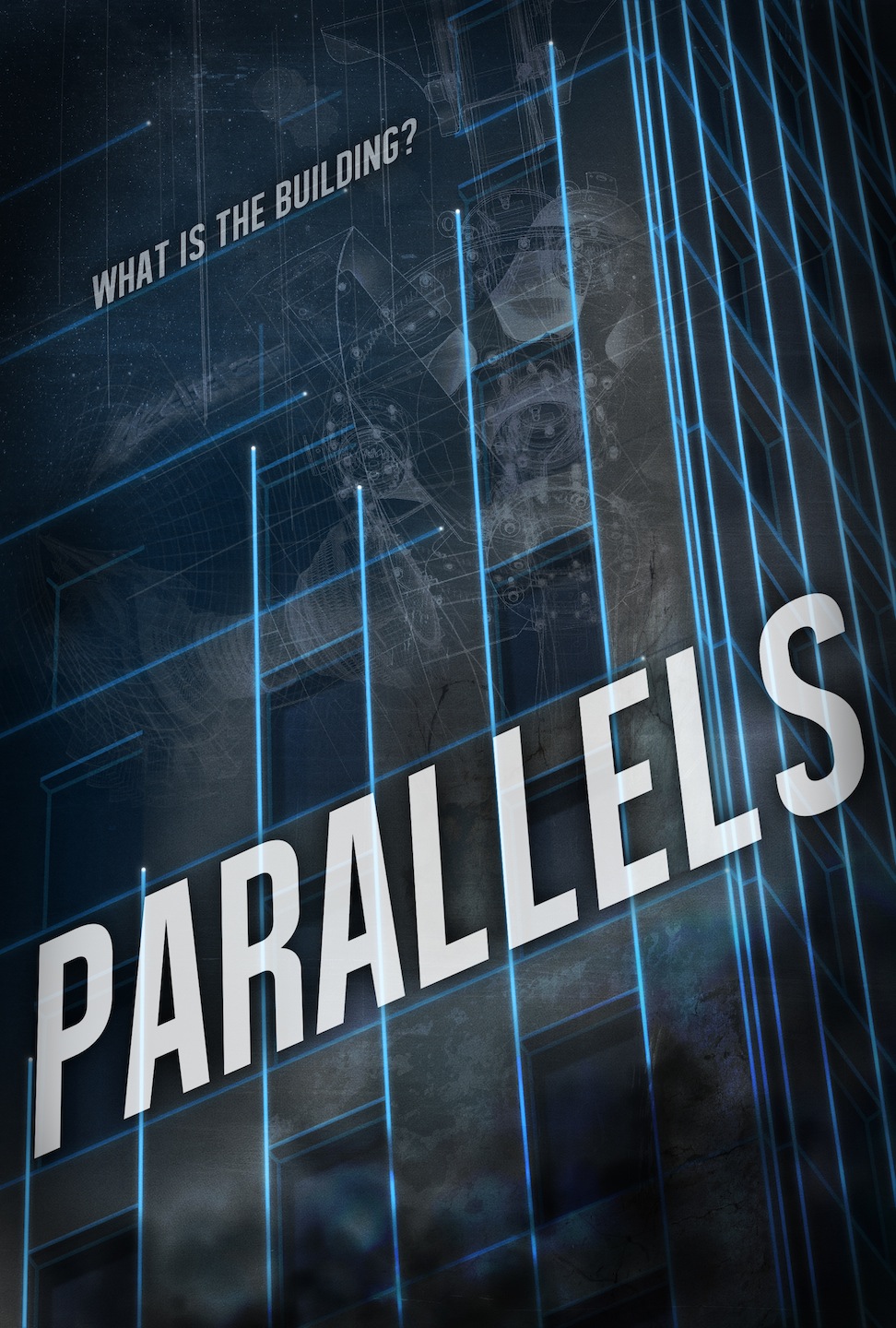
A review of “Parallels” (2015)

First, a clarification — “Parallels” (2015) is absolutely not a feature film; it’s an undisguised attempt at a pilot for an ongoing web-based series.  I think it’s pretty cruddy of Netflix to market it as a standalone film, as viewers expecting a conclusive story will doubtless be disappointed.  Its parallel universe-hopping premise also seems so similar to “Sliders” (1995-1999) that it just might approach the boundary between inspiration and ripoff.

With that said, however … dear LORD!!!  “Parallels” was frikkin’ FANTASTIC.  What we’ve got here is a far edgier, grownup version of “Sliders,” with a first episode introducing the same type of show-spanning mysteries as “Lost.”  But where “Sliders” was milquetoast primetime family fare, this looks like an excellent serialized thriller with plenty of pathos.

What a shame this thoughtful series never reached fruition.  I was hooked.  It’s smartly written by Christopher Leone; he’s visibly well acquainted with string theory, and has a hell of a lot of clever fun with it.  “Parallels” is a face-paced 80 minutes that follows a tragic, dysfunctional modern family embroiled in the mystery of the plot-driving “Building.”  The Building appears to be the nexus of countless parallel universes, a bit like the “The Dark Tower” links them in Stephen King’s multiverse.  The cast is uniformly good; the standouts were Eric Jungmann as the comic relief and Michael Monks as an understated but terrific bad guy.

I had only a few tiny quibbles.  Some of the family melodrama and the mysteries were a little forced and heavy-handed.  The ending (?) here, while really intriguing, also borrows a page or two from “Cube” (1997) and one particularly good episode of Ron Moore’s “Battlestar Galactica” (2004-2009).

I’m not sure how to rate this.  It fails as a standalone film, I think, because it simply doesn’t have an ending.  I suppose I’d give it … a 4 out of 10?  If you can forgive that fatal flaw, however, and want to enjoy some top-shelf science fiction, then I’d easily give it a 9 out of 10.

Dammit.  Why wasn’t this show made?

B0tPX3b

“Graceless Ravens Envy You,” by Eric Robert Nolan

“Graceless Ravens Envy You,” by Eric Robert Nolan

Revel in apostasy.
You are the black dove, hovering
High in an inklike arc.

Blacker, even, than
coal-colored wolves in onyx lines seeking
quarry at starless midnight.

More ebon, even, than
narrow sable blacksnakes staying
cravenly in shade at noon.

Darker, even, than
murders of crows, newly legion at Autumn, amassing
among saw-wing martins at dusk.

You’re blacker, even, then the rooks.
Graceless ravens envy you.

Remember your rebirth?
The sun rose,
Your birdsong changed and then
the questions flew from your beak
faster even than the wrens?
Faster than you could fly?
For a moment, they rendered
all the world obsidian.

Remember your feathers burning?
Sunlight striking your wings and then
all the slow alabaster there
singing, quickening into
aerodynamic black?
Remember the flock’s suspicion?

Remember your siblings, the nest?
Remember when
all their pearl heads turned
their backlit crowns in morning sun
ringed so thinly in shining ivory?

Their song was interrupted,
Yours was made a query —
empiricism’s aria.
Flustered, they fluttered
at all the low notes.
They were all immaculate;
you were the color of night.

Now you arc alone —
soar and sin and sing,
the unrepentant one.

Somewhere an ordinary dog,
awakening from shadow,
howls at the sun.

(c) Eric Robert Nolan 2015

1024px-Indian_Crow_vs

Photo credit: “Indian Crow vs” by Venkatx5 – Own work. Licensed under CC BY-SA 3.0 via Wikimedia Commons.

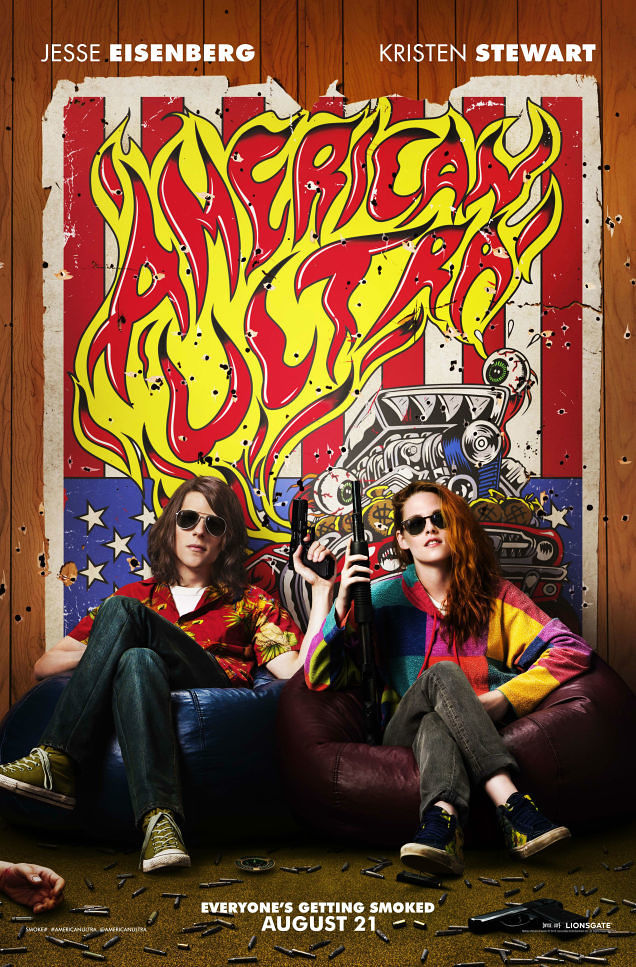
A short review of “American Ultra” (2015)

The Manchurian candidate is a common trope.  A Manchurian candidate hidden within a neurotic, drug addled, underachieving comic book creator is actually pretty creative.

That’s just one of the reasons that “American Ultra” (2015) had the makings of a great movie.  This film has more going for it too.  The soft spoken Jesse Eisenberg is extremely talented, being both quite funny and bizarrely likeable in the role.   Kristen Stewart is also just great.  (I haven’t seen her in the “Twilight” films that made her famous/infamous, but she really impressed me as a child actress in 2002’s terrific “Panic Room.”) And, like Eisenberg, Connie Britton has perfect comic timing and delivery.  (I’m still smiling at her offhand “Hey!” to the guy in the barn.)

Regrettably, maybe just past the halfway mark, this film loses its way just a bit.  The humor stops being character- and dialogue-driven, and the fish-out-of-water comedy sort of segues into a generic (and not terribly well executed) action –thriller.  There are some half-hearted action set pieces that aren’t especially well staged, or even well conceptualized.  And precisely nobody acts as though they have any sort of government or military training — either conventional or subliminally hidden.  Does EVERYONE in hollywood movies ALWAYS cluster together in a clear field of fire without seeking cover?

There is another miscalculation, too, that makes “American Ultra” less than great.  Our bad guys are cartoonish.  Eisenberg’s pursuers turn out to be (sigh) former mental patients who have received the same mental conditioning.  One is code-named “Laugher” because he cackles hysterically.  (That’s something out of a mediocre comic book.) And, like everyone’s least favorite Spiderman movie from the 2000’s, Topher Grace is cast against type as a raging psychotic.  (Am I the only one who thinks he was far funnier as the mild-mannered, relatable everyteen in “That 70’s Show?”)

How much funnier would this movie have been overall if Eisenberg’s quirky antihero (and maybe his weird friends) were the only comedic characters?  What if all their antagonists were “straight men” characters who ironically struggled in vain to defeat them?  This film could have been a classic.

Oh, well.  I still liked this well enough.  I’d give it a 7 out of 10.

kristen-stewart-gets-mega-stoned-for-american-ultra-496323