Tag Archives: review

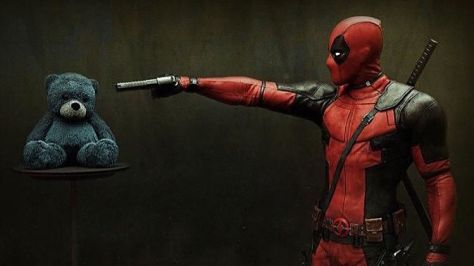
A review of “Deadpool” (2016)

I’ve never read a single “Deadpool” comic book, but that didn’t stop me from enjoying the movie.  It’s  a fun, creative and …  unconventional entry into the “X-Men” film  franchise that actually made me laugh out loud a few times.  I’d give it an 8 out of 10.

It isn’t high art.  It’s got a thin story based on a rickety plot device, nearly no exposition, and it includes some cartoonish action that I thought was just too over the top, even by comic book movie standards.  (Our hero dodges bullets and survives a stab to the brain.)

It helps to bear in mind this movie’s real purpose — fan service for the infamous niche character’s evident legions of followers.  “Deadpool” isn’t meant to be densely plotted, like “X2: X-Men United” (2003), or genuinely cinematic, like the Christopher Nolan “Batman” films.  It’s a long awaited, R-rated feature film to please loyal fans of this profane, adult-oriented antihero, who would be out of place and necessarily bowlderized in a mainstream superhero-teamup flick. (And I kinda get that — I loved the “Wolverine” comics when I was a kid, and, trust me, his film incarnation is tame compared to its source material.)

“Deadpool” is damn funny.  The movie succeeds by making us laugh.  And combining a raunchy comedy with an “X-Men” film gives it a weird, cool, subversive vibe.  It makes you wonder if Stan Lee would approve of this sort of thing … until you see Lee himself in a cameo at the story’s strip bar.  It’s fun to know that dirty jokes indeed do exist within the “X-Men” movie universe.

The lowbrow jokes made me cringe one or twice (“baby hand.”)  But you’ve got to give the movie credit for delivering its bathroom-wall humor if that’s what the original character is about.  (Are the comics like this?)  Ryan Reynolds is genuinely funny, and his deadpan delivery is perfect.  The film might not have even worked at all with out him.

By the way, this movie actually reminded me a hell of a lot of a long-ago flick that I absolutely loved, but which I’m guessing is largely forgotten — Andrew Dice Clay’s “The Adventures of Ford Fairlane” (1990).  That movie also had a foulmouthed, lone, maverick antihero who often broke the fourth wall, and that also made me laugh like hell.  I know it sounds like a strange comparison, but they’re very similar films.

Finally, I’d like to think that the Wade Wilson we see here actually IS a version of the Wade Wilson that we first met in the widely lamented “X-Men Origins: Wolverine” (2009).  (And how can he not be, if that movie is canon?)  If “X-Men: Days of Future Past” (2014) rebooted the timeline, then the Deadpool we’re rooting for here was never recruited, corrupted and experimented upon by William Stryker.  So you can have your cake and eat it, too.


new-deadpool-promo-images-offer-hints-movie-s-unconventional-tone-492440

A review of “Pride and Prejudice and Zombies” (2016)

“Pride and Prejudice and Zombies” (2016) is a fun enough horror-comedy — maybe not quite as good as it could be, considering all of its excellent ingredients, yet still better than most new zombie movies out there.  I’d give it a 7 out of 10.

It’s a great genre mashup, and I don’t just mean combining Jane Austen’s 1813 classic book with horror’s most grisly sub-genre.  (This is a film adaptation of Seth Grahame-Smith’s 2009 eponymous satirical novel.)  It’s also a detailed and thoughtfully constructed horror-fantasy.  (That opening credits’ alternate-history lesson was a nice touch.)  Then it tries, with less success, to be a serviceable romance and a mystery.

The film has a lot going for it: a fun concept, good actors, mostly competent direction, and a creative team that obviously had a hell of a lot of fun with the source material.  Science fiction fans should have fun spotting Matt Smith, Lena Headey and Charles Dance.  The movie has outstanding sets, costumes and filming locations — this was shot on location at historic mansions throughout England.  The fight choreography was decent enough, even if it was occasionally a little hard to follow.  Finally, the zombies that we get to see are indeed creepy — they’re not Romero-type zombies, but the livelier, chattier, brain-eating, sentient baddies similar to those of John Russo’s “Return of the Living Dead” films.  The makeup and digital effects for the monsters are pretty damn good.

Considering its unique idea, its zaniness and its high production values, “Pride and Prejudice and Zombies” could have been an instant cult favorite.  But it still falls short of greatness with two flaws that I couldn’t ignore.

The first is its seeming reliance on a single joke — the juxtaposition of Austen’s proper ladies as badass, feminist heroines in a crazy, Kung-fu, blood-and-guts zombie war.  I believe that’s funny and tickles the viewer for maybe 20 minutes.  But it isn’t enough to sustain the humor for the length of a feature film.  It’s fun, but badass, wise-cracking warrior women have been a common trope in mainstream horror film and television for a long time.  Joss Whedon’s “Buffy the Vampire Slayer” came to TV 19 years ago, for example; the film that inspired it was five years earlier.

Second, for a film with “zombies” in its title, the monsters are a little sparse.  I’m guessing the script closely followed the 2009 book, which I have not read … but this isn’t the actioner that horror fans might be hoping for.  (And why not?  The film falls under so many other categories.)  The movie could have been better if there had been less banter and situational humor, and more zombie fighting.  Its establishing shots and sweeping vistas were downright beautiful … I kept waiting for a major land engagement that would knock my socks off.  But … there isn’t really a final battle, and the story disappoints a little with its anti-climax.  The action sequence that we are presented with is cool, and well executed, but the large-scale period battles you’re probably hoping for occur almost entirely off screen.

Oh — one final quibble … who exactly were the Four Horsemen, outside their allegorical context?  And what happened to them?  They were nice and unsettling — one of the movie’s few scary moments occurs when we wonder whether they’ve spotted a protagonist.  Were scenes cut from this movie that would have explained their role in the story?


zz2

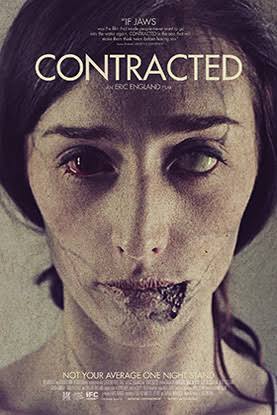
A short pan of “Contracted” (2013)

“Contracted” (2013) actually begins with a creative, compelling premise for a zombie-horror movie — what if the zombie contagion began as a sexually transmitted disease, and we viewers followed the horrifying experiences of patient zero at the pandemic’s inception?

Unfortunately, any praise this movie deserves ends there.  It’s poorly written.  I get the sense that writer-director Eric England has only the vaguest ideas about what a primary care physician does or says, or how any medical professional might react to an unidentified contagion.  He also shows us a world in which the local police are evidently responsible for investigating disease outbreaks, and where 20-somethings are sexually attracted to partners who are visibly, violently ill with what looks like some kind of flesh-eating plague.

England’s direction is also lackluster, as is most of the acting.  (An exception is that of lead actress Najarra Townsend.)

This story actually gets interesting when the viewer finally sees its events in tragic context — but that takes places less than two minutes before the credits roll.  (You’ll understand what I mean if you manage to sit through this.)

I’d give “Contracted” a 2 out of 10 for a creative story idea, and I’d recommend you skip it.


images

A tiny review of “Southbound” (2015)

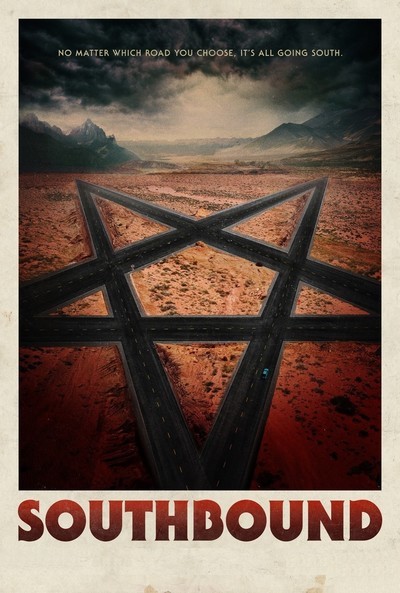
I can’t quite muster the same enthusiasm as everyone else for “Southbound” (2015) — I’d give it a 7 out of 10.  Yes, it’s clever how the five interlocking tales of this horror anthology are finally shown to weave together at the end (and it nicely parallels the equally clever movie poster below).

But the tales themselves were sometimes a little difficult to follow, with too little exposition.  One seemed incoherent.  And … exactly what was the role of the woman we see using the pay telephone?

It does have a few things going for it.  The tone is right — it’s a definitely a serious horror anthology for adults, with no camp and no gratuitous gags.

This movie was largely saved for me by the flying baddies to which we are introduced in the first entry.  (I don’t think that’s much of a spoiler, since we see them assailing us in the film’s trailer.)  They’re entirely originally, artfully grotesque, and possibly nightmare inducing.  You know what would have been an amazing movie?  A well-scripted horror-mystery in the same vein as “The Ring” (2002) or “The Grudge” (2004), focusing entirely on these antagonists.   Or maybe a supernatural desert-chase survival-horror movie.  I’d watch that.


large_ly6llsbUvXnKVnjmLrUwsbtkY5b

A spoiler-free review of the “Sherlock” Christmas special (2016).

What can I say about the “Sherlock” Christmas special, “The Abominable Bride?”  Extremely little, for fear of spoilers.

I will say that I loved it — I’d rate it a perfect 10, as I would just about any episode of this amazing TV show.  Also, as good as the trailer was … I can say that it offers much more in its story than you’d expect.

I’d also say that it strongly, strongly parallels a movie that I happen to love — right down to its surprise plot device, key character interactions, and a symbolic act by the main protagonist in the climactic scene.  The similarities are just too much for this to be a coincidence — it’s just got to be a well done (and a damn fun) homage.  It’s unexpected, too, as the film I’m thinking off probably appeals to a different fan base.  “The Abominable Bride” also cheerfully skewers another excellent recent film and the twist employed there.  [My blog posts link automatically to Facebook.  If you see this via my page, then PLEASE do not name the movies you think I’m talking about.]

There’s some terrific acting, especially between Sherlock (Benedict Cumberbatch) and our main villain.  And the dialogue is as sly and superbly delivered as always.  I don’t think I’ve ever watched a new episode of “Sherlock” and not laughed out loud at least once.  The stronger, more assertive John Watson (Martin Freeman) that we see is damn terrific.  (There’s a compelling and sensible reason why this iteration of Watson seems a little different than our usual mild anti-hero, but I just can’t say why.)

My quibbles were wholly forgivable.  I thought that the Victorian versions of Molly Hooper (Louise Brealey) and Mycroft Holmes (Mark Gatiss) were just so cartoonish that they seemed right out of a “Saturday Night Live” sketch.  It “took me out of the movie,” and hampered my willing suspension of disbelief.  It felt more like farce and silly sight-gags, instead of the dry, dialogue- and character-driven humor that the show is known for.

I also though that the climactic scene occurring among three primary characters, felt a little … off.  Was it just not staged right?  Was the pacing off?  Maybe I got the sense that I was looking at a soundstage?  I’m not sure.

Finally, I am an inveterate horror movie fan, and I might have liked to have seen the director and screenwriters play up the horror story elements just a little bit more here.  The mystery for this episode was a jewel of an opportunity — a garish, fearsome “ghost bride” that assassinates men.  It could have been just a little scarier, given that story.  I know that “Sherlock” is not a horror show, but its creators did just fine in making their adaptation of “The Hound of the Baskervilles” both a bit frightening and a proper mystery.

But, again, those are just forgivable quibbles.  This show remains the best thing on television!

[Update: there’s a direct reference to “The Five Orange Pips,” but we see little parallel with the story shown.]


sherlock_abominable_bride_poster_portrait

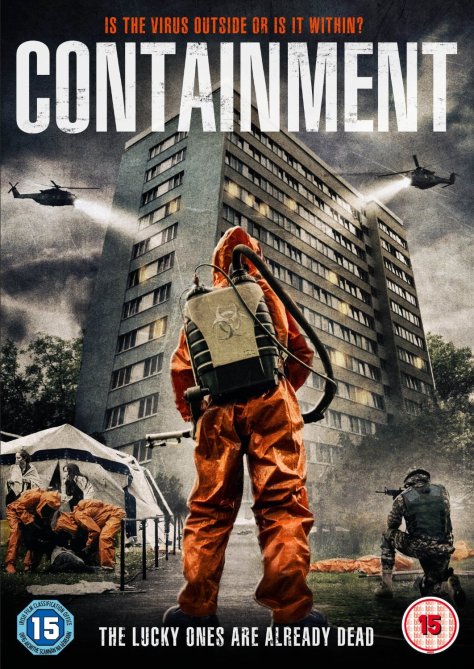
A quick review of “Containment” (2015)

“Containment” (2015) is the film that sounds cliche but isn’t.  It’s a surprisingly fresh take on an old standby — diverse people isolated by an outside threat are forced to cope and survive with each other, along with the threat.  In this case, an entire apartment block in Britain is forcibly and mysteriously quarantined overnight; residents awaken to sealed doors and hazardous materials units being deployed along the grounds.

But this is a smartly written independent sci-fi thriller that avoids a lot of common tropes.  Then it introduces plot developments that are unexpected, yet make perfect sense.  It’s more original than you’d guess at first.

There’s a lot of nice acting, including work by Lee Ross, and by Louise Brealey of “Sherlock” (2010) fame.  And all those moody establishing shots of the tomb-quiet building were creepily effective.

My only complaint was a thematically ambiguous ending that seemed lost on me.  But I’d still give this an 8 out of 10.


91vJl5zT1XL._SL1500_

My spoiler-free review of “Star Wars: The Force Awakens” (2015)

This review of “Star Wars: The Force Awakens” will be necessarily brief, for fear of spoilers.  And when I say “fear of spoilers,” I really do mean FEAR of spoilers.  There are people out there who will burn your house down if you ruin this long-awaited film’s surprises.

I really liked it.  I would somewhat grudgingly give it a 9 out of 10, as I can’t match the sheer ardor of its global legions of fans.  (Yes, “Star Wars” was a big part of my childhood, but I have more or less gotten over it.  I read last night, for example, that filmmaker Kevin Smith actually cried upon stepping aboard the Millennium Falcon when he visited the set; I am not quite as nostalgic as that.)

In short, it absolutely succeeds as a fun space fantasy, and recaptures the spirit of the original “Holy Trilogy.”  It easily surpasses the much-maligned prequels on nearly every level, including screenwriting, acting and special effects.  The predominance of practical effects over those that are exclusively digital make this movie’s universe feel “real” and “lived in.”

We finally have relatable characters again who sound real, and who can invite viewer sympathy.  The dramatic interaction among our newer heroes and returning icons is both logical and emotionally involving.  I was surprised at how well this movie handled the passing of the torch.  It was a kind of skilled storytelling that was almost entirely absent from the last three films.  And the special effects were top notch.

My only mild quibbles might reflect a greater degree of objectivity that you might hear from someone who is not a raging fan of the series.  This film so closely parallels the original “Star Wars” (1977) that at times it started to feel like a remake.  Were the similarities in structure, characters, plot points, planets and villains all an intentional homage?  I suggest that our bad guys here, for example, sometimes feel interchangeable with those of past “Star Wars” films.  I want to say more, but can’t, because of spoilers.  Am I the only person who noticed these things?

I also submit that, like a few other “Star Wars” movies, our characters are rendered with little depth, with sparse information about their skills, motivations, backgrounds or ideosyncrasies.  The dialogue is thin.  Consider lines like “He’s my friend!” and “Because it’s the right thing to do.”   And we are presented with no information about why the speaker here is so noble, when others are not.  Even if the screenwriting here is better than the prequels, it’s still not Tennessee Williams.

It’s all very forgivable, I guess, just so long as the viewer remembers that they’re sitting down to an installment in a film franchise originally intended for young people.  It’s kid stuff.  It’s really, really good kid stuff, but it’s kid stuff.  (Don’t burn my house down!)

And the reason I chose a 9 rating instead of an 8 was primarily the enjoyment I got from seeing familiar faces.  The return of our icons was surprisingly well depicted and, if you loved “Star Wars” as a kid, then that should be enough to make this a “must-see” movie.


Latest-The-Force-Awakens-Trailer-Description


A short review of “The Hallow” (2015)

I wanted to love “The Hallow” (2015) more than I did.  It has all of the attributes of a film that I’d love.  It’s a creatively conceived, independent horror film, beautifully shot on location in the forests of Ireland.  It portrays a family under attack in a gorgeously scenic isolated location at night.  It’s got highly original story antagonists — grotesque monsters who seem birthed from Irish folklore and science fiction both.  They’re rendered quite nicely with some great special visual and sound effects, and are truly frightening.

Yet, at times, my attention wandered.  I’m not sure why.  Maybe it was because the pacing was way off, maybe it was the story’s bland parent-protagonists.  Maybe it was because the modus operandi for the monsters was confusing at first.  I get the sense that “The Hallow” might have been more enjoyable had it been just slightly shorter.

It was still good, though.  I’d give it a 7 out of 10.

If you do watch it, then continue to watch through the credits.  There’s a really neat coda that adds a new and interesting level to the story.


The-Hallow-poster

Are there any lovers of dark, dystopian literature on your holiday gift list?

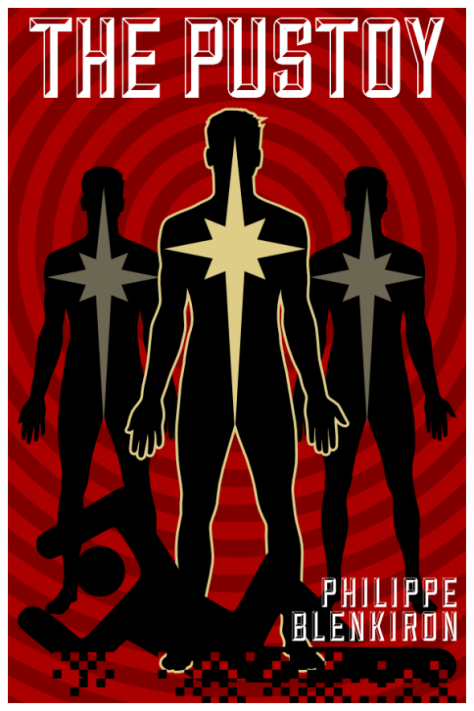
Then please consider surprising them with “The Pustoy,” an outstanding book of poetry by Philippe Blenkiron.  It’s a science fiction and political epic in poetry format, describing future Britain’s rule by a genocidal dictator who scapegoats an underclass to facilitate his rise to power.  It’s quite dark, and I quite loved it.  Click the link below to read my review last year:

A frightening future, skillfully envisioned — God help “The Pustoy.”

“The Pustoy” is also easy to purchase in either paperback or Kindle format.  You can find it at Amazon right here:

“The Pustoy” at Amazon.com

I suggest that this would make an excellent gift for lovers of books like George Orwell’s “Nineteen Eighty-four” or Ray Bradbury’s “Fahrenheit 451.”  And its format in verse would make it an even more interesting companion book.


“Ben Affleck was the bomb in ‘Phantoms.'”

I revisited “Phantoms” (1998) the other night, and I thought I’d just speak up briefly here on its behalf.  For one thing, I really chatted up Dean Koontz’ 1983 source novel here at the blog not too long ago.  And for another, this critically and popularly panned movie is one that I happened to like.

Ben Affleck actually wasn’t “‘the bomb’ in “Phantoms.'”  (Referring to something as “the bomb” was, at one time, a high compliment in American slang.)  He mostly phoned it in, and even seriously flubbed a scene or two.  (Hey, I actually like the guy a lot, and I’m willing to give him a chance as the next Batman.)  The headline above is actually some particularly meta humor from another character played by Affleck, in Kevin Smith’s “Jay and Silent Bob Strike Back” (2001).  Affleck was poking fun at himself a little here, along with his fellow denizens of Smith’s “View Askewniverse.”

Roger Ebert dismissed “Phantoms” as “another one of those Gotcha! thrillers in which loathsome slimy creatures leap out of drain pipes and sewers and ingest supporting actors, while the stars pump bullets into them.”  You can read his entire review right here:

http://www.rogerebert.com/reviews/phantoms-1998

No, “Phantoms” isn’t classic sci-fi-horror.  It’s sometimes pretty thin stuff on a number of levels … but primarily the levels of acting and screenwriting.

But, dammit, I still liked this movie a lot.  If you’re a fan of the book (I’ve suggested it’s Koontz’ best), you’ll be happy to discover that it indeed conscientiously sticks to its wicked-cool source material.  We see a small Colorado mountain town where all the inhabitants have vanished; a clutch of wayward visitors then try to escape the same grisly, mysterious fate as its residents.)

The book’s central plot device is a nicely conceived and executed idea for a monster, with some effectively creepy historical and scientific context.  (I can still remember a colonial victim’s warning, which is referenced in the book, but not the movie: “It has no shape; it has every shape.”)

Despite its clunky script, the film brings us a story that is pretty intelligent — thanks to retaining so many elements of the novel.  This is a thinking man’s monster movie — like somebody rewrote “Beware the Blob” (1972), but put a hell of a lot of smarts and creativity into it.  We’ve got two groups of bright people who fight back against “the Ancient Enemy,” and their actions and strategies generally make sense.

Also … Liev Schreiber does creepy incredibly well, and Peter O’Toole does everything incredibly well.  The former’s face and mannerisms do much to unsettle us.  And the latter brings the “Lawrence of Arabia” (1962) treatment to the fifties-esque trope of the monster-fighting hero scientist.

Finally, this might be an odd thing to praise a film for, but I loved its sound effects.  Because that voice (or voices) on the story’s single working telephone was exactly how I wanted the adversary here to sound.

Slam it all you want.  I’ll watch this one again.


lPiYcVQEMKuZvDw86K92jW7Rwg2