Tag Archives: Season 2

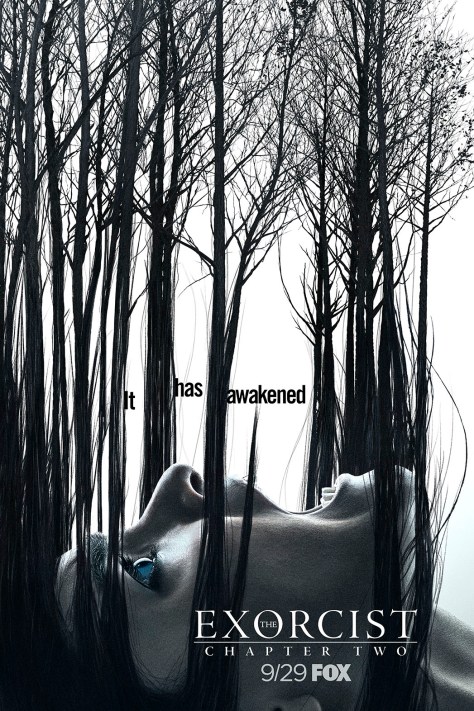
A short review of the Season 2 premiere of “The Exorcist”

I watched the first episode of Season 2 of “The Exorcist” series (2016), and I’m happy to report it was a fun, scary start.  (The season began this past September; its ten-episode arc concluded at the end of the year.)  I’d rate the premiere a 9 out of 10, and I’m on board for another demonic outing.

Alfonso Herrera and Ben Daniels return as a kind of dynamic duo of protagonist priests — all the more so because they appear to be on the run from a Roman Catholic Church that no longer sanctions their heroics.  (The show is actually well written, and this isn’t as stupid as I just made it sound.)  Herrera and Daniels are both terrific, even if an opening action chase scene reintroducing them here was unintentionally funny.  (They’re absconding by pickup truck with a possessed woman — her gun-toting country family, who is unaware of their intentions, is in pursuit.  I kept thinking this was a like a sequel to 1990’s “Nuns on the Run.”)

Herrera’s character feels a bit more interesting this time out.  Six months on the lam as exorcist-knight-errant has made him grim and unexpectedly arrogant — his darker character is more fun to watch than the slightly cloying, pretty-boy apprentice we sometimes saw in Season 1.

There are more things that make Season 2 seem promising, too.  It looks as though the afflicted woman that we see (nicely played by Zibby Allen) drives only this season’s prologue.  The demon antagonist has its sights set on a foster home staffed by a likable altruistic Dad (John Cho) and his equally likable five charges.  (One of them is Brianna Hildebrand, who comic fans might recognize as Negasonic Teenage Warhead from 2016’s “Deadpool.”  Is she here after being thrown out of Xavier’s School for Gifted Youngsters?)

This was fun.  I’m looking forward to the rest of the story.


the_exorcist_s02_key_art_poster

A short review of “Wolf Creek” Season 2 (2017)

The “Wolf Creek” film and TV franchise has all the earmarks of second-rate horror schlock — it’s got a cliched premise, a slightly campy villain, and a redundant story.  It just happens to be exceptionally well made, though — I’d rate Season 2 of the television series a 9 out of 10.

I still love the “Wolf Creek” series.  Much of the credit should go to John Jarratt, who portrays the plot-driving serial killer.  In addition to being physically intimidating, he brings tons of menace and unnerving personality to what would otherwise be a gratingly cartoonish role.  He appears to be a superb character actor.  His voice and his face are so damned frightening here that I wonder what it would be like to meet him in real life.

Like the two feature films and Season 1 of the show, this six-episode arc also benefits from capable acting, directing and screenwriting, and beautiful cinematography.  Series creator Greg McLean once again wisely allows rural Australia to sporadically steal the scene.

With all of that said, I do suspect that the formula here will soon begin wearing thin.  I know that there is a “Wolf Creek 3” planned, but I don’t know if it will be a third film or a third TV season.  If it’s going to continue to excel, it eventually needs to do something new and different with its story.  Only then can it continue to rise so well above its B-movie components.


10da8d59271441.5a1c4db2c55c5


Abi’s song from “Black Mirror” Season 1, Episode 2

The Internet is a fine thing.  Below is the complete rendition of Irma Thomas’ “Anyone Who Knows What Love is,” performed by the character of Abi in “Black Mirror’s” second episode of Season 1.  It’s a beautiful song, and a real highlight of the episode, “Fifteen Million Merits.”  The talented actress here is Jessica Brown Findlay.

The song actually pops up in another episode of “Black Mirror.”  (I am new to the show, but I am enjoying it chronologically with a dear friend of mine who has already seen all the episodes.)  Season 2’s tour de force, “White Christmas,” has one character singing the song in a karaoke bar.  My friend pointed out that we briefly glimpse an in-universe TV show in the very same episode, in which dancers are seen on a stage that looks like the one in “Fifteen Million Merits.”

Do all (or some) of “Black Mirror’s” episodes take place in the same fictional universe?  It kinda feels plausible.  The variations of optically linked computers in different episodes, for example, seem to dovetail pretty nicely.


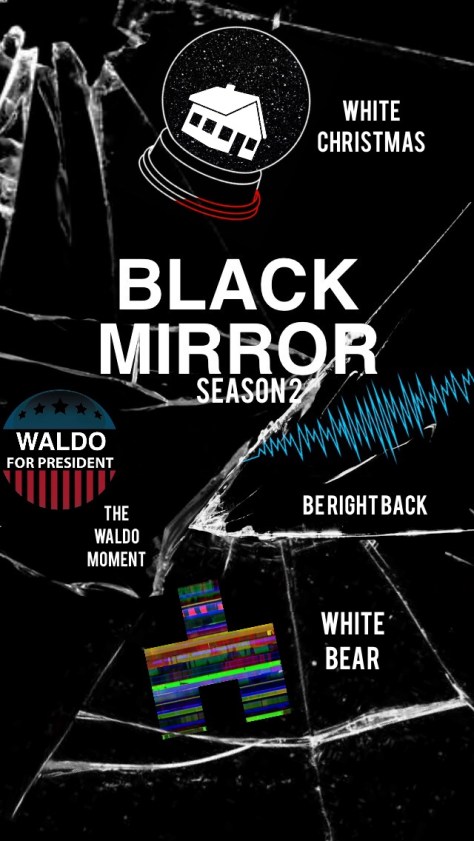
A review of Season 2 of “Black Mirror” (2013)

“Black Mirror” seems to me to be  the best science fiction show on television; I’d rate Season 2 (2013) a 9 out of 10.  (I’m never quite certain whether to group British shows by “season” or by “series,” as they do.  I’m also a little uncertain why the fourth and final episode here, “White Christmas,” is included in Season 2, as it aired nearly two years later as a 2014 holiday special.)

I commented to a friend of mine after seeing “White Christmas” the other night that the show was “brave” — it just isn’t afraid to alienate mainstream audiences by being too dark.  Not all of “Black Mirror’s”  episodes have “twists,” but they typically have an unexpected plot development, and their outcomes and implications are arguably depressing.

It’s just such a damned good show, though, in terms of its writing and acting.  My friend told me she wasn’t aware of anyone who had seen it and disliked it.

“White Christmas,” for example, was one of the best hours of science fiction television I’ve ever seen.  It consists of three blackly tragic vignettes seamlessly woven withing a wraparound story, and it employs a sci-fi plot device that is mind-bending and brutal.  I believe this is the first time I’ve seen its lead actor, Jon Hamm, and I was extremely impressed with his performance.

My only quibbles with the program are extremely minor.  As with the first season, I think that not every episode truly requires a 44-minute running length.  I thought two episodes  (“Be Right Back” and “The Waldo Moment”) seemed like they could have been tightened up into one, maybe with tighter writing allowing for shorter segments.

I’ve noticed another minor relative weakness with “Black Mirror” in general as well — the show does not always present the viewer with likable protagonists.  Occasionally, the various characters we’re asked to identify with are either slightly off-putting or even annoying.  Again, “Be Right Back” and “The Waldo Moment” spring to mind.  This wasn’t enough to greatly affect my enjoyment of the episodes, though.

What an incredible show.


black_mirror_season_2_poster_by_clarkarts24-daug6i3


A review of “The Walking Dead” Season 7.

[THIS REVIEW CONTAINS GENERAL, MINOR SPOILERS FOR SEASON 7 OF “THE WALKING DEAD.”]  I loved Sunday’s season finale of “The Walking Dead” — it was well executed, well performed (especially by Andrew Lincoln), and well written.  It was even beautifully scored.  (The closing narration and montage, combined with the music, were surprisingly moving.)  It had some great twists, unexpectedly good CGI, and some nice callbacks to the original comics.  (One surprise we see actually occurs with respect to another major character in the books.)  Towards the end of the episode, I was riveted.

The finale, however, can’t really redeem Season 7 as a whole.  I would honestly rate the season a 7 out of 10.  This was definitely one of the lesser seasons; I believe it would be the one I liked the least, if not for the inexplicably poor Season 2.

Maybe I was a little grumpy about “The Walking Dead” even before the season started.  Like a lot of viewers, I felt that the “cliffhanger” where Season 6 left off was absolutely manipulative on the part of the writers.  It pissed me off, and I went into Season 7 with reservations.

Then I was reminded about some of the smaller complaints I had about the show in the past.  I strongly differ with my friends about this show’s character development — I think it’s inconsistent at best.  And “The Walking Dead” seems to have so many characters that it can’t seem to decide who is a major character and who is not.

There’s a bit too much cheesy melodrama, like the schoolyard dynamics among the good kids, Maggie and Jesus, and the meanie, Gregory.  (This subplot was drawn from the comics, too — but it played out there in a far more adult fashion.)

Then I had a new quibble or two — one was a lack of proper minimal exposition.  We know extremely little about Jadis and the survivors in the garbage dump, despite the major role they play in the story.  They seem … sort of like a cult, and sort of like a performance art group, but that’s all I could tell you about them.  (The Internet tells me that some fans refer to them as either “the Heapsters” or “the Garbage Pail Kids.”  I find both appellations pretty funny.)

My biggest complaints about Season 7, however, were that it was too much of a downer, and that it was too slow.

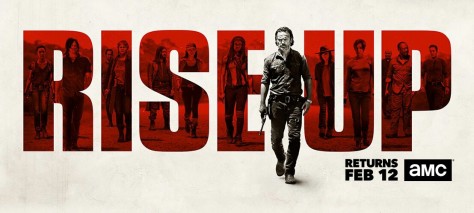
We start the season with a front seat to Negan’s gory, merciless punishment of Rick’s de facto family.  And then the victimization of our favorite characters simply … continues for the length of the season, until the last episode’s climax.  You see that cool image at the bottom of this blog post?  The advertisement depicting bad-ass Rick and his allies getting ready to “RISE UP?”  (It actually looks a lot like the posters for the “Walking Tall” films.)  Well … we don’t see much of that until the final episode. I told one friend that “The Walking Dead” was disappointing me because it had grown tiresome “seeing Negan beat everyone all the time.”

And some episodes felt like filler.  Yes, there were some nice “milieu” -type stories — it was actually a lot of fun expanding the show’s world, to see other settlements, like The Kingdom, The Sanctuary and Oceanside.  But I think the plot needed to move forward more quickly.  (For a far better discussion of these issues, check out Ryan Roschke’s excellent review over at Popsugar.)

Hey … I’m still a fan.  I’m just not as satisfied a fan as I used to be.  I certainly looked forward to “The Walking Dead” every week, and never missed an episode.

And this season did have its high points.  Dwight emerged as quite an interesting, compelling character, thanks in no small measure to Austine Amelio’s portrayal of him.  The character interaction among him, Daryl, Negan and Rick is great stuff — I find myself wishing that the lion’s share of the season was devoted to those four.  I am finally starting to understand that Norman Reedus is indeed a really good actor — his performances were strong throughout the entire season, but must notably upon his return to Alexandria and his embrace with Rick.

And there were moments of nice action and horror as well — the sand-buried walkers pursuing Tara and Health spring to mind, not to mention the neat trick Rick and his group use to dispatch an entire herd of zombies on the interstate.

Let’s hope that Season 8 will pick up a bit, now that “war” is underway.
 

tumblr_oi2yv4Y4U91vai2dso1_1280

A few quick words on the Season 2 premiere of “The Man in the High Castle”

“The Man in the High Castle” is still one of the best shows on television in recent years.  It’s ambitious as hell, and frightening in its story device.  It’s smartly, tightly and deliberately plotted, yet still moves at a nice, brisk pace.  We meet, for example, the titular “Man” right in the second season’s first episode; I don’t think that’s much of a spoiler, as it’s been shown in the season’s trailer.

I’d give it a 9 out of 10.  I won’t say much more than that, this is a mystery-thriller with plot points that are too easy to spoil, and I am still trying to persuade certain friends of mine to watch Season 1.  (Why isn’t this fantastic show more popular?)

I will say that maybe the show’s only failing is its scarcity of likable lead characters.  The duplicitous Joe (Luke Kleintank) is mostly flat.  Frank is inexplicably irritating to me, despite being portrayed by the talented Rupert Evans … though he does seem to shine as a mutual foil for the equally talented Brennan Crown’s callow art dealer, Robert.  And the Man in the High Castle is somewhat … disappointing, despite being portrayed by another wonderful actor.  I hope this character’s peculiarities are explained later.  (No. I haven’t read Philip K. Dick’s source material.)

Only Juliana (the terrific Alexa Davos) comes across as a heroine that I like and root for.  And her character too often feels like a damsel in distress — she’s frequently affected by the plot and the actions of others, and seldom vice versa.

Still, this show is superb.  Watch it.


maninhighcastledsffsdv-1

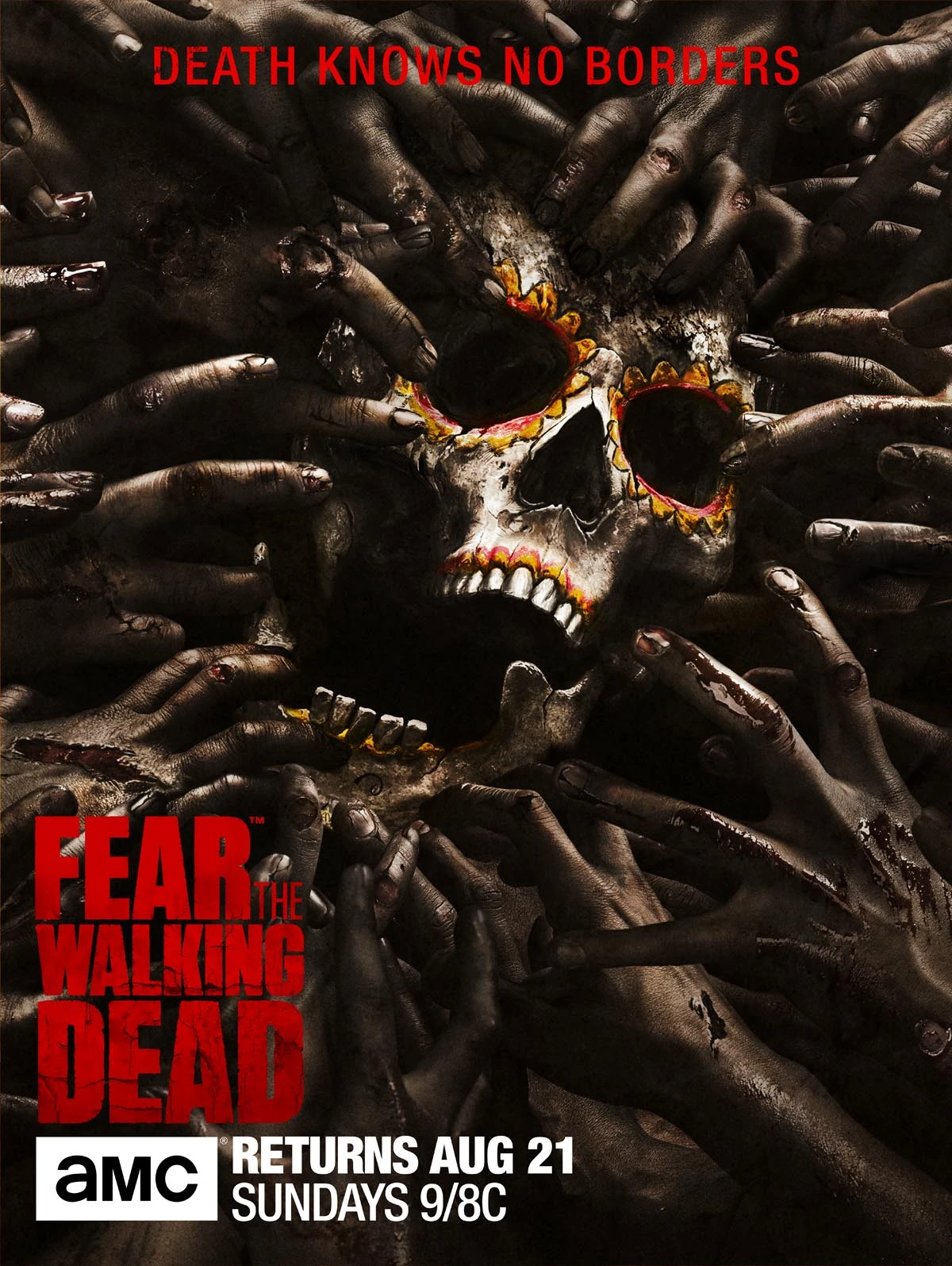
A short review of “Fear the Walking Dead” Season 2

I realize that “Fear the Walking Dead” is the show that so many people love to hate.  But I myself am just thrilled with it.  I’d give the second season a 9 out of 10 for being the show to which I looked forward to the most all week, and for arguably being more enjoyable than … that other zombie show.  (Its name escapes me at the moment.)

I suppose it feels smarter than it really is.  The pace is slower, there is far more background and context for the story, and I personally feel that there is far better characterization than in its predecessor.  (My fellow horror zombie fans strongly disagree, but I always thought that consistent characterization was a problem with “The Walking Dead.”)

As friends and reviewers have pointed out to me, though, it isn’t as smart as it feels.  People do dumb things; I’m not sure if it is laziness on the part of the screenwriters or just a lack of good judgement.  A typically egregious example is when our seafaring heroes deploy an unwieldy landing party to the beach while literally waiting to be attacked by pirates.  Another is the characters’ general apathy about the possibility of infection from blood splatters, from surfaces or from skin-to-dead-skin contact.  (We actually see a hero destroy a zombie by inserting his thumbs through its eye sockets into its brains.)

But the show is still damned enjoyable.  It has an epic feel.  Season 2 opens with a sweeping panorama of a ravaged Los Angeles, seen by a departing boat.  We have action by sea and by land, and show visits Mexico.  Radio transmissions and the accounts of minor characters further paint the apocalypse broadly.

I actually found the characters identifiable, if not always likable.  They just seemed more like real people than their counterparts on “The Walking Dead,” who lean closer to recognizable tropes (the good cop, the kid, the biker-with-a-heart-of-gold, the ninja).  The grounded, real-world drama among average, mundane people just made the show’s horror story context more real, and therefore more frightening.  (Let’s face it — you and I would probably be far more similar to “Fear’s” Travis, Madison or Alicia than to “The Walking Dead’s” Rick, Daryl or Michonne.)

And I think the subplots and story devices are often just genuinely creepy.  The hazards at sea, the boat-to-boat conflict, the outcome of the lighthouse storyline on the dock … a few of the show’s story arcs seemed like they were inspired by the kind of short stories you’d find in the best zombie anthologies.  Maybe I enjoyed “Fear” more than other viewers because I like the kind of varying, “situational” horror tales it served up every week.  This appealed to me more than the standard colony-vs.-colony stories seen that have grown routine on the show’s progenitor.

All in all, “Fear the Walking Dead” isn’t perfect, but its still a a great horror show.


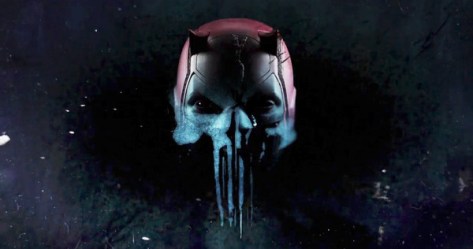
A few quick words on Season 2 of “Daredevil”

As though you hadn’t guessed, I absolutely loved Netflix’ second season of “Daredevil.”  It might have had a problem with its concluding Elektra storyline, but I’d still rate it a perfect 10 — I just can’t give a lower rating to a season that made me cheer out loud while watching it.

I really loved it that much.  I’ve started to think of this gritty little corner of the Marvel Cinematic Universe as my own “Star Wars” — these are characters that I grew up with, and to whom I’ve developed an emotional attachment, however strange or childlike that may seem to non-fans.  If adults can cheer during the opening crawl of “The Force Awakens,” then I can cheer “KICK THEIR ASSES, MATT!!” when the ninjas of “The Hand” noiselessly and acrobatically swarm Daredevil.

It’s just a superb show.  On one level, it’s a good character drama and legal thriller that can easily please a modern mainstream television audience.  On another level, one of those characters just happens to be a low-level hero in the Marvel Comics universe.

The show succeeds nicely on the first level and goddam brilliantly at the second.The martial arts and costuming are perfect.  John Bernthal is perfectly cast as The Punisher.  It’s a cliche, and something I’ve written here before, as well, but I’ll say it again anyway — Netflix succeeded in bringing some of my favorite comic book characters from page to screen.

My only minor criticism is that the Elektra storyline was muddled, and understandably confusing for those who haven’t read the source material.  (And if memory serves, it wasn’t all that easily understood in the original comics.)

Now bring on Bullseye!!


12794707_1719825021587067_5890561489880274871_o

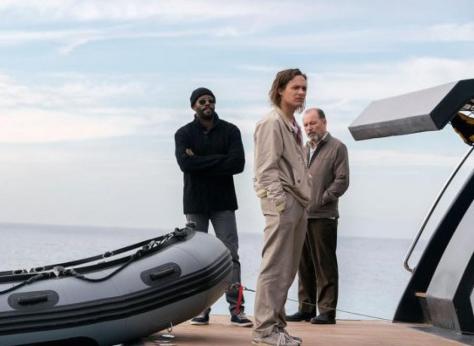
A review of the Season 2 premiere of “Fear the Walking Dead.”

[THIS REVIEW CONTAINS SPOILERS FOR SEASON 1 OF “FEAR THE WALKING DEAD.”]  “Fear the Walking Dead” has done something interesting.  It’s taken two truly reprehensible characters, and made them the most attractive among an ensemble of protagonists in a survival-horror story.

I’m talking about Victor Strand and the young, troubled, drug-addicted Nick, who I’ve been reluctantly but undeniably rooting for since the closing episodes of last season.  They’re both expertly played, by Colman Domingo and Frank Dillane, respectively.  Colman is actually amazing: his deep voice and perfect line delivery should make him a leading man here or elsewhere, either as a hero or a villain.  In just a couple of episodes, he’s easily become one of the best things about the show.

But these aren’t “good guys.”  Or, at least I don’t think they are.  Are they?  Strand is openly a sociopath, and doesn’t even bother to hide it.  He appears to act nobly in rescuing the group.  But as Ruben Blades’ character, Salazar, shrewdly observes, he is almost certainly acting somehow according to his own self-interests.  (And Salazar has been right about these kinds of things so far.)

As for Nick?  No, I am definitely not judging the character about his addiction to illegal drugs.  That would make him a flawed protagonist, not a bad guy.  I’m talking about his demonstrated willingness in Season 1 to victimize the helpless in order to feed that addiction — he does nothing less than kill a sick, elderly man in order to get his “fix.”  (I did understand that scene, didn’t I?)

And what about Salazar himself?  He is easily the third most interesting character to me, and he’s perfectly portrayed by Blades.  I want him to survive this show’s zombie apocalypse, simply because I enjoy watching him so much.  He’s a former torturer for the El Salvadoran junta.  That’s … that’s pretty much as bad as you can get, isn’t it?  And this isn’t a character aspect that the viewer can easily put aside, as audiences did with the character of Sayid on “Lost.”  (He was a past torturer with Saddam Hussein’s Republican Guard.)  Salazar’s deplorable skills are front and center at the end of the show’s first season, driving the plot.)

There’s nothing pathological about my attraction to these characters.  (And I’m sure it’s shared by other viewers.)  It’s just that these are creatively conceived characters on a show that seems to bungle its efforts to create anything resembling or interesting likable good guys.  The remaining protagonists of “Fear the Walking Dead” are written to be utterly bland, even when they are very well portrayed by their actors.  Travis (Cliff Curtis) is a one-note altruist.  Madison (Kim Dickens) shows promise, but isn’t yet that interesting to watch.  Alycia (Alycia Debnam-Carey) is a boring nice-girl.  Ofelia (Mercedes Mason) is so forgettable that I can’t really remember how to describe her as I write this.

The worst offender, by far, though, is the character of Chris.  I can’t imagine how dreadful a job it must be for actor Lorenzo James Henrie to play him.  He’s an utterly punchable brat — an entitled, immature, self-absorbed teenager that makes you root for any zombies that pursuing him.  I can’t imagine the show’s writers created him to be sympathetic … surely they must be setting him up as zombie fodder.

All told, though, the Season 2 opener last Sunday was good stuff.  I’d rate it an 8 out of 10.  Fans who were frustrated with Season 1’s slow pace (I wasn’t) will be pleased to discover that the show opens with an action sequence and a pretty skilled depiction of the destruction of Los Angeles.  No, the show doesn’t have the same special effects budget as a major feature film.  But this was still impressive — we get to see some of the destruction and mayhem that’s only been alluded to or briefly, limitedly portrayed via flashback throughout six years of “The Walking Dead.”  (Remember the faraway shots of the bombing of Atlanta?)

The suspense is also quite good.  I can’t really say much more for fear of spoilers.  But I thought it was well written and intelligent, and I think it will please even seasoned fans of the zombie horror sub-genre.

This was pretty decent stuff.  I think Season 2 should be a fun ride.


fear-the-walking-dead-season-2-key-art-logo-400x600


victor-nick-and-daniel-prepare-for-the-journey

“The … Stalking Dead?” (A review of “Daredevil” S2E1)

[THIS REVIEW CONTAINS ONE SPOILER.]  So the fantastic John Bernthal is now the Marvel Cinematic Universe’s “Punisher,” debuting (however briefly) in the first episode of Netflix’ “Daredevil” Season 2.  I just know that there is a great “Walking Dead” joke hiding around here somewhere; but I can’t seem to put my finger on it …  (Something about … Blind Grimes?  Disabled Rick?  Daredevil can’t see “stuff?”  Or “thangs?”)  You people work that out for me.

Bernthal’s arrival is dream casting, every bit as perfect as bagging the inimitable Robert Downey, Jr. as the MCU’s Iron Man.  Even though the actor speaks only a single word, it’s goddam beautiful.

That’s one of the better things about Season 2’s first outing, which, for me, fell into the category of “good, but not great.”  (I’d still give it an 8 out of 10, and I feel certain the season will get better.)  What we see in S2E1 is mostly setup.  The episode clearly tried to introduce tension by grooming the Punisher as a frightening antagonist, with limited success.  Even casual Marvel fans know that Frank Castle is a good guy, and nothing close to a Big Bad.  Yes, he’s an anti-hero who fatally shoots villains, and will be a foil for Matt Murdock’s Boy Scout restraint (as he was in the comics, back in the day).

But I doubt that the Punisher can be made scary or truly tension-inducing.  (Are we afraid of Wolverine?)  We know that his shoot-em-up tactics won’t leave Daredevil dead.  (This isn’t “Game of Thrones” or TWD.)  And I’d guess that most viewers, like me, aren’t too emotionally invested in this show’s minor characters.  (The only exception would be the quite interesting and three-dimensional Karen Page, still wonderfully portrayed by Deborah Ann Woll.)  Hell, I think the show would be better if the painfully annoying Foggy Nelson were made an early casualty.  Finally, if the show stays true to the original comics, then the Punisher has that most sympathetic of “origin stories” — a murdered nuclear family.

Both the Punisher and Bernthal have such devoted fanbases that a lot of viewers will probably root for him against Matt.  (Our very own Blog Correspondent Len Ornstein, for example, was known for firmly being on “Team Shane” for TWD.)  Looking back at my fervent comic-collecting days in the 1990’s, I seem to recall the Punisher having a far bigger fan following.  He was a mercenary and Vietnam veteran who simply shot up whatever corner of the Marvel Comics universe to which his quarry had tried in vain to escape.  Fans compared him to DC Comics’ iconic cash cow, Batman.  Matt Murdock, on the other hand, had niche appeal.  He was a liberal superhero if there ever was one — a Columbia-educated defense attorney who employed nonfatal force, and who fought for the “everyday man on the street.”  He was like a grownup, thoughtful, socially conscious Spider-Man.  If ever there was a comic book hero who would join the American Civil Liberties Union, it was Daredevil.

Moving forward, I think that Netflix will need an altogether different adversary than Castle to raise the stakes emotionally, and bring suspense to its second season.  Maybe the show will accomplish that with Elektra, who we know will also appear.  (And fans of the comics know that this integral character has far greater implications for our hero.)

The new season’s inaugural episode might have been slightly better if it had been tweaked elsewhere, as well.  Much ominous language is devoted to characterizing the Punisher as a killer with military proficiency.  We kinda don’t see that.  The largest action set piece shows no precision or professionalism, just a room full of gangsters being hosed down by gunfire from an offscreen shooter.  And while the sequence itself was dramatic, it seemed like something that could have been perpetrated by a (very well armed) street gang in a drive-by shooting.

We also see some of the dialogue problems that were so evident in the first season — as superb as the screenwriters are, they don’t do casual conversation among friends very well.  There’s the same forced banter and an embarrassing lack of chemistry among the three lead protagonists, this time on display during an awkwardly staged after-work barroom pool game.  (It’s particularly puzzling because Woll and Charlie Cox are both very good actors.)  This show scripts its villains, petty crooks and adversaries with such flair — why does it seem to fail so often with friendly conversation?  And why bother with these strange attempts at Scooby-Gang camaraderie in the first place?  I think it’s a weird creative choice.  These are serious characters leading serious lives.  It seems implausible to me that they should be so frequently upbeat anyway.

Hey — if I’m nitpicking a lot here, it’s only because I love the show, and consequently hold it to a very high standard.  It really is the best superhero adaptation on television.  My review of last season was absolutely glowing, and I honestly think that Season 2 will be just as good.  If you haven’t checked out “Daredevil” yet, you ought to.


12525571_1720957711473798_4489177249886597130_o

NEqq4plcdvfusz_3_b