“Monsters are real, and ghosts are real too. They live inside us, and sometimes, they win.”
― Stephen King

Photo credit: By “Pinguino” (“Pinguino’s” flickr account) [CC BY 2.0 (http://creativecommons.org/licenses/by/2.0)%5D, via Wikimedia Commons.

“Monsters are real, and ghosts are real too. They live inside us, and sometimes, they win.”
― Stephen King
Photo credit: By “Pinguino” (“Pinguino’s” flickr account) [CC BY 2.0 (http://creativecommons.org/licenses/by/2.0)%5D, via Wikimedia Commons.
It amazes me how little fanfare that “Mr. Mercedes” is getting. Season 1 was not only one of the best Stephen King adaptations ever, I think it has the rare distinction of being even better that its source material. (I really liked 2014 novel, but I loved the show.) I might have a couple of minor quibbles about the ten-episode season, but they’re not enough to stop me from rating it a perfect 10.
I tend to think of this as more “mainstream King.” As with the book, the story here is devoid of the supernatural elements that usually characterize King’s work. It also doesn’t have any overt connection to King’s overarching, interconnected “Dark Tower” multiverse. It’s a depressingly real-world story about a mass murderer whose weapon of choice is a stolen Mercedes. (There is a plot-driving horror set-piece at the start of the pilot episode in which he mows down a crowd lined up for a job fair.)
What follows is a drama of surprising depth and authenticity. We see the extended aftermath of slaughter, throughout the lives of people connected to it — including one victim’s family, the now-retired investigating detective (Brendan Gleeson), the young killer himself (Harry Treadway) and his alcoholic, incestuous mother (Kelly Lynch). Gleeson was who first made me interested in the show, and his performance is outstanding. Lynch is amazing and perfect in her role, and is even talented enough make her onerous character truly sympathetic. But even they are outshined by Treadway’s frighteningly goddam perfect portrayal of the titular “Mr. Mercedes.” The guy is incredible.
The script was nothing short of terrific. There is certainly enough horror here — including one particularly cringe-inducing plot twist late in the game. (It was so disturbingly presented that I almost had to switch the episode off — and I knew it was coming, as I’d already read the book.) But the horror punctuates the unexpectedly touching drama among the story’s protagonists — and the sad relationship between the killer and his disordered mother. There were also some great moments of humor, and the subtexts here dealing with friendship and loyalty were surprisingly moving.
The rest of the cast was quite good. The directing shined as well — especially for a key sequence in Episode 7, “Willow Lake.” Even the soundtrack was excellent. Hell, they even referenced W. H. Auden in one episode.
My quibbles were minor. One was the story’s pacing. It’s actually quite slow for the first eight episodes — enough, I think to lose some viewers. This didn’t bother me much — I took it as “slow-burn” horror, and it matched the very slow pace of the book. Then the story seemed to move forward at a breakneck pace during episodes 9 and 10. I can’t help but wonder if it could have been scripted differently, as that felt odd.
My second quibble lies with Mary-Louise Parker’s portrayal of Janey, the sister of one of the killer’s victims. Parker is an excellent actress, but I found her version of the character to be remarkably detached for someone bereaved in such a horrifying fashion — to me, it seemed like a strange creative choice on the part of the actress.
I’d obviously recommend this; it’s currently the best horror show that I’m aware of.

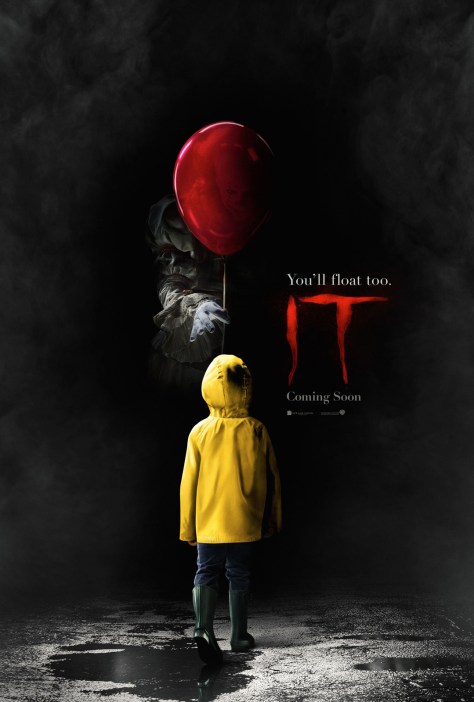
“It” (2017) succeeds on a number of levels; it’s both an excellent horror movie in its own right and a faithful adaptation of Stephen King’s incredible 1986 novel. It’s rate it a 9 out of 10.
The movie works so well because it captures the book’s key juxtaposition of sweetness with horror. There is a gentle innocence about the story’s circle of adolescent protagonists, who remain kind and good in King’s story — despite facing an incredibly powerful monster while being alienated by adults who are shifty, feckless, or monstrous themselves. The screenwriters understand that juxtaposition, and successfully bring it to the screen. The kids here feel real, three-dimensional, quirky and damned likable. (My favorite was Eddie, the wisecracking hypochondriac, played by Jack Dylan Grazer.) It adds great tension to the story.
And the monster itself is truly terrific, thanks to an inspired, menacing portrayal by Bill Skarsgard and startling visual direction that nicely summons summons both coulrophobia and grotesque (yet sometimes subtle) body horror.
The film might suffer just a little from something its makers couldn’t avoid — so many of its basic story elements are overly familiar tropes. King wrote his novel more than 30 years ago. “Scary” clowns are now omnipresent in popular culture. (It’s something I’ll never understand. Clowns are mysteriously and positively irritating to me. They’re a lot like David Tennant before “Jessica Jones.”) We’ve also seen more than a few alienated adolescents, period settings and shape-shifting monsters that impersonate our worst fears, in everything from “The X-Files” to “Stranger Things” to … other Stephen King adaptations. We don’t want the filmmakers to neglect these key story components. That would ruin the movie. But they feel like overly common tropes in 2017.
Still, this was a great fright flick. I can’t wait for Part 2.
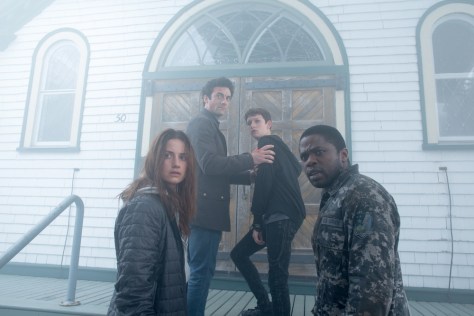
Although it often seemed to show far greater promise, “The Mist” TV series ultimately proved to be pretty average stuff. I’d rate the 10-episode first season a 6 out of 10.
It started strongly, with real efforts to develop compelling characters, significant tension and a tight plot. Most of the characters remained compelling. I found myself liking even Morgan Spector’s protagonist Dad, who I originally thought was milquetoast. (Spector himself isn’t a bad actor when his character is properly motivated.) And I found myself really liking Danica Curcic’s troubled, drug-addicted antiheroine. (She’s one of the best things about the show.) The young Russell Posner also does some fine work as Adrian.
But the tension that the show created with its eponymous, plot-driving “mist” fizzled toward the end, and just set me up for disappointment. Fellow monster fans, this is not a creature-feature. It directly contrasts Frank Darabont’s wonderful 2007 film adaptation of Stephen King’s novel, by featuring mostly supernatural threats instead of physical ones.
Our heroes facing the mist are confronted mostly by phantoms, and various iterations of … sentient snoke. (I’m guessing they are … demons? Or some other non-corporeal bad guys? At one point, are we actually meant to see the four horseman of the apocalypse kill somebody? Huh?) The antagonists’ portrayal is confusing and poorly delineated, and the scare factor consequently wears off toward the end of the season. And the preponderance of CGI-smoke monsters suggests a fog machine and a limited special effects budget.
This is complicated by confusing and unexpected character decisions, which I can only suggest result from poor writing. The viewers are expected to believe that nearly everyone in a small northern town — save for maybe six or seven characters — quickly succumb to elaborate, new-age fantasies in order to turn on one another. (I’m inclined to think they’d more quickly divide along racial, economic and traditionally religious lines.)
It wasn’t all bad. There were some character twists that I quite liked, and the show assiduously sets up a lot of interesting subplots. It also moved at a brisk pace, even if its scattered ending left me nonplussed. It was occasionally pretty creepy in parts, too. I certainly tuned in every week.
I think maybe I’m just a little disappointed because the trailer made this show look amazing, and, by the end, “The Mist” proved to be an average viewing experience.
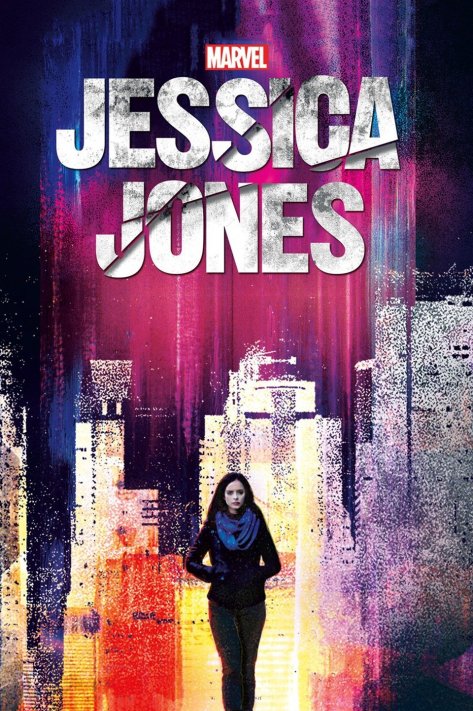
Netflix’ “Jessica Jones” (2015) is easily one of the best things in the Marvel Cinematic Universe; I’d rate it a 9 out of 10. It’s smart, it’s funny and it’s extremely dark — I don’t want to spoil too much by revealing the modus operandi of Season 1’s villain, but his manner of destroying his victims is utterly disturbing. (I’ve mentioned before how his powers seem like a plot device from a Stephen King novel.) Although this series excellently retains a “comic book” feel (due in part to its episodic format), its story elements frequently feel like something out of a John Carpenter film. And, although I know I’m repeating myself yet again, this Hell’s Kitchen niche of the MCU feels like its chosen stage for horror-thrillers.
The cast is excellent. Krysten Ritter is perfect as the titular, hard-drinking, antihero private detective. Mike Colter is nearly as good in the role of Luke Cage, another low-level hero in the Marvel universe. Colter’s talent is evident by the fact that Cage could so easily come across as a one-dimensional character. (And, Jesus, doesn’t the guy look the part?)
The story’s villain, Kilgrave, is played by fan-favorite David Tennant. (Yes, the name “Kilgrave” is stupid and is lifted from the comic book source material. Its silliness is lampshaded in the series several times by other characters making fun of it.) Tennant is an actor I’ve abhorred in the past. There was no logical reason for it — there used to be just something about his voice and his face that made me cringe. It was a running joke for a while among me and my female sci-fi friends. (Good Lord, how the ladies adore that man.) My admittedly irrational dislike of the man even detracted from my enjoyment of the otherwise quite enjoyable 2011 “Fright Night” remake.
He’s phenomenal here. He’s perfect for the part, as Ritter and Colter are for theirs, and he was alternately menacing and quite funny. (He has perfect timing and line delivery, as Ritter often does.) I really liked watching him.
“Jessica Jones” might succeed more than any other MCU property in terms of dialogue and character development — although the “Iron Man” and “Daredevil” series also do great work there. (It’s a tough call.) The show also seems to flesh out the MCU into a kind of “lived in” universe in a way that other Marvel properties usually haven’t — by creating detailed, three-dimensional protagonists out of characters that have no superpowers whatsoever. They’re not “sidekicks” (a trope that the script that slyly winks at); they’re realistic characters that affect the plot. When one or two actually appear to develop superpowers toward the end of the season, the consequences are unexpected and dire. (There is a truly kickass Easter egg here that will please longtime readers of Marvel Comics.) Furthermore, Jones, Cage and most of the other characters have power sets that pale in comparison to M.C.U. heavy hitters like Thor, the Hulk or the Vision. The result is that the MCU feels more … integrated and nuanced, with a blurrier line between superheroes and everyday people. I liked that a hell of a lot.
The show is not entirely without its failings. Despite what I said above about the show’s attention to ordinary characters, I still think it went a bit overboard here. The character of Malcom (nicely portrayed by Eka Darville) began as a hugely interesting supporting character. So, too, did other residents of the heroine’s apartment building. It was a nice touch that expanded the show’s scope and depth … until the law of diminishing returns kicked in. By the end of Season 1’s 13-episode arc, I felt that they’d received far too much screen time. The support group that one character attends started out as an intelligent subplot, but then eventually grew tiresome. (Again, I’m being necessarily vague here to avoid spoilers.) Towards the finale, I actually felt that these minor characters were padding the plot and dragging down the narrative.
Which brings me to another criticism — the narrative’s length. This is yet another show that I felt could be edited down a bit. As much as I loved Tennant here and found Kilgrave to be an interesting villain, I’m not sure that Jones’s conflict with him warranted 12 52-minute episodes. This could have been abridged to eight or ten, I think.
Another criticism I had of “Jessica Jones” was its fight choreography. For a show that succeeds on so many levels, the action sequences were sometimes surprisingly poor. Why do brawls between superpowered individuals include so much polite (and bloodless) grabbing and throwing? Especially when a single punch or kick could easily kill or incapacitate an opponent? The answer, of course, is that those kinds of melees are easy to film, with minimal training for the actors. It’s especially noticeable here because this show’s sibling, “Daredevil,” has fight choreography that is some of the best I’ve ever seen. (If you’re curious, then search for “Daredevil stairwell fight” on Youtube sometime.)
The rudimentary effects were usually even poor when depicting the title character’s “jumping” scenes. (She has super strength, so she can virtually “fly” short distances by literally jumping.) These shots looked like something out of a primetime 80’s action show.
All in all, though, this was indeed a great show. Don’t shy away from it, as I initially did, because you’re unfamiliar with the title character. It’s among the best that Marvel has to offer.

With all of the (frequently quite poor) buzz about the arrival this summer of “The Dark Tower” and “The Mist,” “Mr. Mercedes” might be the Stephen King adaptation that has slipped under the radar. And that’s a shame, because the pilot episode suggests it might be one of the best King adaptations ever. I’d rate it a 9 out of 10.
It really is that good. The show’s first episode begins what looks to be an intelligent horror-thriller that is surprisingly faithful to King’s outstanding novel. David E. Kelley’s script is excellent. After a brutal prologues that sets its plot in motion, the story proceeds with three-dimensional, likable characters who are well played by their performers — especially Brendan Gleeson in the role of the grumpy, retired-cop anti-hero who is harassed by a mass murderer. (Yes, that is indeed the Dad from 2002’s “28 Days Later.”) Gleeson is just great — even though I found myself wondering why a retired Chicago cop should have a heavy U.K. accent.
The script even surprises us by being incongruously sweet during its odder moments. Like its source material, the show effortlessly sets up characters that are easy to like. (An exchange between Gleeson some kids playing hockey outside his house, for example, was truly inspired.)
The story’s plot-driving horror elements are disturbing, too — both in terms of its grisly violence and its sexual taboos. This is not a show for the faint of heart.
This also seems like it could be a King adaptation that could easily appeal to people outside his usual fanbase. There are no supernatural elements to this story, or any tangible connections to King’s sprawling, interconnected “Dark Tower” multi-verse. (The original novel seemed to show us King trying his hand at a Thomas Harris-type serial killer tale.)
The only reservation I might have about “Mr. Mercedes” is what I am guessing about its pace. The original novel was quite slow, despite being an engaging read. After its gut-wrenching mass murder is depicted in graphic detail, the plot moves forward rather lethargically. The one-hour pilot episode here seemed to mirror that, in its apparent loyalty to its source material. I predict that viewers turning to “Mr. Mercedes” for a fast-paced horror tale will be disappointed.
I think that’s probably a subjective quibble on my part, though. I’d still enthusiastically recommend this.

God damn, Netflix’ “Jessica Jones” (2015) looks like a great show. I finally got around to watching the complete pilot episode, due to my interest in the upcoming “The Defenders,” which features the character. And “Jessica Jones” was frikkin’ terrific. I’d rate the first episode a 9 out of 10.
At first, there were aspects of the pilot that annoyed me. We’re told virtually nothing about the origin of the title character’s superpowers, and not much about the powers themselves. They’re also a fairly generic power set, as far as I can tell. She has enhanced strength and agility and … that’s it? So she’s a low-grade Superman or Spider-Man, more or less? We also learn somewhat little about what looks to be the series, antagonist, Kilgrave, played by David Tennant. We see Kilgrave only briefly, in flashbacks that seem reminiscent of post-traumatic stress disorder. (These are sometimes weirdly delivered, for a show that is otherwise well directed.) He has mind-control abilities that resemble the “push” ability seen in Stephen King’s “Firestarter,” as well as my favorite short story of all time, “Everything’s Eventual.”
But … hell, this was just an extremely good show. For starters, Krysten Ritter is perfect as the wisecracking anti-heroine. She’s funny; she’s got great, dry line delivery; and she’s a decent actress. (I know that the Marvel Cinematic Universe’s more powerful heroes rarely visit Hell’s Kitchen, but I’d love to see her trade quips one day with Tony Stark. She couldn’t beat him, but she’d come closer than anyone else.)
The script is good enough to make her a likable character, and the story itself is scary and compelling. Considering the plot-driving capability of the show’s villain this … looks like it could become a King-style horror thriller. Between this show and “Daredevil’s” bloody second season (2016), I’m starting to understand that Hell’s Kitchen might be the MCU’s stage for more horror-type stories. And I’m fine with that.
I couldn’t help but feel just slightly disappointed by the premiere of “The Mist” (2017). It wasn’t bad … it just wasn’t as amazing as its trailer made it look. I’d rate it a 7 out of 10.
The first episode’s horror elements felt rote, rushed and cheesy. The pre-credits teaser was nearly campy. Director Adam Bernstein just isn’t Frank Darabont. (Curiously, each episode seems to be helmed by a different director.) And what seems like “The Mist’s” milquetoast main protagonist is played somewhat anemically by Morgan Spector.
Still, the show displays some promise. Instead of rushing straight into its otherworldly-monster MacGuffin, it goes to great lengths to set up some interesting human drama, and it mostly succeeds. Besides Spector’s ostensibly likable Dad, the characters felt fresh and interesting. (And regarding that human drama? I strongly suspect the individual accused of the crime here is not the actual perpetrator. That’s what the clues are telling me, anyway. It would be devilishly clever, I think, if his accuser turned out to be the one guilty.) “The Mist’s” attention to characters here is something of which I think Stephen King would approve.
The show also seems pretty ambitious. It places its diversity of characters in a number of locations throughout its small-town setting, and a couple are embroiled in some kind of interesting conflict even before the titular mist arrives. For just a single episode, it feels tightly plotted.
Anyway, if you’re curious about what the mist really is … there is an explanation in King’s source material — and I’m not talking about only the vague allusions in the novella of the same name. Die-hard King fans know it was further described in his “The Dark Tower” series. It’s been named as “todash space” by the denizens of one of King’s many worlds — it’s a monster-filled limbo that falls between myriad parallel universes: http://stephenking.wikia.com/wiki/Todash_space.

See the Turtle of enormous girth!
On his shell he holds the earth.
His thought is slow but always kind
He holds us all within his mind
On his back all vows are made,
He sees the truth but mayn’t aid.
He loves the land and loves the sea,
And even loves a child like me.
— from Stephen King’s “The Dark Tower” series

… and I’l be damned if it didn’t give me the shivers.
Watch at your own risk:
 Eric Robert Nolan, Author