Tag Archives: The X Files

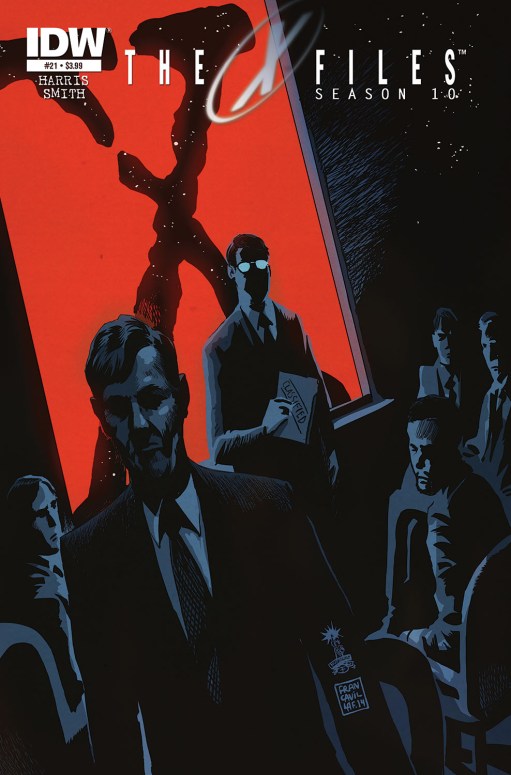
Cover to “The X-Files Season 10” #21, Francesco Francavilla, 2013

IDW Publishing.

XFiless10_21_cvr

Throwback Thursday: “Laverne and Shirley” (1976-1983)

Rest in Peace, Penny Marshall.

This is one of only a handful of TV shows that I can remember watching as a tot in the late 1970’s.  “Laverne and Shirley” (1976-1983) was the kind of of thing I’d see in my older sisters’ room.  My Dad and older brother watched war movies, westerns and monster movies, but my two sisters preferred considerably lighter fare.  Two that they watched a lot at the time, if I recall, were this show and “Donnie & Marie” (1976-1979) — about the scariest thing you could find playing on their black-and-white TV was “The Hardy Boys/Nancy Drew Mysteries” (1977-1979). (One of my sisters had a crush on actor Shaun Cassidy; I think there was a poster of him in their room.)

I loved “Laverne and Shirley” when I was that young.  Lenny and Squiggy were my favorite highlight of any episode, even if I was sometimes confused about whether they were meant to be “good guys” or “bad guys.”  I was in kindergarten, and not altogether bright, and I thought that men who wore black leather jackets (Fonzie notwithstanding) were usually “bad guys.”  I also remember thinking that hippies and motorcyclists were the same group of “bad guys” because they disobeyed God or something … my confusion at the time resulted from some vaguely moraled born-again Christian comic books I’d happened across somewhere.

I also remember recognizing “Laverne and Shirley” as being related to another show that a lot of kids back then loved — “Happy Days” (1974-1984), of which it was a spin-off.  This might have been the first time in my life that I was aware of two live-action television properties occupying the same fictional universe; I’d already seen it happen in the movies with the various incarnations of “King Kong” and “Godzilla.”

Here’s what makes me feel old — for both “Laverne and Shirley” and “Happy Days,” I probably watched a lot of the episodes when they were first broadcast, and not just in re-runs (although “Happy Days” was also played in syndication endlessly throughout the 1980’s — it remained a fixture of daytime television).

And I only just realized writing this that Lenny was played by the priceless Michael McKean.  As an adult, I know him primarily from his brilliant turns in “This Is Spinal Tap” (1984) and “The X-Files” (1998-2018).  He’s 71 now.  Wow.


Cover to “The X-Files: Season 10” #3, Carlos Valenzuela, 2013

IDW Publishing.

920148_10151214922958039_375819368_o

A review of “The X-Files” Season 10

I breaks my heart to say this, but 2016’s long-awaited return of “The X-Files” was not a triumphant one.  (Indeed, I am writing this review nearly two years after its conclusion because I only recently got around to watching the last of its six episodes.)  I’d rate the brief season a 4 out of 10 — the lowest rating I’ve ever given to a season of the show.

I hope this year’s Season 11 proves me wrong, but I’m finally starting to wonder of “The X-Files'” time has come and gone.  (This is coming from someone who was a lifetime fan.  I even thoroughly enjoyed seasons 7 through 9, which was when much of the show’s loyal fan-base began truly eroding between 1999 and 2002.)

So many of the show’s core elements seem outdated now.  The character arcs of its two heroes and their relationship were resolved seasons ago.  Its central overriding story arc — an elite cabal’s conspiracy about (and with) aliens — appears to have been milked for most or all all of its entertainment value.  And the show’s format of mixing a handful of “conspiracy episodes” with standalone “monster-of-the-week” episodes feels awkward compared with contemporary programs that better integrate multiple plot lines.  (Consider HBO’s “Game of Thrones,” for example, or even the various Netflix and television series that are part of the Marvel Cinematic Universe.)

The truly fatal blow to “The X Files'” staying power, though, runs a bit deeper — network television just isn’t as positioned as it used to be to tell the scariest stories to a wide audience.  There is too much competition from sources less beholden to censorship or to the milquetoast sensibilities of mainstream appeal.  The first is easily accessible cable channels like HBO and AMC, which can shock viewers with visceral violence.  The second is subscription services like Netflix.

And third is simply the Internet at large, with its endless cornucopia of morbid or bizarre content.  “The X-Files” was created before the Internet was a common household utility.  Part of the show’s appeal was that it offered people the creepiest stories they’d watch anywhere anywhere outside of a movie theater.  And those stories at least seemed well researched by the program’s writers, who did a tremendous job for most of the show’s run.

Today’s Internet-connected entertainment marketplace is different.  No matter how much weirdness “The X Files” can pack into a 43-minute episode, the average consumer can find material online that is darker or more frightening in less time than that.  Compare the average “X-Files” episode, for example, to the array of material devoted to real-life “paranormal” subjects, like “Slender Man,” alleged UFO footage, or tragedies like the mysterious death of Elisa Lam.  (That last one is truly shudder-inducing.  Google it at your own peril.)

The only way a show like “The X-Files” can hope to compete is with excellent attention to tone, tension and character — something I thought that seasons 7 through 9 did pretty well with, despite a gradual fan exodus after David Duchovny’s awkward departure from the series.  Season 10 just didn’t follow suit.  It really was as though a range of previous “X-Files” episodes has been thrown in a blender, so that their component parts could be served yet again.  The conspiracy stuff, in particular, was poorly executed, too hastily paced, and just a bit too campy for my taste.  Mulder and Scully’s return was also too self-conscious — as though Duchovny and Gillian Anderson were reunited for a tongue-in-cheek reunion special.

It wasn’t all bad.  These two leads are always fun to watch.  The fourth episode was superb — “Home Again” served up both a creepy, macabre story and a meaningful character arc for Dana Scully.

Episode 3, “Mulder and Scully Meet the Were-Monster,” was also fun enough.  But while a lot of other fans absolutely loved this humorous entry, I personally didn’t feel its central joke merited a full episode.  Besides, this particular twist has been done before, in a 1989 book by a well known speculative fiction author.  (I won’t name the book or the author here, in order to avoid spoilers.)

The rest of the episodes were … fair, I suppose.  Oh, well.

I’m thrilled that we’re currently being given Season 11 of “The X-Files.”  As someone who was a longtime fan, I never envisioned the show lasting this long, even after a hiatus of many years.  I just hope the show matures and grows in quality after this disappointing rebirth.


XFilesStillOutThere

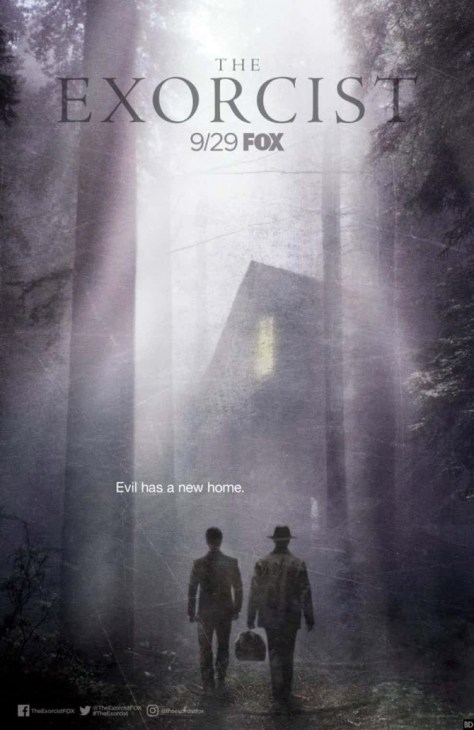
A review of Season 2 of “The Exorcist” (2017)

A show like “The Exorcist” must be difficult to write.  It stands in the shadow of some of horror’s greatest films (William Friedkin’s 1973 original and the third movie in 1990).  Its plot device is inevitably redundant.  (How many possessed innocents can we see strapped to beds while priests pray at them?)  It seems easy to stray into camp.  And it seems like a story concept that is tough to structure into a serialized format.

But the second season of “The Exorcist” was … fantastic.  It surpassed the first season, and I’d rate it a 9 out of 10.

The ten-episode arc wisely changes things up a bit from Season 1, which was maybe a bit too reminiscent of the films.  Our priestly dynamic duo are on the road in America’s northwest, and on the run from a Vatican that has been infiltrated by followers of the demon Pazuzu.  (As stupid as all of that sounds, the show actually depicts it quite well.)  As the story proceeds, there are a couple of surprise plot developments that will contradict most viewers’ expectations.  (I won’t spoil them here.)

The characters are all likable and all well played.  Ben Daniels remains possibly the show’s strongest asset as the senior priest; he’s just a superb actor.  John Cho also gives a fine performance as the head of a foster home where a demon runs amok.  Alfonso Herrera is quite good as the apprentice priest — his character is better written this time around, and isn’t saccharine to the point of annoyance.  And Herrera himself seems more comfortable in the role.  The kids are damned cool — all of them, and their interaction with their foster father was surprisingly sweet and funny — which raises the stakes emotionally when the entire household is besieged by a sadistic force.

The weaknesses here were minor.  I think the ten episodes could have been shortened to seven or eight, to make them tighter.  (I realize I write that about a lot of shows, and I’m not sure why.)  The first five episodes were tightly plotted, while the second five were a little loose.  I think better editing would have entirely excised the flashback scenes depicting Daniels’ character and this season’s new female exorcist, played by Zuleikha Robinson.  (Yes, that is indeed Yves Adele Harlow from “The Lone Gunmen” and “The X-Files.”)

The flashbacks were cheesy, even if they gave Daniels a chance to show his range.  They depict his tutelage of Robinson’s character decades prior, complete with some cliche pulp novel stuff.  (Ugh.)  We’re shown that the priest is younger because of his blond, surfer-esque haircut.  (Really?)  The flashbacks were out of place, and a little too campy.  They reminded me of the comic book style of the “Highlander” films and TV series — this show could have done without them.

I also found myself slightly annoyed by a dearth of exposition about the process of exorcism itself.  After the films and now two seasons of the show, I wanted to know more about the key actions here that affect the story’s resolution.  Do some prayers or methods work better than others?  Then why not use them all the time?  Why are some interventions more lengthy or difficult?  We are told that the demon attacking this family is different than Pazuzu, who we’ve seen in the past (though Pazuzu still puts in an appearance this season).  Can the demons coordinate their efforts, or at least communicate with each other?  If not, why not?  These seem like logical questions to ask, both for the characters and the viewers.

But there is something more that bothered me.  If a demon is intelligent and wants to harm people, then why make its presence known — and why torment or kill only a few people?  Why not remain undetected until it can commit a mass murder?  Or even perpetrate an act of terrorism, and harm far greater numbers of people by causing riots or wars?  That would suit evil’s purposes far more than the garish individual spectacles we find them performing in horror tales like these.  (Maybe I’m just analyzing too much.)

Anyway, I cheerfully recommend “The Exorcist.”  It might be the most grownup horror show on television.

And one more thing — there’s some fun to be had here recognizing actors from other roles.  Daniels was a member of the Rebel Alliance in “Rogue One: A Star Wars Story” (2016).  And there is actually another “The X-Files” alum here — even if it was only a small role.  I thought that Harper’s mother looked familiar — the actress playing her was Rochelle Greenwood.  She’s none other than the teenage waitress who witnessed Walter Skinner getting shot waaaaay back in 1996’s classic episode, “Piper Maru.”  (Can I remember faces or what?)


the-exorcist-season-2-poster

A short review of “It” (2017)

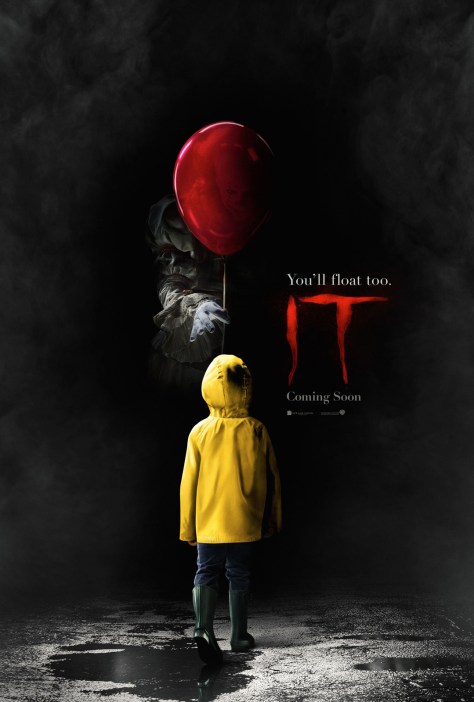
“It” (2017) succeeds on a number of levels; it’s both an excellent horror movie in its own right and a faithful adaptation of Stephen King’s incredible 1986 novel.  It’s rate it a 9 out of 10.

The movie works so well because it captures the book’s key juxtaposition of sweetness with horror.  There is a gentle innocence about the story’s circle of adolescent protagonists, who remain kind and good in King’s story — despite facing an incredibly powerful monster while being alienated by adults who are shifty, feckless, or monstrous themselves.  The screenwriters understand that juxtaposition, and successfully bring it to the screen.  The kids here feel real, three-dimensional, quirky and damned likable.  (My favorite was Eddie, the wisecracking hypochondriac, played by Jack Dylan Grazer.)  It adds great tension to the story.

And the monster itself is truly terrific, thanks to an inspired, menacing portrayal by Bill Skarsgard and startling visual direction that nicely summons summons both coulrophobia and grotesque (yet sometimes subtle) body horror.

The film might suffer just a little from something its makers couldn’t avoid — so many of its basic story elements are overly familiar tropes.  King wrote his novel more than 30 years ago.  “Scary” clowns are now omnipresent in popular culture.  (It’s something I’ll never understand.  Clowns are mysteriously and positively irritating to me.  They’re a lot like David Tennant before “Jessica Jones.”)  We’ve also seen more than a few alienated adolescents, period settings and shape-shifting monsters that impersonate our worst fears, in everything from “The X-Files” to “Stranger Things” to … other Stephen King adaptations.  We don’t want the filmmakers to neglect these key story components.  That would ruin the movie.  But they feel like overly common tropes in 2017.

Still, this was a great fright flick.  I can’t wait for Part 2.


333222

A short review of “Death Note” (2017)

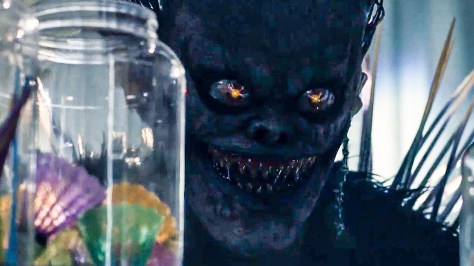
True to its manga origins, Netflix’ “Death Note” (2017) seems cartoonish and sometimes intentionally silly.  That doesn’t stop it from being a lot of fun, though — this is the most original, offbeat horror tale I’ve seen in a while, and I’d rate it an 8 out of 10.

It’s definitely a genre-buster — it’s one part comic book, one part horror tale, one part eastern theological fantasy and one part dark teen romance.  It succeeds in part because it has an interesting supernatural story setup that seems reminiscent an episode of “The X-Files.”  (A magical notebook allows it owner to sentence anyone to death, simply by writing the victim’s name down, and describing how they die.)

It also succeeds because it has a great bogeyman — a seemingly omnipotent demon named Ryuk.  His visual design is creative and wickedly creepy, and his character is menacingly voiced by none other than Willem Dafoe.

Finally, Shea Whigham is very good as the teen protagonist’s tough but likable dad.  I thought I remembered him only from his relatively minor role in this year’s “Kong Skull Island.”  But, as it turns out, he was actually the sympathetic escaped convict from 2008’s criminally underrated monster movie, “Splinter.”  He’s a great actor.

I really liked this.  I’d recommend it.


Death-Note-Light-Poster

maxresdefault

A short review of “The Belko Experiment” (2016)

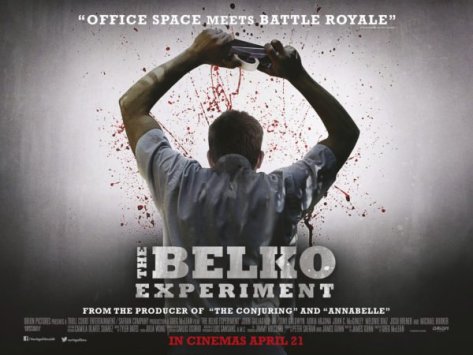
“The Belko Experiment” (2016) is a fairly gut-wrenching and potent horror film.  I was going to describe it as “Battle Royale” (2000) meets “The Office” (2005 – 2013).  But, from the looks of the poster, somebody more or less beat me to it.

As you can imagine, there is a sequence of blood-curdling events after the workers of an entire office building are forced to fight one another to the death.  It’s made all the more horrifying (and a bit sad) by a surprisingly effective early montage that shows these people are indeed likable and relatable.

I’m not sure how I feel about the ending.  There’s a twist that is nicely satisfying, I’ll grant the movie that.  But there was far too little exposition, and a closing shot that was a little too ambiguous and open-ended … maybe even abstract.  I’d be happier if the person doing the talking told us a lot more.  If you think about it, they mostly just reiterated what various characters had hypothesized earlier.

This film has a couple of “I swear I know that guy” actors.  These include Tony Goldwyn, who I last remember from 1990’s “Ghost.”  Turns out he’s a damn fine actor (in addition to being one of those people who weirdly appear to age little or not at all).  They also include John C. McGinley, Owain Yeoman and Michael Rooker.  And if you think you can recall the gentle giant played by Abraham Benrubi, the actor is none other than “Big Mike” from the classic “The X-Files” episode, “Arcadia.”

I was going to rate “The Belko Experiment” a 9 out of 10; it was exceptionally good.  But I was just too nonplussed by that rushed ending, and I think I’ll settle on an 8.


the-belko-experiment-600x450


A review of “The Conjuring” (2013)

I feel the same way about “The Conjuring” (2013) as I did about its prequel, “Annabelle” (2014) — it has all the earmarks of a bad movie, but it inexplicably succeeds anyway.

Seriously — this film has clunky exposition, cheesy dialogue and over-the-top plot developments (toward the end), not to mention a plot setup that’s in questionable taste.  (The movie suggests that the innocents condemned by the infamous 1692 Salem witch trials were indeed witches.  This feels a bit awkward to anyone who read Arthur Miller’s “The Crucible” in high school.)  “The Conjuring” also plays out like a love letter to Ed and Lorraine Warren, the controversial paranormal investigators who are largely the subject of the film (played by Patrick Wilson and Vera Farmiga).  This last offense is forgivable, I suppose — the film was made with the Warrens’ blessing, and Lorraine Warren was even present as a “consultant” during its production.

Strangely, however, these flaws were barely noticeable to me when I watched it.  I had a good time.  “The Conjuring” just happens to be a decent fright flick that delivers on the scares.

I think James Wan’s skilled directing has a lot to do with that; the film works visually.  (I could name specific instances where it works especially well, but I want to avoid spoilers.)

The acting helped a lot too — Wilson and Farmiga are both damned good, as is Lili Taylor as the afflicted family’s mother.  (I’ve admired Taylor’s acting since her long ago 1998 guest appearance on “The X-Files,” and she was equally good as a bad guy in 1996’s “Ransom.”)  Ron Livingston was also quite good in the role of the father — if you have trouble placing his face, as I did, he also played Captain Nixon in HBO’s “Band of Brothers” (2001).  He seems to have a talent for playing the likable everyman — he’s great here as the somewhat feckless father, and functions well as a kind of viewer surrogate.  I should also mention the young Joey King as one of the family’s daughters — she played the role of a terrified child to perfection, and really raised the stakes emotionally.

Despite really enjoying most of the movie, some of my enthusiasm for “The Conjuring” flagged a bit toward the end.  The denouement here includes an exorcism, and those are almost always boring.  There are only so many ways that scenario can play out, and we’ve seen them all — and I shouldn’t even need to name that certain 1973 film that did it best.  Furthermore, we see our story’s demon do some pretty extraordinary things, even by demon standards.  It can apparently transport itself great distances (using an inanimate object as a kind of fax machine?), and can manipulate both the laws of physics and the area’s wildlife.  It was all a little too much for my willing suspension of disbelief.

Again, though — this was a good movie.  I’d give it an 8 out of 10, and I’d recommend it to anyone looking for a good scare.


“Friends, Romans, countrymen, lend me your ears.”

Today is the Ides of March.

I suppose that Marc Antony’s speech from “Julius Caesar,” below, is the Western World’s definitive treatise on sarcasm?

I haven’t read it in its entirety since 10th grade English at Longwood High School.  In doing so now, I’m surprised at how many pop cultural references to it spring to mind:

  1.  The entire speech is beautifully riffed by the eponymous blade-wielding arch-villain in Matt Wagner’s incredible “Grendel: Devil by the Deed” (1993) as follows: “Friends, Romans, city folk — listen to me or I’ll lop off off your ears.  Let’s bury your Caesar and then let’s appraise him.”
  2. I’m guessing that Charles Bronson’s “The Evil That Men Do” (1984) is a reference to the third line?
  3. In at least one episode of “The X Files” in the 1990’s, the Well-Manicured Man angrily refers to the traitorous Syndicate as “these honorable men.”
  4. In one of his later novels (2002’s “The Bear and the Dragon,” maybe?) Tom Clancy describes a pregnant Chinese factory worker as being “made of sterner stuff.”  (I can’t remember which book, but for some strange reason I can remember that line.  Weird.)


Friends, Romans, countrymen, lend me your ears;
I come to bury Caesar, not to praise him.
The evil that men do lives after them;
The good is oft interred with their bones;
So let it be with Caesar. The noble Brutus
Hath told you Caesar was ambitious:
If it were so, it was a grievous fault,
And grievously hath Caesar answer’d it.
Here, under leave of Brutus and the rest–
For Brutus is an honourable man;
So are they all, all honourable men–
Come I to speak in Caesar’s funeral.
He was my friend, faithful and just to me:
But Brutus says he was ambitious;
And Brutus is an honourable man.
He hath brought many captives home to Rome
Whose ransoms did the general coffers fill:
Did this in Caesar seem ambitious?
When that the poor have cried, Caesar hath wept:
Ambition should be made of sterner stuff:
Yet Brutus says he was ambitious;
And Brutus is an honourable man.
You all did see that on the Lupercal
I thrice presented him a kingly crown,
Which he did thrice refuse: was this ambition?
Yet Brutus says he was ambitious;
And, sure, he is an honourable man.
I speak not to disprove what Brutus spoke,
But here I am to speak what I do know.
You all did love him once, not without cause:
What cause withholds you then, to mourn for him?
O judgment! thou art fled to brutish beasts,
And men have lost their reason. Bear with me;
My heart is in the coffin there with Caesar,
And I must pause till it come back to me.

 

— from William Shakespeare’s “Julius Caesar”


Grendel Devil Tales 1