All posts by Eric Robert Nolan

Eric Robert Nolan graduated from Mary Washington College in 1994 with a Bachelor of Science in Psychology. He spent several years a news reporter and editorial writer for the Culpeper Star Exponent in Culpeper, Virginia. His work has also appeared on the front pages of numerous newspapers in Virginia, including The Free Lance – Star and The Daily Progress. Eric entered the field of philanthropy in 1996, as a grant writer for nonprofit healthcare organizations. Eric’s poetry has been featured by Dead Beats Literary Blog, Dagda Publishing, The International War Veterans’ Poetry Archive, and elsewhere. His poetry will also be published by Illumen Magazine in its Spring 2014 issue.

Cover to “Green Lantern Corps” #22, Pat Broderick, 1992

46d71dc5b5d063f7c7e798ee70d6f4d1

Saffire’s “Nobody’s Fool,” 1992

From their album, “Broad Casting.”


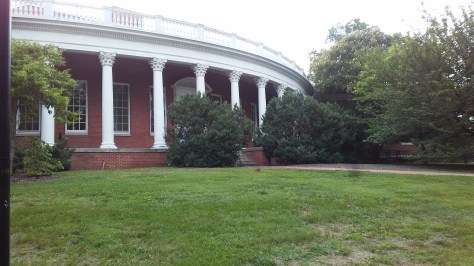
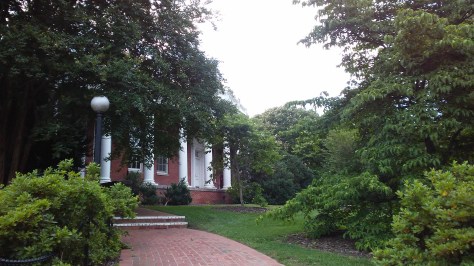
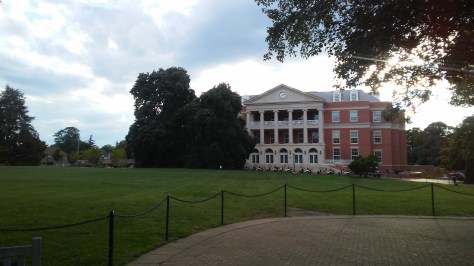
Mary Washington College, Fredericksburg, VA, June 2017 (2)

Pictured are Monroe Hall, Virginia Hall, Campus Walk, Lee Hall, and Trinkle Hall.

*****

The Mary Washington College Campus looked as beautiful as ever last week — it was only marred by the occasional sign bearing an embarrassing misprint.  (They perplexingly refer to the misnomer “University of Mary Washington.”)

At first I hesitated to visit the campus during my stop in Fredericksburg, Virginia on my way to Washington, D.C.  I asked my Alumbud if two men in their 40’s would look suspicious there, given the increased security on today’s college campuses.  He told me to relax — people would assume we were two fathers scouting the school for their respective offspring.  That made me feel really, really old.


Monroe Hall and The Fountain.  When I went to school at MWC, that fountain was occasionally doused with either detergent or dye as a prank.

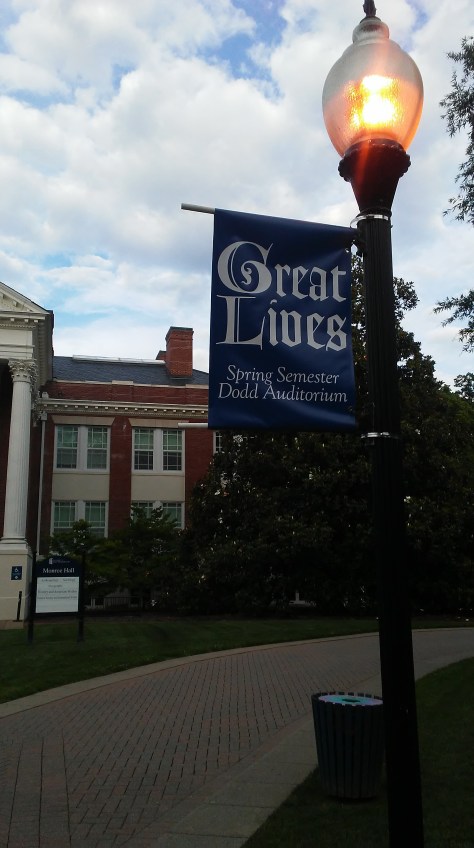
20170606_191016

20170606_191038


Virginia Hall.  In the early 1990’s, this was a dorm exclusively for freshmen girls; I don’t know if that’s still the case today.
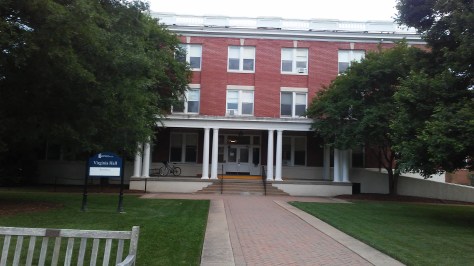
20170606_191031


You can’t see it here, but beyond that hedge and beside Monroe is Campus Drive, curving down past the amphitheater to Sunken Road.  The long hill is still entirely wooded, and is still arguably the prettiest part of campus.
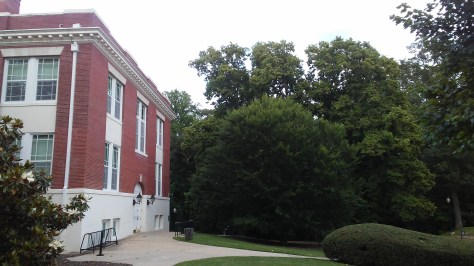
20170606_191114


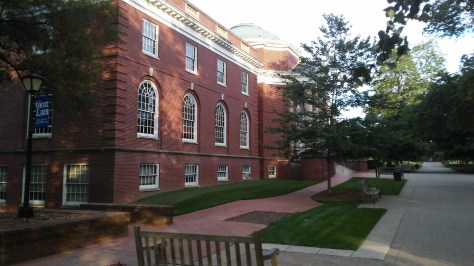
Campus Walk and Lee Hall.

20170606_191156

This is cute.  I’m guessing it was a product of the recent remodeling?  But which way to Winterfell?  Metropolis?  Which way is Caprica City?  I have tickets for a Buccaneers game next week.

20170606_191215

20170606_191228

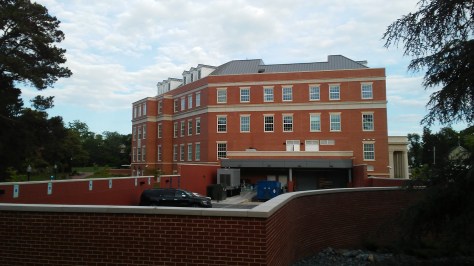
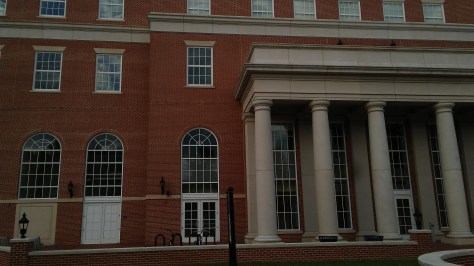
Here is where the College Bookstore used to be (beside the Campus Police Station in the lower part of Lee); I’m told now that it’s in a vastly larger space upstairs.

And The Underground has returned!  It closed after my freshman year in 1990-91.  I met a lot of good friends there, and I heard my first live blues at The Underground, too, performed by Saffire, The Uppity Blues Women.  (I only just now learned that Saffire’s Ann Rabson sadly passed away in 2013.)

[Update: an alumna just told me that she can remember when The Underground was called “The Pub.”]

20170606_191310


Campus Walk and Trinkle Hall.  My Alumbud reminded of what seemed like a big issue back in the day — the students’ desire to have a 24-hour study hall.  They successfully petitioned the college administration for it, and at some point toward the end of my college career, Trinkle began staying open all night.  If that sounds incredibly nerdy, it was.  But it was also a pretty big quality-of-life issue for the dorms.  A lot of people needed a place to go to cram before finals, in order to keep the peace with a sleeping roommate.

The “computer pods” were also located here, downstairs, in a basementish-type space that was air-conditioned to the point where it felt freezing.  You always had to bring a jacket or sweater to do your work there.
20170606_191334

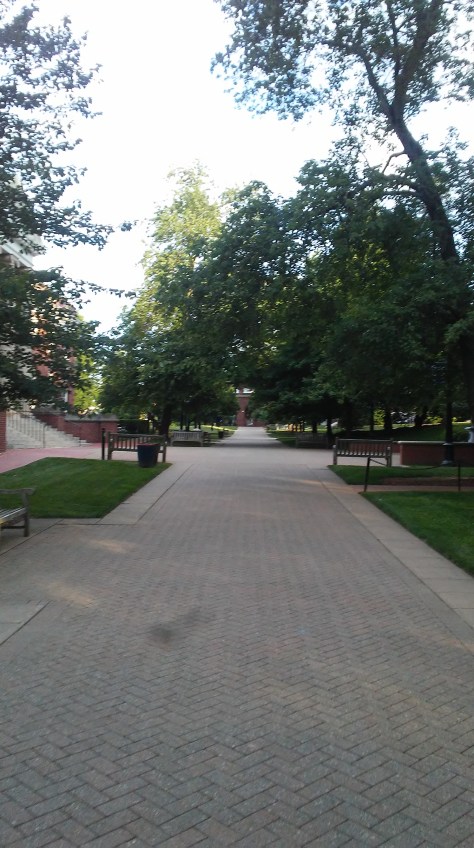
Looking south on Campus Walk, you can just barely make out the Bell Tower, a product of the campus remodeling.  You used to be able to see Bushnell Hall, my freshman-year dormitory.
20170606_191342

20170606_191405

The bust of Dr. James L. Farmer, Jr. that the school erected opposite Trinkle Hall in 2001.  He was one of the nation’s foremost leaders in the Civil Rights movement, founding the Congress on Racial Equality (CORE) and organizing the “Freedom Rides” to desegregate interstate bus travel.  Dr. Farmer was my Civil Rights professor in 1992, and he was universally admired by his students.

Some weird old guy wandered into the photo here — sorry about that.

20170606_191436


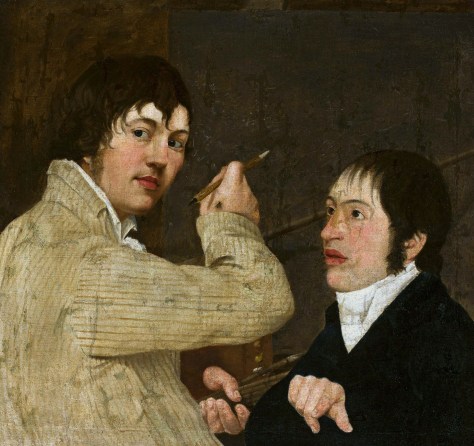
“Self-portrait with a Friend and a Fly,” Jan Antoni Blank, 1806

Oil on canvas.

Blank_Self-portrait_with_a_friend

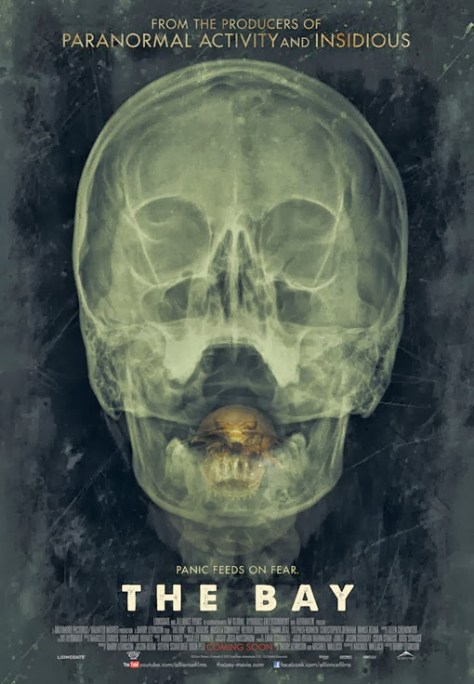
A short review of “The Bay” (2012)

“The Bay” (2012) deserves credit for its effort to give viewers a detailed and well developed, found-footage science fiction-horror movie.  In depicting a brutal parasitic infection eradicating a small coastal town, writers Barry Levinson and Michael Wallach appear familiar with the basics of epidemiology and public health.  And they make nice use of a time-honored sci-fi standby — pollutants causing small organisms to mutate into large ones.

Levinson and Wallach are ambitious too.  “The Bay” follows a number of intertwining narratives winding through the entire town,  making use of more than a dozen actors and innumerable extras.  Some of those actors are quite good — especially those portraying emergency professionals, like the local emergency room doctor, the staff for the Centers for Disease Control and the bureaucrat from the Department of Homeland Security.  I think a story with this scope, and with this many characters, would have made a fine ecological techno-thriller novel.  The filmmakers really do serve up a thoughtful, serious cautionary tale that is sometimes frightening.

Despite its strengths, however, “The Bay” is still encumbered by some noticeable flaws.  There’s little structure to it, the pacing feels off, and we follow so many characters that it is hard for the viewer to get to know any one of them.  There is a news reporter whose point of view serves as a framing device, but she’s performed with little energy by the main actress, and her character isn’t scripted to be terribly likable to begin with.  Parts of the film feel redundant, too.  Levinson (who is also the director here) keeps replaying footage and key dialogue, and it’s a poor choice.

All things considered, I’d rate “The Bay” a 7 out of 10.


TheBay

Cover to “Kingdom Come” #3, Alex Ross, 1996

Kingdom_Come_3

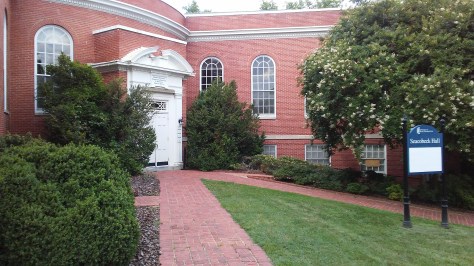
Mary Washington College, Fredericksburg, VA, June 2017

Seacobeck Hall and the University Center.

*****

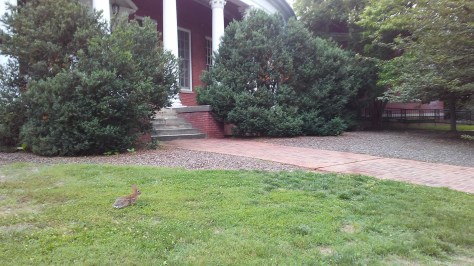
This Seaco-rabbit (lower left) outside Seacobeck Hall was one of many overrunning campus this past Tuesday. Between them and the myriad groundhogs, it was like an invasion, or at least “Soylent Green” meets “Night of the Lepus.” Were these the secret ingredient for Rose Room’s delicious cheeseburgers?  (Seacobeck Dining Hall was the school’s cafeteria — and one of the places where I worked — when I attended in the early 1990’s.)

I’m lucky the rabbits things weren’t so omnipresent when I was a student. I would have inevitably spent many hours trying to catch one, so I could bring it in for a “Waiter, there’s a hare in my soup” joke.

20170606_190750

20170606_190715

20170606_190657

20170606_190636

20170606_190548

Here’s the spot facing College Avenue where I would relax after working a shift — eating Rose Room cheeseburgers and fries.  All jokes aside, we had a really decent head chef back in the day.  The food was often quite good.

20170606_190530


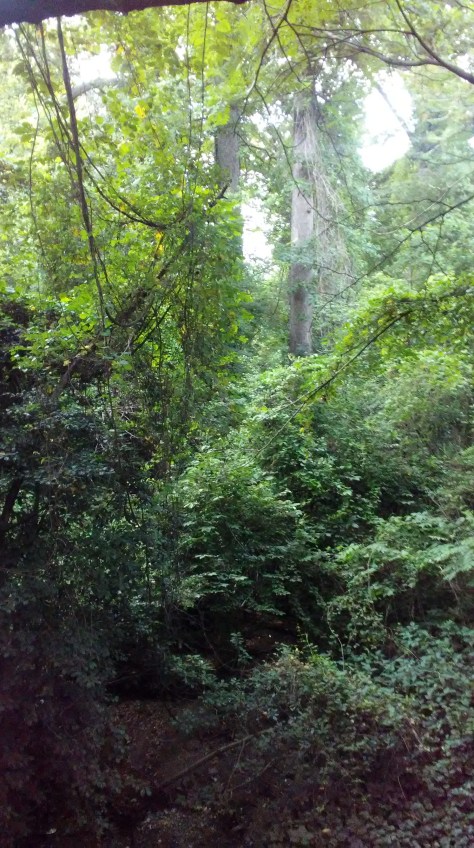
The ravine beneath the Seacobridge is almost entirely invisible under Spring growth.

20170606_190907


Chandler Hall (where I took both my psychology and my writing classes) was razed years ago.  In its place is the gigantic “University Center.”  There is still an interior “Chandler Ballroom.”

20170606_191251

20170606_190618

20170606_190343


Depiction of the sacrifice of a boar, circa 510 B.C.

Depiction of the sacrifice of a young boar, with kalos inscription (ΕΠΙΔΡΟΜΟΣ ΚΑΛΟΣ). Tondo from an Attic red-figure cup, ca. 510 BC–500 B.C.


Sacrifice_boar_Louvre_G112

A short review for the pilot of “The Last Ship” (2014)

So I finally got around to checking out “The Last Ship” (2014), and while the pilot didn’t immediately have me hooked, it seems like a decent show.  I’d rate it an 8 out of 10, and I’ll probably continue watching it.

I was surprised I’d heard so little about this program … it’s a big-budget, post-apocalyptic military science fiction series, but none of my fellow horror or sci-fi nerds mentioned having seen it.

The plot setup seems like something that would please horror fans — a virus eradicates 80 percent of the world’s population, and a lone American naval vessel elects to remain at sea.  (They’re fortunate enough to be carrying a civilian virologist who was tasked by the fallen United States government to develop a vaccine.)  And there are hints that the show’s writers would do well scripting a frightening TV series — there are a couple of nice flourishes for a serialized horror show right here in the pilot.

But the story’s horror elements are minimized in favor of a more mainstream, safe-for-general-audiences techno-thriller.  And that’s not a bad thing, because it succeeds as a such.  The show is based on a 1988 novel by William Brinkley, and it’s produced in cooperation with the United States Navy.  (The destroyers U.S.S. Halsey and the U.S.S. Dewey stand in for the fictional U.S.S. Nathan James.)  It seems smartly scripted with respect to both virology and how the military works.  I’m barely literate in either of those subjects, but what I watched seemed coolly authentic, and that entertained me and held my attention. So while I might not recommend this to fellow “The Walking Dead” fans, I’d definitely recommend it to fans of Tom Clancy.

The directing is pretty good, the story moves along quite quickly, and the action scenes in the pilot are surprisingly ambitious and effective for a TV show.

The acting, I suppose, is average — though it’s always fun seeing Adam Baldwin on screen, and the square-jawed Eric Dane seems well cast and shows promise as the ship’s commanding officer.

The dialogue and character interaction are average at best.  This isn’t high art when it comes to human storytelling.  There are some pretty predictable character tropes, and a few exchanges are so cheesily melodramatic that they nearly insult the viewer’s intelligence.  Dane’s commander faces off, for example, against a beautiful, independent, female scientist who doesn’t like following orders … gee, I wonder if we’ll see any romantic tension there?

Still, this looks like a good enough show, if its pilot is any indication.  The good outweighs the bad, and I’m glad I heard about it.


The_Last_Ship_Season_1_poster

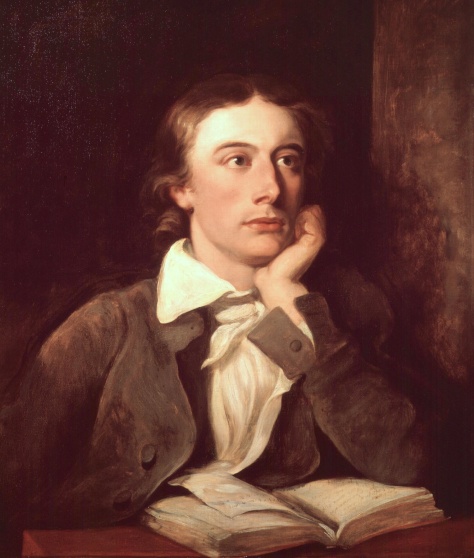
“The day is gone, and all its sweets are gone!” by John Keats

“The day is gone, and all its sweets are gone!”

by John Keats

The day is gone, and all its sweets are gone!
Sweet voice, sweet lips, soft hand, and softer breast,
Warm breath, light whisper, tender semi-tone,
Bright eyes, accomplish’d shape, and lang’rous waist!
Faded the flower and all its budded charms,
Faded the sight of beauty from my eyes,
Faded the shape of beauty from my arms,
Faded the voice, warmth, whiteness, paradise –
Vanish’d unseasonably at shut of eve,
When the dusk holiday – or holinight
Of fragrant-curtain’d love begins to weave
The woof of darkness thick, for hid delight,
But, as I’ve read love’s missal through to-day,
He’ll let me sleep, seeing I fast and pray.

1819


John_Keats_by_William_Hilton

Portrait by William Hilton, circa 1822