Tag Archives: 1979

A spoiler-free review of “Sherlock” Season 4

I actually can understand why some “Sherlock” fans were less than thrilled with its fourth (and apparently last?) season.  (I’ve read that the final episode received the lowest ratings in the show’s history.)  Even if Season 4 wasn’t quite as strong as past seasons, however, I’d still give it a 9 out f 10.

The narrative style and the content of this three-episode arc changed drastically.  The detail and methodical pace of past seasons gave way to a faster, looser narrative that made the show feel more … mainstream, in a way.  These episodes felt more like the standard adventure tales that you’d expect from any television thriller, and far less a genuine homage to the literary source material.  At times it was a little sloppy, with bombs, disguises, false memories and other over-the-top plot devices that were sometimes pretty implausible.  The final episode even seemed directly inspired by a series of horror films not known for being critically acclaimed.

The writing and directing wasn’t as clean, either.  This was easily the most surreal of the show’s four seasons — especially if you count the standalone “special,” “The Abominable Bride,” which preceded the official initial episode.  There were some overly stylized flashbacks, spliced scenes, and other departures from a linear narrative.  (I can’t be more specific without spoilers.)

The tone of the humor changed, too.  Some of the droll, dialogue-driven British humor was replaced by the zanier, crowd-pleasing stuff that you would expect from a more mainstream television comedy.  (One lamentable scene involving the outcome of a car chase, for example, was entirely too silly.)

At the same time, this was the darkest season yet.  The goofier humor was juxtaposed with story elements that were hard-hitting, sad and occasionally frightening.  When one character delivers the line, “Maintain eye-contact,” it was chilling enough to stay with me hours after the show aired.  There was some scary stuff this season, on a couple of different levels — the second episode, in particular, superbly delivers creeping psychological horror, then tops if off with a chilling story resolution.

And here is where Season 4 shined.  At one point, I asked myself, “When did ‘Sherlock’ become a horror show?”  But it was shortly thereafter that I realized that I absolutely didn’t mind.

The season’s success boils down to three things.  The first is the darker story content, which I thought was a bold and surprising choice for what is probably the show’s last season.

The second is the quality of the writing.  I realize that sounds strange, given my above criticisms above, but it is still a superbly scripted show.

And, third, the performances from its principal actors were still uniformly excellent.  (And when they combine via some great dialogue, “Sherlock” still hits it out of the park.)  Martin Freeman, Benedict Cumberbatch, and Amanda Abbington were all at their peak — particularly since their characters have evolved now to what is probably their culmination.  This last  season was easily the most personal and character-focused, and sees these protagonists finally complete their individual arcs.  Sherlock is finally sufficiently humanized, Mary’s development finally reaches full fruition, and Watson has finally grown into his own man.  If I had quibbles about Holmes and Watson’s portrayals in past seasons, it was that Holmes was too much of a jerk , while Watson was merely a weak, even neutered foil for him.  Holmes was never such a heel in the stories I loved a boy — neither was he in the film adaptations.  And I found the far stronger Watson in “The Abominable Bride” to be truer to the stories as well — not to mention reminiscent of my favorite Holmes films, like 1976’s “The Seven Percent Solution” or 1979’s “Murder By Decree.”

The villains were damn good too.  “Sherlock” has always excelled at bringing believable, well scripted and creatively conceived bad guys, and this season was no exception.

All in all, this was still terrific television, despite its relative flaws.  I heartily recommend it to Holmes fans.


sherlock-did-you-miss-me

Cover to “Exit Sherlock Holmes,” 1979

Art by Jordi Penalva, for the excellent novel by Robert Lee Hall.


Throwback Thursday: Blondie

Believe it or not, I actually can remember Blondie’s “Heart of Glass” being played in the summer of 1979.  (That would have been the summer before I entered second grade.)  The song came out in September 1978; but I can pinpoint the year as 1979, because this is a vivid summer memory.  I heard “Heart of Glass”  being played loudly on a hot day by a house halfway down the street I grew up on, and I was playing with the first Star Wars figures I’d ever gotten.  (I’d adopted R2-D2 and C-3PO the prior Christmas; they lived among shuffled papers in the top drawer of the bright blue desk that Santa had also brought me.)

Blondie was a big deal.  “Call Me” and “The Tide is High” were two other hits that I heard a hell of a lot as a little boy in 1980.  You could guarantee those would come up at least once on the way to school on whatever radio station the bus driver played.  (The little kids sat toward the front; my best friend Shawn and I had a habit of sitting in the coveted “front seat” behind the driver, who was an adult we really liked.)

If you watch the truly Kafkaesque video for “The Tide is High,” you’ll actually see an utterly bizarre homage to Star Wars, in which Darth Vader morphs into … an upright robotic rat, apparently.  I am not making this up.  It’s in the second video I posted.

What’s befuddling is that I don’t think I have heard Blondie played since … the very early 1980’s, I guess.  Other superstars from the era occasionally get rediscovered.  In 1993 and 1994, for example, the kids at Mary Washington College were hit by a horrifying revival of the truly abhorrent ABBA, not to mention a couple of “songs” from (God help us), The Partridge Family.  (If you ask me, a meth epidemic would have been less troubling.)

Why not Blondie?  I don’t get that.


“The Revenant” (2015) was astonishingly good.

“The Revenant” (2015) changed the way that I see movies.  This utterly immersive, jaw-droppingly gorgeous period thriller is easily one of the best films I’ve ever seen, and I plan to see it again, soon.  I’d rate it a perfect 10.

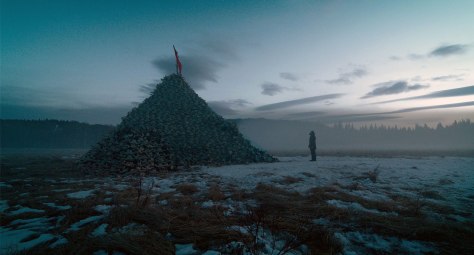
It’s a visual masterpiece.  Its cinematography renders its mountains, valleys and plains both dreamlike and lucid, and its action is unflinchingly visceral.  Shot mostly in Alberta, Canada (standing in for 1823 Montana and South Dakota), the film’s visuals are more stunning than anything I’ve ever seen.  You truly do feel that “you are there.”  But “there” is an absolutely brutal 19th century middle American winter wilderness.  It’s fatally dangerous, both with its unforgiving elements and with the human violence that seems to erupt casually and constantly over its land and resources — not to mention bloody retribution among groups and individuals.  This isn’t a movie for the faint of heart.  I won’t spoil the subject of its gut-wrenching action sequences for fear of spoilers — most of these sequences arrive as frightening surprises, thanks to Alejandro G. Inarritu’s expert direction.  It is this juxtaposition of beauty and brutality that define the movie.

Leonardo DiCaprio plays Hugh Glass, an American trapper who begins as one of the seemingly few characters that do not quickly resort to unnecessary violence, prejudice or revenge.  He later does seek vengeance for his son’s death against fellow trapper John Fitzgerald, played by Tom Hardy.  (Glass was a real frontiersman who was the subject of Michael Punke’s 2002 biography, “The Revenant.”  But a cursory Google search suggests to me that this is not actually “a true story;” I think of it as loosely based historical fiction.)  Like DiCaprio and Hardy, Domhnall Gleeson and Will Poulter also excel in their supporting roles.  (Gleeson seems to specialize in playing reluctant innocents; I remember him from his skilled performance as the gentle young computer genius in last year’s outstanding science fiction thriller, “Ex Machina.”)

But the main star of “The Revenant” is the setting itself, beautifully shot by Emmanuel Lebezki and masterfully employed by Inarritu as a kind of character unto itself in the story.  It’s lovely.  I’ve never seen a movie like this.  And while I’m no film connoisseur, or even a genuine critic, I’ve seen a lot of good ones.

The direction most reminds me of Francis Ford Coppola’s work in 1979’s “Apocalypse Now.”  I was also reminded of Stanley Kubrick’s “The Shining” (1980) — that was a film that also depicted threatening snowscapes as dreamlike and eerily beautiful.  There was one shot near the end, following DiCaprio’s vengeful hero on his path through immense firs on either side — it reminded me a lot of Jack Nicholson’s murderous Jack Torrance on his path through the hellish hedge labyrinth.

There is also a central action set piece involving an attack on one group of characters on another — it actually reminded me of Oliver Stone’s work in “Platoon” (1986).  Like Stone’s finale, the battle is staged so that the viewers have no sense of which direction the attack is coming from, paralleling the experience of the confused defenders.  There are countless long tracking shots throughout this film, with fewer cuts — and amazing circular surrounding shots of the action.  I’ve read that Inarritu actually had to transport cranes to his mountaintop shooting locations in order to execute those.

If you had to find a flaw with “The Revenant,” I suppose you could complain that its story and characters are thin.  We know little more about DiCaprio’s Glass beyond that he is competent, patient and slow to fight — then merciless and unrelenting in seeking justice.  Poulter’s Jim Bridger  is loyal, but not as strong as the hero.  Hardy’s Fitzgerald is a greedy, opportunistic bully whose murder of an innocent drives the plot.  That’s … little more than the plot and characters of a lot of throwaway westerns, isn’t it?  (I’ve indeed seen this movie categorized as a western in reviews.  That’s technically correct, I guess, but it feels too unique to pigeonhole that way.)

You could easily read the movie for moral ambiguity.  There are the obvious issues connected with revenge, of course, underscored by a final shot in which one character appears to break the fourth wall.  I found myself wondering about Glass’ compatriots.  Yes, it is Fitzgerald who acts villainously, but all of Glass’ fellow trappers also consign him to death by abandoning him after his injuries.  I do understand that they feel they can’t survive themselves if they try to carry him back to their staging area at Fort Kiowa.  But … is what they do “right?”  What would you or I do?

I think I am coming too close here to revealing too much about the film.  The best way to experience “The Revenant” is to walk into it knowing little about it.  I strongly recommend you do so.


revenant-poster

The-Revenant-03

the-revenant-trailer-screencaps-dicaprio-hardy6

revenant-horse-xlarge

revenant

24115986425_3e247de327_b

Throwback Thursday: “Halloween III: Season of the Witch” (1982)

Young people, let me try to explain what it was like for a kid who loved movies in the early 1980’s.

There was no trivia section for the Internet Movie Database.  There was no Internet Movie Database.  There was no goddam Internet.  This meant that information about new movies came mostly from other second-, third- or fourth-graders.  And that was one imperfect grapevine.

Sometimes the information was flat out wrong.  Brad Fisher told me at the beach in the summer of 1980 that Han Solo dies in “The Empire Strikes Back.”  (Yes, “Star Wars” fanatics, I am aware that Harrison Ford wanted the character to die.  Now grow up and watch Ron Moore’s “Battlestar Galactica.”)

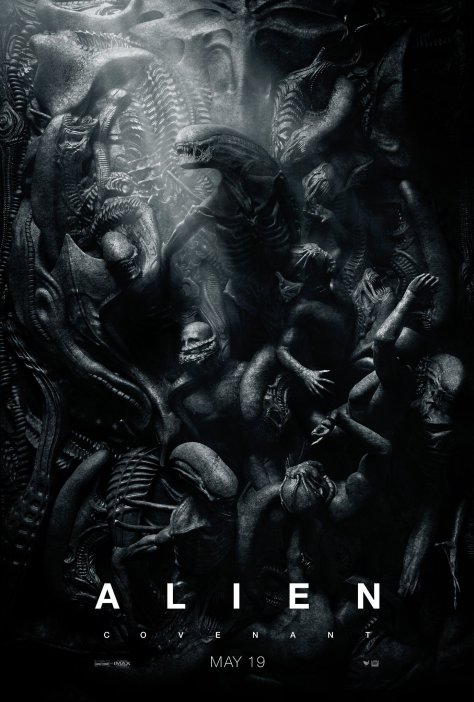
Other times, the information was technically accurate, but confusingly articulated.  Such was the account of Jason Huhn, the kid across the street, of Ridley Scott’s “Alien.”  (That was a 1979 movie, but I wasn’t even allowed to watch the bowdlerized version that was on television a few years later.)  “Its head is like a tube.”  Jason told me thoughtfully.  “It has, like, two mouths.  It has a mouth, and then a mouth inside a mouth.”

Finally, the other boys’ reviews were occasionally just too spoiler-heavy.  In 1984, I had the entire rope-bridge scene in “Indiana Jones and the Temple of Doom” memorized in detail before I got to see the movie myself.  (Maddeningly, most of Mr. Greiner’s sixth grade class had seen it before I did, and Jason Girnius was particularly exuberant in recounting its climactic fight.)

“Halloween III: Season of the Witch” was something of a different animal.  None of the kids in the neighborhood could figure that one out.

“Michael isn’t in it!”  That was the buzz.  To a boy in the 1982, Michael Myers was an icon on par with “Friday the 13th’s” Jason.  (Leatherface was a bit before our time, and Freddy Krueger and Pinhead hadn’t arrived in theaters just yet.)  Even those of us who weren’t allowed to watch the movies had heard all about him.  It utterly confused us that that a “Halloween” movie could be made in which he was absent.

It … looked pretty scary, at least.  Its poster and tagline suggested that young trick-or-treaters would be victimized instead of teenagers old enough to babysit, so that was more frightening to a young boy.  (As an adult today, I suggest that this movie absolutely did not turn out to be a classic horror film, despite the pretty terrifying basic plot device revealed at the end.)

Today a simple Google search would inform us of John Carpenter’s plans — an anthology series in which every subsequent “Halloween” sequel was a standalone horror story with the holiday as a theme.  (I think I’d question the wisdom of that even as a kid; the studio wisely resurrected the slasher four years later.)

But the gradeschool grapevine was not so informed.  There weren’t even any tentative hypotheses among the kids on my street.  I think we just shrugged it off and returned to talking about “Star Wars.”  We just figured that adults sometimes did some really puzzling, really stupid things.  That’s a belief I still hold today.  In fact, I’m pretty sure that I occasionally engender that belief in others.

halloween-3-poster