DC Comics.
I love Silver Banshee’s visual design — simple and iconic. Sometimes the most memorable costumes are the simplest, like hers or Captain Atom’s or Grendel’s.

DC Comics.
I love Silver Banshee’s visual design — simple and iconic. Sometimes the most memorable costumes are the simplest, like hers or Captain Atom’s or Grendel’s.
DC Comics.

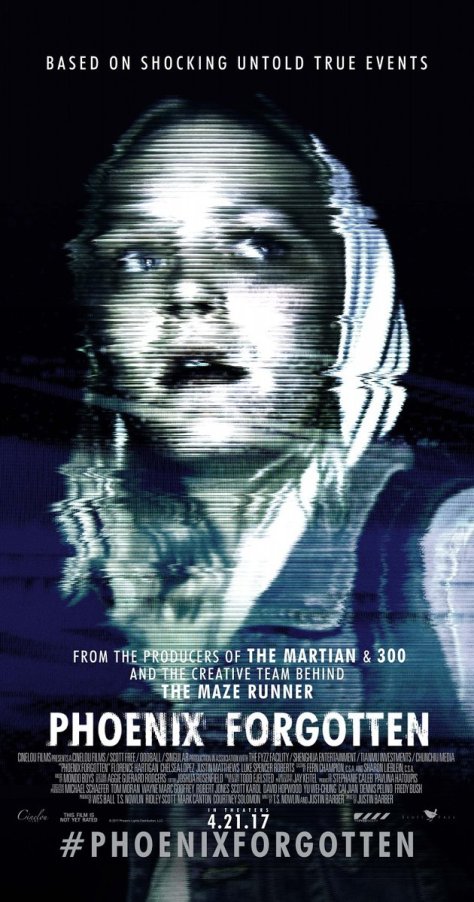
“Phoenix Forgotten” (2017) has a couple of things going for it. The first is its use of real events as the MacGuffin for its found-footage horror story — the 1997 mass UFO sighting in Arizona known as “The Phoenix Lights.” The second is the young Chelsea Lopez in a lead role. She appears to be a gifted young actress, and she’s … astonishingly good here. (The script, too, does succeed in painting her adolescent protagonist as likable and identifiable.)
Those two things, however, do not save “Phoenix Forgotten” from being a mediocre movie. It’s sometimes slow and occasionally even boring, despite the fact that it picks up quite a bit in its closing minutes.
It also feels far too much like a beat-for-beat remake of 1999’s “The Blair Witch Project.” Yes, it’s a different sub-genre, with a science fiction plot device instead of a supernatural threat, and a desert setting instead of the Maryland forest. But its story, its conclusion and even its closing shots parallel that superior film very closely.
I’d rate this a 4 out f 10.
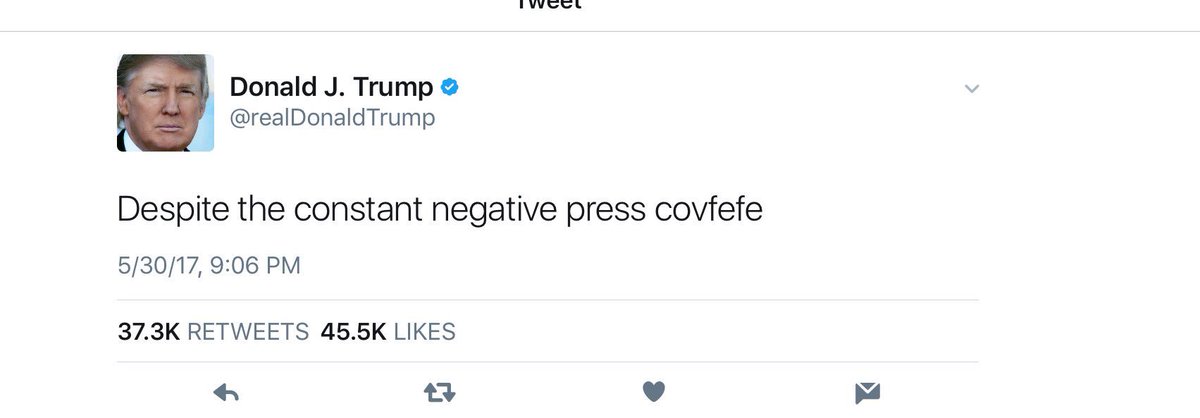
Trumps’ presidency is such a disaster that, at this point, our only hope may be to launch a team of plucky oil drillers into space.
Every time I mention “Armageddon” (1998), someone makes a joke about its Morgantastic, Freemaniffic contemporary, “Deep Impact.” I tell people it is on my list of things to watch, but I still haven’t even seen “Predestination” (2014), “The Fifth Element” (1997) or a single episode of “Breaking Bad” (2008 – 2013).
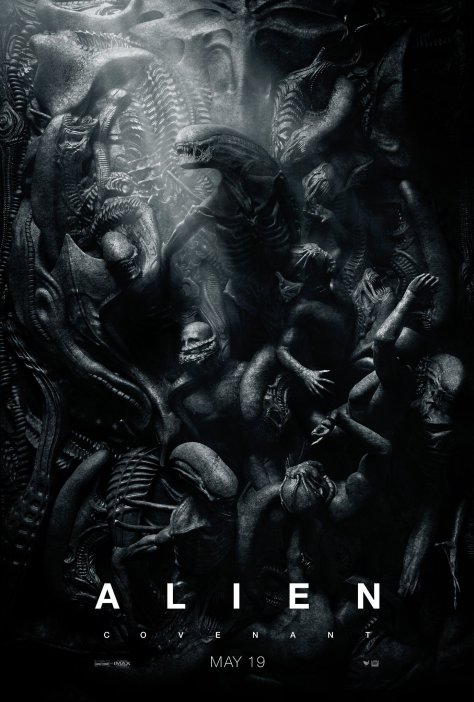
I am part of a happy minority where “Alien Covenant” (2017) is concerned — I keep hearing about “meh” or negative reactions from my friends, but I quite enjoyed it. I’d rate it a 9 out of 10.
No, this second installment in the “Alien” prequel trilogy doesn’t bring much new to the table. It often seems like a collection of common tropes, and borrows a bit from previous films in the franchise — especially the first movie in 1979. Some aspects of it — like a predictable and slightly gimmicky development late in the story — even feel like horror movie cliches. (I am doing everything I can to avoid spoilers, so forgive how vague I’m being here.) “Alien: Covenant” isn’t groundbreaking, and it isn’t destined to be called a “classic.”
Here’s the thing, though — all of the movie’s common tropes are exactly what make fans happy. Think about it … if you had to name two “Alien” movies as unique or the most divergent, they might be the heady, ambitious “Prometheus” (2012) and the baroquely experimental “Alien: Resurrection” (1997). Whatever their failings, both of those movies deserve points for creativity. And they are among the three films that fans hated the most. (The third here is the smartest and most underappreciated installment, 1993’s brilliant “Alien 3.”)
With “Alien: Covenant,” Ridley Scott gives fans exactly what they were clamoring for — a frightening, gory, space-based horror film with creatively designed monsters and some nasty surprises. It very much returns to the tone of the first film. It is even jarringly darker than “Prometheus,” which was defined partly by its moments of cautious optimism. And, more than any other sequel, it seems directly inspired by the grotesquerie of H. R. Giger’s original, nightmarish monster designs. I feel certain this movie would have received the late artist’s blessing. (I could name a certain scene and an excellent surprise story development, but I won’t.)
Michael Fassbender shined in his two roles here. (He not only reprises his role as the android, “David,” but also portrays a newer model, “Walter.”) The rest of the acting was roundly good too.
I also found the movie nice and scary. I, for one, don’t think Scott’s direction of action scenes here is perfect. (They are harder to follow here, for example, than his beautiful arena melees in 2000’s “Gladiator.”) But they were still effective.
So this return to form made me pretty happy. I didn’t want another muddled attempt at profundity like “Prometheus.” Nor did I want a winding, bizarre, arthouse-horror tale like “Resurrection” — that movie was like a poorly written, drug-fueled comic book. I wanted a first-rate sci-fi horror show with lots of monstery goodness, and that’s what I got.
If I had to pick a criticism of “Alien: Covenant,” I’m surprised to have to point to some less-than-stellar CGI. This was something I noticed from early trailers for the film, and I’m surprised I haven’t heard another reviewer mention in it yet. One scene rendered a title baddie about as well as a modern video game, albeit a good one. Another’s depiction of an upright “neomorph” seemed … fairly bad. (Fans of decent creature features shouldn’t despair, however — there are still some outstanding monster moments, and no small amount of accompanying gore and goo.) Have I just become spoiled by the amazing dinosaur effects of 2015’s “Jurassic World?” I don’t think so … I suggest that the otherwise lamentable “Alien: Resurrection,” with its combination of CGI and practical effects, had far better creature effects than this newest outing.
Of course I recommend this movie. Maybe I should only do so with the caveat that I am (obviously) a huge fan of the series. It has been said that I’m easy to please, too — I actually gave a glowing review to “Prometheus” shortly after its release, before wiser minds pointed out to me its sometimes egregious flaws. (A friend of mine shared with me one of those “Everything Wrong With” videos that CinemaSins produces … it’s a hilarious webseries, but it sure will dull the shine of some of your favorite movies, lemme tell ya.) Your mileage may vary, especially depending on how much you enjoy horror movies, as opposed to more general science fiction.
Oh! There is a mostly non-sequitur postscript that I can’t help but add here … yet another one of my movie prognostications was flat out wrong. It isn’t a spoiler if it’s a far-out prediction that didn’t happen, so I’ll go ahead and share it here … during one of the ads for “Alien: Covenant,” I could swear I heard a character call out the name “ASH!!!!” (I’ve evidently started hallucinating at the start of mid-life.) I predicted that the new and robotic Walter would turn evil, and actually become the android named Ash in the 1979 original. (And why not? Androids do not age, and a web-based prologue for “Alien Covenant” suggests their faces can be easily swapped out.) I further predicted that the more human David would be pitted against him in order to save humanity somehow from alienkind. (These things do not happen.)
I still think that’s a pretty clever idea, though, even if I only accidentally arrived at it. It would be great if that happened somehow in the planned “Alien: Awakening.”
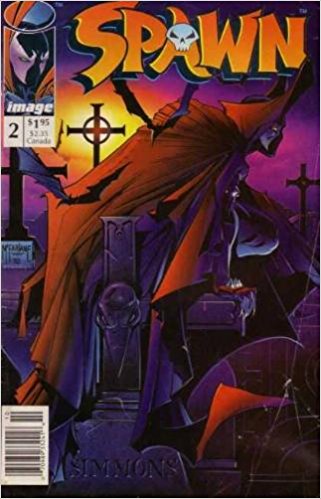
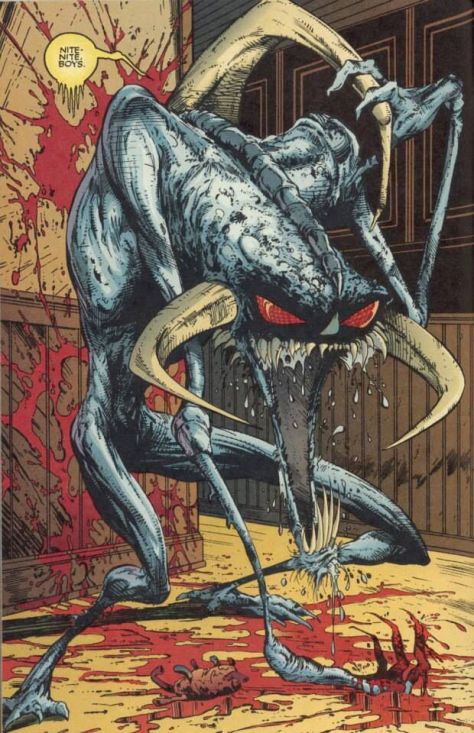
I remember greedily snapping up the first two issues of Todd McFarlane’s “Spawn” comic in the spring of 1992. Comics fans were excited about it — it was the de facto flagship title of the newly created Image Comics, which was bringing its own ambitious interconnected comic book universe to the shelves to compete with “the Big Two,” Marvel and DC.
There already was a competitive third major comic publisher — Dark Horse Comics. But it had no successful superhero titles or shared universe; it instead was known for science fiction and horror comics. I also remember seeing comics back then from the short-lived Valiant here and there — or maybe it was mostly ads in the Comic Shop News. I didn’t know a single soul who read them, though.
McFarlane was nothing short of famous in the comic book fan community, after his broadly popular work on “Spider-Man.” (I still love his unique style.) And “Spawn” had an absolutely subversive flavor to it. Its title anti-hero was nothing less than an agent of hell, and the comic revolved around hell, sin, damnation and various demons. There was also far more violence and gore.
“Spawn” felt subversive, too, because of the impetus behind its creation. Image Comics was launched by a group of artists who were unhappy with Marvel’s failure to grant them creative control over their work (or, according to the artists, proper merchandising royalties). They included McFarlane, and fan-favorite artists Rob Liefeld, Jim Lee and Marc Silvestri, among others.
I don’t pretend to know how justified their complaints were, as I was only a fan and not an industry insider. But they sound right … I’ve always heard that major comic companies have historically screwed over their creative talent with restrictive “work-for-hire” payment arrangements. (This is why Stan Lee, creator of so many of Marvel’s first heroes, is not absurdly wealthy.) The start of Image seemed to fans like their favorite artists rebelling against the status quo, and that was kind of exciting.
Some of McFarlane’s acrimony with Marvel was pretty overtly expressed in the pages of “Spawn.” There was a weird, slightly confusing plot digression early on in which McFarlane editorialized heavily about creator-owned characters … Spawn actually visited a kind of purgatory where various leading Marvel and DC heroes were imprisoned. It seems in retrospect like a labored and self-indulgent metaphor, and it detracted from the title’s story. But the college kids then reading “Spawn” had never seen anything like it. It was interesting at the time. (Bear in mind, please, that this was before the Internet.)
I started picking it up regularly. I was going to the comic shop that was on … George Street, I think, in downtown Fredericksburg, Virginia. There were only two comic shops in the downtown area in the early 1990’s — this one, and a seedy shop across from the Hardee’s on northern Princess Anne Street, in a tiny corner of a ramshackle, abandoned hotel. There was a categorically unpleasant, batshit-insane woman staffing the latter – she was nasty to everyone who entered, and accused them of touching the merchandise. (That part of Princess Anne Street has since been improved – I think the huge hotel building has since been renovated.)
As the “Spawn” title progressed, its fandom became firmly entrenched. The art truly was fantastic, and of course it remains an incredibly successful group of comic properties today. Over time, McFarlane’s critics also grew in number … no matter how gifted he was as an artist, fans said he wasn’t a terrific writer. (And I do get what they’re saying.) I will say this — the “Spawn” comics I was reading were a thousand times better than that weird movie adaptation in 1997. I’ve only seen bits and pieces of that, but they were terrible bits and pieces.
I still think I’d have a great time perusing my back issues.


“Circle” (2015) is a particularly dark sci-fi thriller that manages to be pretty good despite its obviously low budget. I’d give it a 7 out of 10.
Fifty strangers awaken in mysterious high-tech room in which they’re forced to vote on who among them will next die, until only one survivor remains. (It’s a setup reminiscent of the “Survivor” reality tv series. Good Lord, has that show really been on for 15 years?!) Other amatuer reviewers have called this a “study in human nature;” I think maybe that’s a bit generous. We see a few obvious stereotypes and some pretty thin characters (even if a couple of unexpected flourishes were very well played). I also think that the vast majority of people who would find themselves in this story’s setting would lack the composure we see from virtually every character on screen.
Still, this movie was different and creative. It kept me in suspense at times, and held my attention. And early on, the talk about awakening “in a red room” appears to be a pretty cool nod to what seems like this movie’s direct inspiration — 1997’s classic “Cube.”
I really disliked the ending, but an explanation about why would be a tremendous spoiler.

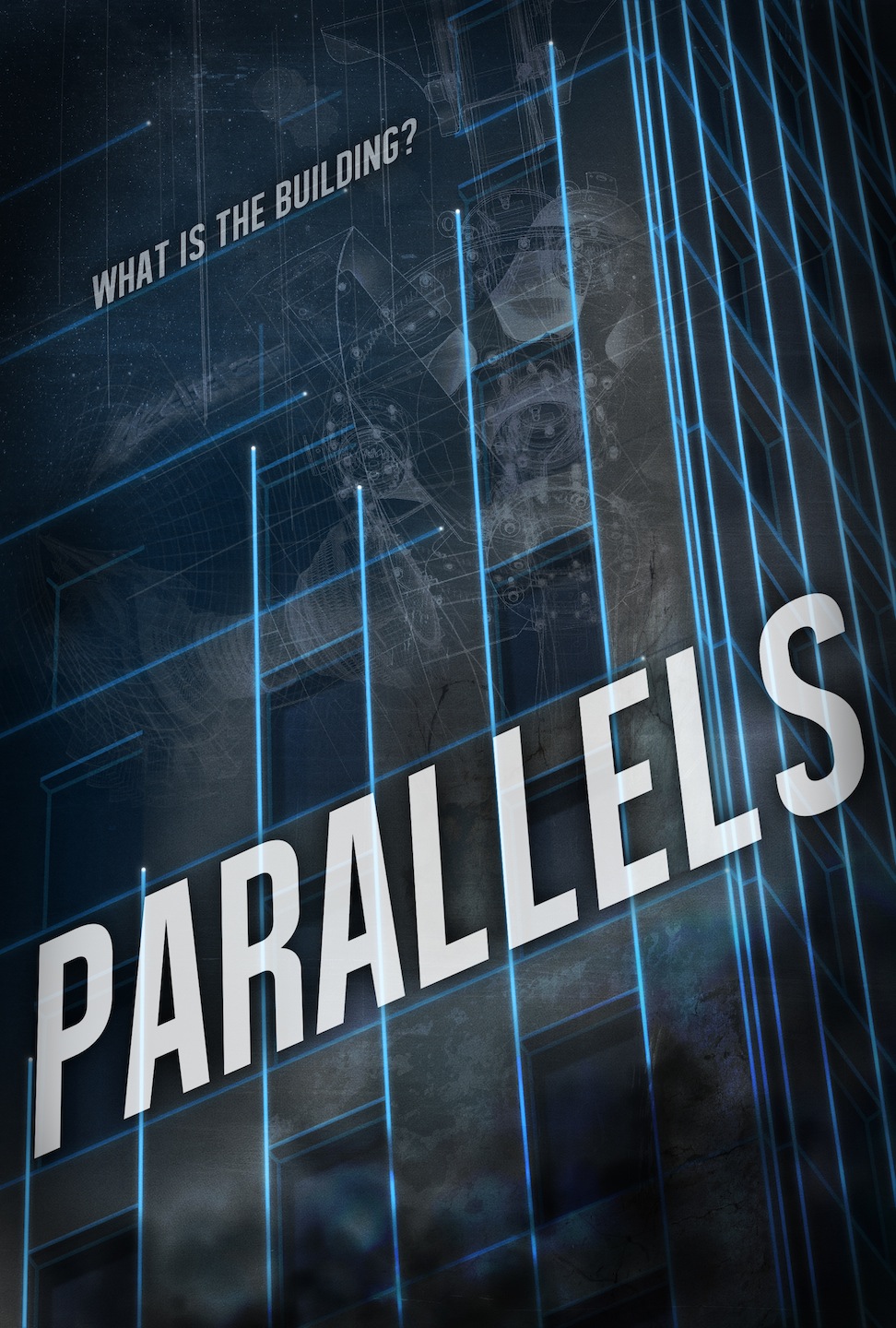
First, a clarification — “Parallels” (2015) is absolutely not a feature film; it’s an undisguised attempt at a pilot for an ongoing web-based series. I think it’s pretty cruddy of Netflix to market it as a standalone film, as viewers expecting a conclusive story will doubtless be disappointed. Its parallel universe-hopping premise also seems so similar to “Sliders” (1995-1999) that it just might approach the boundary between inspiration and ripoff.
With that said, however … dear LORD!!! “Parallels” was frikkin’ FANTASTIC. What we’ve got here is a far edgier, grownup version of “Sliders,” with a first episode introducing the same type of show-spanning mysteries as “Lost.” But where “Sliders” was milquetoast primetime family fare, this looks like an excellent serialized thriller with plenty of pathos.
What a shame this thoughtful series never reached fruition. I was hooked. It’s smartly written by Christopher Leone; he’s visibly well acquainted with string theory, and has a hell of a lot of clever fun with it. “Parallels” is a face-paced 80 minutes that follows a tragic, dysfunctional modern family embroiled in the mystery of the plot-driving “Building.” The Building appears to be the nexus of countless parallel universes, a bit like the “The Dark Tower” links them in Stephen King’s multiverse. The cast is uniformly good; the standouts were Eric Jungmann as the comic relief and Michael Monks as an understated but terrific bad guy.
I had only a few tiny quibbles. Some of the family melodrama and the mysteries were a little forced and heavy-handed. The ending (?) here, while really intriguing, also borrows a page or two from “Cube” (1997) and one particularly good episode of Ron Moore’s “Battlestar Galactica” (2004-2009).
I’m not sure how to rate this. It fails as a standalone film, I think, because it simply doesn’t have an ending. I suppose I’d give it … a 4 out of 10? If you can forgive that fatal flaw, however, and want to enjoy some top-shelf science fiction, then I’d easily give it a 9 out of 10.
Dammit. Why wasn’t this show made?
 Eric Robert Nolan, Author