Tag Archives: 1999

A review of Season 1 of “The Haunting of Hill House” (2018)

Ghosts seldom scare me, because I’m never 100 percent clear on what sort of threat they present to the protagonists of a horror film or TV show.  They’re not like zombies, vampires, werewolves or serial killers, all of which will do predictably horrible things to their victims.

Can ghosts … kill you?  Injure you?  That usually doesn’t make sense, given their non-corporeal nature.  Can they … scare you to death?  How would that work?  Would they cause a heart attack?  Or drive you mad?  That’s fine, I suppose, but here they’ve taken a back seat to the demons of horror films since 1973’s “The Exorcist” spawned a sub-genre with far more frightening supernatural baddies.  Are ghosts supposed to inspire existential dread, by reminding the viewers of their own mortality?  For me, that backfires — their existence would strongly suggest the existence of an afterlife, which would be paradoxically reassuring.

It’s therefore a testament to the quality of Netflix’ “The Haunting of Hill House” (2018) that it’s frequently so scary, even to me.  We find out in the first episode that its ghosts indeed do more than frighten the story’s protagonists, but it’s the show’s writing, directing and acting that make it so memorable.  It’s an a superb viewing experience, and I’d rate it a 10 out of 10.

The cast roundly shines — but especially Carla Gugino and Timothy Hutton (even if his performance was a little understated).  Catherine Parker is deliciously evil in a supporting role as the house’s most outwardly vicious spirit.  The best performance, for me, however, was the young Victoria Pedretti as the traumatized Nell — she was goddam amazing, and deserves an Emmy nomination.

Mike Flanagan’s directing was perfect — his use of long angles and colors to make lavish interiors disorienting reminded me of Stanley Kubrick’s similar sensory trickery in “The Shining” (1980).  Michael Fimognari’s cinematography was beautiful.  Even the makeup effects were damned good.  (Nothing beats Greg Nicotero’s work in “The Walking Dead” universe, but the work here is sometimes horrifying.)

I’m not the only one who loved this show either.  It is broadly praised in online horror fan circles (though I’d recommend avoiding most of those for spoilers).  I haven’t read Shirley Jackson’s 1959 novel that is its source material, but a bibliophile who I trust assured me that the show is even better.

Sure, there were some things that didn’t work for me.  “The Haunting of Hill House” actually does take a while to get where it’s going; it favors in-depth, flashback-heavy character development over advancing its plot, in much the same manner as “Lost” (2004 – 2010) once did.  And some viewers might feel the same frustration here as they would for that show.

Its story and supernatural adversaries are also distinctly Gothic.  (Your mileage may vary as to what’s a comfortably familiar trope and what’s an archaic cliche.  I myself was more interested the more modern and three-dimensional interpretation of ghost characters seen in 1999’s “The Sixth Sense.”)  I’d even go so far as the say that the first ghost that we see in any detail is actually disappointing — the otherworldly figure connected with the bowler hat felt too cartoonish for me, like something we’d see on Walt Disney World’s “The Haunted Mansion” ride.  (Trust me, they get more intimidating after that.)

Give this show a chance — and stay with it if you think it’s too slow, or if you find its characters a little unlikable at first.  You’ll be glad you did.

Weird world: if the diffident, sometimes off-putting character of Steven looks familiar to you, it might be because that’s none other than Michiel Huisman, who plays the charismatic Daario on “Game of Thrones.”


HauntingHillHouse-tp0004c_Double_Gate_Cover_houseback

Washington, D.C., June 2018

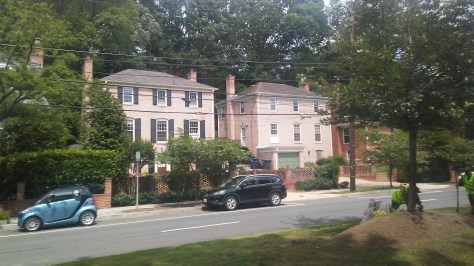
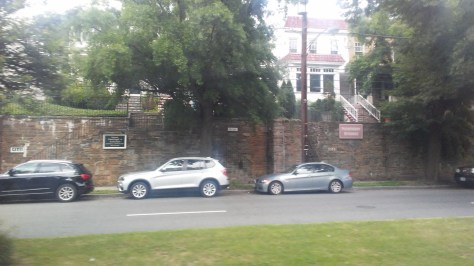
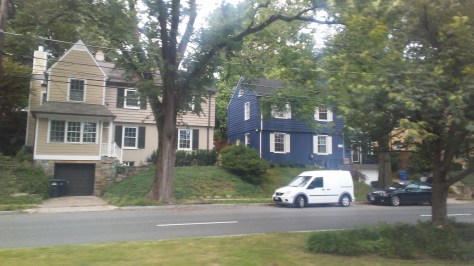
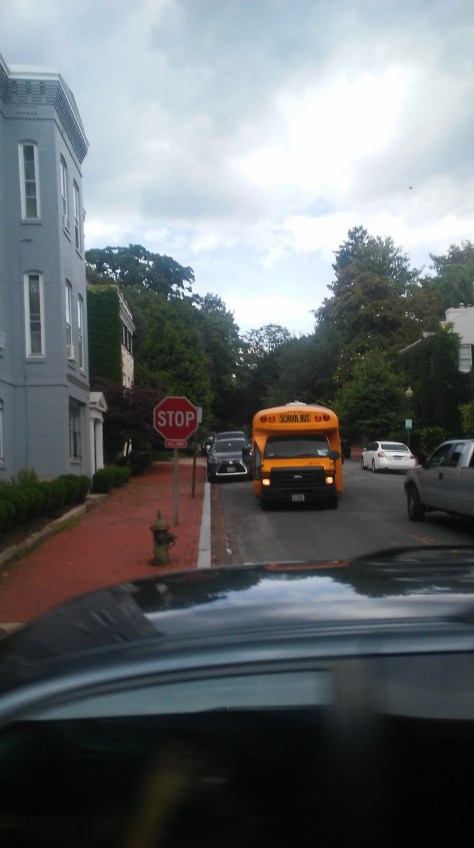
Here are a few more pictures of Washington, D.C. — you’ll notice the befuddling inclusion of a shot of a service station on Wisconsin Avenue.  It was that location that clued me into the fact that I was near my old friend Nick’s neighborhood.

He’s a Mary Wash alum, and I met up with him and some other alums a few years after we graduated.  It would have been … 1998?  1999?  Anyway, I had an air conditioning unit in the trunk of my Ford Taurus, because I’d recently changed apartments myself, and I’d forgotten to take it out.  For reasons I’ve never been able to determine, my friends found that uproariously hilarious.  People called me “Air Conditioner Guy.”  They asked about it in e-mails and calls.  (“Is it still in there?”)  They brought it up at parties.

To this day, I feel certain there is an element to the joke that I am unaware of.


20180605_151021

20180605_151152

20180605_151250

20180605_151359

20180605_151440

20180605_153245

20180605_153432

20180605_153516

A review of “The X-Files” Season 10

I breaks my heart to say this, but 2016’s long-awaited return of “The X-Files” was not a triumphant one.  (Indeed, I am writing this review nearly two years after its conclusion because I only recently got around to watching the last of its six episodes.)  I’d rate the brief season a 4 out of 10 — the lowest rating I’ve ever given to a season of the show.

I hope this year’s Season 11 proves me wrong, but I’m finally starting to wonder of “The X-Files'” time has come and gone.  (This is coming from someone who was a lifetime fan.  I even thoroughly enjoyed seasons 7 through 9, which was when much of the show’s loyal fan-base began truly eroding between 1999 and 2002.)

So many of the show’s core elements seem outdated now.  The character arcs of its two heroes and their relationship were resolved seasons ago.  Its central overriding story arc — an elite cabal’s conspiracy about (and with) aliens — appears to have been milked for most or all all of its entertainment value.  And the show’s format of mixing a handful of “conspiracy episodes” with standalone “monster-of-the-week” episodes feels awkward compared with contemporary programs that better integrate multiple plot lines.  (Consider HBO’s “Game of Thrones,” for example, or even the various Netflix and television series that are part of the Marvel Cinematic Universe.)

The truly fatal blow to “The X Files'” staying power, though, runs a bit deeper — network television just isn’t as positioned as it used to be to tell the scariest stories to a wide audience.  There is too much competition from sources less beholden to censorship or to the milquetoast sensibilities of mainstream appeal.  The first is easily accessible cable channels like HBO and AMC, which can shock viewers with visceral violence.  The second is subscription services like Netflix.

And third is simply the Internet at large, with its endless cornucopia of morbid or bizarre content.  “The X-Files” was created before the Internet was a common household utility.  Part of the show’s appeal was that it offered people the creepiest stories they’d watch anywhere anywhere outside of a movie theater.  And those stories at least seemed well researched by the program’s writers, who did a tremendous job for most of the show’s run.

Today’s Internet-connected entertainment marketplace is different.  No matter how much weirdness “The X Files” can pack into a 43-minute episode, the average consumer can find material online that is darker or more frightening in less time than that.  Compare the average “X-Files” episode, for example, to the array of material devoted to real-life “paranormal” subjects, like “Slender Man,” alleged UFO footage, or tragedies like the mysterious death of Elisa Lam.  (That last one is truly shudder-inducing.  Google it at your own peril.)

The only way a show like “The X-Files” can hope to compete is with excellent attention to tone, tension and character — something I thought that seasons 7 through 9 did pretty well with, despite a gradual fan exodus after David Duchovny’s awkward departure from the series.  Season 10 just didn’t follow suit.  It really was as though a range of previous “X-Files” episodes has been thrown in a blender, so that their component parts could be served yet again.  The conspiracy stuff, in particular, was poorly executed, too hastily paced, and just a bit too campy for my taste.  Mulder and Scully’s return was also too self-conscious — as though Duchovny and Gillian Anderson were reunited for a tongue-in-cheek reunion special.

It wasn’t all bad.  These two leads are always fun to watch.  The fourth episode was superb — “Home Again” served up both a creepy, macabre story and a meaningful character arc for Dana Scully.

Episode 3, “Mulder and Scully Meet the Were-Monster,” was also fun enough.  But while a lot of other fans absolutely loved this humorous entry, I personally didn’t feel its central joke merited a full episode.  Besides, this particular twist has been done before, in a 1989 book by a well known speculative fiction author.  (I won’t name the book or the author here, in order to avoid spoilers.)

The rest of the episodes were … fair, I suppose.  Oh, well.

I’m thrilled that we’re currently being given Season 11 of “The X-Files.”  As someone who was a longtime fan, I never envisioned the show lasting this long, even after a hiatus of many years.  I just hope the show matures and grows in quality after this disappointing rebirth.


XFilesStillOutThere

Cover to “Superman: A Nation Divided,” Eduardo Barreto, 1999

DC Comics.


d96612bfbca1b13e633e14a7aecfb6a0

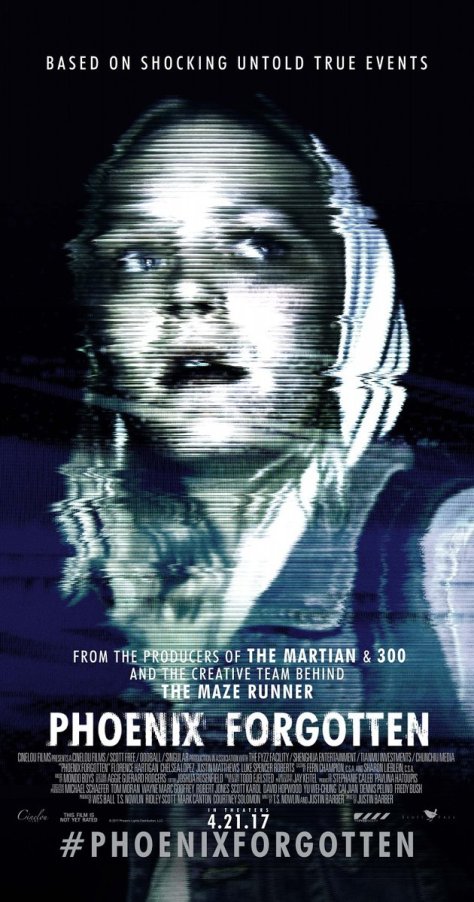
“Phoenix Forgotten” (2017) is a found-footage horror film that didn’t pan out.

“Phoenix Forgotten” (2017) has a couple of things going for it.  The first is its use of real events as the MacGuffin for its found-footage horror story — the 1997 mass UFO sighting in Arizona known as “The Phoenix Lights.”  The second is the young Chelsea Lopez in a lead role.  She appears to be a gifted young actress, and she’s … astonishingly good here.  (The script, too, does succeed in painting her adolescent protagonist as likable and identifiable.)

Those two things, however, do not save “Phoenix Forgotten” from being a mediocre movie.  It’s sometimes slow and occasionally even boring, despite the fact that it picks up quite a bit in its closing minutes.

It also feels far too much like a beat-for-beat remake of 1999’s “The Blair Witch Project.”  Yes, it’s a different sub-genre, with a science fiction plot device instead of a supernatural threat, and a desert setting instead of the Maryland forest.  But its story, its conclusion and even its closing shots parallel that superior film very closely.

I’d rate this a 4 out f 10.


MV5BMTUxODEyNjEzNl5BMl5BanBnXkFtZTgwMDQyMTM2MTI@._V1_UY1200_CR90,0,630,1200_AL_

A short review of “The Boondock Saints” (1999)

I can’t say I fully understand the zeal of “The Boondock Saints'” (1999) cult following, but I had fun with it — I’d give it an 8 out of 10 for being unusual and unexpectedly diverting.

I don’t really see it as a crime thriller — it’s more like an absurdly violent situation-comedy.  It borrows its tone and style from 1994’s “Pulp Fiction,” not to mention its own shock-comedy throwaway scene involving an accidentally discharged sidearm.

Like its superior inspiration, its formula is creating quirky, likable characters with some funny dialogue, and then raising the tension by placing them in the midst of graphic violence.  It mostly succeeds — Sean Patrick Flanery and Norman Reedus’ characters are endearing, cool and easy to root for.  I laughed out loud a few times, and I can see how their telegenic antiheroes would attract a devoted fandom.

The directing seemed choppy and even amateurish.  I noticed this right from the opening credits, which are awkwardly spliced with the onscreen introduction of the main characters.

The screenwriting is a little spotty, too — we’re never told, for example, how its two protagonists come to be such proficient assassins.  (Are they former military?  Is there a joke here I’m missing about them being “blessed,” consistent with the “saints” motif and all the references to Catholicism?)  Nor do we get much meaningful information about their motivations.  (Their bloody crusade begins only when they kill several gangsters in self-defense, then they seem to pursue a life of vigilantism as an afterthought.)  Finally, our antiheroes seem refreshingly real and identifiable, while other characters (Willem Dafoe’s detective and Billy Connolly’s mafia hitman) seem cartoonish enough to populate a farce like “The Naked Gun” series).

Again, though — this was fun.  I’d recommend it.


boondock-saints


“Fantasia” double-feature today!

I just finished watching Disney’s “Fantasia” (1940) this snowy afternoon with my girlfriend — she gave me the boxed set with “Fantasia 2000” (1999) this Christmas.  This is the first time I’ve seen the entire film in … 26 years?  If memory serves, I last saw it at Mary Washington College’s Dodd Auditorium when I was a freshman in 1990.

I loved it just now even more than I loved it then.  My favorite segment will always be the final one — Modest Mussorgsky’s “Night on Bald Mountain,” with a coda of Franz Schubert’s “Ave Maria.”  (The accompanying animation is Gothic horror; I’ve posted about it here at the blog before.)

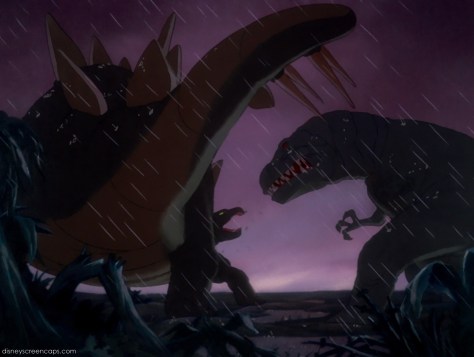
I felt for sure that my second favorite would be Igor Stravinsky’s “Rite of Spring.”  Pictures of those animated dinosaurs startled and thrilled me as a tot after Christopher Finch’s “The Art of Walt Disney” (1975) somehow appeared magically among my baby books in Queens, New York.  As an adult, however, I liked the segment mostly because of its cool depiction of lower life-forms.  The dinosaurs were stylized and interesting to see, but I don’t think the quality of the animation has held up very well — especially considering what we know about the dinosaurs has changed so much in 80 years or so.

Instead, my second favorite was Ludwig von Beethoven’s “The Pastoral Symphony,” and its whimsical, beautiful depiction of centaurs, gods, and other figures from Greek mythology.

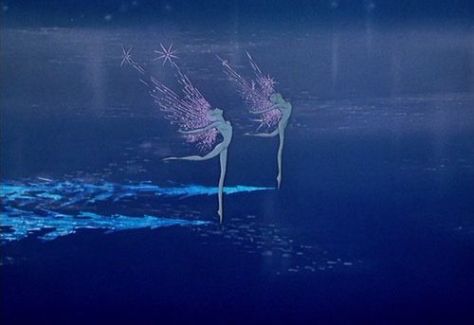
My girlfriend’s favorite segment was Pyotr Ilyich Tchaikovsky’s “Nutcracker Suite,” with its dancing fairies.  “Fantasia” was actually a favorite movie of hers growing up; she’s seen it several dozen times in her childhood.

There is some bizarre trivia about “Fantasia” from Wikipedia, which has a lengthy entry for the movie: “In the late 1960s, four shots from The Pastoral Symphony were removed that depicted two characters in a racially stereotyped manner. A black centaurette called Sunflower was depicted polishing the hooves of a white centaurette, and a second named Otika appeared briefly during the procession scenes with Bacchus and his followers.”  That’s so nuts.


fantasia-locandina-1940


fantasia-disneyscreencaps-com-4506-1


frost-fairies-fantasia


download


A very short review of “Blair Witch” (2016)

I fully understand the reasonable popular criticisms of “Blair Witch” (2016).  But I’d be lying if I said I didn’t really enjoy it — I’d give it an 8 out of 10.

Yes, it’s largely a retread of the first film in 1999.  This putative sequel is effectively a remake, given how closely it parallels the original.  (And there are a lot of people who hated that movie to start with.)

There are other problems too.  A subplot’s non sequitur segue into body horror is entirely out of place, for example, and we have at least two characters who are so irritating that we can’t care much about their fate.  And then there are some missed opportunities involving technology.  (Much attention is paid to a drone that the ill-fated protagonists bring along in their trek into the woods, but it is underused later in the story.)

Still … this still worked for me.  I have always really liked found-footage horror movies, and I also like stories featuring local legends.  (They’re just more engaging to me than yet another slasher film or third-rate, no-budget zombie movie.)  And there are a couple of moments of brilliance.  The scariest has already been spoiled by the film’s trailer (seriously, f*** you,  Lionsgate marketing department).  But there are other nice touches … one is the dread-inducing, reality-bending story arc of the two locals who accompany the main protagonists.  (And weren’t these two supporting characters the most fun and interesting, anyway?)

And we indeed finally get glimpses of the titular Blair Witch!  They are brief and few, but they’re a damned effective, scary payoff.

All in all, this is still an offbeat horror outing in the same vein as the original, and I think the better parts made it a decent viewing.


Cover to DC Comics’ “Batman: Harley Quinn,” 1999

Original artwork by Alex Ross.


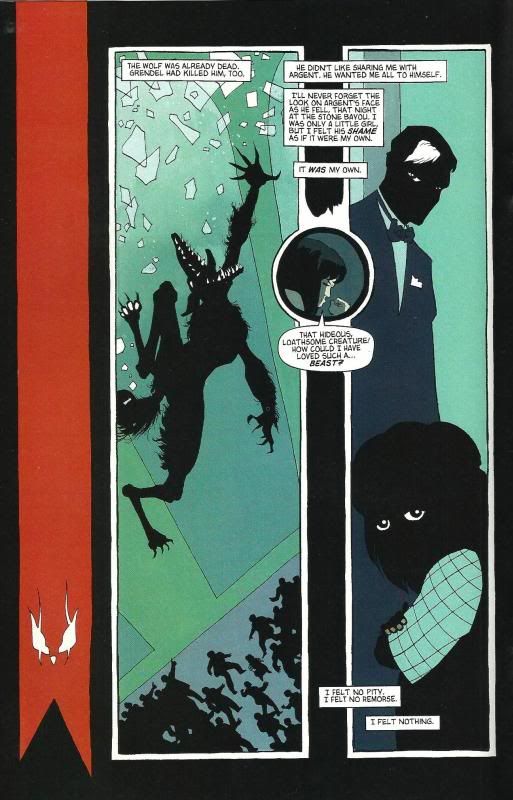
Cover and interior page for Matt Wagner’s “Grendel: Devil Child,” 1999

Cover by “Grendel” creator Matt Wagner.


Interior art by Tim Sale, with colors by Teddy Kristiansen.  The story was written by Diana Schutz.