Tag Archives: Eric Robert Nolan

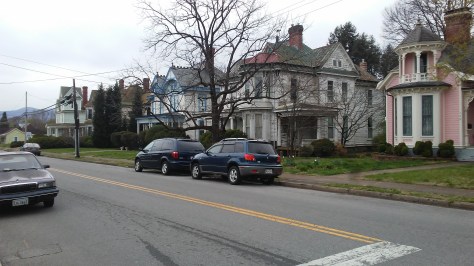
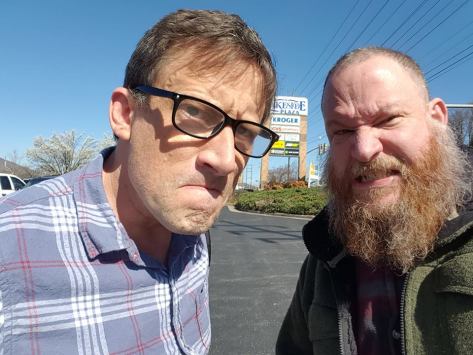
Towers Shopping Center, Roanoke, Virginia

Clearly this shopping center lies along the path of The Beam.

Only Stephen King fans will get that joke.

There are at least two cool places to grab lunch there — McAlister’s Deli and Firehouse Subs.  Unless I’m mistaken, we don’t have those chains in New York.


20170401_113532

20170401_113515

20170401_113722

20170401_113025


A review of “The Walking Dead” Season 7.

[THIS REVIEW CONTAINS GENERAL, MINOR SPOILERS FOR SEASON 7 OF “THE WALKING DEAD.”]  I loved Sunday’s season finale of “The Walking Dead” — it was well executed, well performed (especially by Andrew Lincoln), and well written.  It was even beautifully scored.  (The closing narration and montage, combined with the music, were surprisingly moving.)  It had some great twists, unexpectedly good CGI, and some nice callbacks to the original comics.  (One surprise we see actually occurs with respect to another major character in the books.)  Towards the end of the episode, I was riveted.

The finale, however, can’t really redeem Season 7 as a whole.  I would honestly rate the season a 7 out of 10.  This was definitely one of the lesser seasons; I believe it would be the one I liked the least, if not for the inexplicably poor Season 2.

Maybe I was a little grumpy about “The Walking Dead” even before the season started.  Like a lot of viewers, I felt that the “cliffhanger” where Season 6 left off was absolutely manipulative on the part of the writers.  It pissed me off, and I went into Season 7 with reservations.

Then I was reminded about some of the smaller complaints I had about the show in the past.  I strongly differ with my friends about this show’s character development — I think it’s inconsistent at best.  And “The Walking Dead” seems to have so many characters that it can’t seem to decide who is a major character and who is not.

There’s a bit too much cheesy melodrama, like the schoolyard dynamics among the good kids, Maggie and Jesus, and the meanie, Gregory.  (This subplot was drawn from the comics, too — but it played out there in a far more adult fashion.)

Then I had a new quibble or two — one was a lack of proper minimal exposition.  We know extremely little about Jadis and the survivors in the garbage dump, despite the major role they play in the story.  They seem … sort of like a cult, and sort of like a performance art group, but that’s all I could tell you about them.  (The Internet tells me that some fans refer to them as either “the Heapsters” or “the Garbage Pail Kids.”  I find both appellations pretty funny.)

My biggest complaints about Season 7, however, were that it was too much of a downer, and that it was too slow.

We start the season with a front seat to Negan’s gory, merciless punishment of Rick’s de facto family.  And then the victimization of our favorite characters simply … continues for the length of the season, until the last episode’s climax.  You see that cool image at the bottom of this blog post?  The advertisement depicting bad-ass Rick and his allies getting ready to “RISE UP?”  (It actually looks a lot like the posters for the “Walking Tall” films.)  Well … we don’t see much of that until the final episode. I told one friend that “The Walking Dead” was disappointing me because it had grown tiresome “seeing Negan beat everyone all the time.”

And some episodes felt like filler.  Yes, there were some nice “milieu” -type stories — it was actually a lot of fun expanding the show’s world, to see other settlements, like The Kingdom, The Sanctuary and Oceanside.  But I think the plot needed to move forward more quickly.  (For a far better discussion of these issues, check out Ryan Roschke’s excellent review over at Popsugar.)

Hey … I’m still a fan.  I’m just not as satisfied a fan as I used to be.  I certainly looked forward to “The Walking Dead” every week, and never missed an episode.

And this season did have its high points.  Dwight emerged as quite an interesting, compelling character, thanks in no small measure to Austine Amelio’s portrayal of him.  The character interaction among him, Daryl, Negan and Rick is great stuff — I find myself wishing that the lion’s share of the season was devoted to those four.  I am finally starting to understand that Norman Reedus is indeed a really good actor — his performances were strong throughout the entire season, but must notably upon his return to Alexandria and his embrace with Rick.

And there were moments of nice action and horror as well — the sand-buried walkers pursuing Tara and Health spring to mind, not to mention the neat trick Rick and his group use to dispatch an entire herd of zombies on the interstate.

Let’s hope that Season 8 will pick up a bit, now that “war” is underway.


tumblr_oi2yv4Y4U91vai2dso1_1280

“Red Hill Mining Town?”

This is a shot of the red clay found around the Roanoke area.  It’s an acidic soil that’s common around the southeastern United States; sciencey types call it a “ultisol.”  The rust color results from … actual rust, if I understand correctly.  It’s full of iron oxide.

I don’t think my camera phone does it justice — it’s actually redder than it appears below.  I have no doubt Roanoke natives hardly notice it, but it looks strange at first to a carpetbagger.


20170330_142517

Season 1 of “Westworld” was fantastic.

The premise for HBO’s “Westworld” sounds like a bad situation comedy — robot cowboys entertain the rich at a futuristic theme park.  There are showdowns and shootouts, and hilarity ensues when the guests fall in love with the coy robot ladies.

But “Westworld” is an arguably brilliant serial science fiction thriller, far transcending its gimmicky central plot contrivance.  It is occasionally weighted down by some challenges with pacing, story structure and exposition.  But I still loved it enough to get hooked on it immediately, and I’d give it a 9 out of 10.

I think it’s the smartest science fiction show I’ve seen in a long time.  Its brilliance doesn’t stem from its kitsch premise.  (I haven’t seen the original 1973 film based on Michael Crichton’s screenplay, but I’ve seen it lampooned at least once.)  It generally doesn’t extend from the show’s many twists and surprises, however well executed they are.  Nor does it stem from the show’s ambitious discussions of the nature of consciousness.

Its brilliance, in my opinion, stems from its nuanced and surprisingly disturbing depiction of human evil.  Of course there’s the obvious — the theme park exposes human depravity by allowing people to rob, rape and murder lifelike human surrogates with impunity.  But there is far more that the show has to say.  To get a sense of it, you have to watch the entire 10-episode season, and see several key character arcs reach completion.  One of these arcs was so dark and cruelly contemplative that it’s stayed with me long after I watched the final episode.

The show is well made at every level.  It’s gorgeously shot, at locations throughout California, Utah and Arizona.  The special effects are great.  Anthony Hopkins is characteristically perfect as the park’s patriarch, and Jeffrey Wright is terrific as his well meaning right hand.  (That actor is starting to grow on me.)  The entire cast is quite good — even those in relatively minor roles, like the two hapless technicians (nicely portrayed by Leonardo Nam and Ptolemy Slocum) who become entangled in the events connected with the park’s malfunctions.

Ed Harris, however, consistently steals the show as “the Man in Black,” a park guest who vacations as a brutal rapist and murderer (and who we learn has another agenda, as well).  He’s chilling.  I never really saw Harris as an amazing actor before, despite seeing him in many roles, including his memorable turn in “A Beautiful Mind” (2001).  But he was incredible here.

I wanted to give this show a perfect 10, but even someone who loves it as much as I do can see the weaknesses of this first season.  Overall, “Westworld” is sometimes too drawn out.  I feel the plot moves forward rather slowly, and I think Season 1 would be perfect if only it were carefully edited down from ten to maybe seven episodes.  I found myself getting a little frustrated by the the fifth episode, when we see two major characters follow arcs that seem redundant.  (I’m being intentionally vague here to avoid spoilers.)

The problem is compounded by the deliberately superficial nature of “Westworld’s” setting.  This is a theme park with stereotypical stock characters associated with Hollywood westerns.  Accordingly, its inhabitants have overly stylized speech and behavior.  Furthermore, these androids are programmed to follow the same “loops” repeatedly, as the same preconceived story “narratives” are reused to entertain new patrons of the park.

It gets annoying.  Yes, I know it makes perfect sense and is necessary in the context of the story.  But it can be grating to someone who tunes in to see a science fiction show, and not a cheesy western.  James Marsden is a decent enough actor, and he’s well cast as “Westworld’s” prototypical “good guy” cowboy.  But seeing this character’s shtick over and over was irritating.  So, too, were the sassy ladies at the brothel and some other minor characters.

Finally, I suggest that, for some viewers, “Westworld” may be hard to follow.  I occasionally found it that way.  There are twists that are wonderfully well crafted, gradually deciphered mysteries, and a very layered backstory.  Finally, the show’s discussions of things like consciousness, morality and artificial intelligence can sometimes border on the didactic.  (It helps a hell of a lot, though, when the actor delivering the exposition is the priceless Hopkins.)  It’s a lot to take in.  People tuning in should be prepared for some challenging, cerebral science fiction instead of easily digested, escapist fantasy.

All in all, this show was superb.  If you’re a science fiction fan, you need to at least give it a try.

Unnecessary postscript: actor Jimmi Simpson sure looks a hell of a lot like a young Christian Slater.


evan-rachel-wood-as-dolores-abernathy-ed-harris-as-the-man-in-black-c1


Because I worked hard for that doctorate.

The off-brand knock-off of Dr. Pepper is named “Dr. Perky” and, for some reason, that is very, very sad.

One of my Mary Washington College alums suggested that “Dr. Pervy” would be a catchier name, but I’m already using that for my Match.com profile name.

Do I LOOK any perkier?  I’m feeling more chagrined that I bought a 12 pack of this, even if it was only $2.35.  It tastes like water, sugar, and just a touch of peppermint-flavored cough syrup.


20170331_200513


“Life’s” a bitch.

Or at least it is to the astronauts who make an abortive attempt to escort it back to Earth.  (They realize that bringing a Martian organism home is a bad idea in this year’s surprisingly satisfying science fiction-thriller.)

I actually had more fun with this than I expected; the movie is much faster paced and scarier than the trailer made it look.  There are some real surprises and moments of genuine horror here, following a requisite plot setup that is relatively brief.  It’s a really nice monster movie that should please fans of the genre.

I actually didn’t prefer its ending, which is something for which other reviewers are praising it a lot.   I’m disinclined to say more, for fear of spoilers.  The movie’s marketing already spoiled enough.  (The ads infuriatingly show the fate of a main character.)

I will say what the movie is not, however.

One, it’s not a stealth prequel for Sony’s planned 2018 “Spider-Man” spinoff, “Venom” (though that’s such a clever idea, I wish I’d thought of it).

Two, it’s not a ripoff of Ridley Scott’s “Alien” (1979).  Yes, it’s got the same MacGuffin, and some story parallels that I noticed early on.  But I like to think of this as a more grounded contemporary thriller, where “Alien” was a futuristic fantasy creature feature.  Besides, if we criticize every “haunted-house-in-space” movie as an “Alien” imitator, we won’t get more of them.

I’d give this an 8 out of 10, and I’d recommend it.


life_ver2

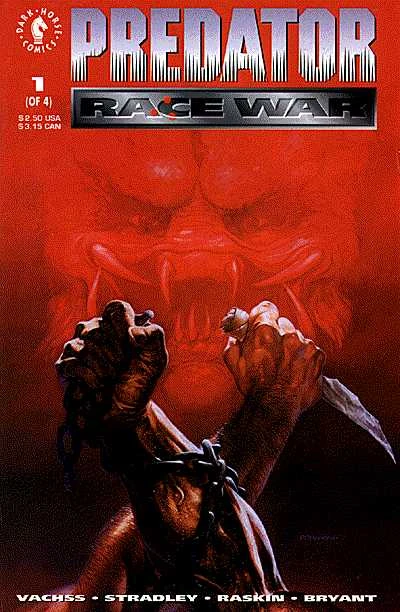
Throwback Thursday: the Debut of “Spawn” Comics (1992)

I remember greedily snapping up the first two issues of Todd McFarlane’s “Spawn” comic in the spring of 1992.  Comics fans were excited about it — it was the de facto flagship title of the newly created Image Comics, which was bringing its own ambitious interconnected comic book universe to the shelves to compete with “the Big Two,” Marvel and DC.

There already was a competitive third major comic publisher — Dark Horse Comics.  But it had no successful superhero titles or shared universe; it instead was known for science fiction and horror comics.  I also remember seeing comics back then from the short-lived Valiant here and there — or maybe it was mostly ads in the Comic Shop News.  I didn’t know a single soul who read them, though.

McFarlane was nothing short of famous in the comic book fan community, after his broadly popular work on “Spider-Man.”  (I still love his unique style.)  And “Spawn” had an absolutely subversive flavor to it.  Its title anti-hero was nothing less than an agent of hell, and the comic revolved around hell, sin, damnation and various demons.  There was also far more violence and gore.

“Spawn” felt subversive, too, because of the impetus behind its creation.  Image Comics was launched by a group of artists who were unhappy with Marvel’s failure to grant them creative control over their work (or, according to the artists, proper merchandising royalties).  They included McFarlane, and fan-favorite artists Rob Liefeld, Jim Lee and Marc Silvestri, among others.

I don’t pretend to know how justified their complaints were, as I was only a fan and not an industry insider.  But they sound right … I’ve always heard that major comic companies have historically screwed over their creative talent with restrictive “work-for-hire” payment arrangements.  (This is why Stan Lee, creator of so many of Marvel’s first heroes, is not absurdly wealthy.)  The start of Image seemed to fans like their favorite artists rebelling against the status quo, and that was kind of exciting.

Some of McFarlane’s acrimony with Marvel was pretty overtly expressed in the pages of “Spawn.”  There was a weird, slightly confusing plot digression early on in which McFarlane editorialized heavily about creator-owned characters … Spawn actually visited a kind of purgatory where various leading Marvel and DC heroes were imprisoned.  It seems in retrospect like a labored and self-indulgent metaphor, and it detracted from the title’s story.  But the college kids then reading “Spawn” had never seen anything like it.  It was interesting at the time.  (Bear in mind, please, that this was before the Internet.)

I started picking it up regularly.  I was going to the comic shop that was on … George Street, I think, in downtown Fredericksburg, Virginia.  There were only two comic shops in the downtown area in the early 1990’s — this one, and a seedy shop across from the Hardee’s on northern Princess Anne Street, in a tiny corner of a ramshackle, abandoned hotel.  There was a categorically unpleasant, batshit-insane woman staffing the latter – she was nasty to everyone who entered, and accused them of touching the merchandise.  (That part of Princess Anne Street has since been improved – I think the huge hotel building has since been renovated.)

As the “Spawn” title progressed, its fandom became firmly entrenched.  The art truly was fantastic, and of course it remains an incredibly successful group of comic properties today.  Over time, McFarlane’s critics also grew in number … no matter how gifted he was as an artist, fans said he wasn’t a terrific writer.  (And I do get what they’re saying.)  I will say this — the “Spawn” comics I was reading were a thousand times better than that weird movie adaptation in 1997.  I’ve only seen bits and pieces of that, but they were terrible bits and pieces.

I still think I’d have a great time perusing my back issues.


Spawn-1

41xEvucyk-L._SL500_SX319_BO1,204,203,200_

7df869d110ee2fcf1af64d8f9f1fa8a4

aad31586d7576e942f6eafba618445f4

Grandin Village, Virginia, March 2017 (2)

Grace’s Pizzeria is damn good, and inexpensive too.  You can get a small pizza with two toppings for just under $10.  It’s occasionally extra greasy, though.  (At one point, I tilted the pie sideways and it started just sliding off.)


20170326_171547

20170326_174447

20170326_172244

20170326_174037


A few quick words on “Kong: Skull Island” (2017)

“Kong: Skull Island” doesn’t have the charm and sense of fun of Peter Jackson’s version, but it’s still a first-rate monster movie that I highly recommend.  It’s got a good script, likable characters and terrific special effects.

Parts of it were actually scary.  The first action set-piece is unexpectedly brutal, and there’s a sequence with a giant spider that was a little unnerving, too.  I was surprised at how the filmmakers here so heavily emphasized the story’s action-horror elements.

I had a blast with this, and I’d give it a 9 out of 10.

I have a question — did anyone else notice a reference to “Jurassic Park” (1993)?  At one point, Samuel Jackson’s character tells his companions to “Hang on to your butts.”  Isn’t that his character’s line in “Jurassic Park” when he restores power to the facility, shortly before he gets killed?


A review of the “Westworld” pilot (2016)

Blog Correspondent Pete Harrison suggested I give the Westworld” series (2016) a try, and I’m damn glad he did.  The first episode was superb, and it’s safe to say it’s reeled me in.  I’d give the pilot a 9 out of 10; this seems like it could be the best science fiction television show I’ve seen in a long time.

I still think the premise is just slightly cheesy — grown men and women spending a fortune to visit a western-themed amusement park with interactive android cowboys.  (I think maybe westerns were a more mainstream genre in 1973, when Michael Crichton’s original film was in theaters.)  And there are times when the show’s central western-themed motifs are a little annoying to me … even though I know the park is supposed to appear superficial and cliche.

But “Westworld” is a highly intelligent thriller — it looks like a hell of a lot of thought went into the script.  Just about every aspect of the show seems like it was well developed — everything from the actors’ performances to the set design.  And don’t let the gorgeous, idyllic, sunny landscapes fool you — there is no shortage of pathos here.  It’s brutally dark in its storytelling.  (By the way, if you happen to be a fan of this show, I must recommend 2014’s “Ex Machina” film — it is similarly cerebral and dark in its outlook.)

Anthony Hopkins is fantastic, as usual; Jeffrey Wright, James Marsden, Evan Rachel Wood and Thandie Newton are all very good.  They’re all overshadowed here, though, by two stellar performances.

The first is Ed Harris as a black-clad psychopathic visitor to the park — I had no idea he could be so frightening.  Dear God.  Has he played bad guys before?  I’ve always associated him with nice-guy roles — even his antagonist in 1996’s “The Rock” was misguided and sympathetic.  I’d love to see him get a role in an upcoming “The Dark Tower” film, maybe as one of the Big Coffin Hunters, if they are ever featured.

The second is Louis Herthum, the ostensible “father” of Wood’s heroine.  (They are both androids within the park — I don’t think that’s much of a spoiler, as it’s all over the show’s advertising.)  Herthum may be a lesser known actor, but he stole the show in a tour-de-force performance, in my opinion.  And that’s no small feat in a cast including Hopkins and this surprisingly vicious Harris.  I haven’t seen a performance that good on television since NBC’s “Hannibal” went off the air.

Anyway, I noticed something funny here.  Steven Ogg plays a bandit who invades people’s homes and murders them … this is basically the same role he plays as Negan’s chief henchman on “The Walking Dead.”  It must be weird to be typecast like that.

Hey … it is only just now that I realized the logo below is a riff on Da Vinci’s “Vitruvian Man.”