I KNOW I shouldn’t worry about things I can’t control, but there’s a rumor aboard the Galactica that Dr. Baltar’s building a Nolan detector.


I KNOW I shouldn’t worry about things I can’t control, but there’s a rumor aboard the Galactica that Dr. Baltar’s building a Nolan detector.
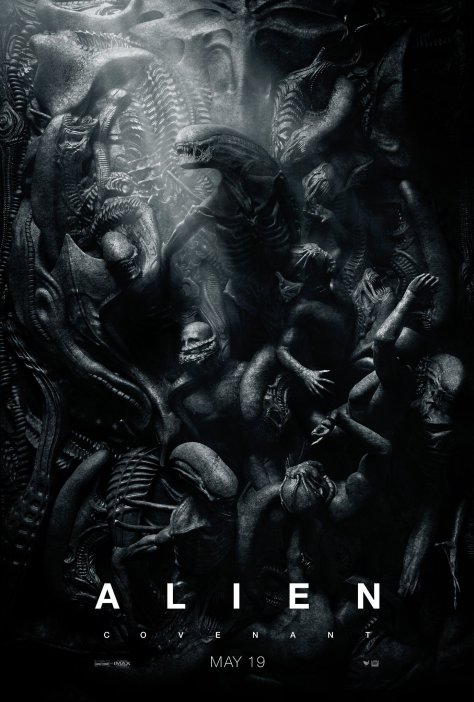
I am part of a happy minority where “Alien Covenant” (2017) is concerned — I keep hearing about “meh” or negative reactions from my friends, but I quite enjoyed it. I’d rate it a 9 out of 10.
No, this second installment in the “Alien” prequel trilogy doesn’t bring much new to the table. It often seems like a collection of common tropes, and borrows a bit from previous films in the franchise — especially the first movie in 1979. Some aspects of it — like a predictable and slightly gimmicky development late in the story — even feel like horror movie cliches. (I am doing everything I can to avoid spoilers, so forgive how vague I’m being here.) “Alien: Covenant” isn’t groundbreaking, and it isn’t destined to be called a “classic.”
Here’s the thing, though — all of the movie’s common tropes are exactly what make fans happy. Think about it … if you had to name two “Alien” movies as unique or the most divergent, they might be the heady, ambitious “Prometheus” (2012) and the baroquely experimental “Alien: Resurrection” (1997). Whatever their failings, both of those movies deserve points for creativity. And they are among the three films that fans hated the most. (The third here is the smartest and most underappreciated installment, 1993’s brilliant “Alien 3.”)
With “Alien: Covenant,” Ridley Scott gives fans exactly what they were clamoring for — a frightening, gory, space-based horror film with creatively designed monsters and some nasty surprises. It very much returns to the tone of the first film. It is even jarringly darker than “Prometheus,” which was defined partly by its moments of cautious optimism. And, more than any other sequel, it seems directly inspired by the grotesquerie of H. R. Giger’s original, nightmarish monster designs. I feel certain this movie would have received the late artist’s blessing. (I could name a certain scene and an excellent surprise story development, but I won’t.)
Michael Fassbender shined in his two roles here. (He not only reprises his role as the android, “David,” but also portrays a newer model, “Walter.”) The rest of the acting was roundly good too.
I also found the movie nice and scary. I, for one, don’t think Scott’s direction of action scenes here is perfect. (They are harder to follow here, for example, than his beautiful arena melees in 2000’s “Gladiator.”) But they were still effective.
So this return to form made me pretty happy. I didn’t want another muddled attempt at profundity like “Prometheus.” Nor did I want a winding, bizarre, arthouse-horror tale like “Resurrection” — that movie was like a poorly written, drug-fueled comic book. I wanted a first-rate sci-fi horror show with lots of monstery goodness, and that’s what I got.
If I had to pick a criticism of “Alien: Covenant,” I’m surprised to have to point to some less-than-stellar CGI. This was something I noticed from early trailers for the film, and I’m surprised I haven’t heard another reviewer mention in it yet. One scene rendered a title baddie about as well as a modern video game, albeit a good one. Another’s depiction of an upright “neomorph” seemed … fairly bad. (Fans of decent creature features shouldn’t despair, however — there are still some outstanding monster moments, and no small amount of accompanying gore and goo.) Have I just become spoiled by the amazing dinosaur effects of 2015’s “Jurassic World?” I don’t think so … I suggest that the otherwise lamentable “Alien: Resurrection,” with its combination of CGI and practical effects, had far better creature effects than this newest outing.
Of course I recommend this movie. Maybe I should only do so with the caveat that I am (obviously) a huge fan of the series. It has been said that I’m easy to please, too — I actually gave a glowing review to “Prometheus” shortly after its release, before wiser minds pointed out to me its sometimes egregious flaws. (A friend of mine shared with me one of those “Everything Wrong With” videos that CinemaSins produces … it’s a hilarious webseries, but it sure will dull the shine of some of your favorite movies, lemme tell ya.) Your mileage may vary, especially depending on how much you enjoy horror movies, as opposed to more general science fiction.
Oh! There is a mostly non-sequitur postscript that I can’t help but add here … yet another one of my movie prognostications was flat out wrong. It isn’t a spoiler if it’s a far-out prediction that didn’t happen, so I’ll go ahead and share it here … during one of the ads for “Alien: Covenant,” I could swear I heard a character call out the name “ASH!!!!” (I’ve evidently started hallucinating at the start of mid-life.) I predicted that the new and robotic Walter would turn evil, and actually become the android named Ash in the 1979 original. (And why not? Androids do not age, and a web-based prologue for “Alien Covenant” suggests their faces can be easily swapped out.) I further predicted that the more human David would be pitted against him in order to save humanity somehow from alienkind. (These things do not happen.)
I still think that’s a pretty clever idea, though, even if I only accidentally arrived at it. It would be great if that happened somehow in the planned “Alien: Awakening.”
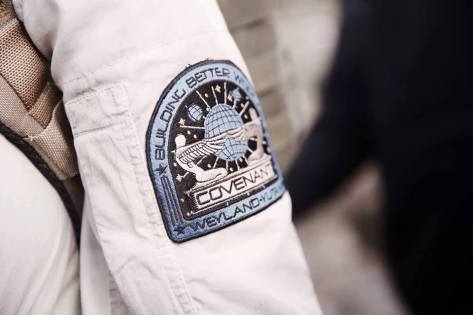
Does anyone else think that the “Alien: Covenant” ship logo looks a hell of a lot like the sculpted top of “Raiders'” Ark of the Covenant?!
Am I just realizing something everyone else has already noticed? I’m not known for being the first guy to notice important details …
Or maybe both are based on the same ancient Hebrew art or something?
[UPDATE:] Okay, various smart people on Facebook are informing me that while the Bible doesn’t contain illustrations, it does contain a detailed textual description of the top of the ark. So both movies took their cue from Exodus: 25. (Thanks, Lisa L.)
NERDS.
Whatever. I’m still counting this as my own “Sherlock” moment.

This photo isn’t one of my own; nor was it taken around Roanoke. This was taken from Chimney Rock Mountain, which is just north of Charlottesville, Virginia.
I pulled it off of Wikimedia Commons, though, because the mountains around Roanoke look so much like this. (And the camera I am using just cannot do them justice.) I get to see something like this every day. It’s wild.

Photo credit: By Chimney_Rock_Mountain_Overlook.jpg: Ed Brown derivative work: Patrick {oѺ∞} (Chimney_Rock_Mountain_Overlook.jpg) [Public domain], via Wikimedia Commons
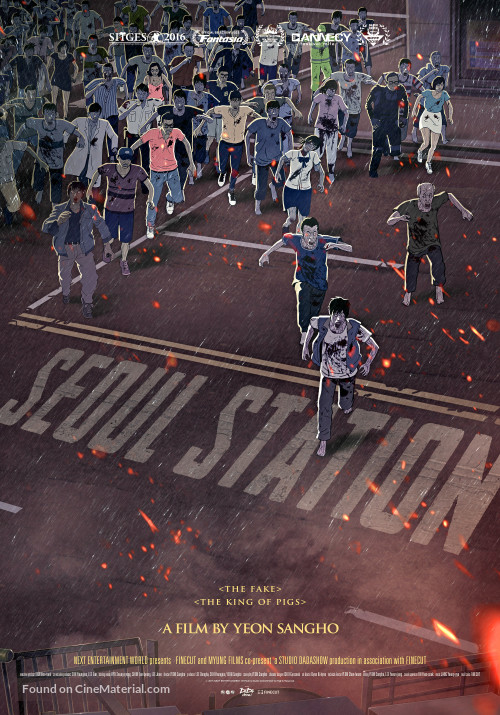
If you enjoyed last year’s excellent “Train to Busan,” then check out its animated prequel, “Seoul Station.” They’re both directed by Yeon Sang-Ho, and I was surprised at how much I enjoyed this movie. (I don’t usually prefer animated features — even the truly impressive anime classics.)
But this was worth a watch — and it even had some moments of real tension toward the end.
When I was a kid, fidget spinners were called “ninja throwing stars,” and they could only be obtained by the ads in the back of “Ninja Magazine.”
AND WE WERE THANKFUL FOR WHAT WE HAD.
Unless, of course, you were the kind of kid whose mother forbade him to ever touch one. Dammit. (She also took away the crossbow I’d made from scratch.)
Let me qualify the first sentence above — only the uninitiated actually called them “ninja throwing stars.” Genuine ninjas, like me and my friends, knew that they were properly called “shuriken.” My friends and I were serious students of ninjutsu in the early 80’s, and we had the magazines to prove it. Our Ninja Clan was called “The Night Stalkers.” (We actually started out as “The Night Crawlers,” until one of us realized that was what fishermen called earthworms.)
[DISCLAIMER: If any real ninjas are reading this, please do not assassinate me. Also, various sites on the Internet contain misinformation suggesting that historical ninjas did not actually wear those black outfits — they’d wear ordinary period clothing, so that they could only figuratively “blend in with their surroundings” and avoid detection by samurai. I didn’t write that nonsense, I’m just passing it along to you.]


Yeah, okay — so May 19th is just Roanoke’s annual Drive-All-Over-the-Road Day.
Way to make your own holiday, there, Roanoke.
(The headline above is an MST3K reference.)
“Dead Rush” (2016) isn’t quite as bad as other reviewers have made it out to be; it’s a passably entertaining zombie feature that I’d rate a 6 out of 10. It occasionally rises above its central gimmick to create a few moments of suspense and emotion. (The gimmick here is that the entire film is shot from the point-of-view of one man in the middle of a zombie apocalypse.)
That point-of-view device does wear a little thin by the end of this feature-length film … and I’m a found-footage horror movie fan who usually doesn’t mind that sort of thing. This movie might have been better overall if the viewer weren’t required to follow those “shaky-cam”-type visuals for quite so long; my understanding is that it was adapted from a well received short film.
If there was one thing that bothered me the most, though, it wasn’t the POV. There is a recurring shot in “Dead Rush” that I liked a hell of a lot, involving the main character’s memory of a loved one. It’s made even better when it is rather creatively used as a framing device at the film’s end. A little reflection, though, made me remember that this shot seems to crib a little too much from a similar effective recurring shot in 2011’s “The Grey.”
What the hell … if you need a zombie horror fix, you could do worse than “Dead Rush.”

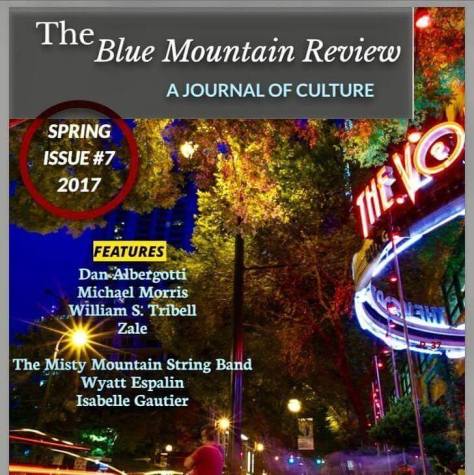
I’ve had the pleasure of getting acquainted recently with The Blue Mountain Review. The poetry there is simply superb. I suggest that it makes excellent summer reading — I know I’ll be bringing it along on the annual “River Trip” with the Mary Washington College kids.
Click here and peruse the newly published Issue 7: The Blue Mountain Review, Issue 7.
For more information about the journal, you can find its Facebook page right here: The Blue Mountain Review.
Down in the startled valley
Two lovers break apart:
He hears the roaring oven
Of a witch’s heart;
Behind his murmur of her name
She sees a marksman taking aim.
(1952)


