All posts by Eric Robert Nolan

Eric Robert Nolan graduated from Mary Washington College in 1994 with a Bachelor of Science in Psychology. He spent several years a news reporter and editorial writer for the Culpeper Star Exponent in Culpeper, Virginia. His work has also appeared on the front pages of numerous newspapers in Virginia, including The Free Lance – Star and The Daily Progress. Eric entered the field of philanthropy in 1996, as a grant writer for nonprofit healthcare organizations. Eric’s poetry has been featured by Dead Beats Literary Blog, Dagda Publishing, The International War Veterans’ Poetry Archive, and elsewhere. His poetry will also be published by Illumen Magazine in its Spring 2014 issue.

A short review of “Split” (2016)

For much of its running length, I was considering writing a review for “Split” (2016) that rated it a perfect 10.  (I am an unabashed fan of M. Night Shyamalan, no matter how reviled he is by other Internet commentators.)  I love the way he frames his shots, I love his dialogue, I love his stories, and I love the strange way he can make a slowly paced film nevertheless absorbing.)

And “Split” looked nearly perfect.  James McAvoy handed in a tour-de-force performance as Kevin, a man with dissociative identity disorder (DID).  (Yes, I am aware of the clinical controversies connected with whether the disorder even exists — I was a psychology student many, many years ago.  I think we should suspend whatever disbelief we have for the purposes of enjoying the movie.)  McAvoy plays his role to perfection.  His “Dennis” persona is particularly frightening, and “Barry,” one of the “good personalities” he portrays, is surprisingly endearing and sympathetic.

Playing off McAvoy wonderfully are Betty Buckley as his gentle psychiatrist and Anya Taylor-Joy as one of three teenaged girls kidnapped by his nastier personalities.  The talented Taylor-Joy was also perfect in her role.  (I last saw her 2015’s “The Witch” and she was also in last year’s “Morgan;” I’m gaining the impression that this promising young specializes in cerebral horror-thrillers.)

I would rate “Split” an 8 out of 10.  It suffers a bit, I think, from two missteps toward the end.  One, this taut psychological thriller takes an ill-advised turn into dark fantasy.  I thought it was amazingly good as a thriller grounded only in the real world — it was far less so with the later jarring story elements.  (I do realize why Shyamalan made this creative decision, and you will too, after watching it and then reading up on it.)  But I still think that this would have been a perfect film if the majority of it focused on McAvoy’s personalities either aiding or misleading his psychiatrist, with Taylor-Joy’s fate hanging in the balance.

Two, this film seemed to suffer from the too-many-endings syndrome that people often associate with Peter Jackson’s “The Lord of the Rings” movies.  We seem to have one denouement that works quite well, then a second that should have been re-shot and re-scripted.  And then there’s another plot strand finally addressed … but it is played so subtly that I’m not even sure I got it.  And this isn’t even counting the significance of the movie’s final line, which works as a fantastic framing device.

About that line … if you’re a Shyamalan fan, then you simply must watch the film until it’s very end, as the camera pans through the coffee shop.  You’ll love it.


“This Windy Morning,” by Eric Robert Nolan

“This Windy Morning, by Eric Robert Nolan

The gales cry,
their sounds rise,
so strangely like
the wailing of children.
The gales
have ripped a rift in purgatory.

Along the low hill’s haze
and indistinct palette of grays,
the thinning slate shapes
are either columns of rain,
or a quorum of waifish wraiths.

Condemned but inculpable
are those little figures —
long ago natives maybe — in an ironic,
insufficient sacrament:
this obscuring rain’s
parody of baptism.

If that faultless chorus
should never see heaven,
they will ever be wind without end
their lamentations ever
shrill within rare
arriving spring downpours.
Always will the squall
imprison their calls.

You and I should refrain
any temptation to breach
these palisades of rain —
lest we be greeted by each
iron-colored countenance:
the sorrowing slim nickel
of an infant’s visage,
little boys’ graying faces,
the silvering eyes of the girls.

© 2017 Eric Robert Nolan

[Note: I began writing this yesterday morning, which was, at a sensory level, just like the fictional morning described.  Southwest Virginia indeed has some unique weather, affected, as I’m told, by its sprawling mountain ranges.  (They circle the Roanoke metro area.)

The rain yesterday was abrupt and shrieking.  I posted on social media that I’d experienced “that eerie moment when the wind sounds strangely like the wailing of children.”  So hence the poem that I finished (?) tonight.  I think a lot of my friends will find it funny; they certainly were laughing at my poet’s melodrama yesterday.  One said it was a nice turn of phrase, too — and that it could be the start of a story.

I’ve never written what I’ve considered a “horror poem” before.  (“The Writer” in 2013 was never intended as such, anyway.)  But the genre is alive and well, at least in the small presses.  Horror poetry is frequently requested in the calls for submissions you can find on Facebook’s various “Open Calls” pages, anyway.  (And if you’re an indie writer, those pages are great to peruse anyway.)

I hope you enjoyed the piece.]

Uetersen_Unwetter_09-08-2009-11

Photo credit: By Huhu Uet (Own work) [CC BY-SA 3.0 (http://creativecommons.org/licenses/by-sa/3.0)%5D, via Wikimedia Commons.

“See the Turtle of enormous girth!”

See the Turtle of enormous girth!
On his shell he holds the earth.
His thought is slow but always kind
He holds us all within his mind
On his back all vows are made,
He sees the truth but mayn’t aid.
He loves the land and loves the sea,
And even loves a child like me.

— from Stephen King’s “The Dark Tower” series


A baffled review of “Lucy” (2014)

Everything you’ve heard about “Lucy” (2014) is correct — it’s exactly as trite and nonsensical as its multitude of unfavorable reviews have described it.  Maybe this was intended as some sort of weird, meta, inside joke by writer and director Luc Besson … after all, it’s a movie about increased “brain capacity” that is, ironically, really dumb.

I can’t imagine why Scarlett Johansson and Morgan Freeman would sully their reputations by starring in this film.  Although, sadly, even the wonderful Johansson is not at her best here.  She seems to try to portray increased intelligence by delivering some of her lines like a robot.  (Seriously, she reads some of her lines like a speedy automaton, and it’s a bad creative decision for her performance.)

I could go on and on about the silly things in this movie.  So could you, if you’ve seen it.  But it’s a lot more fun listening to the surly wise-asses over at Cinema Sins.  Their trademark “Everything Wrong With” video for “Lucy” is particularly harsh.  At one point they call it “an aggressive dickhead of a movie.”  Here’s the link:

https://www.youtube.com/watch?v=i3rZmnJ66Po

There is one overriding problem I need to address myself … and that’s how its premise seems to relate so little to the events of the story.  We begin by understanding that the titular Lucy is affected by a drug that increases her brain capacity.  Before the movie reaches its halfway mark, she appears to gain omniscience.  (She doesn’t need to actually learn anything — she simply knows virtually everything already.  This is evinced by her ability to translate foreign languages instantly, with no books or instruction at all.)  She also appears omnipotent by the film’s end.  Her powers become literally godlike.  And I’m not talking about Thor or Odin from the Marvel Cinematic Universe — we’re talking the all-powerful,  Old Testament God of Abraham.

Why?  Why should increased intelligence, no matter how incredibly vast, give her power of matter, space and even time?  If she were as smart as a thousand Stephen Hawkings, she still shouldn’t be able to do the things she does in the movie.

Believe it or not, I’d rate this movie a 4 out of 10.  (That’s far kinder than the other reviews I’ve read.)  I managed to have fun with this movie by rewriting some of it in my head while I watched.  Instead of Lucy benefiting from a drug that increases her brain capacity (which borrows a bit from 2011’s excellent “Limitless,” anyway), I pretended that I was watching a movie in which Scarlett Johansson became God.  (Think of 2003’s “Bruce Almighty.”)  Honestly.  I swapped out the plot device in my head, and imagined a different movie.  That made it fun — watching Scarlett Johansson as a wrathful God was strangely satisfying, especially when she wreaks havoc on the bad guys.

And speaking of bad guys … that is actually one thing that this otherwise clueless movie manages to get right.  No, I’m not kidding — the Taipei gangsters that serve as the story’s antagonists were performed to perfection by their actors.  The villains were repulsive and terrifying, and they aroused more interest in me than the good guys.  Min-sik Choi was terrific as the homicidal patriarch of the Taiwanese crime syndicate.  Even better, though, was Nicolas Phongbeth as the cherubic-faced, vaguely androgynous, sociopathic lieutenant.  If they were vanquished in this brainless movie, it’d be nice to see them resurrected in a James Bond film or a season of Fox’s “24.”  It’s weird seeing a movie so bad do one important thing so successfully.

There are really only two reasons why anybody should see “Lucy.”  One is morbid curiosity.  Two is if they are a learning to be a screenwriter, and are looking for a feature-length example of what NOT to do.


Lucy_(2014_film)_poster

“I don’t want to wait / For our lives to be over …”

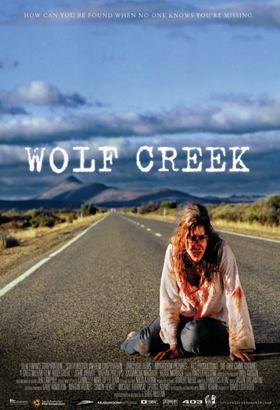
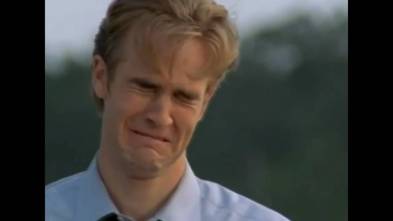
No matter how many letters I write to Hollywood, I’m still waiting on that “Wolf Creek”/”Dawson’s Creek” crossover movie.

I’m starting to worry it might not happen.


17757394_1483205588365964_4427386272171626812_nmaxresdefault


Throwback Thursday: the Launch of Image Comics (1992)

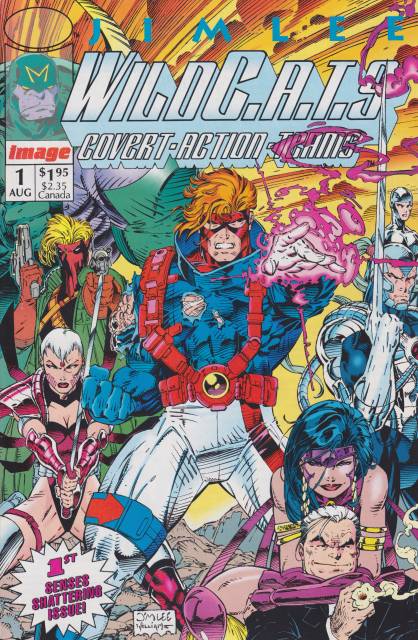
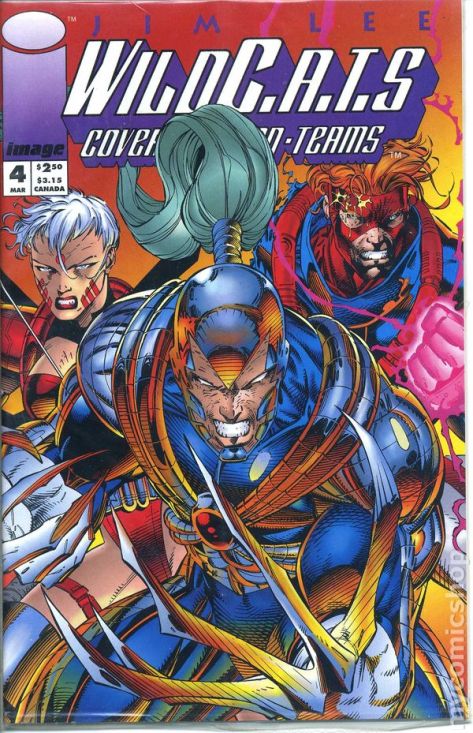
I talked about Todd McFarlane’s “Spawn” in last week’s Throwback Thursday post; these are some very early issues of a few of Image Comics’ other titles when the company launched in 1992.  I remember snapping them up in earnest when I was 19 years old — as I said last week, it was exciting for a comics fan to see a new company challenge the “Big Two,” Marvel Comics and DC Comics, with a new superhero universe.

I and other ambitious collectors also grabbed these off the shelves because we naively expected they all would one day be very valuable.  (Investing in comic books is a little more complicated than that — they’ve generally got to be in extremely good condition to fetch high prices.)

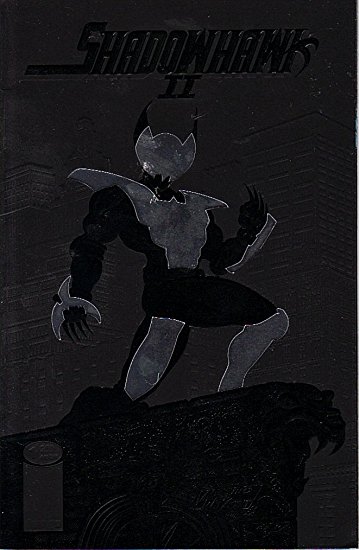
The first Image comics were a mix of good and bad.  If memory serves, Jim Lee’s “WildC.A.T.s” was very good; Rob Liefeld’s “Youngblood” was less so, but was at least interesting.  The art and writing for Jim Valentino’s “Shadowhawk” was truly mediocre.  That didn’t stop me from buying a few issues, though — the novelty of these new books just gave them too much appeal.

There were a lot of creative things going on with early Image titles.  Some of the new characters were pretty neat.  I remember being partial to Youngblood’s “Diehard” for some reason, along with the WildC.A.T.s’ “Grifter.”  (The former has the red, white, and blue full bodysuit; the latter has the trenchcoat and pistols.)  And I definitely liked WildC.A.T.s’ “Warblade.”  He’s the guy below with the ponytail and the shape-changing, liquid-metal hands.  He was a favorite of mine despite the fact that he seemed to borrow a trick or two from the newly iconic liquid-metal terminator.  (“Terminator 2: Judgement Day” had hit theaters a year earlier.)

Image comics were quite different than those produced by Marvel and DC.  (As I explained last week, Image was formed by artists who revolted against their prior employers’ unfair, work-for-hire payment policies — their new company gave them complete creative control over their characters.)  Despite the popularity of Image’s new books, however, they sometimes appeared to have been developed without some needed editorial oversight.

The violence and gore was often far more graphic.  And Image’s creative decisions ranged from the inspired to the strange to just being in questionable taste.  (It all depended on your disposition, I guess.)  WildC.A.T.s, for example, portrayed Vice President Dan Quayle as being possessed by an unearthly “Daemonite.”  (Damn, those Daemonites were wicked-cool bad guys, and Lee Illustrated them beautifully.)  Shadowhawk’s signature move was breaking the spines of criminals.  He was also HIV-positive, the result of some gangsters’ reprisal — they captured him and injected him with infected blood.  The character thereafter spent some of his history trying in vain to locate a cure for AIDS.  (This was 1992, just after the epidemic became fully entrenched in the public’s anxieties in the 1980’s.)

My interest in these titles eventually waned, though I did still pick “Spawn” up when I had the money.  The Image universe was densely crowded with new characters, and it was just too much information to sustain my interest.  (Seriously, look at the first couple of covers below.)  I spent far more money on DC’s various “Batman” and “Green Lantern” titles.  And if I wanted edgy comics, I had discovered the various incarnations of Matt Wagner’s “Grendel” that were available through Dark Horse Comics.  Those boggled the mind.

But Image comics did burgeon into a great success, even if these early titles have since been retired.  “Spawn,” of course, is still being produced.  And today the company’s wide range of books includes Robert Kirkman’s “The Walking Dead.”  It’s hard to imagine either of the Big Two picking up Kirkman’s gory epic masterpiece … so I suppose we have Image to thank for the TV show.

1618179-wildcats_covert_action_teams__1992__01a

ibc25b64d2961mh92d73z

726109

559443

shadowhawk1992series3

61zpMu6Im+L._SY550_

Untitled image from “Favourite English Poems and Poets,” 1870

From page 530, in a section for Samuel Taylor Coleridge’s “The Rime of the Ancient Mariner.”  (“Are those her sails that glance in the sun …”)

I’m pretty sure I spot the artist’s name just beneath the illustration, but it’s too small to make out.


Image_taken_from_page_530_of_'Favourite_English_poems_and_poets._Illustrated_with_..._engravings_on_wood_from_drawings_by_eminent_artists._New_and_improved_edition'_(11093161915)

Nineteen Eighty-Four (1984)

CineMuseFilms's avatarCineMuseFilms

180 1984

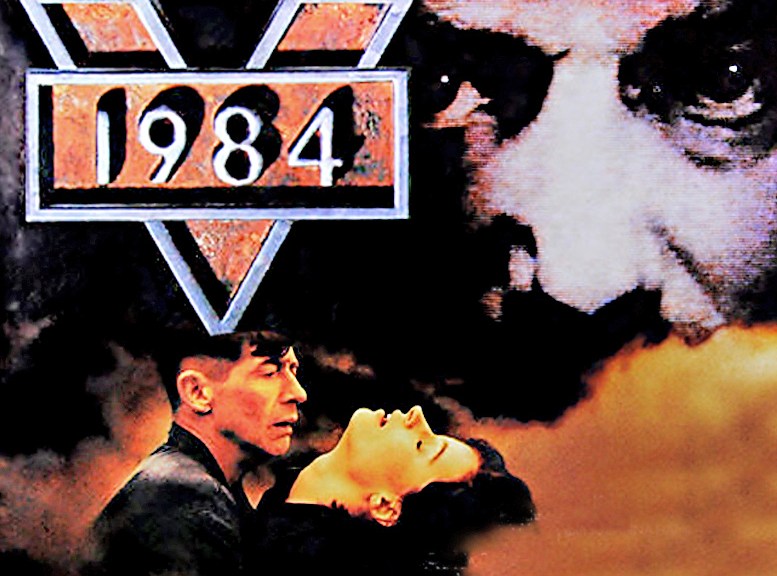
When a US Presidential spokesperson recently used the term alternative facts to explain away inconsistencies between the White House version of truth and objectively verified truth it triggered a global revival of interest in the George Orwell classic Nineteen Eighty-Four (1949). Single-handedly, the term alternative facts caused a run on the 68-year old novel and led to cinemas across America re-screening the 1984 film adaptation. Acknowledged as one of the most important literary works of the modern era, 1984 has been adapted to film, television, radio, stage, music, and other popular culture platforms and it continues to resonate as a contemporary dystopian warning about how power can be used as a weapon to crush truth.

The film’s plotline, setting and acting are starkly minimalist. Oceania is an imaginary futuristic totalitarian society that is in ruins from perpetual war. The people are under constant surveillance and there are screens everywhere broadcasting…

View original post 496 more words

“To make others less happy is a crime. To make ourselves unhappy is where all crime starts.”

Yesterday was the fourth anniversary of the passing of Roger Ebert.  (Our own Blog Correspondent Pete Harrison pointed it out to the gang on Facebook.)

I still miss reading Ebert’s reviews.  He was such an intelligent man, yet so lacking in pretense or pedanticism.  His had an unassuming, straightforward, everyman’s voice that the average reader could trust and relate to.  His talent for that remains inimitable.

The quote below is one I discovered just today.  It’s a good one.


Image result for Roger Ebert Quotes

Stop by The Bees Are Dead.

If you haven’t caught up with The Bees Are Dead lately, now is a good time to do so.  B.A.D. featured a particularly potent piece today by Stephen Jarrell Williams, “In the Desert.”  It’s a surprisingly effective poem despite its deceptively simple language, and I recommend it highly.

You can also find an outstanding example of prose poetry in Darren C. Demaree’s “Trump as a Fire Without Light #86.”  (This is actually one of my favorite poems submitted to B.A.D. so far, and I have no doubt that many readers both here in America and abroad will relate to its poignant social commentary.)

Be sure to peruse Wren Tuatha’s “The Trees Tell Our Future” too.  It’s a beautifully evocative poem that has stayed with me long after I read it for the first time.