Standing by the side of the road, and a raven leaves its perch on the power lines to overfly me.
If you are a fan of “28 Days Later” (2002), then you know that this is a setup for a BAD situation.
Standing by the side of the road, and a raven leaves its perch on the power lines to overfly me.
If you are a fan of “28 Days Later” (2002), then you know that this is a setup for a BAD situation.
Perhaps predictably, I truly enjoyed “28 Years Later” (2025). It wasn’t a perfect film, but it was damned good; I’d rate it a 9 out of 10 on the Nolan scale. Screenwriter Alex Garland and director Danny Boyle are still the dream team for stylish, breakneck-paced action-horror. (It was their incendiary creative alchemy gave us the classic 2002 original film, “28 Days Later.”)
The movie has beautiful acting across the board, kinetic action sequences, decent makeup effects, convincing sets, a resonant theme and some gorgeous cinematography. (I keep reading that the film was shot with … iPhones? All of it? Really?)
Jodie Comer and Ralph Fiennes absolutely shine; Aaron Taylor-Johnson is also quite good. But I particularly enjoyed the performance of 14-year-old Alfie Williams, whose character’s coming-of-age comprises the human story of the film.
On the downside, “28 Years Later” has some problems with pacing and structure — although things like those are especially subjective, and other viewers will hardly notice.
Several characters make decisions that are … baffling. (Yes, I do realize that Williams’ character is supposed to be 12 years old, and that this is a horror movie. But … seriously, wtf, kiddo?) And there are some larger plot questions that I can’t really expand upon for fear of spoilers.
Finally, an abrupt change of tone at the end of the film left me feeling a little nonplussed. It might make sense in a larger context — the next “28” installment is due out in only six months, and the hard left turn we see in the final moments might be validated where the next movie picks up. For now, though, I have mixed feelings about this ending. (I want to know why a lengthy, somber meditation on mortality should end like a Saturday morning cartoon.)
I cheerfully recommend this! It is obviously not for the faint of heart, but it is highly effective action-horror that still manages to catch the viewer off guard. And Boyle delivers it with oddball, feverish finesse.

Watching Alex Garland’s “Civil War” (2024) is a lot like watching an hour-and-forty-nine-minute train wreck — except it’s even more horrifying because the accident happens right outside your hometown, and its casualties might easily be people you know.
It isn’t an “entertaining” movie; it’s hard to imagine anyone “having a good time” seeing it. It’s disturbing enough that I wouldn’t even recommend it to many people I know. I’m probably showing my age when the movie I keep wanting to compare it to is Oliver Stone’s “Platoon” (1986).
But it is definitely a well made film. In a nutshell, it combines the best elements of two of Garland’s previous movies. It has the breakneck, street-level, frightening, kinetic action of 2002’s “28 Days Later” and the thoughtful dialogue of 2015’s “Ex Machina.” (But viewers who are wary of Garland’s sometimes ponderous and lengthy dialogue scenes should rest assured that this is definitely an action movie.)
It’s surprisingly apolitical. (Garland himself stated it was intentionally “opaque.”) When we see random factions and individuals committing revolting acts of violence, we’re often given little information about which side they are actually on. Viewers hoping to see America’s contemporary left/right divide depicted will be disappointed. (Hence the part of the plot setup that readers laughed at before the movie’s release — California and Texas join forces against the federal government.) While Nick Offerman’s cruel and feckless American president is obviously “a bad guy,” his political party is never named.
The cast is roundly excellent, even if everyone is outshined by Kirsten Dunst’s hollow-eyed photojournalist who is in the midst of a traumatized existential crisis. And if you’re a fan of creepy “that guy” actor Jesse Plemmons, as I am, you’ll see that he is at his finest here.
I know that there have been a spate of negative reviews since the film opened yesterday, accusing it of being “pointless” or without a meaningful story. I disagree.
This is a milieu-type story in which the catastrophic war itself is the primary antagonist. It kills both the culpable and the innocent indiscriminately.
And Garland’s message is clear: “Kids, don’t try this at home.”

Showtime, SyFy.
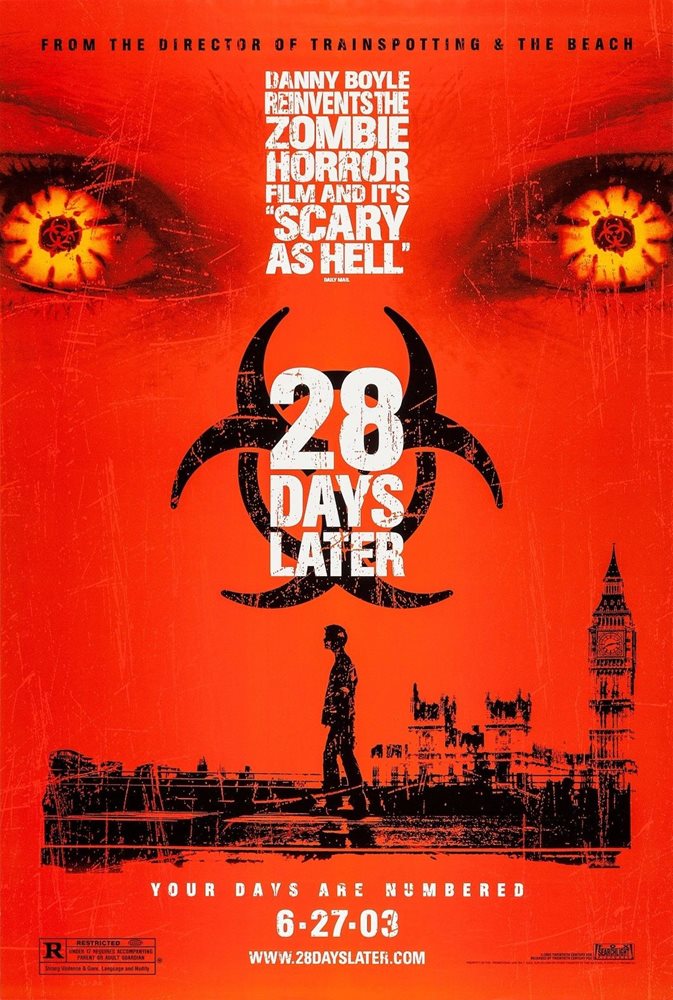
So I’m introducing a dear friend tonight to “28 Days Later” (2002). It is possibly my favorite horror film of all time, maybe even narrowly beating out “Aliens” (1986), “Alien 3” (1992), John Carpenter’s “The Thing” (1982), the Sutherland-tacular 1978 version of “Invasion of the Body Snatchers,” and George A. Romero’s first three “Dead” films (1968, 1978, 1985). (Whenever “Star Wars” fans refer to their “Holy Trilogy,” I muse inwardly that those last three are its equivalent for zombie horror fans.)
My friend thinks it’s funny that I refer to “28 Days Later” as “my sacred cow.” I’ll be crestfallen if she does not like it, and I told her as much. And that’s weird for me … I usually don’t feel let down when someone doesn’t enjoy the same books, movies or music that I do. Not everything is for everyone. Art would lose its mystique if it weren’t subjective. If all art appealed to all people, it would lose all its appeal altogether.
Part of me feels, unconsciously perhaps, that “28 Days Later” is the kind of film that “redeems” the horror genre (even though no genre needs such redemption — if art is well made or if it affects people, then it’s just fine).
Most comic book fans of my generation can tell you how people can occasionally roll their eyes at their favorite medium. (Comics have far greater mainstream acceptance today than when I started reading them in the 1990’s.) For horror fans, it’s sometimes worse. Horror is a genre that is easily pathologized — and sometimes with good reason, because a portion of what it produces is indeed cheap or exploitative. I wish I could accurately describe for you the looks I’ve gotten when acquaintances find out that I’m a horror fan. They aren’t charitable.
“28 Days Later” and movies like it are so good that they elevate horror to a level that demands respect from the uninitiated. It is an intrinsically excellent film — it just happens to have a sci-f-/horror plot setup and setting. It’s beautifully directed by Danny Boyle, it’s perfectly scored and it’s masterfully performed by its cast — most notably by Cillian Murphy and Brendan Gleeson.
Moo.
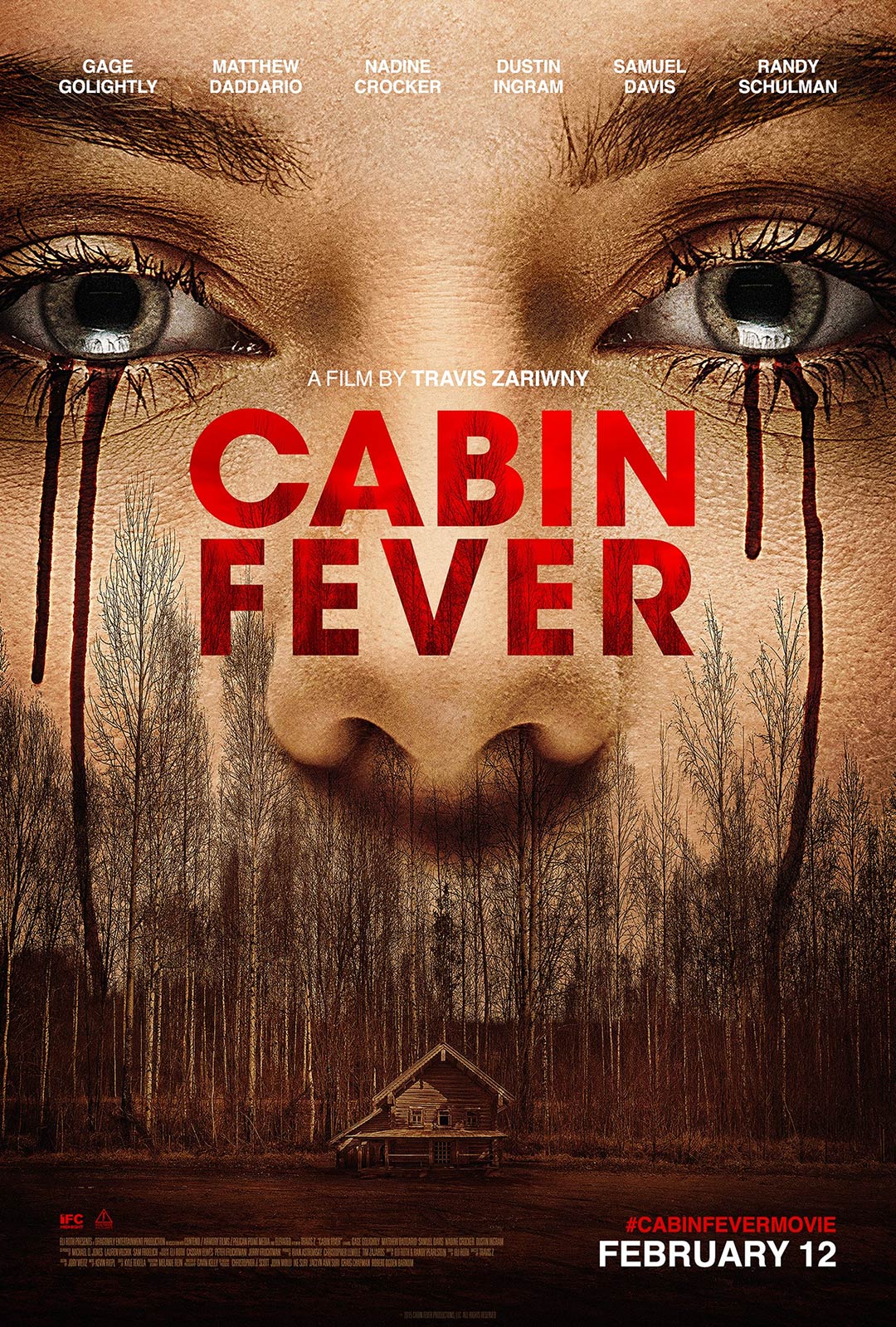
I don’t understand why the 2016 remake of Eli Roth’s “Cabin Fever” (2002) is so hated by critics and audiences. It has a 0% rating over at Rotten Tomatoes, and reviews of the movie are withering. I personally thought it was a very well made horror film; I’d rate it at least an 8 out of 10.
Sure, I understand the criticisms. This is definitely an unneeded remake. And the new cast here feels bland compared to the doomed vacationers in Roth’s campier, weirder outing 14 years prior. (Although this isn’t a shot-for-shot remake, it still proceeds mostly from his original script.)
But the new “Cabin Fever” is well filmed, and it’s damned horrifying. Director Travis Z significantly ups the gore, violence and frightening imagery — it’s not for the squeamish. It passes the litmus test for decent horror movies, because it scared me.
Maybe I’m just partial to Roth’s basic story concept — a terrifying new illness that jumps from person to person in an isolated location from which it’s difficult to escape, turning them against one another. It’s precisely the same plot driver as the one for John Carpenter’s “The Thing” (1982), which is among the greatest sci-fi/horror films of all time. And I suppose Roth’s story could be taken as modern retelling of Edgar Allan Poe’s “The Masque of the Red Death,” with some of the director’s sadism and unique black humor injected into it via his screwball, eccentric characters. Remake or not, this is still a creative change of pace from a genre consistently overcrowded with slashers and shrieking ghosts.
“Spider-Man: Far From Home” (2019) is a fun enough Marvel movie; based on my own enjoyment, I’d rate it an 8 out of 10. It’s got the same qualities as almost all the other films in the Marvel Cinematic Universe — fun, humor and great special effects housed within a remarkably well constructed shared universe. This mostly standalone adventure is definitely one of the MCU’s campier outings, but I think that most viewers will find it a welcome break after the last two high-stakes, apocalyptic “Avengers” films. (You may have heard of them.)
It’s also a great film to appeal to comic fans who are younger adults. The humor usually works, and the characters are nicely relatable. Peter’s peers and teachers are all engaging enough on their own, and make a good group of supporting characters. I know most fans have commented how much they like Ned, and I do too — but I think the MCU’s biggest improvement in this part of the mythos is the character of M.J. She is vastly different from her comic book progenitor, but in good ways. She’s dry, sardonic and slightly dark, and she’s extremely well played by Zendaya. I don’t imagine that many fans will agree with me here, but I personally find this character to be a lot more likable and compelling than the MCU’s Peter Parker.
And that brings me to my largest concern about the new “Spider-Man” films. Their version of Peter is sometimes frustrating. I don’t think it’s the fault of Tom Holland, who brings a nice amount of energy and personality to the role. I think it’s the fault of the screenwriters, who have made the character so doltish, boyish and eager-to-please that it’s occasionally annoying. He sometimes seems more like a middle school student than an advanced high school student. (Isn’t he supposed to be a senior here?) The writers seem to want to counter-balance the character’s high intelligence with a humanizing flaw, and they seem to want to contrast young Peter with the older, more seasoned Avengers lineup. All of that makes perfect sense, but I do think they go a little overboard.
I’m willing to go on record here and say that I prefer Sam Raimi’s “Spider-Man.” His trilogy between 2002 and 2007 had more heart, more devotion to heroic archetypes, and greater attention character depth and detail. (I still think that 2004’s outstanding “Spider-Man 2” is one of the best comic book movies ever made.) There are advantages, too, to depicting an iconic superhero that doesn’t inhabit a shared universe — you spend more time exploring the character than exploring their context in relation to others.
Still, I’d recommend “Spider-man: Far From Home.” Like I said, it was a fun movie.

DC Comics.
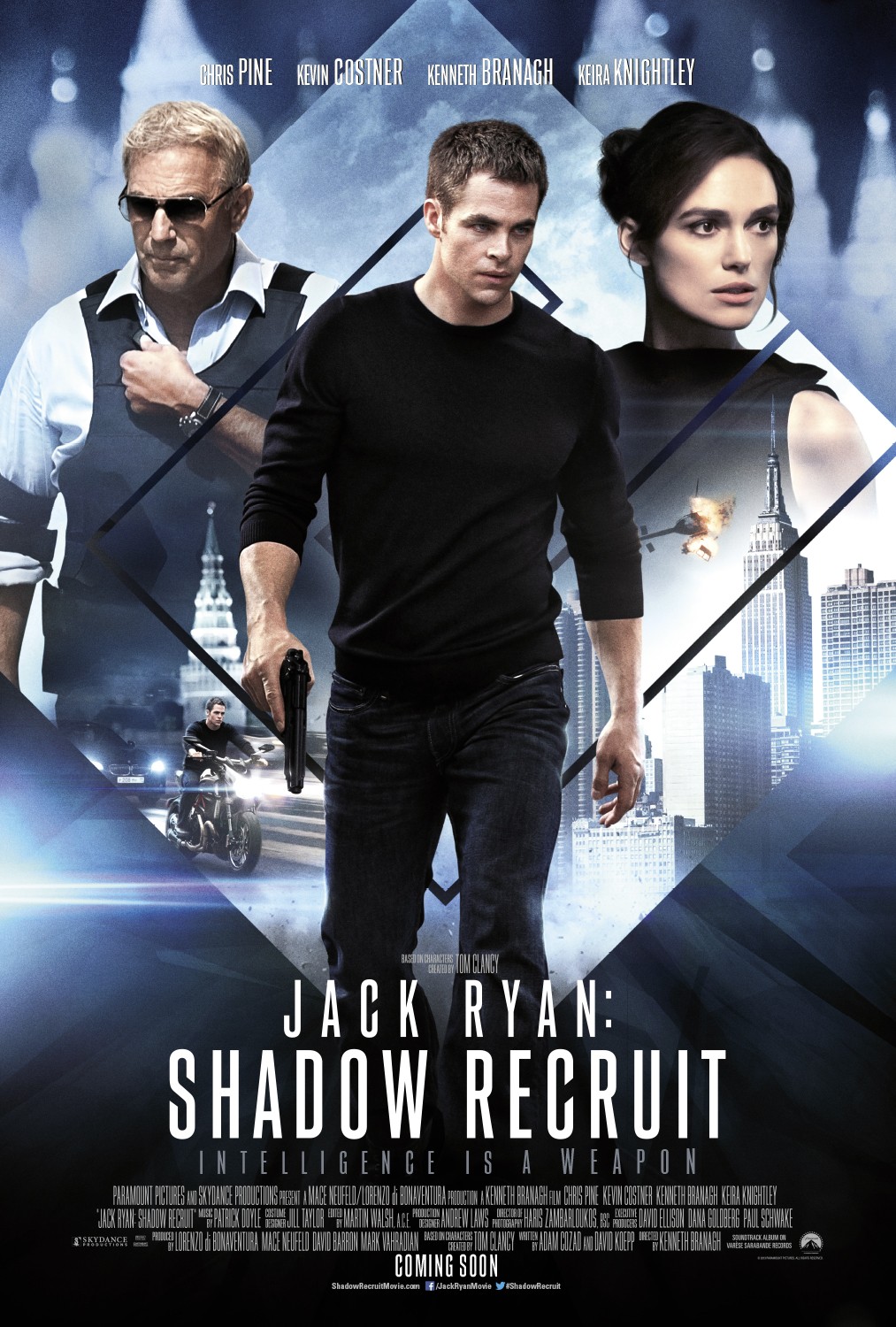
“Jack Ryan: Shadow Recruit” (2014) is easily the least of the Tom Clancy adaptations. But that shouldn’t be enough to indict the film; the other film treatments of the author’s books have all been roundly excellent. (Okay, 2002’s often-reviled “The Sum of All Fears” might be an exception, but I still like that flick even if I’m in the minority.) I’d rate this outing a 6 out of 10.
It isn’t a bad movie … it’s just an average, generally undistinguished boilerplate spy thriller that seems half-heartedly rewritten as a reboot of the Clancy films. Screenwriters Adam Cozad and David Koepp pay cursory attention to the title character’s background, and a key plot development from the books that I will not spoil here. But the film utterly lacks the mood, detail or methodical plotting of anything Clancy created.
It’s all very generic stuff. We’ve got a generic, telegenic, twenty-something action hero (Chris Pine), his generic hot girlfriend (Keira Knightley), the expected Russian bad guy (Kenneth Branagh) and a by-the-numbers climax — including the last-second requirement to divert a bomb from its target. Rounding it all out is Kevin Costner, the most generic good guy ever to behave predictably on screen — he characteristically projects the expected, wholesome gravitas. Even this film’s title is generic — it sounds like the name a marketing department would come up with for an entry in a video-game series.
There are plot elements that are painfully implausible, even by spy-movie standards. Jack Ryan’s new girlfriend, for example, surprises him by arriving in Russia in a flourish of quirky-girlfriend spontaneity, only to discover his secret career and then be fully enlisted in a spy operation. Branagh doubles as the movie’s director; his work here is surprisingly problematic. This is yet another movie in which important action sequences are barely comprehensible because of frequent, rapid cuts.
Oh, well. It certainly isn’t all bad. There isn’t a single bad actor in the film, for example. If I don’t like Branagh’s directing, I love his acting. The guy is magnetic — he alternately and convincingly projects menace and charisma to perfection. Alec Utgoff shines too, in a small role as a soft-spoken, ironically disarming Russian assassin.
People tend to either love or hate Costner. I like him quite a bit. No, he doesn’t always demonstrate an incredible range. But his acting is competent and he’s likable and consistently convincing. He’s the actor equivalent of that old American sedan that isn’t flashy but always starts reliably when you need it to get you to work.
Hey, you might like this movie far more than I did. I was an obsessive fan of the books, so my standards may be a bit high where they are adapted to the screen. Your mileage may vary.
 Eric Robert Nolan, Author