Tag Archives: Batman

Throwback Thursday: MTV in the early 90’s (at Mary Washington College).

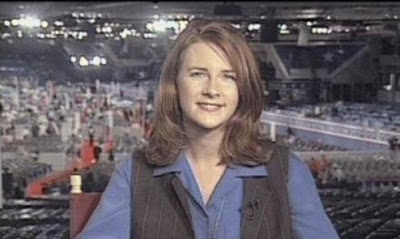
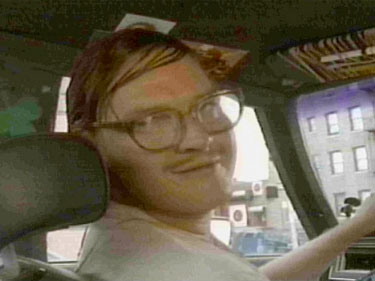
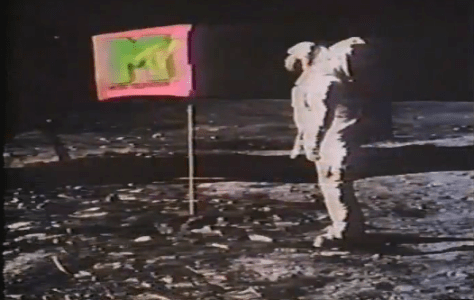
You are really getting old if you can remember when MTV was cool.  In the first half of the 1990’s, MTV had it all: weird, varying animated logos; Tabitha Soren; “MTV Unplugged,” which I still enjoy via Youtube today; “Liquid Television;” the sometimes priceless “Beavis and Butthead;” the always priceless “Aeon Flux;” and the bizarre promos featuring “Jimmy the Cab Driver.”  (The date on the embedded video below is incorrect; Jimmy was annoying his fares in the 90’s — not the 80’s.)

This was the age when non-music-video programming more or less began for the channel.  But it didn’t suck — it was actually quite good.

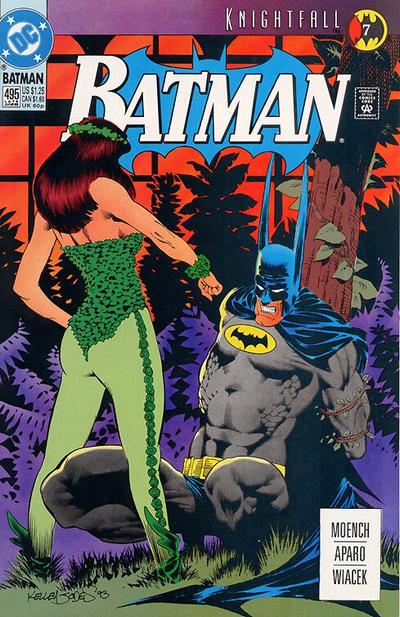
I think MTV’s greatness lasted until 1994 or 1995, around the time when my college career drew to a close.   We didn’t have cable in our dorm rooms at Mary Washington College … except when we did.  During my junior year, some intrepid, subversive genius had gotten into the vicinity of the Resident Director’s cable connection, and “split” it or something, in order to provide our entire floor with basic cable.  He was an anonymous hero … like Batman, except probably a lot more chill, we figured.  (He wasn’t the hero that Alvey Hall deserved, but he was the hero that Alvey Hall needed just then.)

God, did we all love it.  Frederickburg, VA, was a small, quiet town, and we didn’t have the Internet, or even cell phones.  We didn’t even have landlines in our room; we had two shared “hall phones” for local calls and a pay phone to call anywhere outside town.  (And I guess college kids today might be unfamiliar with the concept of “local” and “long-distance” calls.)

Here’s what I can’t figure out in retrospect, after 24 years …  I understand that cable can be “split;” New Yorkers do it all the time.  But … wouldn’t Batman need to lay cable down throughout the length of our dorm?  And wouldn’t he need to install cable jacks in each of our rooms?  Did he do it on a Saturday night, when we were all drunk?  How did he get in?

Maybe he came in the window.  Godspeed, Batman.


875_1.1384871086

tumblr_mursv0fC3B1r4jqhwo1_500

tabitha-soren-003

rs-237605-GettyImages-2225160

maxresdefault

beavis_and_butthead_by_laylaloves13-d7ahfkh

aeon-flux_L07

dd59bcc492bfbb539c51762c7ec514d5

donallogue

Mtvmoon

Throwback Thursday: early 1990’s “Aliens” and “Predator” comics.

I was chatting here with a friend last week about the “Aliens,” “Predator” and “Aliens vs. Predator” comics produced by Dark Horse Comics in the 1990’s.  While Marvel, DC and Image Comics all specialized in their superhero universes, Dark Horse tended to corner the market on hot properties in science fiction and horror.  (The company actually did try to compete by launching its own superhero line, but its unsuccessful “Comics’ Greatest World” universe lasted a mere three years.)

Dark Horse acquired the rights to the biggest science fiction movie characters of the first half of the decade, including “Aliens,” “Predator,” “Terminator,” “Robocop,” and “The Thing.”  It also produced great books in other genres too, like Frank Miller’s legendary “Sin City” series, Matt Wagner’s brilliant “Grendel,” and “Indiana Jones” comics.   (I never actually saw “Indiana Jones” on the shelves; the two retailers in my smallish Virginia college town never carried it.)

Perhaps strangely, I don’t remember any regular ongoing series for “Aliens,” “Predator” or “Aliens vs. Predator.”  Instead, the company published limited series on an ongoing basis.

Dark Horse had been a young company back then — it had started only four years earlier, in 1986.  But I’ll be damned if the people running the company didn’t know their stuff.  Not only did they snatch up big-name properties, they did a great job in producing consistently high-quality “Alien” and “Predator” books.  (Maybe “Aliens: Genocide” wasn’t as good as the other series, but it was really more average than flat-out bad.)  I honestly don’t know how they managed to publish such uniformly excellent comics that drew from a variety of creative teams.  The “Big Two,” Marvel and DC, produced their share of mediocre comics — even for tentpole characters or major storylines.  (See the “Batman” chapters of DC’s “Knightfall,” for example, or Marvel’s “Maximum Carnage” storyline for Spider-Man.)

Was Dark Horse’s track record better because their target audience was adults?  Did they just have really good editorial oversight?  Or did they maybe share such oversight with 20th Century Fox, which had a vested interest in its characters being capably handled?  I’m only guessing here.

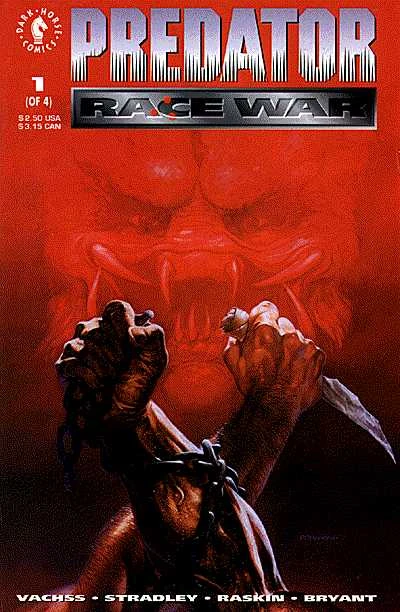
I’ve already blathered on at this blog about how I loved “Aliens: Hive,” so I won’t bend your ear yet again.  An example of another terrific limited series was “Predator: Race War,” which saw the title baddie hunting the inmates of a maximum security prison.  And yet another that I tried to collect was “Aliens vs. Predator: the Deadliest of the Species.”  The series had a slightly annoying title because of it was a lengthy tongue twister, but, God, was it fantastic.  I think I only managed to lay hands on four or five issues, but the art and writing were just incredibly good.

Take a gander at the covers below — all except the first are from “The Deadliest of the Species.”  I think they are some of the most gorgeous comic covers I’ve ever seen, due in no small part to their composition and their contrasting images.  And I’ve seen a lot of comic covers.  I think the very last cover you see here, for Issue 3, is my favorite.

I would have loved to collect all 12 issues … I still don’t know how the story ended.  (It was partly a mystery, too.)  But at age 19, I absolutely did not have the organizational skills to seek out any given limited series over the course of a full year.

In fact, this title may well have taken longer than that to be released … Dark Horse did have an Achilles’ heel as a company, and that was its unreliable production schedule.  Books were frequently delayed.  To make matters worse, these were a little harder to find in the back issues bins.  (I don’t know if retailers purchased them in fewer numbers or if fans were just buying them out more quickly.)

I suppose I could easily hunt down all 12 issues of “The Deadliest of the Species” with this newfangled Internet thingy.  But part of being an adult is not spending a lot of money on comic books.  Maybe I’ll give myself a congratulatory present if I ever manage to get a book of poetry published.  Yeah … I can totally rationalize it like that.


Aliens-Predator_The_Deadliest_of_the_Species_Vol_1_2

Aliens Predator 10

Aliens-Predator_The_Deadliest_of_the_Species_Vol_1_11

avp_deadliest_of_the_species_3


Throwback Thursday: the Launch of Image Comics (1992)

I talked about Todd McFarlane’s “Spawn” in last week’s Throwback Thursday post; these are some very early issues of a few of Image Comics’ other titles when the company launched in 1992.  I remember snapping them up in earnest when I was 19 years old — as I said last week, it was exciting for a comics fan to see a new company challenge the “Big Two,” Marvel Comics and DC Comics, with a new superhero universe.

I and other ambitious collectors also grabbed these off the shelves because we naively expected they all would one day be very valuable.  (Investing in comic books is a little more complicated than that — they’ve generally got to be in extremely good condition to fetch high prices.)

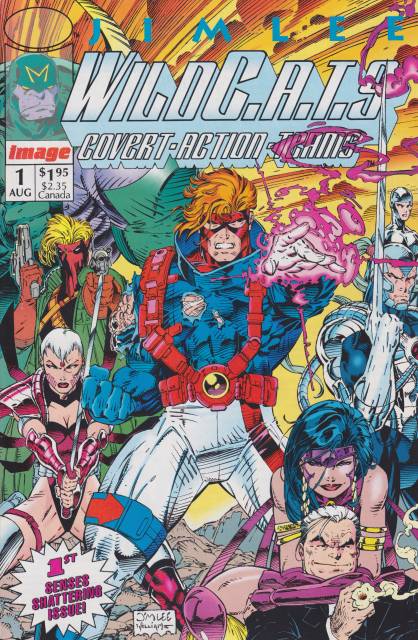
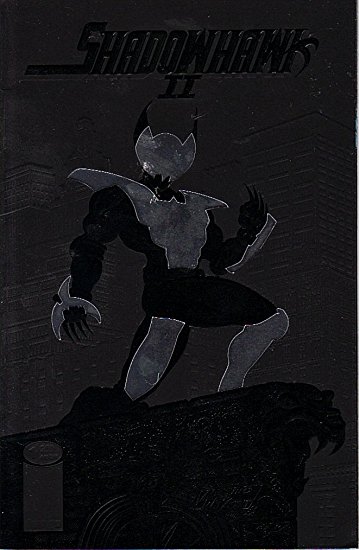
The first Image comics were a mix of good and bad.  If memory serves, Jim Lee’s “WildC.A.T.s” was very good; Rob Liefeld’s “Youngblood” was less so, but was at least interesting.  The art and writing for Jim Valentino’s “Shadowhawk” was truly mediocre.  That didn’t stop me from buying a few issues, though — the novelty of these new books just gave them too much appeal.

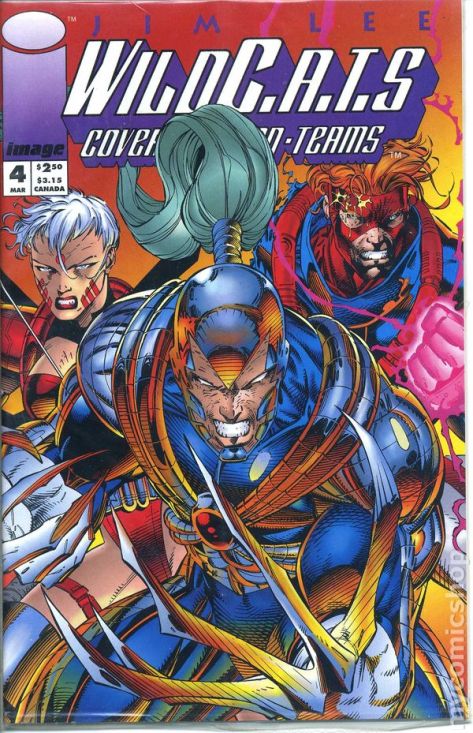
There were a lot of creative things going on with early Image titles.  Some of the new characters were pretty neat.  I remember being partial to Youngblood’s “Diehard” for some reason, along with the WildC.A.T.s’ “Grifter.”  (The former has the red, white, and blue full bodysuit; the latter has the trenchcoat and pistols.)  And I definitely liked WildC.A.T.s’ “Warblade.”  He’s the guy below with the ponytail and the shape-changing, liquid-metal hands.  He was a favorite of mine despite the fact that he seemed to borrow a trick or two from the newly iconic liquid-metal terminator.  (“Terminator 2: Judgement Day” had hit theaters a year earlier.)

Image comics were quite different than those produced by Marvel and DC.  (As I explained last week, Image was formed by artists who revolted against their prior employers’ unfair, work-for-hire payment policies — their new company gave them complete creative control over their characters.)  Despite the popularity of Image’s new books, however, they sometimes appeared to have been developed without some needed editorial oversight.

The violence and gore was often far more graphic.  And Image’s creative decisions ranged from the inspired to the strange to just being in questionable taste.  (It all depended on your disposition, I guess.)  WildC.A.T.s, for example, portrayed Vice President Dan Quayle as being possessed by an unearthly “Daemonite.”  (Damn, those Daemonites were wicked-cool bad guys, and Lee Illustrated them beautifully.)  Shadowhawk’s signature move was breaking the spines of criminals.  He was also HIV-positive, the result of some gangsters’ reprisal — they captured him and injected him with infected blood.  The character thereafter spent some of his history trying in vain to locate a cure for AIDS.  (This was 1992, just after the epidemic became fully entrenched in the public’s anxieties in the 1980’s.)

My interest in these titles eventually waned, though I did still pick “Spawn” up when I had the money.  The Image universe was densely crowded with new characters, and it was just too much information to sustain my interest.  (Seriously, look at the first couple of covers below.)  I spent far more money on DC’s various “Batman” and “Green Lantern” titles.  And if I wanted edgy comics, I had discovered the various incarnations of Matt Wagner’s “Grendel” that were available through Dark Horse Comics.  Those boggled the mind.

But Image comics did burgeon into a great success, even if these early titles have since been retired.  “Spawn,” of course, is still being produced.  And today the company’s wide range of books includes Robert Kirkman’s “The Walking Dead.”  It’s hard to imagine either of the Big Two picking up Kirkman’s gory epic masterpiece … so I suppose we have Image to thank for the TV show.

1618179-wildcats_covert_action_teams__1992__01a

ibc25b64d2961mh92d73z

726109

559443

shadowhawk1992series3

61zpMu6Im+L._SY550_

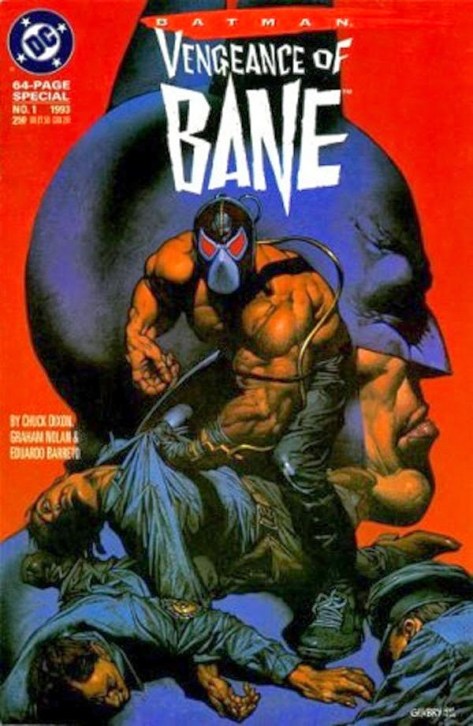
Cover to “Batman: The Vengeance of Bane,” Glenn Fabry, 1993

I’ve always had mixed feeling about this classic cover.  The composition is excellent.  Bane and his victims look great.  (I’ve actually got a copy of this autographed by Chuck Dixon and Graham Nolan; they were among my favorite creators when I was fervently collecting comics at college.)

But that’s got to be one of the ugliest Batmans I’ve ever seen, and I don’t think the cowl should look so much like a skull cap.


vengeanceofbane

Panel from Matt Wagner’s “Batman/Grendel: Devil’s Masque,” 1993

grendelhunterrose2

Cover to DC Comics’ “Batman: Harley Quinn,” 1999

Original artwork by Alex Ross.


“These are a few of my favorite things.”

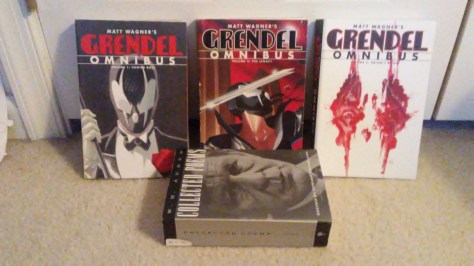
I am now the proud owner of … a goodly portion of all the “Grendel” comics Matt Wagner ever wrote.  What you see in the top row are “Grendel Omnibus” Volumes 1, 2 and 3.  (I believe I actually shared my review of Volume 1 on this site a while ago.)  These would comprise a nearly inclusive history of Hunter Rose, Christine Spar, Brian Li Sung, Orion Assante and Eppy Thatcher.  All that remains for me to collect is the fourth Omnibus trade-paperback, chronicling the possibly immortal Grendel Prime and his imperiled charge, Jupiter Assante.

The Omnibus editions do not include crossovers with heroes such as Batman and The Shadow, as those characters are obviously owned by other companies.  Nor do they include the diverse dystopian future tales depicted by various artists in the 1990’s “Grendel Tales.”  But I am in heaven with what you see below — or maybe hell, considering these books’ central motif.

To top it all off, that hefty tome beneath the comics is W. H. Auden’s “Collected Poems,” edited by Edward Mendelson, with the poet’s work between 1927 and his death in 1973.  It’s 927 pages.  It weighs 30 pounds, probably.  And it is indexed by both the poem’s titles and their first lines.  That is what you call a lifetime investment.

The comics will be excellent summer reading; as will Auden.  But I’ll focus more on the Briton when fall arrives.  Like his countryman, Doyle, he might be best enjoyed outdoors on a gray and increasingly brisk Autumn day.

I need to buy books more often.


20160812_193810


Batman vs. Superman vs. a Terrible Script

[THIS REVIEW CONTAINS MINOR, GENERAL SPOILERS.]

Wow.  The script for “Batman vs. Superman: Dawn of Justice” (2016) was really bad.

I hate to begin a review with a statement so negative, but it’s true.  I really think that I could have done better than this, and I know nothing about screenwriting.  Hell, parts of the movie were actually MSTy-worthy.  I just can’t believe that the gifted David S. Goyer had a hand in this.

Batman is flatly rendered and barely likable.  Superman is capably played by Henry Cavill, but has little to say.  Lex Luthor is portrayed as a cloying, verbose, flamboyant, attention-seeking manchild.  He gets all the screen time in the world (and more dialogue than Superman, it seems), and he really come across as a whiny, rambling high school student playing at theologian, trying in vain to impress the girls.  Luthor seems to want to ingratiate himself to every other character on screen.  Strangely, this includes even those he is threatening or endeavoring to murder.  He has weird vocal tics that quickly get on our nerves.  “Mmm.”  He makes repeated references to god, who he hates, and … this makes him hate the godlike Superman, via Freudian transference.  Or something.

He consequently wants to kill Superman.  He has kryptonite and demonstrably capable mercenaries at his disposal.  But, for some reason, he wants to employ unreliable, convoluted plans to prompt Batman to do it.  His plans to motivate Batman include harassing him with newspaper clippings and nasty notes, like a deranged stalker.

He also has a photograph of Wonder Woman that she would like to keep secret.  She goes ahead and mentions it to an ostensibly drunken Bruce Wayne at a party anyway.

Oh!  Luthor also knows the secret identities for both Superman and Batman, and has known for some time.  We don’t find out how he knows, and he does far less to exploit this information than you would think.  Couldn’t he easily (and quite legally) cause problems for both men simply by exposing them?  Superman knows Batman’s identity too; I guess we can chalk that up to his x-ray vision?  Batman is not in the know, and spends much of the movie trying to play catch-up, and is easily manipulated by Luthor.  This is despite the fact that, in the comics, he is the world’s greatest detective.

There is bad dialogue, weird science, and bad science.  There are murky, vague plot points and unsupported character motivations.  Some things are just plain dumb — Metropolis and Gotham City stand within sight of each other, just across a bay.  Either hero could easily intervene in the other’s city … but they apparently respect each other’s nearly adjacent turf, even though they don’t know or trust each other.

Even the premise is shaky — legions of people hate Superman because they blame him for the damage inflicted by Zod during the events of “Man of Steel” (2013).  Couldn’t he just exonerate himself by simply telling the truth — that Zod attacked earth and he rose to defend it?  I’m willing to bet most people would get that.

There are … dream sequences … and/or visions … and/or messages from the future?  And … conversations with the dead?  Or … not?  You tell me.

Why does Superman need a winter jacket?

Why does he refer to his mother as “Martha?”  Do any of us refer to our mothers by their first name?

I could go on, but you get the idea.  I actually found my attention wandering during this movie.

All of this is a shame, because there are hints of brilliance hiding among the mediocrity.  The movie is ambitious.  It seems to want to say a lot about weighty themes such as power, unlimited power, its ability to corrupt, and the unintended consequences of unilateral action.  There seem to be visual references to real world horrors like 9/11 and ISIS’ terrorism, which I found pretty bold.  I’ve never been good with subtext.  Were there allegories here that I missed, connected with U.S. foreign policy or the War on Terror?

I will say this — the film isn’t quite as bad as the critics are making it out to be.  It isn’t all garbage, it’s just a below average superhero film.  And it appears worse because it’s part of a genre characterized by a lot of really good films — Christopher Nolan’s Batman movies were groundbreaking, and most of the Marvel Cinematic Universe’s titles were quite good.  So this ambitious misfire seems far worse in contrast.  I myself would rate this movie a 5 out of 10 — even if I might be biased here by my lifelong love for these iconic characters.

I’ll tell you what — why don’t I go ahead and list this movie’s successes?  There are a few things that I really liked, and this blog post is so negative it’s starting be a buzzkill.

  1.  Ben Affleck did a damn good job in his portrayal of Batman.  I’m sold.  I strongly get the sense that he worked hard to prepare for the role.  The man is a good actor; this was a good performance.  Somebody get Batffleck a better script!
  2. Amy Adams and Diane Lane are both skilled actresses, and are both a pleasure to watch here, as Lois Lane and Martha Kent, respectively.
  3. The special effects are damned good.  If you’re a longtime fan of Superman, then his heat vision alone might make this movie worth the price of a ticket.  His flights and landings look damned good too.  The scene where Wonder Woman lassos Doomsday was downright beautiful — it’s one of the best FX shots in recent memory.  I couldn’t conceive of anything better by using my imagination.
  4. The fight choreography when Batman takes down multiple thugs is quite good.
  5. It’s a little hard for me to articulate, but … the final showdown here really does capture the epic, mythic feel of a major superhero battles in the DC Comics I grew up with.  We’ve got two heavy hitters — Superman and Wonder Woman — battling a super-powered villain in an apocalyptic battle, with the quite-mortal Batman holding his own just fine, employing the power of badass.  It was a hell of a fun finale for me, as it recalled the superpowered clashes I used to find in the better-written “Justice League” comics, or those various Jeph Loeb-written team-ups between Bats and Supes.  The vibe was just right, and it really struck a chord with me and improved the movie.
  6. As much as I’ve complained about the script, there were parts here and there that were actually surprisingly awesome.  The scene at the Capitol was darkly inspired.  Luthor’s modus operandi for controlling Superman was a nasty bit of business.  And one character delivers a monologue about a flood that is vivid and hauntingly sad — and it was made all the more effective because the actor delivering it is so talented.  I’m genuinely surprised that the movie went so dark with all of these moments.  Again — there were hints of brilliance among the mediocrity.

Postscript:  a note to those who might be new to comics — this movie cribs heavily from two famous comic book story arcs.  The first is 1972’s “Must There Be A Superman?” and the second is 1986’s  graphic novel, “The Dark Knight Returns.”  I haven’t read the former, but let me assure you that the latter is incredibly good.  It was written and illustrated by Frank Miller, and it was so damn good it actually transformed the medium, by changing how fans and the general public viewed comic books.  It’s a masterpiece.  The point I’m trying to make is this — please don’t judge the seminal comic series by its putative representation by this film.

Postscript II: has there really been a great live-action Superman movie since “Superman II” in 1980?  It’s well known that the third and fourth installments in the 80’s franchise were abominable.  I thought that “Superman Returns” (2006) and “Man of Steel” were both good, but they got mixed reviews from audiences and critics alike.  Weird.


bvsquad2


“The … Stalking Dead?” (A review of “Daredevil” S2E1)

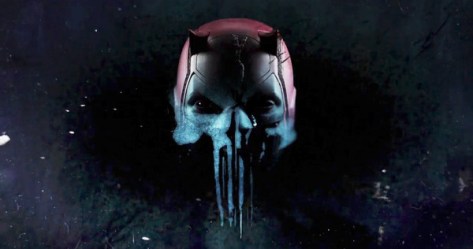
[THIS REVIEW CONTAINS ONE SPOILER.]  So the fantastic John Bernthal is now the Marvel Cinematic Universe’s “Punisher,” debuting (however briefly) in the first episode of Netflix’ “Daredevil” Season 2.  I just know that there is a great “Walking Dead” joke hiding around here somewhere; but I can’t seem to put my finger on it …  (Something about … Blind Grimes?  Disabled Rick?  Daredevil can’t see “stuff?”  Or “thangs?”)  You people work that out for me.

Bernthal’s arrival is dream casting, every bit as perfect as bagging the inimitable Robert Downey, Jr. as the MCU’s Iron Man.  Even though the actor speaks only a single word, it’s goddam beautiful.

That’s one of the better things about Season 2’s first outing, which, for me, fell into the category of “good, but not great.”  (I’d still give it an 8 out of 10, and I feel certain the season will get better.)  What we see in S2E1 is mostly setup.  The episode clearly tried to introduce tension by grooming the Punisher as a frightening antagonist, with limited success.  Even casual Marvel fans know that Frank Castle is a good guy, and nothing close to a Big Bad.  Yes, he’s an anti-hero who fatally shoots villains, and will be a foil for Matt Murdock’s Boy Scout restraint (as he was in the comics, back in the day).

But I doubt that the Punisher can be made scary or truly tension-inducing.  (Are we afraid of Wolverine?)  We know that his shoot-em-up tactics won’t leave Daredevil dead.  (This isn’t “Game of Thrones” or TWD.)  And I’d guess that most viewers, like me, aren’t too emotionally invested in this show’s minor characters.  (The only exception would be the quite interesting and three-dimensional Karen Page, still wonderfully portrayed by Deborah Ann Woll.)  Hell, I think the show would be better if the painfully annoying Foggy Nelson were made an early casualty.  Finally, if the show stays true to the original comics, then the Punisher has that most sympathetic of “origin stories” — a murdered nuclear family.

Both the Punisher and Bernthal have such devoted fanbases that a lot of viewers will probably root for him against Matt.  (Our very own Blog Correspondent Len Ornstein, for example, was known for firmly being on “Team Shane” for TWD.)  Looking back at my fervent comic-collecting days in the 1990’s, I seem to recall the Punisher having a far bigger fan following.  He was a mercenary and Vietnam veteran who simply shot up whatever corner of the Marvel Comics universe to which his quarry had tried in vain to escape.  Fans compared him to DC Comics’ iconic cash cow, Batman.  Matt Murdock, on the other hand, had niche appeal.  He was a liberal superhero if there ever was one — a Columbia-educated defense attorney who employed nonfatal force, and who fought for the “everyday man on the street.”  He was like a grownup, thoughtful, socially conscious Spider-Man.  If ever there was a comic book hero who would join the American Civil Liberties Union, it was Daredevil.

Moving forward, I think that Netflix will need an altogether different adversary than Castle to raise the stakes emotionally, and bring suspense to its second season.  Maybe the show will accomplish that with Elektra, who we know will also appear.  (And fans of the comics know that this integral character has far greater implications for our hero.)

The new season’s inaugural episode might have been slightly better if it had been tweaked elsewhere, as well.  Much ominous language is devoted to characterizing the Punisher as a killer with military proficiency.  We kinda don’t see that.  The largest action set piece shows no precision or professionalism, just a room full of gangsters being hosed down by gunfire from an offscreen shooter.  And while the sequence itself was dramatic, it seemed like something that could have been perpetrated by a (very well armed) street gang in a drive-by shooting.

We also see some of the dialogue problems that were so evident in the first season — as superb as the screenwriters are, they don’t do casual conversation among friends very well.  There’s the same forced banter and an embarrassing lack of chemistry among the three lead protagonists, this time on display during an awkwardly staged after-work barroom pool game.  (It’s particularly puzzling because Woll and Charlie Cox are both very good actors.)  This show scripts its villains, petty crooks and adversaries with such flair — why does it seem to fail so often with friendly conversation?  And why bother with these strange attempts at Scooby-Gang camaraderie in the first place?  I think it’s a weird creative choice.  These are serious characters leading serious lives.  It seems implausible to me that they should be so frequently upbeat anyway.

Hey — if I’m nitpicking a lot here, it’s only because I love the show, and consequently hold it to a very high standard.  It really is the best superhero adaptation on television.  My review of last season was absolutely glowing, and I honestly think that Season 2 will be just as good.  If you haven’t checked out “Daredevil” yet, you ought to.


12525571_1720957711473798_4489177249886597130_o

NEqq4plcdvfusz_3_b


A review of “Deadpool” (2016)

I’ve never read a single “Deadpool” comic book, but that didn’t stop me from enjoying the movie.  It’s  a fun, creative and …  unconventional entry into the “X-Men” film  franchise that actually made me laugh out loud a few times.  I’d give it an 8 out of 10.

It isn’t high art.  It’s got a thin story based on a rickety plot device, nearly no exposition, and it includes some cartoonish action that I thought was just too over the top, even by comic book movie standards.  (Our hero dodges bullets and survives a stab to the brain.)

It helps to bear in mind this movie’s real purpose — fan service for the infamous niche character’s evident legions of followers.  “Deadpool” isn’t meant to be densely plotted, like “X2: X-Men United” (2003), or genuinely cinematic, like the Christopher Nolan “Batman” films.  It’s a long awaited, R-rated feature film to please loyal fans of this profane, adult-oriented antihero, who would be out of place and necessarily bowlderized in a mainstream superhero-teamup flick. (And I kinda get that — I loved the “Wolverine” comics when I was a kid, and, trust me, his film incarnation is tame compared to its source material.)

“Deadpool” is damn funny.  The movie succeeds by making us laugh.  And combining a raunchy comedy with an “X-Men” film gives it a weird, cool, subversive vibe.  It makes you wonder if Stan Lee would approve of this sort of thing … until you see Lee himself in a cameo at the story’s strip bar.  It’s fun to know that dirty jokes indeed do exist within the “X-Men” movie universe.

The lowbrow jokes made me cringe one or twice (“baby hand.”)  But you’ve got to give the movie credit for delivering its bathroom-wall humor if that’s what the original character is about.  (Are the comics like this?)  Ryan Reynolds is genuinely funny, and his deadpan delivery is perfect.  The film might not have even worked at all with out him.

By the way, this movie actually reminded me a hell of a lot of a long-ago flick that I absolutely loved, but which I’m guessing is largely forgotten — Andrew Dice Clay’s “The Adventures of Ford Fairlane” (1990).  That movie also had a foulmouthed, lone, maverick antihero who often broke the fourth wall, and that also made me laugh like hell.  I know it sounds like a strange comparison, but they’re very similar films.

Finally, I’d like to think that the Wade Wilson we see here actually IS a version of the Wade Wilson that we first met in the widely lamented “X-Men Origins: Wolverine” (2009).  (And how can he not be, if that movie is canon?)  If “X-Men: Days of Future Past” (2014) rebooted the timeline, then the Deadpool we’re rooting for here was never recruited, corrupted and experimented upon by William Stryker.  So you can have your cake and eat it, too.


new-deadpool-promo-images-offer-hints-movie-s-unconventional-tone-492440