Tag Archives: Eric Robert Nolan

“An Irish Airman Foresees His Death,” by W. B. Yeats (read by Eric Robert Nolan)

I know that I shall meet my fate
Somewhere among the clouds above;
Those that I fight I do not hate
Those that I guard I do not love;
My country is Kiltartan Cross,
My countrymen Kiltartan’s poor,
No likely end could bring them loss
Or leave them happier than before.
Nor law, nor duty bade me fight,
Nor public man, nor cheering crowds,
A lonely impulse of delight
Drove to this tumult in the clouds;
I balanced all, brought all to mind,
The years to come seemed waste of breath,
A waste of breath the years behind
In balance with this life, this death.


“Gonzalo,” by W. H. Auden (recited by Eric Robert Nolan)

A selection from “The Sea and the Mirror.”

Ghost Dork.

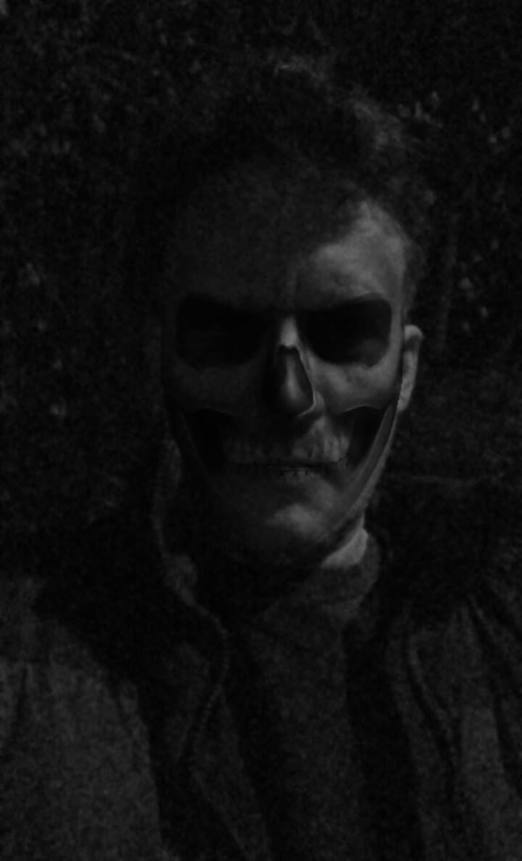
Yes, I realize that photo filters are nothing new.  But they’re new and amazing to me, because I am old, and I was never quick to catch on to things in the first place.  This is actually my first use of a filter, and I only discovered it by accident because I’m befuddled by the Facebook Messenger app on my cell phone.

I hope you like it.  I’m so glad they had a horror theme instead of just sunglasses and neon kitten ears and stuff.  I even ran into the woods behind my house for the creepiest effect.


27972529_1810779438941909_49216920836872985_n

All I want for Presidents Day is a qualified one.

I’ll even leave out cookies and milk …


Bee afraid, bee very afraid …

If you’re looking for a way to spend a lazy Sunday evening, then stop over at The Bees Are Dead for the best in dystopian poetry, prose, art and photography.

There’s some haunting poetry by Jonathan May and Jon Bennett, as well as some stark, vivid photography of abandoned buildings by Kathryn Nee.


Beewithprotectionmask_paris_aout12

Credit: By ADBGVA (Own work) [CC BY-SA 3.0 (https://creativecommons.org/licenses/by-sa/3.0)%5D, via Wikimedia Commons

A few quick words about “Philip K. Dick’s Electric Dreams” (2017)

I was skeptical about “Philip K. Dick’s Electric Dreams” (2017), and I’m not sure why — maybe because I assumed it would be a failed and shameless imitator of “Black Mirror” (2011).  But I’m happy to be proven wrong — the first episode was damned good.  It isn’t quite as good as “Black Mirror” (the success of which doubtlessly helped this series reach fruition), but it looks like it could be a great show in its own right.  (None other than Ron Moore and Bryan Cranston are among the producers for “Electric Dreams,” so that should make us optimistic about the show’s quality.)

I’d rate the first episode a 9 out of 10.  (The entry I’m referring to here is the “Episode 1” with which Amazon Video audiences will be familiar — the episodes appeared in a different order when this series first aired last year on Britain’s Channel 4.)  It’s got a great cast, including Anna Paquin, Lara Pulver, and the incredible Terrence Howard.  (His acting skills are among the best I’ve ever seen.)  And its story is damned neat, even if it employs a Dick story device that we’ve already seen in some other adaptations.  (Can I write “Dick story device” without my Facebook friends snickering?)

This was good.  I recommend it.


MV5BNGY4OTBiMTktMDM4Zi00MjVhLTgyNjctOGYzNGM5YzBlMjU5XkEyXkFqcGdeQXVyNjI4OTg2Njg@._V1_UY1200_CR92,0,630,1200_AL_

A review of “The X-Files” Season 10

I breaks my heart to say this, but 2016’s long-awaited return of “The X-Files” was not a triumphant one.  (Indeed, I am writing this review nearly two years after its conclusion because I only recently got around to watching the last of its six episodes.)  I’d rate the brief season a 4 out of 10 — the lowest rating I’ve ever given to a season of the show.

I hope this year’s Season 11 proves me wrong, but I’m finally starting to wonder of “The X-Files'” time has come and gone.  (This is coming from someone who was a lifetime fan.  I even thoroughly enjoyed seasons 7 through 9, which was when much of the show’s loyal fan-base began truly eroding between 1999 and 2002.)

So many of the show’s core elements seem outdated now.  The character arcs of its two heroes and their relationship were resolved seasons ago.  Its central overriding story arc — an elite cabal’s conspiracy about (and with) aliens — appears to have been milked for most or all all of its entertainment value.  And the show’s format of mixing a handful of “conspiracy episodes” with standalone “monster-of-the-week” episodes feels awkward compared with contemporary programs that better integrate multiple plot lines.  (Consider HBO’s “Game of Thrones,” for example, or even the various Netflix and television series that are part of the Marvel Cinematic Universe.)

The truly fatal blow to “The X Files'” staying power, though, runs a bit deeper — network television just isn’t as positioned as it used to be to tell the scariest stories to a wide audience.  There is too much competition from sources less beholden to censorship or to the milquetoast sensibilities of mainstream appeal.  The first is easily accessible cable channels like HBO and AMC, which can shock viewers with visceral violence.  The second is subscription services like Netflix.

And third is simply the Internet at large, with its endless cornucopia of morbid or bizarre content.  “The X-Files” was created before the Internet was a common household utility.  Part of the show’s appeal was that it offered people the creepiest stories they’d watch anywhere anywhere outside of a movie theater.  And those stories at least seemed well researched by the program’s writers, who did a tremendous job for most of the show’s run.

Today’s Internet-connected entertainment marketplace is different.  No matter how much weirdness “The X Files” can pack into a 43-minute episode, the average consumer can find material online that is darker or more frightening in less time than that.  Compare the average “X-Files” episode, for example, to the array of material devoted to real-life “paranormal” subjects, like “Slender Man,” alleged UFO footage, or tragedies like the mysterious death of Elisa Lam.  (That last one is truly shudder-inducing.  Google it at your own peril.)

The only way a show like “The X-Files” can hope to compete is with excellent attention to tone, tension and character — something I thought that seasons 7 through 9 did pretty well with, despite a gradual fan exodus after David Duchovny’s awkward departure from the series.  Season 10 just didn’t follow suit.  It really was as though a range of previous “X-Files” episodes has been thrown in a blender, so that their component parts could be served yet again.  The conspiracy stuff, in particular, was poorly executed, too hastily paced, and just a bit too campy for my taste.  Mulder and Scully’s return was also too self-conscious — as though Duchovny and Gillian Anderson were reunited for a tongue-in-cheek reunion special.

It wasn’t all bad.  These two leads are always fun to watch.  The fourth episode was superb — “Home Again” served up both a creepy, macabre story and a meaningful character arc for Dana Scully.

Episode 3, “Mulder and Scully Meet the Were-Monster,” was also fun enough.  But while a lot of other fans absolutely loved this humorous entry, I personally didn’t feel its central joke merited a full episode.  Besides, this particular twist has been done before, in a 1989 book by a well known speculative fiction author.  (I won’t name the book or the author here, in order to avoid spoilers.)

The rest of the episodes were … fair, I suppose.  Oh, well.

I’m thrilled that we’re currently being given Season 11 of “The X-Files.”  As someone who was a longtime fan, I never envisioned the show lasting this long, even after a hiatus of many years.  I just hope the show matures and grows in quality after this disappointing rebirth.


XFilesStillOutThere

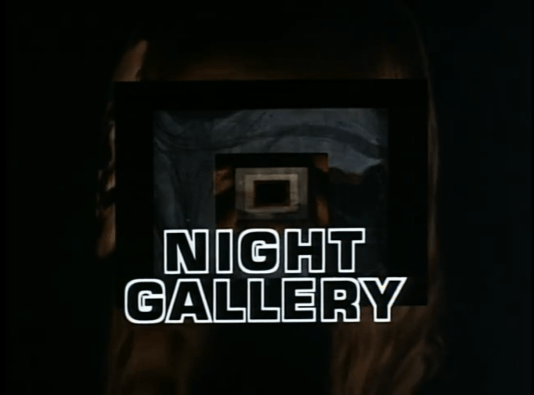
A short review of the pilot for “Night Gallery” (1969)

In some ways, I’m a poor excuse for a horror fan.  I haven’t seen any episodes of some of the classic anthology series that my friends regard as biblically important.  Such was the case with “Night Gallery” — at least until a couple of nights ago.  (You can find it online, if you look hard enough.)

I checked out the 1969 feature-length pilot for the series, and I’m glad I did.  It was good stuff, despite the now lamentable 1960’s music and camera effects that were occasionally distracting.  I’d rate it an 8 out of 10.

There were three half-hour tales comprising the made-for-television movie: “The Cemetery,” “Eyes,” and “The Escape Route.”  “Eyes” was by far and away the best written and performed, but they were all quite good.  The twists for all three tales were quite satisfactory, and the tone was nice and macabre.  And the cast was terrific — Roddy McDowall and Ossie Davis starred in the first segment; Joan Crawford and Tom Bosley appeared in the second.  It was weird seeing such youthful versions of actors that were familiar to me in the 1980’s and 1990’s.

The format, along with Rod Serling’s unique narration, was engaging, if a little quaint.  It’s easy to see how this went on to become such a popular television show.

Here’s an odd trivium -in the establishing shots for the second segment, which takes place in New York City, the Twin Towers are missing.  That’s because construction had only just begun on the first tower in 1969, when this pilot was released.  The entire World Trade Center was completed three years later.


night_gallery_title

A short review of “The Cloverfield Paradox” (2018)

As you may have heard, there were two major surprises connected with “The Cloverfield Paradox” (2018).  The first was its surprise release via Netflix on Sunday immediately after the Super Bowl.  The second was the surprise that it was a truly mediocre movie.  I can’t actually recommend “The Cloverfield Paradox,” and I’d rate it a 4 out of 10.

It’s a mess.  It’s crowded with too many characters, cluttered with too many plot points, and seems like at least three movies crammed into one.  The writing is lackluster — and characters appear to have minimal reactions to things that should astound and terrify them.  Much of my enjoyment was hampered by a bizarre and inexplicable plot point. (What was the deal with one crew member’s arm?)  And my mind was wandering toward the end.

What’s sad is this — hidden within the film is the germ of a vastly better movie.  Consider the plights faced by the characters played by Gugu Mbatha-Raw and Elizabeth Debicki, and the interaction between them.  (I’m keeping things intentionally vague here to avoid spoilers.)  How much better would this movie be if it was strictly about that subplot alone?  With some skilled screenwriting, it could have been a beautifully tragic soft-sci-fi drama — and it wouldn’t require much in the way of special effects either.  Both actresses were damned terrific here.  Given a proper script and a feature-length exploration, they could have given us a new sci-fi classic.  Oh, well — file this movie under “missed opportunities.”

One more thing — this actually does connect with the previous “Cloverfield” films, albeit in a surprising way.  It’s a result of the unusual story device that’s emphasized in the movie’s second half, and it’s pretty neat.  This is one of the things the movie gets right … if you’re still confused after the film is over, then google an explanation of it, as I did.


cloverfield-3-poster-xl

Throwback Thursday: “Get your stinkin’ paws off me, you damned dirty ape!!!”

“Planet of the Apes” (1968) is a half century old; today is the 50th anniversary of the film’s premiere at the Capitol Theater in Manhattan.  (Thanks to Blog Correspondent Pete Harrison for pointing out the date for us.)  The movie’s original trailer is below.  I actually learned something new looking for it — Rod Serling co-wrote the screenplay.  (I wasn’t aware of that, but it makes sense.)

I’ve already written at length about how the “Planet of the Apes” franchise was a part of my childhood.  (No, I wasn’t alive in 1968, but these films were broadcast periodically on television in the late 70’s and early 80’s.)  So I won’t blather on yet again about it.

But I will say that the iconic line of dialogue you see in the above headline made a pretty big impression on me as a kid.  (And Charlton Heston’s delivery of it was unforgettable.)  When I was in the second or third grade,  I once growled that line at a girl at recess who kept poking me and smacking me on the head.  She was really taken aback by it.