Tag Archives: Eric Robert Nolan

Neill Blomkamp’s free new sci-fi short films are goddam nightmare-inducing.

Writer-director Neill Blomkamp (who brought us 2009’s “District 9” and who wanted to bring us a fifth “Alien” installment) is currently releasing a series of sci-fi short films via his “Oats Studios” channel on Youtube.  There have been four released so far, with a fifth, “ZYGOTE,” scheduled for release today.

The two to which I’ve linked below, “Firebase” and “Rakka,” are fantastic.  They’re both military science fiction, they’ve both got lots of gore and great special effects, and they both show Blomkamp’s trademark predilection for body horror.

They’re both incredibly dark stories, too.  “Firebase” is disturbing; “Rakka” is downright horrifying.  (The Eiffel Tower scene … yeesh.)  It might make you smile, though, to see none other than Sigourney Weaver fighting alien invaders.

If “Firebase” doesn’t make much sense to you, try not to let it hamper your enjoyment of it.  (The short’s reveal shows us that many of these disparate story elements actually aren’t supposed to make much logical sense, considering their cause.)  And you should know ahead of time that both of these short films should serve as prologues for sequels or longer tales.  (Maybe Blomkamp is planning their denouements in subsequent shorts?)

I was so befuddled by “Firebase” at first that I wound up turning it off and then returning to it later.  I still think that its writing could be cleaned up a bit.  It’s definitely out there, and strays from science fiction into fantasy and … maybe even theology.  It was “Firebase,” however, that stayed with me and really got under my skin — much more than the more straightforward invasion horror story, “Rakka.”


Evolution stinks sometimes.

Soooooo, I finally gained a true appreciation earlier tonight of how bad a skunk could smell.  I’ve smelled them before … I’ve been in Virginia for a while now, and I actually spotted my first skunk in upstate New York when I was a kid.  (They’re not pretty.)  But this is the first time I’ve encountered a full dose from an animal that was evidently nearby.

Dear Lord.

This was the olfactory equivalent of Dante Alighieri’s worst visions of hell.  The odor was at once strangely metallic, horribly organic and chemically toxic.   If one of Michael Bay’s “Transformers” were possessed by the demon from William Peter Blatty’s “The Exorcist,” and it wielded flatulence to punish the damned, this would be it.  If the three Kryptonian villains from 1980’s “Superman II” had been poisoned by chili laced with spoiled pork and Ex-Lax, this would be it.

Skunks might now top my list of hated animals, were it not for my enduring abhorrence of alligators.

Earwigs are moving up on that list, too — at least since I spotted one at 7:15 tonight in my kitchen.  Earwigs look like God tried to make a proper beetle while on acid.


Is a bear complicit in the woods?

When I was a boy, we had a Republican president who stood ready, if necessary, to defeat the Russian Bear.

Now we have a Republican President who seems willing to kneel, if necessary, to fellate the Russian Bear.

I realize this is the punchline for a very old joke, but … WE WERE THANKFUL FOR WHAT WE HAD.

For further illustration between the two men’s dispositions where Russia is concerned, consider the following:

“Trust but verify.”

—  Ronald Reagan, repeatedly between 1984 and 1987, during nuclear disarmament negotiations with Mikhail Gorbachev.  The phrase is actually a Russian proverb; it had been taught to the president by a writer in Russia, Suzanne Massie.

“Well, I think it was Russia, and I think it could have been other people in other countries. Could have been a lot of people interfered. Nobody knows for sure.”  

“I strongly pressed President Putin twice about Russian meddling in our election. He vehemently denied it. I’ve already given my opinion …”

—  Donald Trump, 2017, about the FBI, CIA and NSA conclusions that Russia interfered in the 2016 Presidential election.  The latter quote was a tweet.

Let me close by sharing something a friend of mine from college said to me tonight:

“I miss Republicans. Family values, free trade, strong alliances against the Kremlin. Whatever happened to those guys?”


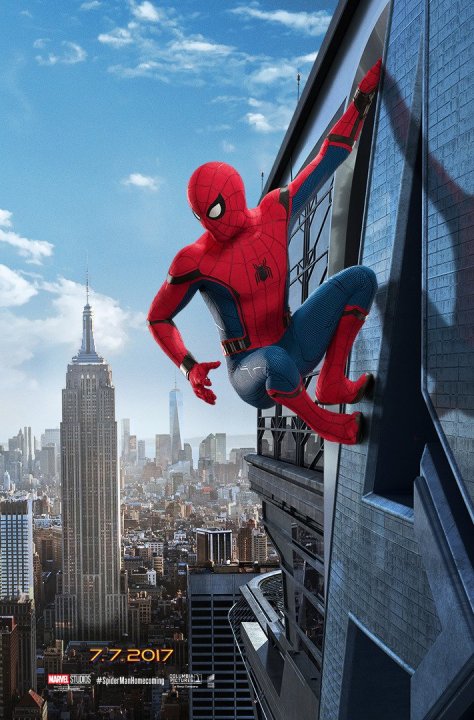
A review of “Spider-Man: Homecoming” (2017)

“Spider-Man: Homecoming” (2017) isn’t a bad movie.  To the contrary, it’s a very good one — I would even rate it a 9 out of 10, if a little reluctantly.

The action, humor, surprises and special effects are all top-notch; it’s got a slew of fun Easter eggs and great continuity within the Marvel Cinematic Universe; and Michael Keaton hits it out of the park as the story’s villain.  (As Ed Harris did recently with HBO’s “Westworld,” the sublimely likable Keaton really surprised me with how he could become so intimidating.)  Furthermore, the screenwriters wisely omit another redundant re-telling of the web-slinger’s origin.  (Even a die-hard fan like me is sick of seeing or reading about it.)

I think your enjoyment of this movie might vary according to what you want Spider-Man to be.  This isn’t a movie in which Peter Parker or his alter ego stand out as his own man (despite its plot resolution’s heavy-handed efforts to tell us that).  I submit that it’s fairly undistinguished as a standalone superhero film —  it feels like an ancillary, companion film to the “Avengers” movies, including last year’s de facto installment, “Captain America: Civil War.”  Indeed, fan-favorite Tony Stark is “Spider-Man: Homecoming’s” most significant supporting character — far more than any of the many friends, family, love interests or villains that have long inhabited the iconic hero’s mythos.  Peter’s primary motivation throughout the movie is his desire to become an Avenger, like a normal kid would aspire to the varsity football team.  Many of his powers stem from a ultra-high-tech costume designed and given to him by Iron Man; it even has an advanced A.I. that is a femme fatale equivalent of J.A.R.V.I.S.  (Fun fact: that alluring voice belongs to none other than the alluring Jennifer Connelly.  The actress is the wife of Paul Bettany, who is the voice of J.A.R.V.I.S. and then the actor portraying The Vision.  And Connelly herself played the love interest of 1991’s mostly forgotten “The Rocketeer,” a World War II-era hero with the a similar character concept to Iron Man.)

I was a big fan of Spider-Man in the 1990’s, and, believe me, the ol’ web-head did just fine with his own powers, intelligence and character — and without any sort of “internship” with Iron Man, either metaphorically or otherwise.  He was also a far more popular character with readers.  I was buying comics regularly between 1991 and 1996 — while Spider-Man books and merchandise were everywhere, I don’t think I ever remember seeing an “Iron Man” comic on the racks at my local comic shop.  I kept thinking inwardly of Spider-Man during this movie as “Iron Man Jr.,” and, for me, that wasn’t a good thing.

I also found myself musing during the film that this felt like “Spider-Man Lite.”  While “Spider-Man: Homecoming” was fun, it doesn’t have the depth, character development or gravitas of the Sam Raimi trilogy.  (Yes, I even liked the third one, despite its bizarre flaws.)  I know that critics are praising the movie’s lighter tone, and I realize the need to avoid a simple rehash of the Raimi films.  (Nobody would want that; we can rightfully expect more from the excellent MCU.)  I actually prefer the Raimi films, though.  While Tom Holland might be the better Peter Parker (Tobey Maguire was a strange casting choice), the Raimi movies were more … heartfelt.  They were an earnest exploration of the Spider-Man of the comics, and they felt … truer.   “Homecoming,” in contrast, is yet another cool installment in the “Avengers” series.  “Spider Man 2” came out 13 years ago, and I can still remember how that movie made me feel — not to mention how its sheer quality vindicated “comic book movies” like no other film before it.  This new movie will not be memorable that way.

Anyway, although my criticisms above are obviously lengthy, please know that this is only because I love the source material so much — and we comic book fans have a tendency to analyze.  I certainly enjoyed the movie, and I’d cheerfully recommend it.  (Note my rating.)  The MCU continues to entertain with quality movies; its consistency, even with its expanding group of ongoing Netflix series, is kind of astonishing.

Go see this.  You’ll have fun.
 

Spider-Man2

Who said “The price of liberty is eternal vigilance?”

I’ve discovered yet again that I may have been incorrectly attributing one of my favorite quotes.  This time it’s Thomas Jefferson’s (supposed) utterance, “The price of freedom is eternal vigilance.”

Some nice, knowledgeable folks over at Quoteland.com have been chatting about this, and their thread clarified a few things for me.

First, the quote (when attributed to Jefferson) is usually as follows:  “Eternal vigilance is the price of liberty.”

Second, although Jefferson is frequently credited, the quote appears to be apocryphal — nobody can point to a primary source showing that Jefferson said or wrote it.

Third, several other historical figures have been credited with coining the phrase or some variation of it.  These include Edmund Burke, abolitionist Wendell Phillips and Irish Judge John Philpot Curran.

Curran might have said it best, in a speech he wrote in 1790:

“”It is the common fate of the indolent to see their rights become a prey to the active. The condition upon which God hath given liberty to man is eternal vigilance; which condition if he break, servitude is at once the consequence of his crime and the punishment of his guilt.”


SC809

Intinmost. (интимность.)

STOP putting pressure on the President to let people “be in the room” when he meets with Putin.

It’s sick. Just let them make love in private.


Throwback Thursday: Peter Benchley’s “The Deep” and “The Island”

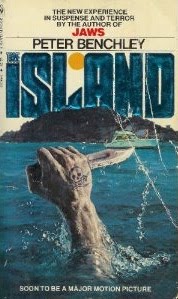
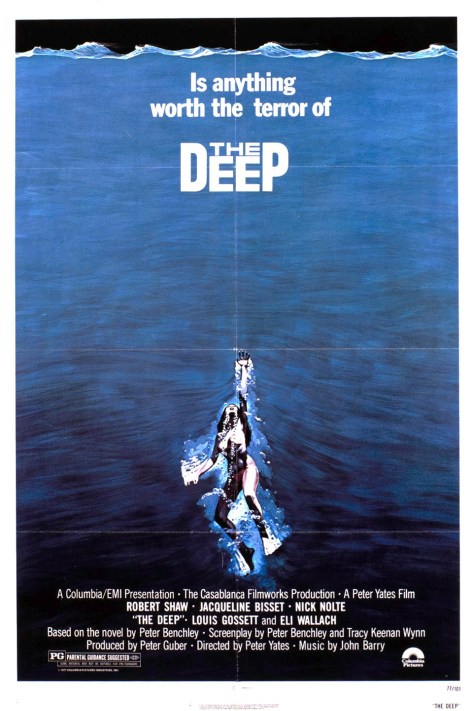
I mentioned these late-1970’s seafaring novels last week — they could be considered the “other” Peter Benchley classics.  Neither “The Deep” nor “The Island” had nearly the broad-based cultural impact of “Jaws,” of course.  But they were still pretty damned good.

I got my hands on the paperbacks in the 1980’s, after my Dad left them lying around the house.  (It’s funny how much of my reading material I inherited from my father or older brother during my formative years.  I wonder how many kids grew up like that and were thus influenced.)  Both books leaned toward being horror-thrillers, as “Jaws” did.

I saw the the 1980 film adaptation of “The Island” on broadcast television when I was in early gradeschool, and it freaked me the hell out.  It’s actually a pretty bizarre tale about a colony of throwbacks who murder modern boatgoers in the manner of 18th Century pirates.  (Check out the trailer below.)  It stars none other than Michael Caine, and also an Australian actress Angela Punch MacGregor.  (If that isn’t a badass Australian name for a lady, I don’t know what is.)

I read the original book when I was older — in some ways, it was even freakier.  There were some weird sexual undercurrents and potty humor that weren’t even necessary for the plot; Benchley was a little more out there than you might gather from the more traditional thriller that “Jaws” was.

“The Deep” was a scuba diving thriller; the book and the 1977 movie filled my adolescent head with ambitions of becoming a professional treasure-hunter.  I remember devoting a lot of thought around age 13 or so to trying to figure out if that was a realistic career aspiration.  (I supposed it all depended on what I found.)  There is a moray eel in the movie, and it is unpleasant.  It prompted me to adopt the neurotic habit of bringing a knife along on the summer snorkeling expeditions behind my friend Brian’s house.

Interestingly enough, Wikipedia informs me that Benchley returned to writing books in the late 1980’s; his last two novels in the early 1990’s sound pretty damn cool.  They’re both seafaring monster stories — “The Beast” and “White Shark.”  The latter even selects its victims from my native Long Island, New York.  Maybe I’ll pick those up this summer.


DeepCover

2344832

p1883_p_v8_aa

A few quick words on “The Rogue Cut” of “X-Men: Days of Future Past”

If you are a die-hard “X-Men” fan, then I do recommend checking out Bryan Singer’s non-canonical “The Rogue Cut” of “X-Men: Days of Future Past.”  You might enjoy it just for its novelty — it actually is a very different version of the original movie.  It has a lot of scenes that are either entirely new or shot and edited quite differently.  (The most notable difference, obviously, is an entire subplot concerning the rescue of Anna Paquin’s Rogue, which was deleted from the 2014 theatrical release.)

I get the sense that this will come across as a better film to “X-Men” purists.  There is greater attention to a multitude of characters, far more character interaction, and greater detail about the apocalyptic future segments.  (I myself was happy to finally figure out why the dystopian mutants were housed in such a strange looking building.  It turns out they were hiding in a Chinese temple as part of an ongoing global evasion strategy.)  “The Rogue Cut” also has greater continuity with more of the prior films — it feels integral to the films’ ongoing mythos, and less like a standalone adventure.

But “The Rogue Cut” might not be better at pleasing general audiences.  It clocks in at just under two and a half hours, and the overall result did feel far slower to me.  There is a reason why movies are edited down — their unabridged versions have problems with pacing that really can affect the average viewer’s enjoyment.

I will also point out that this version of the film fails to rectify what I’ll reiterate is the theatrical version’s biggest story flaw — why would the shape-shifting Mystique be the key to developing the Sentinels power-stealing technology.  Why not the power-stealing Rogue herself?

Anyway … speaking of what is canon and what is not, there is a damned interesting fan theory floating around about the “X-Men” movies following this year’s release of “Logan.”  That movie stood out for many reasons, but two in particular are relevant here.  The first is the radical change in its tone and storytelling, which makes it feel like it takes place in “the real world.”  The second is its odd, apparently meta-fictional inclusion of the “X-Men” comics themselves within the story.  (Copies of the comic books are discussed by the characters, and even serve as an important plot element; Wolverine complains that they are horribly inaccurate.)

Many fans are having fun wondering if there has, in fact, been only one canonical “X-Men” movie — and that is “Logan” itself.  The brutal, subdued reality of “Logan” alone is “the real world” of the X-Men; all of the fantastical prior films (which occasionally contradict one another anyway) are merely the stories inside the last movie’s comic books.  I thought that was pretty damned clever.


newcut2_by_joseelizondo-d901c11

“A Republic, if you can keep it.”

Happy Independence Day, all!  Enjoy any celebrations you might attend, and please be safe.

The quote above is attributed to Benjamin Franklin.  Upon exiting the Constitutional Convention in 1787, he was asked by a bystander what form of government the delegates had created:

“Well, Doctor, what have we got—a Republic or a Monarchy?”

“A Republic, if you can keep it.”

His reply was documented by Dr. James McHenry, the delegate from Maryland.

The imperative implied in Franklin’s words is the same as what Thomas Jefferson expressed when he warned us that “The price of freedom is eternal vigilance.”


120504-M-IX426-237

Photo credit: By U.S. Department of Defense Current Photos (120504-M-IX426-237) [Public domain], via Wikimedia Commons.

“Flowers for Alnolan”

If you haven’t read Daniel Keyes’ outstanding novella, then check out Cliff Robertson in its excellent film treatment, “Ricky.”


20170703_142225

20170703_142406