Tag Archives: Eric Robert Nolan

A very short review of “Now You See Me 2” (2016)

My enthusiasm for “Now You See Me’s” hero magicians waned just a bit after seeing last year’s sequel.  It was fun enough, though, so I’d give it a 7 out of 10.

Much of my enjoyment was hampered here by the use of an overly convenient plot device that was also utterly ridiculous — one of the “Four Horsemen” protagonists can simply employ hypnosis to persuade anybody to do anything.  It seems like a godlike power, and it feels like a pretty big cheat on the part of the screenwriter.  (I think anyone familiar with hypnosis knows it absolutely doesn’t work as depicted here, anyway.)

If even one of the protagonists has this ability, why do they need to employ legerdemain to commit or stop crimes in the first place?  Instead of disguises or sleight-of-hand, couldn’t they just program unwilling confederates to do everything for them, at minimal risk to themselves?  And why steal anything in a conventional sense, if they can just brainwash a target into “giving” it to them?

Like the first film, though, “Now You See Me 2” is entertaining, if you take it as an escapist fantasy.  It’s still a pretty creative premise, and it’s still nice and funny.  (The exception is a bunch of jokes connected with a twin brother for Woody Harrelson’s character.  The character, also played by Harrelson, was annoying and creepy enough to make me cringe.)

One nice addition to this film was Lizzy Caplan as the new female “horseman”  after the departure of actress Isla Fisher.  Caplan is charismatic and fun to watch, and she has good comic timing.

I’d recommend seeing this, if you enjoyed the first movie.


A few quick words on”Now You See Me” (2013)

I ought to pan “Now You See Me” (2013), but I just had too much fun with it.  It’s a smile-inducing heist film that barely qualifies as a thriller, given its upbeat tone.  It held my attention and made me laugh, so I’m giving it and 8 out of 10.

Much of it is preposterous, especially if you stop to think about it.  The comedians over at Cinema Sins really skewer it here, for example.  (Spoilers.  Do not watch the linked video until after you’ve seen the movie.)  But if you take it as an escapist fantasy, it’s a good movie — like maybe one of the Roger Moore-era James Bond films.  It’s got a terrific ensemble cast, it’s funny, and it makes great use of its novelty story device — famous stage magicians using their skills to commit high-profile crimes, and incorporating those crimes into their show.

I’d definitely recommend this.

Quick note — if you’re a movie buff and you haven’t checked out the Cinema Sins Youtube channel, then you’re cheating yourself.  Their “Everything Wrong With” and “Honest Trailers” series are two of the best things on the Internet.


cZU_cTYcD-M.movieposter_maxres (1)

A review of “The Monster” (2016)

What a neat little horror movie.  “Monster” (2016) is unencumbered by any sort of belabored mystery or backstory — or even the need for familiarity with werewolf or vampire lore.  Its title baddie appears to simply be a horrible, nameless, forest-dwelling predator that waylays and assails a mother and her young daughter along a lonely highway at night.  The story’s simplicity alone makes it interesting.

And it’s a well crafted, thoughtful story.  It focuses heavily on its characters while its plot-driving antagonist is concealed in the rainswept woods, and the movie’s extensive use of flashbacks isn’t too jarring and is generally very good.  We see two interwoven stories — the first is a bare-bones scary campfire tale, while the second is about a mother-daughter relationship effectively destroyed by alcoholism.  The flashbacks do not feel like filler, nor are they maudlin.  They pack a decent enough emotional punch and, despite being sparsely scripted, they seem to reflect a sophisticated understanding of alcoholism on the part of screenwriter and director Bryan Bertino.

Bertino also shot this movie beautifully, making the most of its primary location on a rainy rural road.  It looks just great, and the isolated, pretty and nearly surreal environment here lends itself well to the movie’s horror elements.

The many positive reviews for “The Monster” point to a great performance by Zoe Kazan; I definitely agree with them.  Equal credit, I think, should go to 15-year-old Ella Ballentine (who is playing a much younger character here).  She brings a mixture of vulnerability and intensity to her role …  I actually think Bertino could have improved his story somewhat by allowing her to have a bit more pathos, and having her fight a bit more — both against her mother and against the monster.  In the latter half of the movie, she does feel underused when depicted only as an imperiled child.

If I had a major criticism of “The Monster,” I’d suggest that it is maybe 20 or 30 minutes too long.  Yes, the simplicity of the story is what makes it interesting.  But … it also feels like too little to sustain the full length of a feature film.  There … actually isn’t a hell of a lot of story here.

I would also better conceal the monster itself to the shadows.  We do indeed get a good look at it — and its artistic design is actually great.  But Bertino obviously didn’t have a tremendous special effects budget, and it shows a little — particularly when the monster should be shown moving.  For a movie that succeeds so well in being character-driven,  I think a less-is-more approach would have worked just fine here.

I’d rate this movie an 8 out of 10 and I’d recommend it.

Weird trivia — that violent, abusive prick of a boyfriend that we see in flashbacks?  That’s none other than Scott Speedman, who plays nice-guy Michael Corvin in the “Underworld” movies.  I thought that was funny.


MV5BOTI2MjY3MDkzOV5BMl5BanBnXkFtZTgwODQ4NTQ0MDI@._V1_UY1200_CR107,0,630,1200_AL_

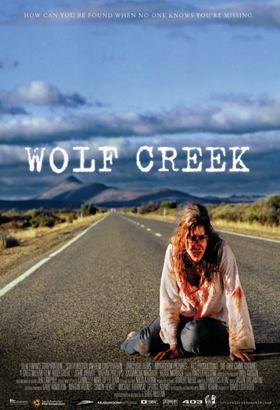
A short review of Season 1 of the “Wolf Creek” TV series (2016)

“Wolf Creek” (2005) and “Wolf Creek 2” (2013) are among the most chilling and effective horror films out there.  (They can be difficult for even seasoned fans of the genre to watch.)  And last year’s follow-up television series faithfully channeled so much of their mood, tone and atmosphere that it should have been just as effective.  What a shame that its first season falls short due to tremendous problems with pacing and story structure.  I’d rate it a 6 out of 10.

The six-episode arc has the feel of the films.  It was written, directed and produced by Greg McLean, as they were.  Once again, the forbidding Australian outback is itself a central character, gorgeously captured and lovingly presented by the show’s cinematography.   I think it’s been a long time since I saw a horror film or series so successfully project a mood.  Also returning, of course, is John Jarrett in his perfect and perfectly frightening portrayal of the serial killer Mick Taylor.

Lucy Fry’s young American antihero, Eve, is the latest to face off against him, but there’s a twist — after surviving the slaughter of her family, she resolves to find and kill him.  Fry is just great in the role; Dustin Clare is well cast as the nice-guy cop who alternately pursues and tries to rescue her from danger.  The rest of the cast is also roundly terrific.  The soundtrack and scoring are beautifully atmospheric.

Unfortunately, though, all of these elements appear within a plot that moves at a snail’s pace.  We actually don’t see much of Mick for many episodes — the story focuses on Eve’s haphazard, calamitous odyssey through rural Australia, encountering criminals, good Samaritans and just plain lunatics.  McLean scripts a protagonist that is compelling and cool, and Fry is a good actress.  But many of the events of her journey are only tangentially related to the story’s central conflict, which is her duel with Mick.  I get the sense that fans might tune in to see a horror film, but might be disappointed by a moody, loosely plotted travelogue through McLean’s brutal fictional interpretation of the Australian outback.

I wondered how the screenwriter here could make such a major miscalculation.  Then I remembered that the “Wolf Creek” films, despite their brilliance, were also quite slow.  They contained what seem like lots of supporting or ancillary material connected with Mick’s victims, which were ultimately interspersed with the intense violence that made them terrifying movies (not to mention Jarratt’s flawless portrayal of a violent sociopath).

But those movies both had an hour-and-forty-minutes running time.  These six episodes add up to four full hours.  The slow pace of films was a forgivable flaw — it even came across as deliberate pacing.  It’s frustrating, though, for any onscreen story lasting more time than that.  I honestly think I would have enjoyed Season 1  much more if it had been edited down to half its length — into maybe three episodes or one feature film.

Oh, well.  This series is still remarkably well made, and I do think it will please many fans of the films.  If you enjoyed those, I would recommend giving this series a shot.


Former Peacock-Salem Launderers and Cleaners building in Salem, VA

This building had too much character for me not to photograph it.  It is the former site of the Peacock-Salem Launderers and Cleaners on Colorado Street in Salem.

The business is not defunct — they actually just moved elsewhere in town five years ago. Prior to that, the building below was used since 1935.


20170228_135804

20170228_135730

20170228_151337

20170228_151354


Site update. Your thoughts?

Hi, guys.

I just finished reworking the website a bit — mostly trying to create at least a quasi-professional looking Purchasing page, and swapping out most of the public domain photos for my own shots.  (Mine of are inferior quality, of course, but I wanted the site to feel more “mine.”)

If any of you guys feel like perusing the site, and offering constructive feedback, I would be very grateful.  (Be gentle … poets are sensitive creatures, and living in Southwest Virginia has softened me up a bit — everybody is so damn polite!!)

I know most people tend to respond via Facebook, but anyone else can feel free to comment or shoot me a note here, as well.

Again, my goal here was to create something more professional, as well as easy to navigate.   Does the Purchasing page feel at least somewhat professional?  And I am thinking of getting rid of the Brevity is the soul of wit section entirely … I tacked it on years ago, and now it feels superfluous and childish.

Speaking of my photos … I can’t resist running the one below again.  It’s trippy.  I love it.


20160821_152928


Grandin Village, Virginia, March 2017

20170311_140914

20170311_141043

20170311_141027

20170311_140710

20170311_140523.jpg


Only in the South can you find an “ice cream and soda bar” on the main strip.  Some great friends of mine introduced me to “Pop’s” a couple of weeks ago.  Diet be damned; I can’t wait to find an excuse to go back.

20170311_140211

20170311_140241

20170311_140253

20170311_135405


The below sign for Tae Kwon Do apparently advertises training in styles from “Traditional” through “WTF.”

I’d love to know what the “WTF” style of fighting is.  I’ll bet it’s something to see.

Below the sign is Grace’s Pizzeria.  (I wish I’d gotten a better picture.)  The pizza there is damn good, if a little extra greasy.

20170311_134953

20170311_134825

20170311_134741


Downtown Roanoke, Virginia, March 2017 (3)

20170306_133752

20170306_134010

20170306_134338

20170306_134408

20170306_134637

20170306_135041

20170306_135059

And the song’s name, ironically enough, is “Lazy Eye.”

I am listening to the Silversun Pickups and taking in the massive non-uniform angles of a distant, dark aquamarine mountain range.

I think that it is little moments like this that define a life, more than any triumph or nadir.


“The Disappearance of Little Tommy Drummond,” By Eric Robert Nolan

[First published by Dead Beats Literary Blog, November 5, 2013]

A town could die from the inside out.

That was what Kira Manning thought as she gazed absently out from the wide front window of Manning Hardware in Willibee, Massachusetts. A single loss close to its heart can reverberate throughout a town, in the same manner that a malignant cancer flourishes throughout a body.

On the surface, things might look the same. Main Street beyond her window still held the same cars and passersby. Eddie Berenger, the town drunk, still ambled along with his big, dark green Army knapsack, ever laboring under the misconception that nobody knew it held a 12-pack. Anna Mirren walked smartly along with her arms full of choir notes for the Willibee First Baptist Church Adult Choir. And the prim Mrs. Bell still strolled like royalty along the sidewalk, her corgi keeping perfect pace with her like a diligent squire.

But that was the surface. Today, Willibee was a changed place. On a telephone pole just outside the store window, a poster broadcast a word in bold black letters:

MISSING

Below that was a photograph. A handsome 11-year-old boy with closely cropped black hair smiled broadly out at passersby. That smile suggested a soul who had never seen a rainy day in his life. If the boy himself had been standing there on the sidewalk, the smile would have been contagious.

But he wasn’t there on the sidewalk. Little Tommy Drummond had been missing since May 9th, 2013. He had been playing with two friends at Falcon’s Wing (or just “The Wing,” to many locals), a twisting ravine among the piney hills along Willibee’s western edge. The Wing had been a favorite place for the town’s children – a steep, sharp rift, full of thick vines, with a sandy trail winding along the bottom. Lined by coniferous ridges, it was actually quite close to town, running alongside it. Yet it was tucked firmly under the forest’s endless canopy of pines.

Tommy had been playing with two friends – John Paulson and Troy Bristol – and they were the last two people to see him alive. And now, as the calendar crept into the waning days of a humid June, a growing consensus held that they would always be the last to have seen him.

Tommy Drummond never returned home that night. And the only sign of him the following day had been a single, bright red, left sneaker, sitting askew in the ravine’s vines.

Kira turned away from the window. She was a slender 32-year-old in a red flannel shirt, with a cascade of curly walnut hair tied back in a ponytail. She had much work to do. It was inventory day at Manning Hardware, and she preferred to run a tight ship. Besides, she was only one woman, and the store was hers alone. She liked to run a tight ship because life had taught her that she needed to do so. She’d been orphaned by a car accident when she was 14, and she was far too independent to have ever married. She was one of those uncommon people who truly treated industry as a virtue. And so she resumed counting the rows of squat green Kohlemen Lanterns on an overhead shelf.

Still, like so many others in Willibee, her thoughts returned to what the newspapers had dubbed “The Drummond Case.” Willibee was a logging community of about 2,000 souls, and the possibility of a kidnapping or murder had monopolized – no, fundamentally altered – the town consciousness. Nobody could forget the pageant of grief that was the local news coverage: Cynthia Drummond, the mother, weeping openly on television; the worn, frightened look of Sean Drummond, that father; the shell-shocked expressions of his two younger sisters.

And nobody could forget the singular nature of the case’s strangest clue. On May 11, two days after the disappearance, someone in the search party noticed a single word carved into one of the great, tall pines lining The Wing:

NERO

Police determined that it had been made with a pocket knife, and neither of Tommy Drummond’s playmates had placed it there. And nobody had a firm idea how it might relate to the boy’s disappearance. Nearly all opined, however, that it had something to do with it. The tree sat at a high pass that overlooked nearly all of Falcon’s Wing; whoever had put the message there could easily see where Tommy and the other boys had been playing. The FBI had been called in from the Boston Field Office (kidnapping is a federal crime), and their forensics experts had determined that it had been carved at about the same time the boys had been there.

Nero. What did that mean? Was it a name? If so, was it a name the abductor called himself, or was it an appellation given to him by others? A minority in the town held that it wasn’t a name at all, but a reference – “Nero fiddled while Rome burned.” Was that how the message was intended?

But while Rome burned, a chill settled over Willibee. The effect on the town was difficult to fully describe. Certain changes were predictable: people locked their doors at night, schools cancelled outdoor activities, parents admonished their children never to talk to strangers. And, of course, children no longer played along Falcon’s Wing.

The real effect of the disappearance, however, ran far deeper; the chill over Willibee permeated its very bones. A sense of danger can invade a place. It can occupy a town like an opposing army. It can change the nature of every single subsequent moment for the people living there. Willibee was a small town, and like many small towns, it was no stranger to provincialism. Residents there had once credited themselves for living lives that were simpler and safer than those who lived in big cities. The Drummond Case robbed them of that. The sense of safety was gone now, leaving a gap that was as painful as a roughly extracted tooth. And the most venomous aspect to all of this was a suspicion – that the crime had been committed by one of Willibee’s own. The small town was not a tourist destination, and had few visitors. Some of the lumberjacks were seasonal workers from elsewhere, but the police had investigated them with no real leads.

The possibility – the very notion – that “Nero” could be a local was not only terrifying, it also destroyed the town’s sense of identity. It was a different place now – the old Willibee was dead, while this new and frightened community had fallen, trembling, in its place. With Tommy Drummond’s loss, the town had died from the inside out.
After a solid day’s work, Kira closed Manning Hardware just a little early at 4:50 PM. Skipping her usual cup of coffee at the Bumblebee Diner, she proceeded directly home. Her left turn on Willows Street took her past one of the immense and solid walls of pines that lined the town like ramparts. Not far away was Falcon’s Wing.

She too had played along The Wing as a girl, in those forever-ago days when she had parents. Her favorite game was hide and seek, and she had been good at it. She remembered how each tree seemed like a friend and a teammate, concealing her flight from her pursuers. She remembered how the fallen pine needles on the forest floor made her footfalls silent.

Now the trees felt like a presence once again. Here, in yet another humid June evening, they stood sentinel over the secret of Tommy Drummond’s fate.

A girlish, irrational thought crossed her mind – “Maybe the pine trees took him.” She could imagine them thinking, conspiring once again, but this time as confederates with whatever dark soul had stolen away with the lost boy.

Shivering a little, Kira continued home.

(c) Eric Robert Nolan, 2013


PuszczaBydgoska_night4_01-2015

Photo credit: By Pit1233 (Own work) [CC0], via Wikimedia Commons