Tag Archives: HBO

A short review of “Godzilla: King of the Monsters” (2019)

It’s true what they say about “Godzilla: King of the Monsters” (2019) — its script is almost completely brainless.  It’s got about as much depth as the old “G.I. Joe” cartoon (1983-1986) that played after school when we were kids.

But I’d be lying to you if I said I didn’t enjoy this.  And I’m sure you know why — the big-budget, big-MONSTER special effects.  They were spectacular — and sometimes they approached being unexpectedly beautiful.  (It’s hard to explain here, but our eyes are treated to more than skyscraper-tall brawls between “titans.”  We get a light show too — thanks to some confusing, thinly scripted, but nonetheless dazzling energy-based monster powers.  It was really damned good.)

Add to this a generally excellent cast, and you might be able to forgive the screenplay for insulting your intelligence.  I know that most people would name Ken Watanabe as the actor who truly classes up the joint.  And there’s plenty of truth to that, but I myself would name Charles Dance as the movie’s biggest standout.  The man’s craft is goddam Shakespearean, and I think he’s equal of the likes of Patrick Stewart or Ian McKellen.  And I’d like to think that his throwaway line, “Long live the King,” was at least partly a fan-service reference to what I’m guessing is his best known role — Tywin Lannister on HBO’s “Game of Thrones” (2011-2019).

Based on my own enjoyment, I’d rate this movie an 8 out of 10 — with the caveat that I’m a kid at heart when it comes to giant monsters.  If you’re the same way, then “Godzilla: King of the Monsters” might just become a guilty pleasure that you return to more than once.


GodzillaKingOfTheMonstersPoster

JUST SAY CHERNOBYL.

Friend: “Ok just finished ‘Chernobyl’ on HBO. Not sure what all the hype was about, to be honest.”

Me:        “You’re the kind of guy who insists there is no graphite on the ground.”

I know these jokes are getting worse. I really ought to Dyatlov it back a little bit.


68659948_2628669370486241_4657181975633723392_n

A short review of “Child’s Play” (2019)

“Child’s Play” (2019) actually surprised me by being a little more ambitious and well rounded than the typical reboot of an 80’s slasher franchise.  Screenwriter Tyler Burton Smith tries to present audiences with a fresh, updated horror film with funny, engaging, likable characters.  And he mostly succeeds — it helps that the cast is roundly quite good in their roles.  (The voice of Chucky is none other than Mark Hamill.)  There is some discomfiting dark humor here, too, that makes for some great, guilty fun.

But this “Child’s Play” is doomed to suffer in comparison to the 1988 original.  The very first “Child’s Play” was a particularly scary film, even if its sequels were much less so; I remember people screaming in the theater when I saw it with my high school friends.  This new movie doesn’t come close to matching it in that manner.

Smith’s update abandons the admittedly campy premise of the original, in which a serial killer employs voodoo to transfer his soul into an interactive doll.  Smith gives us something that is more plausible — a malfunctioning A.I. that turns homicidal partly because its programming leads it to.  His take is interesting … Chucky is even a little sympathetic at first — he’s a childlike, vaguely cute robot, and his mischievous young owner is at least partly responsible for his early, less frightening transgressions.

This all works on a certain level.  It’s smarter than its 80’s source material.  It might have been gold if it had been fleshed out by a science fiction screenwriting master like Charlie Brooker, of “Black Mirror” fame.  Or, better yet, why not the writers for HBO’s brilliant “Westworld,” which proceeds from essentially the same basic story concept?

Alas, we can’t have our cake and eat it too, at least in this case.  The new Chucky is a more intelligent story concept but a less menacing bogeyman.  He just can’t hold a candle to the voodoo-infused, sociopathic demon-doll voiced by the legendary Brad Dourif so long ago.  The new “Child’s Play” isn’t quite scary enough for our expectations, and that’s a serious criticism for a horror movie.

All things considered, I’d rate this a 7 out of 10.


childs-play-chucky_in_childs_play_rgb-h_2019_0

Like money in the Iron Bank.

Today’s agenda — get rich quick by selling pirated copies of 1985’s “Ladyhawke” to millennials.

Tell them it’s a soon-to-be-released “Game of Thrones” prequel that was leaked from HBO.

HOUSE NAVARRE!!!!


61046431_2465597083460138_8252295796838367232_n

A review of HBO’s “Chernobyl” (2019)

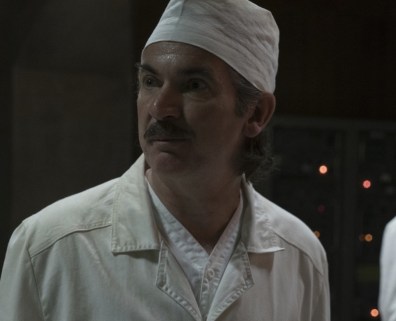
HBO’s “Chernobyl” (2019) is … flawless, as far as I can tell.  I can’t name a single criticism I have of its writing, directing or performances.  It is among the best miniseries I’ve ever seen, and I don’t hesitate to rate it a 10 out of 10.

I can’t comment with any credibility about its historical accuracy, of course.  I know that the character of Ulana Khomyuk (wonderfully played by Emily Watson) was a composite meant to represent a number of scientists responding to the world-changing 1986 nuclear disaster; HBO notes this in its closing notes of the last episode.  But, to an average viewer like myself, the show certainly felt accurate — not once did I pause to remember that I was watching a TV show, and not getting a real-life glimpse into the closing days of the Soviet Union.  There is an immersive authenticity to “Chernobyl” that underscores every second of the horrors it depicts.

The entire five-episode program is an exercise in balance.  Screenwriter Craig Mazin deftly portrays terrifying events (including the effects of radiation exposure on average people nearby) without sensationalizing them.

The show does a masterful job of explaining the necessary technical information without overwhelming the viewer.  I typically have some trouble following material like this, and I understood most of it.  (The relationship between Jared Harris’ character and Stellan Skarsgard’s character helps quite a bit.  The former is a leading nuclear scientist who explains things in layman’s terms for the latter, who is a high-ranking Soviet official supervising the disaster response.)

And the script is ultimately quite moving, without once approaching the threshold of melodrama.  The character interaction and dialogue is a lot more restrained than you might expect for this subject matter.  But I was surprised at the sense of sympathy for the Russian people that this engendered for me, and at the dismay I felt for the visceral  technological horrors they faced.  (The show admirably highlights how average Russians were very much like Americans in 1986, albeit under an oppressive government.  It was ironic how some characters ominously referred to “The West,” with the same apprehension as people here in the 1980’s referred to “the Russians.”)

It’s a nuanced script too.  By the times the miniseries concludes, the viewer comes to understand that the putative “bad guys” are scapegoats who are not fully and solely responsible for the disaster.  (And the character arc for Skarsgard’s bureaucrat is a compelling redemption.)  More troubling, though, is that some of the “good guys” we are rooting for are also not completely inculpable.

For me, though, Chernobyl succeeded mostly because of Harris and Skarsgard.  They were both phenomenally good — perfect, in fact.  They are accomplished actors who have the subtlety and restraint to play men from a stoical culture who must nonetheless have human reactions to tragedy.

I obviously recommend this.


chernobyl-hbo-miniseries-review-960x475

A very short review of the premiere of HBO’s “Chernobyl” (2019)

I’m arriving at the opinion that Jared Harris is one of the finest actors working today.  His performance in last year’s “The Terror” was nothing short of beautiful.  So I tuned in the other night to the first episode of HBO’s “Chernobyl” miniseries, in which he is the protagonist.

I wasn’t disappointed.  “Chernobyl” is gripping.  I’m no expert about the 1986 nuclear disaster in the Soviet Union, but this certainly comes across like a meticulous historical adaptation.  But what’s surprising is how its smart, relatively spare script moves so quickly and so adeptly incorporates the human horror of the event.  (After a brief prologue with Harris’ voiceover, the story begins almost immediately with the accident occurring.)  The plot points that follow are by necessity mostly technical.  But the pitch-perfect writing here makes the story quite easy to follow.

It’s gut-wrenching stuff — made even more frightening by the Soviet administrators who cared little about whether the power plant’s workers died an agonizing death.  It’s the kind of story that would be frightening even if it were pure fiction.  But the program’s authenticity and attention to detail are constantly present to remind you that it is not.

There’s some impressive camera work, too — especially the final shot, which will feel like a punch in the stomach.

I’d rate this a 9 out of 10, and I highly recommend it.


chernobylposter

A review of “The X-Files” Season 10

I breaks my heart to say this, but 2016’s long-awaited return of “The X-Files” was not a triumphant one.  (Indeed, I am writing this review nearly two years after its conclusion because I only recently got around to watching the last of its six episodes.)  I’d rate the brief season a 4 out of 10 — the lowest rating I’ve ever given to a season of the show.

I hope this year’s Season 11 proves me wrong, but I’m finally starting to wonder of “The X-Files'” time has come and gone.  (This is coming from someone who was a lifetime fan.  I even thoroughly enjoyed seasons 7 through 9, which was when much of the show’s loyal fan-base began truly eroding between 1999 and 2002.)

So many of the show’s core elements seem outdated now.  The character arcs of its two heroes and their relationship were resolved seasons ago.  Its central overriding story arc — an elite cabal’s conspiracy about (and with) aliens — appears to have been milked for most or all all of its entertainment value.  And the show’s format of mixing a handful of “conspiracy episodes” with standalone “monster-of-the-week” episodes feels awkward compared with contemporary programs that better integrate multiple plot lines.  (Consider HBO’s “Game of Thrones,” for example, or even the various Netflix and television series that are part of the Marvel Cinematic Universe.)

The truly fatal blow to “The X Files'” staying power, though, runs a bit deeper — network television just isn’t as positioned as it used to be to tell the scariest stories to a wide audience.  There is too much competition from sources less beholden to censorship or to the milquetoast sensibilities of mainstream appeal.  The first is easily accessible cable channels like HBO and AMC, which can shock viewers with visceral violence.  The second is subscription services like Netflix.

And third is simply the Internet at large, with its endless cornucopia of morbid or bizarre content.  “The X-Files” was created before the Internet was a common household utility.  Part of the show’s appeal was that it offered people the creepiest stories they’d watch anywhere anywhere outside of a movie theater.  And those stories at least seemed well researched by the program’s writers, who did a tremendous job for most of the show’s run.

Today’s Internet-connected entertainment marketplace is different.  No matter how much weirdness “The X Files” can pack into a 43-minute episode, the average consumer can find material online that is darker or more frightening in less time than that.  Compare the average “X-Files” episode, for example, to the array of material devoted to real-life “paranormal” subjects, like “Slender Man,” alleged UFO footage, or tragedies like the mysterious death of Elisa Lam.  (That last one is truly shudder-inducing.  Google it at your own peril.)

The only way a show like “The X-Files” can hope to compete is with excellent attention to tone, tension and character — something I thought that seasons 7 through 9 did pretty well with, despite a gradual fan exodus after David Duchovny’s awkward departure from the series.  Season 10 just didn’t follow suit.  It really was as though a range of previous “X-Files” episodes has been thrown in a blender, so that their component parts could be served yet again.  The conspiracy stuff, in particular, was poorly executed, too hastily paced, and just a bit too campy for my taste.  Mulder and Scully’s return was also too self-conscious — as though Duchovny and Gillian Anderson were reunited for a tongue-in-cheek reunion special.

It wasn’t all bad.  These two leads are always fun to watch.  The fourth episode was superb — “Home Again” served up both a creepy, macabre story and a meaningful character arc for Dana Scully.

Episode 3, “Mulder and Scully Meet the Were-Monster,” was also fun enough.  But while a lot of other fans absolutely loved this humorous entry, I personally didn’t feel its central joke merited a full episode.  Besides, this particular twist has been done before, in a 1989 book by a well known speculative fiction author.  (I won’t name the book or the author here, in order to avoid spoilers.)

The rest of the episodes were … fair, I suppose.  Oh, well.

I’m thrilled that we’re currently being given Season 11 of “The X-Files.”  As someone who was a longtime fan, I never envisioned the show lasting this long, even after a hiatus of many years.  I just hope the show matures and grows in quality after this disappointing rebirth.


XFilesStillOutThere

A review of “Spider-Man: Homecoming” (2017)

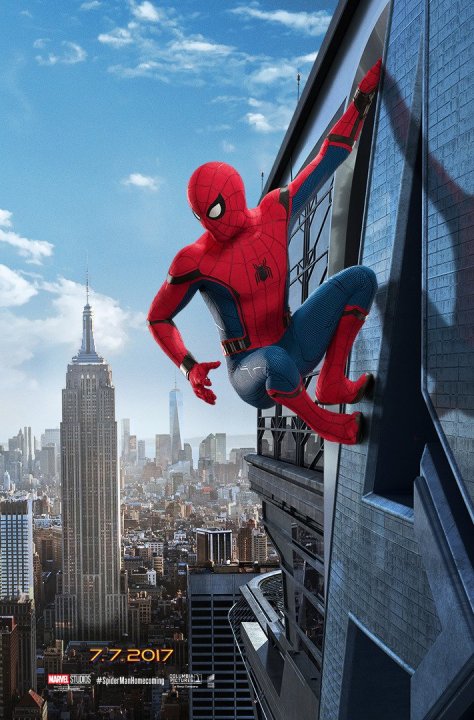
“Spider-Man: Homecoming” (2017) isn’t a bad movie.  To the contrary, it’s a very good one — I would even rate it a 9 out of 10, if a little reluctantly.

The action, humor, surprises and special effects are all top-notch; it’s got a slew of fun Easter eggs and great continuity within the Marvel Cinematic Universe; and Michael Keaton hits it out of the park as the story’s villain.  (As Ed Harris did recently with HBO’s “Westworld,” the sublimely likable Keaton really surprised me with how he could become so intimidating.)  Furthermore, the screenwriters wisely omit another redundant re-telling of the web-slinger’s origin.  (Even a die-hard fan like me is sick of seeing or reading about it.)

I think your enjoyment of this movie might vary according to what you want Spider-Man to be.  This isn’t a movie in which Peter Parker or his alter ego stand out as his own man (despite its plot resolution’s heavy-handed efforts to tell us that).  I submit that it’s fairly undistinguished as a standalone superhero film —  it feels like an ancillary, companion film to the “Avengers” movies, including last year’s de facto installment, “Captain America: Civil War.”  Indeed, fan-favorite Tony Stark is “Spider-Man: Homecoming’s” most significant supporting character — far more than any of the many friends, family, love interests or villains that have long inhabited the iconic hero’s mythos.  Peter’s primary motivation throughout the movie is his desire to become an Avenger, like a normal kid would aspire to the varsity football team.  Many of his powers stem from a ultra-high-tech costume designed and given to him by Iron Man; it even has an advanced A.I. that is a femme fatale equivalent of J.A.R.V.I.S.  (Fun fact: that alluring voice belongs to none other than the alluring Jennifer Connelly.  The actress is the wife of Paul Bettany, who is the voice of J.A.R.V.I.S. and then the actor portraying The Vision.  And Connelly herself played the love interest of 1991’s mostly forgotten “The Rocketeer,” a World War II-era hero with the a similar character concept to Iron Man.)

I was a big fan of Spider-Man in the 1990’s, and, believe me, the ol’ web-head did just fine with his own powers, intelligence and character — and without any sort of “internship” with Iron Man, either metaphorically or otherwise.  He was also a far more popular character with readers.  I was buying comics regularly between 1991 and 1996 — while Spider-Man books and merchandise were everywhere, I don’t think I ever remember seeing an “Iron Man” comic on the racks at my local comic shop.  I kept thinking inwardly of Spider-Man during this movie as “Iron Man Jr.,” and, for me, that wasn’t a good thing.

I also found myself musing during the film that this felt like “Spider-Man Lite.”  While “Spider-Man: Homecoming” was fun, it doesn’t have the depth, character development or gravitas of the Sam Raimi trilogy.  (Yes, I even liked the third one, despite its bizarre flaws.)  I know that critics are praising the movie’s lighter tone, and I realize the need to avoid a simple rehash of the Raimi films.  (Nobody would want that; we can rightfully expect more from the excellent MCU.)  I actually prefer the Raimi films, though.  While Tom Holland might be the better Peter Parker (Tobey Maguire was a strange casting choice), the Raimi movies were more … heartfelt.  They were an earnest exploration of the Spider-Man of the comics, and they felt … truer.   “Homecoming,” in contrast, is yet another cool installment in the “Avengers” series.  “Spider Man 2” came out 13 years ago, and I can still remember how that movie made me feel — not to mention how its sheer quality vindicated “comic book movies” like no other film before it.  This new movie will not be memorable that way.

Anyway, although my criticisms above are obviously lengthy, please know that this is only because I love the source material so much — and we comic book fans have a tendency to analyze.  I certainly enjoyed the movie, and I’d cheerfully recommend it.  (Note my rating.)  The MCU continues to entertain with quality movies; its consistency, even with its expanding group of ongoing Netflix series, is kind of astonishing.

Go see this.  You’ll have fun.


Spider-Man2

A review of “The Conjuring” (2013)

I feel the same way about “The Conjuring” (2013) as I did about its prequel, “Annabelle” (2014) — it has all the earmarks of a bad movie, but it inexplicably succeeds anyway.

Seriously — this film has clunky exposition, cheesy dialogue and over-the-top plot developments (toward the end), not to mention a plot setup that’s in questionable taste.  (The movie suggests that the innocents condemned by the infamous 1692 Salem witch trials were indeed witches.  This feels a bit awkward to anyone who read Arthur Miller’s “The Crucible” in high school.)  “The Conjuring” also plays out like a love letter to Ed and Lorraine Warren, the controversial paranormal investigators who are largely the subject of the film (played by Patrick Wilson and Vera Farmiga).  This last offense is forgivable, I suppose — the film was made with the Warrens’ blessing, and Lorraine Warren was even present as a “consultant” during its production.

Strangely, however, these flaws were barely noticeable to me when I watched it.  I had a good time.  “The Conjuring” just happens to be a decent fright flick that delivers on the scares.

I think James Wan’s skilled directing has a lot to do with that; the film works visually.  (I could name specific instances where it works especially well, but I want to avoid spoilers.)

The acting helped a lot too — Wilson and Farmiga are both damned good, as is Lili Taylor as the afflicted family’s mother.  (I’ve admired Taylor’s acting since her long ago 1998 guest appearance on “The X-Files,” and she was equally good as a bad guy in 1996’s “Ransom.”)  Ron Livingston was also quite good in the role of the father — if you have trouble placing his face, as I did, he also played Captain Nixon in HBO’s “Band of Brothers” (2001).  He seems to have a talent for playing the likable everyman — he’s great here as the somewhat feckless father, and functions well as a kind of viewer surrogate.  I should also mention the young Joey King as one of the family’s daughters — she played the role of a terrified child to perfection, and really raised the stakes emotionally.

Despite really enjoying most of the movie, some of my enthusiasm for “The Conjuring” flagged a bit toward the end.  The denouement here includes an exorcism, and those are almost always boring.  There are only so many ways that scenario can play out, and we’ve seen them all — and I shouldn’t even need to name that certain 1973 film that did it best.  Furthermore, we see our story’s demon do some pretty extraordinary things, even by demon standards.  It can apparently transport itself great distances (using an inanimate object as a kind of fax machine?), and can manipulate both the laws of physics and the area’s wildlife.  It was all a little too much for my willing suspension of disbelief.

Again, though — this was a good movie.  I’d give it an 8 out of 10, and I’d recommend it to anyone looking for a good scare.


Season 1 of “Westworld” was fantastic.

The premise for HBO’s “Westworld” sounds like a bad situation comedy — robot cowboys entertain the rich at a futuristic theme park.  There are showdowns and shootouts, and hilarity ensues when the guests fall in love with the coy robot ladies.

But “Westworld” is an arguably brilliant serial science fiction thriller, far transcending its gimmicky central plot contrivance.  It is occasionally weighted down by some challenges with pacing, story structure and exposition.  But I still loved it enough to get hooked on it immediately, and I’d give it a 9 out of 10.

I think it’s the smartest science fiction show I’ve seen in a long time.  Its brilliance doesn’t stem from its kitsch premise.  (I haven’t seen the original 1973 film based on Michael Crichton’s screenplay, but I’ve seen it lampooned at least once.)  It generally doesn’t extend from the show’s many twists and surprises, however well executed they are.  Nor does it stem from the show’s ambitious discussions of the nature of consciousness.

Its brilliance, in my opinion, stems from its nuanced and surprisingly disturbing depiction of human evil.  Of course there’s the obvious — the theme park exposes human depravity by allowing people to rob, rape and murder lifelike human surrogates with impunity.  But there is far more that the show has to say.  To get a sense of it, you have to watch the entire 10-episode season, and see several key character arcs reach completion.  One of these arcs was so dark and cruelly contemplative that it’s stayed with me long after I watched the final episode.

The show is well made at every level.  It’s gorgeously shot, at locations throughout California, Utah and Arizona.  The special effects are great.  Anthony Hopkins is characteristically perfect as the park’s patriarch, and Jeffrey Wright is terrific as his well meaning right hand.  (That actor is starting to grow on me.)  The entire cast is quite good — even those in relatively minor roles, like the two hapless technicians (nicely portrayed by Leonardo Nam and Ptolemy Slocum) who become entangled in the events connected with the park’s malfunctions.

Ed Harris, however, consistently steals the show as “the Man in Black,” a park guest who vacations as a brutal rapist and murderer (and who we learn has another agenda, as well).  He’s chilling.  I never really saw Harris as an amazing actor before, despite seeing him in many roles, including his memorable turn in “A Beautiful Mind” (2001).  But he was incredible here.

I wanted to give this show a perfect 10, but even someone who loves it as much as I do can see the weaknesses of this first season.  Overall, “Westworld” is sometimes too drawn out.  I feel the plot moves forward rather slowly, and I think Season 1 would be perfect if only it were carefully edited down from ten to maybe seven episodes.  I found myself getting a little frustrated by the the fifth episode, when we see two major characters follow arcs that seem redundant.  (I’m being intentionally vague here to avoid spoilers.)

The problem is compounded by the deliberately superficial nature of “Westworld’s” setting.  This is a theme park with stereotypical stock characters associated with Hollywood westerns.  Accordingly, its inhabitants have overly stylized speech and behavior.  Furthermore, these androids are programmed to follow the same “loops” repeatedly, as the same preconceived story “narratives” are reused to entertain new patrons of the park.

It gets annoying.  Yes, I know it makes perfect sense and is necessary in the context of the story.  But it can be grating to someone who tunes in to see a science fiction show, and not a cheesy western.  James Marsden is a decent enough actor, and he’s well cast as “Westworld’s” prototypical “good guy” cowboy.  But seeing this character’s shtick over and over was irritating.  So, too, were the sassy ladies at the brothel and some other minor characters.

Finally, I suggest that, for some viewers, “Westworld” may be hard to follow.  I occasionally found it that way.  There are twists that are wonderfully well crafted, gradually deciphered mysteries, and a very layered backstory.  Finally, the show’s discussions of things like consciousness, morality and artificial intelligence can sometimes border on the didactic.  (It helps a hell of a lot, though, when the actor delivering the exposition is the priceless Hopkins.)  It’s a lot to take in.  People tuning in should be prepared for some challenging, cerebral science fiction instead of easily digested, escapist fantasy.

All in all, this show was superb.  If you’re a science fiction fan, you need to at least give it a try.

Unnecessary postscript: actor Jimmi Simpson sure looks a hell of a lot like a young Christian Slater.

 

evan-rachel-wood-as-dolores-abernathy-ed-harris-as-the-man-in-black-c1