Tag Archives: Stephen King

“Show me a man or a woman alone and I’ll show you a saint.”

“Show me a man or a woman alone and I’ll show you a saint.  Give me two and they’ll fall in love.  Give me three and they’ll invent the charming thing we call “society.”  Give me four and they’ll build a pyramid.  Give me five and they’ll make one an outcast.  Give me six and they’ll reinvent prejudice.  Give me seven and in seven years they’ll reinvent warfare.  Man may have been made in the image of God, but human society was made in the image of His opposite number, and is always trying to get back home.”

— from Stephen King’s The Stand


Stephen_King_-_2011

Photo credit: By Stephanie Lawton – https://www.flickr.com/photos/steph_lawton/7634622516/, CC BY 2.0, https://commons.wikimedia.org/w/index.php?curid=50296410

Tis’ the season.

Isn’t this the coolest Halloween card ever?  The little skeleton guy dances.

Hope you guys have something scary planned for the month ahead.  I’ve got a short list of movies I’d love to make time for: “Dracula” (1939), “House of the Devil” (2009),  “Annabelle Creation” (2017) and “Mr. Mercedes” Season 3 (2019).  Yeah, I know that last one isn’t a feature film, but it’s a program of truly cinematic quality.  “Mr. Mercedes” has been the best kept secret in Stephen King fandom — no, its antagonist isn’t as flashy as Pennywise the Clown or The Gunslinger’s various nemeses.  But it’s a gorgeous adaptation of a King novel that might even be better than its source material.  Check it out, seriously — skip “American Horror Story” if you have to.

There are two movies I need to get to that have been recommended to me with a lot of enthusiasm.  The first is “In the Mouth of Madness,” 1994’s H.P. Lovecraft adaptation starring Sam Neill.  (I actually started it a few years ago after a friend in New York urged me to, but it just didn’t hold my interest.)  The second is 2001’s “Shadow of the Vampire,” which features Willem Dafoe doing Nosferatu.  (I only discovered just now writing this that John Malkovich portrays F.W. Murnau.)

I’ll tell you something else, too — I’ve checked out one or two short films on the free ALTER channel and they’ve been terrific.  Maybe I’m due for another visit there.


7152087410030557161

“Humor is almost always anger with its make-up on.”

“Humor is almost always anger with its make-up on.”

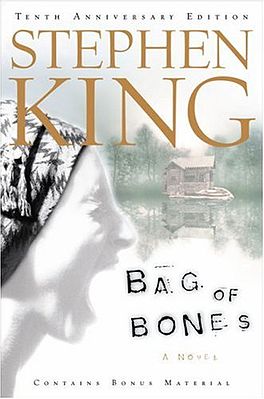
― Stephen King, Bag of Bones


stephen-king-bag-of-bones-5

Throwback Thursday: Carvel Ice Cream in the 1980’s!

I was actually very surprised when I discovered this week that Carvel Ice Cream wasn’t a small, local chain that inhabited only my native Long Island.  I hadn’t heard word one about Carvel since I was a kid; I always assumed that the strange, ubiquitous TV and radio ads for “Cookie Puss” and “Fudgie the Whale” were strictly a New York thing.  But there were 865 stores throughout the United States in 1985; my friend in Texas even recognized the name.

I think my confusion is easy to understand, considering the weird ads that I mentioned above.  The first thing that most people remember about Carvel usually isn’t the chain’s crude looking novelty ice cream cakes.  The first thing they remember is founder Tom Carvel’s voice, which you can hear in the videos below.  It … did not please the ear.  Polite people almost always describe it as “gravelly;” the less charitable remember it with descriptors such as “phlegm-filled.”

The latter folks are not wrong.  Seriously.  I cringed when I heard it as a kid, no matter how much I loved the store’s wares.  (And I did love it; it was an absolute treat when my parents took me there.)  It sounded like a man dying of a chest cold was trying to sell me ice cream.  I even remember my parents talking about it.

Carvel was a independent personality who insisted on recording the ads himself since 1955, and he recorded them unrehearsed — even going so far as to set up a production studio at his company’s headquarters, according to Wikipedia.   Carvel Ice Cream was a true small-business success story, and many credit the brand’s popularity with Carvel’s  extemporized, conversational voiceovers — even if they were awkward.

And that kind of makes sense.  The commercials were memorable.  Maybe the owner’s voice evoked images of Stephen King’s superflu in “The Stand,” but that didn’t dissuade you from visiting a store for its trademark soft-serve ice cream.  (You figured he wasn’t actually working the counter, where he could cough into your dessert.)


A short review of Season 1 of “Black Summer” (2019)

I don’t understand how “Black Summer” can be as good as it is.  It’s produced by The Asylum, the makers of low budget, direct-to-video ripoff films like “Atlantic Rim” (2013) and “Triassic World” (2018).  It’s a prequel to the horror-comedy “Z Nation” (2014-2018) — a show that was so bad I couldn’t make it through its first episode.  Yet “Black Summer” is inexplicably a great, albeit imperfect, TV show.  I’d rate it a 9 out 10.

I might be in the minority here; a lot of people are severely panning this show online.  And I do recognize its weaknesses — there is very little detail in its plot or character development … there is often even very little dialogue at all.  And even I recognized some plot holes.  (I’m typically a little slow on the uptake where these are concerned.)

But this bare-bones zombie story still manages to screen some likable characters, and then put them through a thrilling succession of hyper-kinetic chases and melees.  I was on the edge of my seat, and I consequently didn’t miss the methodical, detailed plotting of shows like “The Walking Dead.”  The season’s finale is crowned by an extended, eye-level, real-time action set-piece that ought to be considered a classic in the  zombie-horror subgenre.  It was mind-blowing. I just can’t dislike a horror property that genuinely scared me.

I could simply be out of step with everyone else; I often have different tastes in zombie fare.  I love Zack Snyder’s 2008 remake of “Dawn of the Dead,” which this series reminds me of.  And I also love similar overseas productions like Spain’s “[REC]” films (2007 – 2014) and Britain’s “Dead Set” miniseries (2008), while those amazing entries are hardly known among my friends.  I also cannot understand why many people who love George A. Romero’s and Robert Kirkman’s productions must always compare other films and TV shows unfavorably to them.  We can love both.  Why not?

Hey, if you don’t want to make my word for it, here is what Stephen King tweeted: “No long, fraught discussions. No endless flashbacks, because there’s no back story. No grouchy teens. Dialogue is spare. Much shot with a single handheld camera, very fluid.”

I obviously recommend this.


black-summer-season-1-poster-1166630-1280x0

A review of “Pet Sematary” (2019)

“Pet Sematary” (2019) is an unnecessary remake, but still a decent one.  I personally prefer the flamboyant 1989 film adaptation of Stephen King’s novel; it was more garish and stylish, if a little campy.  (And its flashback sequences involving one character’s deceased sister are priceless horror fare.)  But this sleeker, more restrained update is nonetheless still made and sometimes pretty scary.  I’d rate it an 8 out of 10.

The writing and directing are generally good, even if certain jump scares were so heavy-handed that they were nearly laughable.  (The script wisely capitalizes on the universal, existential dread of mortality, as the first film did.)  There are few new bells and whistles here; the 2019 film instead tries to distinguish itself with a key variation in the plot of King’s eponymous 1983 book.  (I won’t describe it here, as I’m not certain whether it is a spoiler.  But this change isn’t “shocking,” as The New York Times’ headline proclaims; it’s simply a basic story alteration.)

The cast is roundly quite good.  A surprise standout for me was Amy Seimetz, who plays the mother of the story’s troubled Creed family with surprising power and nuance.  She’s a damned excellent actress.  And I was surprised to learn that I failed to recognize her as one of the doomed spacefarers  from 2017’s “Alien: Covenant” — another role that required her to portray apprehension and panic.

There were two possible nitpicks that occurred to me as I watched “Pet Sematary,” but these probably aren’t the fault of the filmmakers, as they likely stem from the literary source material.  (I read the book several times, but I was a young teenager when I did so.)  As an adult, I am only a fuzzy on two story elements:

  1. How is the character of Victor Pascow (played here by Obssa Ahmed) able to offer help to the troubled Creed family?  Can anyone in his circumstances do so?  Might others step forward as well?  Why should Pascow be uniquely motivated?  (I am again trying to keep this review spoiler free.)
  2. Why is the mother’s traumatic childhood a factor in the story’s present?  It’s … mostly tangential, right?  It is a compelling character element, and portrayed beautifully by Seimetz.  But I don’t fully understand how it seems to affect what transpires before us.

One final note — I’ve seen a few people on the Internet compare John Lithgow’s performance to that of Fred Gwynne in the 1989 film.  (They both play the character of Jud, the family’s elderly neighbor.)  Lithgow is predictably wonderful here — especially when Jud is showing kindness to the young daughter (played charmingly by Jete Laurence).  But Gwynne was better, because he was so perfectly cast.  It was a role that he was born to play.


MV5BMjUyNjg1ODIwMl5BMl5BanBnXkFtZTgwNjMyOTYzNzM@._V1_SY1000_CR0,0,640,1000_AL_

“That blue and lonely section of hell.”

36890867_10211076159129452_8806118541028753408_n

Isn’t IT cute?

My baby groundhog buddy came back, but he’s shy all of a sudden. See the little twerp peeking out of the storm drain?

When I posted his picture on Facebook, however, Blog Correspondent Pete Harrison immediately cautioned me that he might NOT be a groundhog.  (And me all alone in my little yellow raincoat!)


20180713_155914 (2)


37240688_10155261668755388_1543803381544386560_n

Dennis Villelmi interviews the Woman in Room 237!

If you are a horror fan, you’re in for a rare treat.  Stop over at The Bees Are Dead to read Dennis Villelmi’s interview with Lia Beldam, who portrayed the woman in Room 237 in Stanley Kubrick’s 1980 adaptation of Stephen King’s “The Shining.”  (Fans of the 1977 novel and its 2013 sequel, “Doctor Sleep,” may recognize the character as the ghost of Lorraine Massey.)

Dennis chatted with Ms. Beldam about a few different aspects of filming — including her experiences with Kubrick and Jack Nicholson.  It’s great stuff.


doorsixteen_mintgreenbathrooms_theshining

Throwback Thursday: “Omni” magazine in the late 1980’s (and that weird Stephen King cover)

Omni in the 1980’s was an absolutely unique magazine dedicated to science fiction and science fact — it was always weird and occasionally wonderful.  Its content was consistently a good deal trippier than anything you’d find in more mainstream contemporaries like Scientific American or Discover — futurism, the paranormal, and short stories that were pretty damned abstract.  (I remember Patricia Highsmith’s “The Legless A” being a real head-scratcher for me.)  And the covers to Omni were frequently awesome.

I had a subscription around 1989 or so — I believe I got a year’s subscription as either a Christmas or birthday present.  I still remember it arriving in the mailbox.  I think I had all of the issues you see below — except the third one.  That issue is from January 1983, and I never had it.  I’m including it here because it’s too interesting not to share.

Stephen King fans will recognize Don Brauitgam’s artwork for the cover of King’s classic 1978 short story collection, “Night Shift.”  Brautigam apparently sold it to the magazine later.  (Interesting, too, is the similarity of the artist’s name to a key character in King’s subsequent “Hearts in Atlantis” and his “The Dark Tower” series — the kindly psychic, Ted Brautigan.)

Anyway, if you were geeky enough to enjoy this back in the day, the entire run of Omni is currently available at Amazon for $3 a pop.  It was available online for free for a while, and I think you can still find all of the short stories uploaded in pdf if you google them — I found a bunch, including Highsmith’s story.  (I wonder if I’d get a better sense of it if I read it today.)


be72939e64ff7df733c03244383ce5f9--futurism-film-posters

df6ffdc5e4e3ba597cd55df5230f615c--magazine-editor-magazine-art

1c0ecb344901ba309cc659ae896f7ce8

d6f679bf67711d1a0993827f3cc8f4af--magazine-art-magazine-covers

ff439bc98faf2a2ccd88a65ac67c338c--control-your-dreams-retro-futurism

omni_1989_04_0000

0016b03f6bbbddec98768905a4ee7c15

omni-1989-august