Tag Archives: Netflix

A very short review of the pilot for “Iron Fist” (2017)

They said that Netflix’ “Iron Fist” (2017) was bad.  They were … mostly right, at least as far as I can tell from the pilot.  I’d rate the first episode a 4 out of 10.

This episode was a thinly scripted collection of common tropes, cluttered with clunky exposition and weird, improbable plot points.  (A friendly homeless man helps the hero by googling key information for him on a stolen iPhone?)  The show even managed to be briefly boring in parts.

“Iron Fist” has the depth and hastily concocted story of an 80’s primetime action show.  But I don’t mean that in a fun, nostalgic way, I mean it in a bizarre, awkward way.  I was actually reminded of Mystery Science Theater 3000 lampooning 1984’s ninja groaner, “The Master.”  In fact … don’t “Iron Fist” and “The Master” have a similar story setup?  There are some weird parallels, if you think about it.

Look … it wasn’t all bad.  The fight choreography was actually damned good.  I don’t know if that was actor Finn Jones performing the Kung-Fu, or a stunt double.  But it was believable and a lot of fun to watch.  It was nicely shot, too — the vibrant visuals had an appropriate comic-book feel, and were better than those that I would expect from this show’s companion series, “Daredevil” and “Jessica Jones” (2015).

I also submit that Jones is great in the role of the titular hero.  He’s a decent actor, he’s well cast in the part, and I find Danny Rand to be a surprisingly likable protagonist.  I just hope that “The Defenders'” new team-up places him in the hands of a better set of writers.


iron-fist-netflix-serie

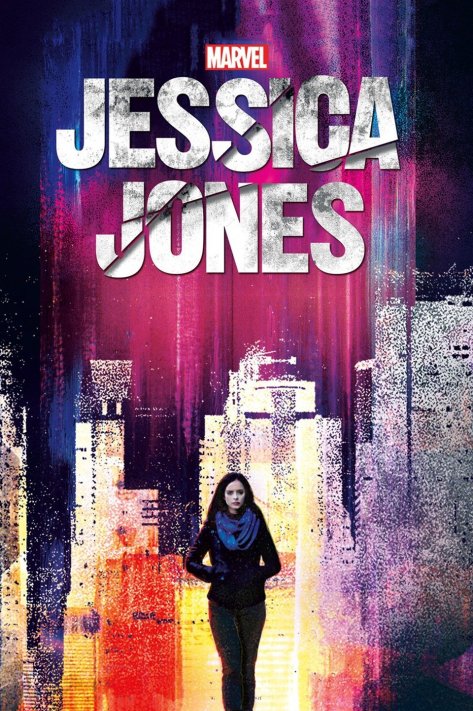
A review of Season 1 of “Jessica Jones” (2015)

Netflix’ “Jessica Jones” (2015) is easily one of the best things in the Marvel Cinematic Universe; I’d rate it a 9 out of 10.  It’s smart, it’s funny and it’s extremely dark — I don’t want to spoil too much by revealing the modus operandi of Season 1’s villain, but his manner of destroying his victims is utterly disturbing.  (I’ve mentioned before how his powers seem like a plot device from a Stephen King novel.)  Although this series excellently retains a “comic book” feel (due in part to its episodic format), its story elements frequently feel like something out of a John Carpenter film.  And, although I know I’m repeating myself yet again, this Hell’s Kitchen niche of the MCU feels like its chosen stage for horror-thrillers.

The cast is excellent.  Krysten Ritter is perfect as the titular, hard-drinking, antihero private detective.  Mike Colter is nearly as good in the role of Luke Cage, another low-level hero in the Marvel universe.  Colter’s talent is evident by the fact that Cage could so easily come across as a one-dimensional character.  (And, Jesus, doesn’t the guy look the part?)

The story’s villain, Kilgrave, is played by fan-favorite David Tennant.  (Yes, the name “Kilgrave” is stupid and is lifted from the comic book source material.  Its silliness is lampshaded in the series several times by other characters making fun of it.)  Tennant is an actor I’ve abhorred in the past.  There was no logical reason for it — there used to be just something about his voice and his face that made me cringe.  It was a running joke for a while among me and my female sci-fi friends.  (Good Lord, how the ladies adore that man.)  My admittedly irrational dislike of the man even detracted from my enjoyment of the otherwise quite enjoyable 2011 “Fright Night” remake.

He’s phenomenal here.  He’s perfect for the part, as Ritter and Colter are for theirs, and he was alternately menacing and quite funny.  (He has perfect timing and line delivery, as Ritter often does.)  I really liked watching him.

“Jessica Jones” might succeed more than any other MCU property in terms of dialogue and character development — although the “Iron Man” and “Daredevil” series also do great work there.  (It’s a tough call.)  The show also seems to flesh out the MCU into a kind of “lived in” universe in a way that other Marvel properties usually haven’t — by creating detailed, three-dimensional protagonists out of characters that have no superpowers whatsoever.  They’re not “sidekicks” (a trope that the script that slyly winks at); they’re realistic characters that affect the plot.  When one or two actually appear to develop superpowers toward the end of the season, the consequences are unexpected and dire.  (There is a truly kickass Easter egg here that will please longtime readers of Marvel Comics.)  Furthermore, Jones, Cage and most of the other characters have power sets that pale in comparison to M.C.U. heavy hitters like Thor, the Hulk or the Vision. The result is that the MCU feels more … integrated and nuanced, with a blurrier line between superheroes and everyday people.  I liked that a hell of a lot.

The show is not entirely without its failings.  Despite what I said above about the show’s attention to ordinary characters, I still think it went a bit overboard here.  The character of Malcom (nicely portrayed by Eka Darville) began as a hugely interesting supporting character.  So, too, did other residents of the heroine’s apartment building.  It was a nice touch that expanded the show’s scope and depth … until the law of diminishing returns kicked in.  By the end of Season 1’s 13-episode arc, I felt that they’d received far too much screen time.  The support group that one character attends started out as an intelligent subplot, but then eventually grew tiresome.  (Again, I’m being necessarily vague here to avoid spoilers.)  Towards the finale, I actually felt that these minor characters were padding the plot and dragging down the narrative.

Which brings me to another criticism — the narrative’s length.  This is yet another show that I felt could be edited down a bit.  As much as I loved Tennant here and found Kilgrave to be an interesting villain, I’m not sure that Jones’s conflict with him warranted 12 52-minute episodes.  This could have been abridged to eight or ten, I think.

Another criticism I had of “Jessica Jones” was its fight choreography.  For a show that succeeds on so many levels, the action sequences were sometimes surprisingly poor.  Why do brawls between superpowered individuals include so much polite (and bloodless) grabbing and throwing?  Especially when a single punch or kick could easily kill or incapacitate an opponent?  The answer, of course, is that those kinds of melees are easy to film, with minimal training for the actors.  It’s especially noticeable here because this show’s sibling, “Daredevil,” has fight choreography that is some of the best I’ve ever seen.  (If you’re curious, then search for “Daredevil stairwell fight” on Youtube sometime.)

The rudimentary effects were usually even poor when depicting the title character’s “jumping” scenes.  (She has super strength, so she can virtually “fly” short distances by literally jumping.)  These shots looked like something out of a primetime 80’s action show.

All in all, though, this was indeed a great show.  Don’t shy away from it, as I initially did, because you’re unfamiliar with the title character.  It’s among the best that Marvel has to offer.


maxresdefault

“You call her Doctor JONES, Doll!”

God damn, Netflix’ “Jessica Jones” (2015) looks like a great show.  I finally got around to watching the complete pilot episode, due to my interest in the upcoming “The Defenders,” which features the character.  And “Jessica Jones” was frikkin’ terrific.  I’d rate the first episode a 9 out of 10.

At first, there were aspects of the pilot that annoyed me.  We’re told virtually nothing about the origin of the title character’s superpowers, and not much about the powers themselves.  They’re also a fairly generic power set, as far as I can tell.  She has enhanced strength and agility and … that’s it?  So she’s a low-grade Superman or Spider-Man, more or less?  We also learn somewhat little about what looks to be the series, antagonist, Kilgrave, played by David Tennant.  We see Kilgrave only briefly, in flashbacks that seem reminiscent of post-traumatic stress disorder.  (These are sometimes weirdly delivered, for a show that is otherwise well directed.)  He has mind-control abilities that resemble the “push” ability seen in Stephen King’s “Firestarter,” as well as my favorite short story of all time, “Everything’s Eventual.”

But … hell, this was just an extremely good show.  For starters, Krysten Ritter is perfect as the wisecracking anti-heroine.  She’s funny; she’s got great, dry line delivery; and she’s a decent actress.  (I know that the Marvel Cinematic Universe’s more powerful heroes rarely visit Hell’s Kitchen, but I’d love to see her trade quips one day with Tony Stark.  She couldn’t beat him, but she’d come closer than anyone else.)

The script is good enough to make her a likable character, and the story itself is scary and compelling.  Considering the plot-driving capability of the show’s villain this … looks like it could become a King-style horror thriller.  Between this show and “Daredevil’s” bloody second season (2016), I’m starting to understand that Hell’s Kitchen might be the MCU’s stage for more horror-type stories.  And I’m fine with that.


p12123988_b_v8_aa

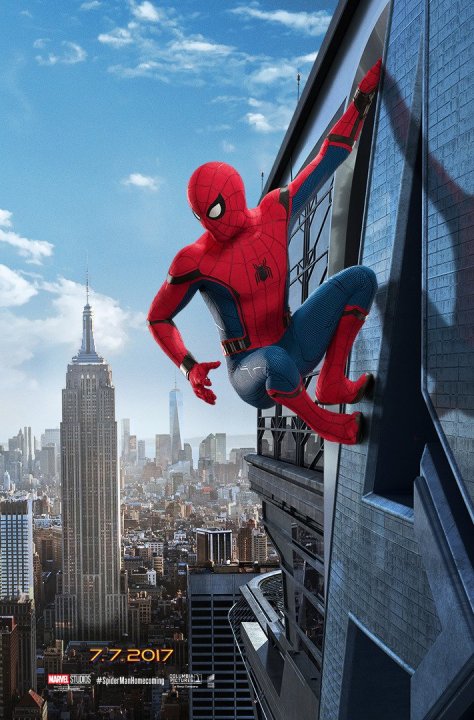
A review of “Spider-Man: Homecoming” (2017)

“Spider-Man: Homecoming” (2017) isn’t a bad movie.  To the contrary, it’s a very good one — I would even rate it a 9 out of 10, if a little reluctantly.

The action, humor, surprises and special effects are all top-notch; it’s got a slew of fun Easter eggs and great continuity within the Marvel Cinematic Universe; and Michael Keaton hits it out of the park as the story’s villain.  (As Ed Harris did recently with HBO’s “Westworld,” the sublimely likable Keaton really surprised me with how he could become so intimidating.)  Furthermore, the screenwriters wisely omit another redundant re-telling of the web-slinger’s origin.  (Even a die-hard fan like me is sick of seeing or reading about it.)

I think your enjoyment of this movie might vary according to what you want Spider-Man to be.  This isn’t a movie in which Peter Parker or his alter ego stand out as his own man (despite its plot resolution’s heavy-handed efforts to tell us that).  I submit that it’s fairly undistinguished as a standalone superhero film —  it feels like an ancillary, companion film to the “Avengers” movies, including last year’s de facto installment, “Captain America: Civil War.”  Indeed, fan-favorite Tony Stark is “Spider-Man: Homecoming’s” most significant supporting character — far more than any of the many friends, family, love interests or villains that have long inhabited the iconic hero’s mythos.  Peter’s primary motivation throughout the movie is his desire to become an Avenger, like a normal kid would aspire to the varsity football team.  Many of his powers stem from a ultra-high-tech costume designed and given to him by Iron Man; it even has an advanced A.I. that is a femme fatale equivalent of J.A.R.V.I.S.  (Fun fact: that alluring voice belongs to none other than the alluring Jennifer Connelly.  The actress is the wife of Paul Bettany, who is the voice of J.A.R.V.I.S. and then the actor portraying The Vision.  And Connelly herself played the love interest of 1991’s mostly forgotten “The Rocketeer,” a World War II-era hero with the a similar character concept to Iron Man.)

I was a big fan of Spider-Man in the 1990’s, and, believe me, the ol’ web-head did just fine with his own powers, intelligence and character — and without any sort of “internship” with Iron Man, either metaphorically or otherwise.  He was also a far more popular character with readers.  I was buying comics regularly between 1991 and 1996 — while Spider-Man books and merchandise were everywhere, I don’t think I ever remember seeing an “Iron Man” comic on the racks at my local comic shop.  I kept thinking inwardly of Spider-Man during this movie as “Iron Man Jr.,” and, for me, that wasn’t a good thing.

I also found myself musing during the film that this felt like “Spider-Man Lite.”  While “Spider-Man: Homecoming” was fun, it doesn’t have the depth, character development or gravitas of the Sam Raimi trilogy.  (Yes, I even liked the third one, despite its bizarre flaws.)  I know that critics are praising the movie’s lighter tone, and I realize the need to avoid a simple rehash of the Raimi films.  (Nobody would want that; we can rightfully expect more from the excellent MCU.)  I actually prefer the Raimi films, though.  While Tom Holland might be the better Peter Parker (Tobey Maguire was a strange casting choice), the Raimi movies were more … heartfelt.  They were an earnest exploration of the Spider-Man of the comics, and they felt … truer.   “Homecoming,” in contrast, is yet another cool installment in the “Avengers” series.  “Spider Man 2” came out 13 years ago, and I can still remember how that movie made me feel — not to mention how its sheer quality vindicated “comic book movies” like no other film before it.  This new movie will not be memorable that way.

Anyway, although my criticisms above are obviously lengthy, please know that this is only because I love the source material so much — and we comic book fans have a tendency to analyze.  I certainly enjoyed the movie, and I’d cheerfully recommend it.  (Note my rating.)  The MCU continues to entertain with quality movies; its consistency, even with its expanding group of ongoing Netflix series, is kind of astonishing.

Go see this.  You’ll have fun.


Spider-Man2

A quick review of “Wolf Creek 2” (2013)

Is “Wolf  Creek 2” (2013) a well made film?  Yes.  It’s exceptionally well made.  Would  I recommend it?  I’m not sure.

I’d rate it a perfect 10.  Its technical expertise in undeniable.  The cast is roundly excellent.  John Jarratt is absolutely perfect in the role he seems born for.  He’s so effectively menacing as this film’s serial killer that I think I’d find it unnerving even meeting the actor in real life.  The only other actor I think I can say that about is Ted Levine, who so indelibly portrayed Buffalo Bill in “Silence of the Lambs” (1991).

Ryan Corr is damn perfect, as are the actors in smaller roles.  I think Shannon Ashlyn portrays terror better than any other actress I’ve seen.  She isn’t just a horror movie “scream queen;” her performance was so skilled that she rises above such a trite label.  (And I’ve seen a lot of horror movies, people.)

It’s extremely well directed.  The conclusion of an action sequence involving a truck must have looked downright stupid on the page, but damn if Greg McLean doesn’t make it plausible and shocking.

The entire movie is gorgeously shot.  It was enough to make me want to visit Australia … if the story didn’t make want to stay the hell away from Australia.

I just get the impression that some movie studio planned to produce a generic, derivative slasher movie … but just inexplicably employed the best creative talent available for all aspects of its creation.

Now, about my reluctance to recommend this …  Please understand that this film is incredibly dark, even by horror movie standards.  At times it was just too much for me.  I actually stopped playing this on Netflix several times to “take a break with something lighter” by watching “The Walking Dead.”  Yes, you read that right.

The story depicted is just brutal.  There are very few movies that are too dark for me … I think I could count them on one hand.  (And one was 2005’s original “Wolf Creek.”)  And this film is just so masterfully made that its victims seem like real people suffering — something at which the “Saw” films and various other slasher movies rarely succeeded.

I honestly think it might have been so “good” that it went past the point of entertaining me.  Can I honestly recommend a movie that I felt the need to switch off?

You make your own call.  Again — this is exceedingly dark material, even by horror movie standards.  But if you think you’re up to it, watch it.


images (1)

A review of “Goodbye World” (2013)

“Goodbye World” (2013) is technically a post-apocalyptic drama.  I say “technically” because this sometimes misguided movie contains little tension associated with its apocalyptic event.  (A cyber-attack destroys the technological infrastructure of America and possibly the world.)  Indeed, this catastrophe doesn’t even truly drive the plot — it’s more of a background subplot that fails to even affect the tone of the film.  (The poster you see below is misleading.)

Instead, the film scrutinizes the personal lives of a group of thirtyish college alumnae who have an informal reunion at a mountain cabin — one of their number is a plot-convenient intellectual-turned-survivalist.  They’re portrayed by an (admittedly quite good) ensemble cast.  I think a lot of my friends would smile at “Gotham’s” Jim Gordon (Ben Mckenzie) being a rather meek, feckless husband.  And Caroline Dhavernas here is no longer the alpha female we saw in NBC’s “Hannibal,” but is rather an insecure, overly sensitive young wife who immaturely pines that she was the student “everyone hated.”

And there lies a problem that the movie has … few of these characters are terribly likable.  Only Gaby Hoffmann’s surprisingly tough civil servant made me root for her.  And Kerry Bishe’s perfectly performed, chatty neo-hippy eccentric was also pretty cool … Bishe might have given the best performance in the film.  Finally, Linc Hand is a surprise standout, arriving halfway through in a menacing supporting role.  It’s a far smaller role, but damn if he doesn’t nail it.  (Please, Netflix, cast this guy as Bullseye in Season 3 of “Daredevil.”)

The others all seem either self-absorbed, self-righteous and preachy, or inscrutable and vaguely dumb.  Dhavernas’ character actually steals a child’s teddy bear (which she herself had brought as a gift) and … sets it free in the forest.  It was a belabored character metaphor when written.  Worse, it just seems jarringly weird when it plays out on the screen.

All the characters seem strangely detached about the watershed national or global crisis. Some cursory dialogue is devoted to the imagined welfare of their family, colleagues or other friends; the character interaction is devoted mostly to  marriage issues and personal emotional crises that I have mostly forgotten as of this writing.  And those seem maudlin and slightly selfish compared to the Fall of the United States.  The characters mostly failed at engendering viewer sympathy in me.

The screenwriters’ juxtaposition of personal matters and the end of the world also seemed tone deaf.  We follow what the writers hope are educated, successful and endearingly quirky fun people, and we’re asked to worry about their love triangles and spousal communication issues.  But … we’re then asked to view this in the context of a pretty frightening collapse of society, complete with plot elements that are interchangeable with those of AMC’s “The Walking Dead.”  (One secondary character turns violent over the issue of resources, then charismatically justifies his violence to  a crowd using a half-baked ideology that seems to channel “The Governor.”)

I felt like I was watching two movies at once, and not in a good way.  The opening motif is brilliantly creepy — the virus causes cell phones everywhere to receive a text reading the titular “Goodbye World.”  Our laconic, uniformly telegenic protagonists kinda just shrug at it.  And even when suspicions arise in the group about whether one character is connected to the cyber-attack, there is dry, dialogue-driven humor instead of any real consequent tension.  It was like John Hughes wrote a thirtysomething dramedy, but then tried unsuccessfully to sprinkle in the human pathos of one of George A. Romero’s more pessimistic zombie films.

But don’t get me wrong.  This wasn’t even really a bad movie.  I didn’t hate it.  It held my interest, its actors gave good performances, and I am a shameless fan of Dhavernas in particular.  The cinematography was very good too, and the story’s tonal differences were occasionally interesting.  (This is definitely a unique end-of-the-world tale, if nothing else.)

I’d honestly give “Goodbye World” a 7 out of 10.  I think my expectations sitting down with it were just unusually high, seeing Dhavernas attached to what looked like an independent, cerebral, apocalyptic science fiction thriller.  I might even recommend it if you’re in the mood for a really unusual doomsday movie.  Just don’t expect “28 Days Later” (2002) or “The Divide” (2012), and you might like this.


Goodbye_World_Theatrical_Poster

hero_GoodbyeWorld-2014-1

A few quick words on Season 2 of “Daredevil”

As though you hadn’t guessed, I absolutely loved Netflix’ second season of “Daredevil.”  It might have had a problem with its concluding Elektra storyline, but I’d still rate it a perfect 10 — I just can’t give a lower rating to a season that made me cheer out loud while watching it.

I really loved it that much.  I’ve started to think of this gritty little corner of the Marvel Cinematic Universe as my own “Star Wars” — these are characters that I grew up with, and to whom I’ve developed an emotional attachment, however strange or childlike that may seem to non-fans.  If adults can cheer during the opening crawl of “The Force Awakens,” then I can cheer “KICK THEIR ASSES, MATT!!” when the ninjas of “The Hand” noiselessly and acrobatically swarm Daredevil.

It’s just a superb show.  On one level, it’s a good character drama and legal thriller that can easily please a modern mainstream television audience.  On another level, one of those characters just happens to be a low-level hero in the Marvel Comics universe.

The show succeeds nicely on the first level and goddam brilliantly at the second.The martial arts and costuming are perfect.  John Bernthal is perfectly cast as The Punisher.  It’s a cliche, and something I’ve written here before, as well, but I’ll say it again anyway — Netflix succeeded in bringing some of my favorite comic book characters from page to screen.

My only minor criticism is that the Elektra storyline was muddled, and understandably confusing for those who haven’t read the source material.  (And if memory serves, it wasn’t all that easily understood in the original comics.)

Now bring on Bullseye!!


12794707_1719825021587067_5890561489880274871_o

“The … Stalking Dead?” (A review of “Daredevil” S2E1)

[THIS REVIEW CONTAINS ONE SPOILER.]  So the fantastic John Bernthal is now the Marvel Cinematic Universe’s “Punisher,” debuting (however briefly) in the first episode of Netflix’ “Daredevil” Season 2.  I just know that there is a great “Walking Dead” joke hiding around here somewhere; but I can’t seem to put my finger on it …  (Something about … Blind Grimes?  Disabled Rick?  Daredevil can’t see “stuff?”  Or “thangs?”)  You people work that out for me.

Bernthal’s arrival is dream casting, every bit as perfect as bagging the inimitable Robert Downey, Jr. as the MCU’s Iron Man.  Even though the actor speaks only a single word, it’s goddam beautiful.

That’s one of the better things about Season 2’s first outing, which, for me, fell into the category of “good, but not great.”  (I’d still give it an 8 out of 10, and I feel certain the season will get better.)  What we see in S2E1 is mostly setup.  The episode clearly tried to introduce tension by grooming the Punisher as a frightening antagonist, with limited success.  Even casual Marvel fans know that Frank Castle is a good guy, and nothing close to a Big Bad.  Yes, he’s an anti-hero who fatally shoots villains, and will be a foil for Matt Murdock’s Boy Scout restraint (as he was in the comics, back in the day).

But I doubt that the Punisher can be made scary or truly tension-inducing.  (Are we afraid of Wolverine?)  We know that his shoot-em-up tactics won’t leave Daredevil dead.  (This isn’t “Game of Thrones” or TWD.)  And I’d guess that most viewers, like me, aren’t too emotionally invested in this show’s minor characters.  (The only exception would be the quite interesting and three-dimensional Karen Page, still wonderfully portrayed by Deborah Ann Woll.)  Hell, I think the show would be better if the painfully annoying Foggy Nelson were made an early casualty.  Finally, if the show stays true to the original comics, then the Punisher has that most sympathetic of “origin stories” — a murdered nuclear family.

Both the Punisher and Bernthal have such devoted fanbases that a lot of viewers will probably root for him against Matt.  (Our very own Blog Correspondent Len Ornstein, for example, was known for firmly being on “Team Shane” for TWD.)  Looking back at my fervent comic-collecting days in the 1990’s, I seem to recall the Punisher having a far bigger fan following.  He was a mercenary and Vietnam veteran who simply shot up whatever corner of the Marvel Comics universe to which his quarry had tried in vain to escape.  Fans compared him to DC Comics’ iconic cash cow, Batman.  Matt Murdock, on the other hand, had niche appeal.  He was a liberal superhero if there ever was one — a Columbia-educated defense attorney who employed nonfatal force, and who fought for the “everyday man on the street.”  He was like a grownup, thoughtful, socially conscious Spider-Man.  If ever there was a comic book hero who would join the American Civil Liberties Union, it was Daredevil.

Moving forward, I think that Netflix will need an altogether different adversary than Castle to raise the stakes emotionally, and bring suspense to its second season.  Maybe the show will accomplish that with Elektra, who we know will also appear.  (And fans of the comics know that this integral character has far greater implications for our hero.)

The new season’s inaugural episode might have been slightly better if it had been tweaked elsewhere, as well.  Much ominous language is devoted to characterizing the Punisher as a killer with military proficiency.  We kinda don’t see that.  The largest action set piece shows no precision or professionalism, just a room full of gangsters being hosed down by gunfire from an offscreen shooter.  And while the sequence itself was dramatic, it seemed like something that could have been perpetrated by a (very well armed) street gang in a drive-by shooting.

We also see some of the dialogue problems that were so evident in the first season — as superb as the screenwriters are, they don’t do casual conversation among friends very well.  There’s the same forced banter and an embarrassing lack of chemistry among the three lead protagonists, this time on display during an awkwardly staged after-work barroom pool game.  (It’s particularly puzzling because Woll and Charlie Cox are both very good actors.)  This show scripts its villains, petty crooks and adversaries with such flair — why does it seem to fail so often with friendly conversation?  And why bother with these strange attempts at Scooby-Gang camaraderie in the first place?  I think it’s a weird creative choice.  These are serious characters leading serious lives.  It seems implausible to me that they should be so frequently upbeat anyway.

Hey — if I’m nitpicking a lot here, it’s only because I love the show, and consequently hold it to a very high standard.  It really is the best superhero adaptation on television.  My review of last season was absolutely glowing, and I honestly think that Season 2 will be just as good.  If you haven’t checked out “Daredevil” yet, you ought to.


12525571_1720957711473798_4489177249886597130_o

NEqq4plcdvfusz_3_b


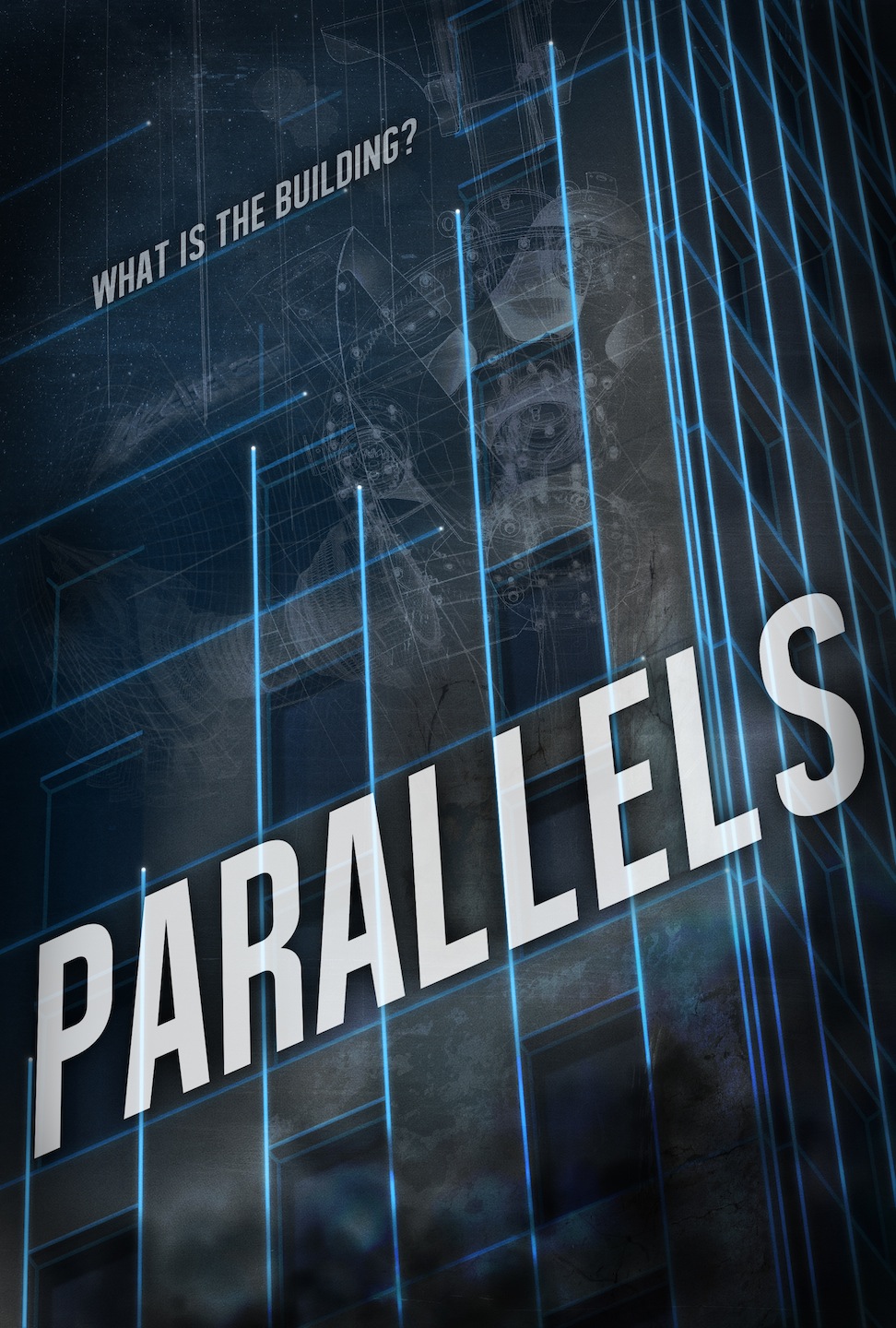
A review of “Parallels” (2015)

First, a clarification — “Parallels” (2015) is absolutely not a feature film; it’s an undisguised attempt at a pilot for an ongoing web-based series.  I think it’s pretty cruddy of Netflix to market it as a standalone film, as viewers expecting a conclusive story will doubtless be disappointed.  Its parallel universe-hopping premise also seems so similar to “Sliders” (1995-1999) that it just might approach the boundary between inspiration and ripoff.

With that said, however … dear LORD!!!  “Parallels” was frikkin’ FANTASTIC.  What we’ve got here is a far edgier, grownup version of “Sliders,” with a first episode introducing the same type of show-spanning mysteries as “Lost.”  But where “Sliders” was milquetoast primetime family fare, this looks like an excellent serialized thriller with plenty of pathos.

What a shame this thoughtful series never reached fruition.  I was hooked.  It’s smartly written by Christopher Leone; he’s visibly well acquainted with string theory, and has a hell of a lot of clever fun with it.  “Parallels” is a face-paced 80 minutes that follows a tragic, dysfunctional modern family embroiled in the mystery of the plot-driving “Building.”  The Building appears to be the nexus of countless parallel universes, a bit like the “The Dark Tower” links them in Stephen King’s multiverse.  The cast is uniformly good; the standouts were Eric Jungmann as the comic relief and Michael Monks as an understated but terrific bad guy.

I had only a few tiny quibbles.  Some of the family melodrama and the mysteries were a little forced and heavy-handed.  The ending (?) here, while really intriguing, also borrows a page or two from “Cube” (1997) and one particularly good episode of Ron Moore’s “Battlestar Galactica” (2004-2009).

I’m not sure how to rate this.  It fails as a standalone film, I think, because it simply doesn’t have an ending.  I suppose I’d give it … a 4 out of 10?  If you can forgive that fatal flaw, however, and want to enjoy some top-shelf science fiction, then I’d easily give it a 9 out of 10.

Dammit.  Why wasn’t this show made?

B0tPX3b

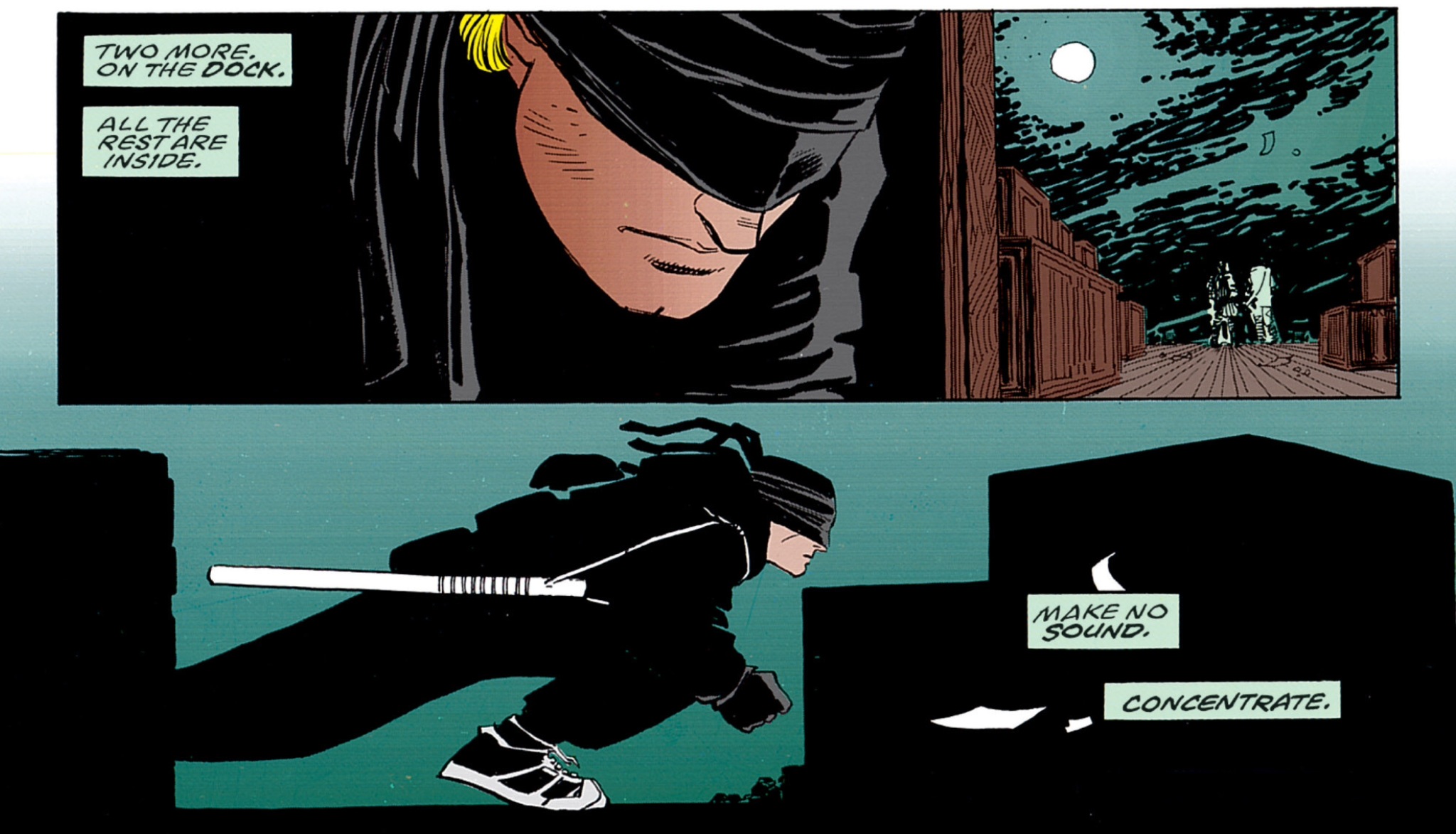
Quick comic tip: “Daredevil: The Man Without Fear,” (Miller, Romita, Williamson, 1993)

So you saw me rave at length last night about Marvel’s “Daredevil” series on Netflix.  If you loved it, as I did, but you’re also new to the character, may I recommend the 1993 limited comic book series upon which it’s based?

“Daredevil: The Man Without Fear” was cited by the show’s creators as their direct inspiration.  You can tell just by looking at it.

And it’s a terrific set of books.  It was penned by one legend in the comic industry, Frank Miller, and illustrated two others, John Romita, Jr. and Al Williamson.  It’s an expert recounting of his origin that is easily understood by a new reader.

Totally random thought: man, I spent a lot of money on comic books in college.  Comic books and Butterfingers, seriously.  There was a candy machine in my dorm that I just couldn’t stay away from.

jrjr-man-without-fear-101387sin-city-roofs-9ef97ManWithoutFear_03daredevil---the-man-without-fear-124662