Tag Archives: 28 Days Later

A short review of “Patient Zero” (2018)

I’d be lying to you if I told you that “Patient Zero” (2018) is an especially good movie.  It isn’t.  It plays a lot like the classic “28 Days Later” (2002) would play if it were produced by the SyFy Channel, and by that I mean it generally is a poorly written, low-budget cheese-fest.  (This is one of those movies where even the score was kinda bad.)  Still, there were some hints of greatness hidden within this lackluster zombie movie — enough to save it from being a complete failure — and I would reluctantly rate it a 5 out of 10.  (Most other reviewers are not even that kind.)

First, it has some fine performers. These include two “Game of Thrones” actors who are always fun to watch — the mesmerizing Natalie Dormer and the consistently likable John Bradley.  (The latter seems to specialize in winning audiences over as the “hero’s-affable-friend” role.)  “Doctor Who” fans will of course recognize Matt Smith in the lead role.  But by far and away, they’re overshadowed by a fantastic performance by Stanley Tucci as the zombies’ surprisingly eloquent leader.  (More on that in a moment.)  Tucci is truly a great actor and he makes a perfectly menacing bad guy; his voice, diction and line delivery are goddam perfect.  His talent for voicing a magnetic, highly intelligent antagonist reminds me of Jeffrey Dean Morgan’s portrayal of Negan on “The Walking Dead,” or one of the better “big bads” seen on “24” (2001 – 2014).

Second, there are some really clever ideas hiding under this thin, hasty script.  (I strongly get the sense that “Patient Zero” was a rush job for screenwriter Mike Le and director Vincent Newman.)  The hyper-kinetic zombies here are afflicted with “super-rabies” and are reminiscent of their ilk from “28 Days Later.”  But there is a truly intriguing plot conceit — their roars and screams are perfectly intelligible to Smith’s protagonist.  He speaks their “language” because he’s infected, but also mysteriously asymptomatic.  When he interrogates the zombies for the military, their interaction is filmed as normal dialogue (creating the opportunity for Tucci’s terrific turn here).  Then things get even more interesting when it’s demonstrated that the ostensibly mindless zombies are quite proficient at planning an attack.

I … might be treating this movie a bit charitably simply because I liked some of its ingredients.  Again, I don’t actually recommend it.  But your mileage may vary.


17YBhcjXvv5BFz433OcF1UqcGzd

A review of the pilot for Stephen King’s “Mr. Mercedes” (2017)

With all of the (frequently quite poor) buzz about the arrival this summer of “The Dark Tower” and “The Mist,” “Mr. Mercedes” might be the Stephen King adaptation that has slipped under the radar.  And that’s a shame, because the pilot episode suggests it might be one of the best King adaptations ever.  I’d rate it a 9 out of 10.

It really is that good.  The show’s first episode begins what looks to be an intelligent horror-thriller that is surprisingly faithful to King’s outstanding novel.  David E. Kelley’s script is excellent.  After a brutal prologues that sets its plot in motion, the story proceeds with three-dimensional, likable characters who are well played by their performers — especially Brendan Gleeson in the role of the grumpy, retired-cop anti-hero who is harassed by a mass murderer.  (Yes, that is indeed the Dad from 2002’s “28 Days Later.”)  Gleeson is just great — even though I found myself wondering why a retired Chicago cop should have a heavy U.K. accent.

The script even surprises us by being incongruously sweet during its odder moments.  Like its source material, the show effortlessly sets up characters that are easy to like.  (An exchange between Gleeson some kids playing hockey outside his house, for example, was truly inspired.)

The story’s plot-driving horror elements are disturbing, too — both in terms of its grisly violence and its sexual taboos.  This is not a show for the faint of heart.

This also seems like it could be a King adaptation that could easily appeal to people outside his usual fanbase.  There are no supernatural elements to this story, or any tangible connections to King’s sprawling, interconnected “Dark Tower” multi-verse.  (The original novel seemed to show us King trying his hand at a Thomas Harris-type serial killer tale.)

The only reservation I might have about “Mr. Mercedes” is what I am guessing about its pace.  The original novel was quite slow, despite being an engaging read.  After its gut-wrenching mass murder is depicted in graphic detail, the plot moves forward rather lethargically.  The one-hour pilot episode here seemed to mirror that, in its apparent loyalty to its source material.  I predict that viewers turning to “Mr. Mercedes” for a fast-paced horror tale will be disappointed.

I think that’s probably a subjective quibble on my part, though.  I’d still enthusiastically recommend this.


A very short review of “The Dead” (2010)

Take a look at the movie poster below for the Ford Brothers’ “The Dead” (2010).  It’s problematic for two reasons.

One, of course, is that it contains what is arguably the most unimaginative title in zombie movie history.

Two is its immediate recollection of the marketing art for Zack Snyder’s terrific 2004 “Dawn of the Dead” remake.  It is so similar in composition and color scheme that it makes the Ford Brothers’ film look like a “mockbuster,” whose cover is designed to fool hasty movie renters.

And that’s a shame, because “The Dead” is a fairly decent zombie movie in its own right — I’d rate it a 7 out of 10.  It’s a lower-budget feature, and some of the acting is a bit flat, but this is a movie that does a lot with a little.  The film wisely makes the most of its African setting, and has an intelligent, if slowly paced, story.  It focuses on its two military protagonists’ needs for food, sleep, shelter, fuel and vigilance, during the course of a lengthy overland trek.  That’s refreshing in an era of “Strippers vs. Zombies” (2012), and various fairly lackluster clones of “Shaun of the Dead” (2004).

Best of all, however, is the film’s skilled manner of evoking “slow burn” or “creeping” horror.  The zombies in “The Dead” usually move quite slowly.  They might be the slowest zombies I’ve ever seen.  This might be the anti-“28 Days Later” (2002).  But that makes the vibe here unique among the spate of modern zombie films — and maybe a little reminiscent of George A Romero’s pioneering early films.  If your reaction is like mine, you’ll find it a little unnerving to see them gather en masse at a snail’s pace.

I recommend this.

the-dead-1464333825197

A short review of “Here Alone” (2016)

I think “Here Alone” (2016) would disappoint a lot of casual zombie movie fans.  It is admittedly quite slow, there is very little action, and the zombies mostly inhabit the story’s background.

I really liked it.  It is a thoughtful, sensitive post-apocalyptic drama that is beautifully filmed in the mountains of upstate New York.  The idyllic rural setting is a terrific contrast to the film’s brutal plot devices.  And its naturalistic dialogue feels authentic — it’s either a very well written movie or its three principal actors are unusually good at improv.  (The conversations flow so organically that the latter seems plausible.)

The movie focuses on three survivors of a horrifying epidemic.  (The “zombies” here are of the “28 Days Later” variety, and turn murderous upon infection.)  Although they remain off screen for much of the movie, we are reminded of their threat by some intermittent, hellish screams.  (The sounds were perfect; it’s a nice touch that lent tension and atmosphere.)

All three leads — Lucy Walters, Adam David Thompson and Gina Piersanti — were outstanding.  Walters’ performance was especially superb.  Her portrayal of a bereaved young wife and new mother was understated and subdued, but powerful.  She absolutely drew me in to the story.  We visit via flashback the fates of her husband and infant, and some of what we see is truly heart-rending.

The movie’s surprising final shot stayed with me for a while.   It’s ambiguous — maybe even confusing, at first.  But it makes sense if you reflect a little about the dialogue concerning the characters’ coping mechanisms.  It’s bittersweet, and seems to say something sad about survival and human attachments.

I’d give this an 8 out of 10, and I recommend it.

Website-Thumbnail1

A review of “Goodbye World” (2013)

“Goodbye World” (2013) is technically a post-apocalyptic drama.  I say “technically” because this sometimes misguided movie contains little tension associated with its apocalyptic event.  (A cyber-attack destroys the technological infrastructure of America and possibly the world.)  Indeed, this catastrophe doesn’t even truly drive the plot — it’s more of a background subplot that fails to even affect the tone of the film.  (The poster you see below is misleading.)

Instead, the film scrutinizes the personal lives of a group of thirtyish college alumnae who have an informal reunion at a mountain cabin — one of their number is a plot-convenient intellectual-turned-survivalist.  They’re portrayed by an (admittedly quite good) ensemble cast.  I think a lot of my friends would smile at “Gotham’s” Jim Gordon (Ben Mckenzie) being a rather meek, feckless husband.  And Caroline Dhavernas here is no longer the alpha female we saw in NBC’s “Hannibal,” but is rather an insecure, overly sensitive young wife who immaturely pines that she was the student “everyone hated.”

And there lies a problem that the movie has … few of these characters are terribly likable.  Only Gaby Hoffmann’s surprisingly tough civil servant made me root for her.  And Kerry Bishe’s perfectly performed, chatty neo-hippy eccentric was also pretty cool … Bishe might have given the best performance in the film.  Finally, Linc Hand is a surprise standout, arriving halfway through in a menacing supporting role.  It’s a far smaller role, but damn if he doesn’t nail it.  (Please, Netflix, cast this guy as Bullseye in Season 3 of “Daredevil.”)

The others all seem either self-absorbed, self-righteous and preachy, or inscrutable and vaguely dumb.  Dhavernas’ character actually steals a child’s teddy bear (which she herself had brought as a gift) and … sets it free in the forest.  It was a belabored character metaphor when written.  Worse, it just seems jarringly weird when it plays out on the screen.

All the characters seem strangely detached about the watershed national or global crisis. Some cursory dialogue is devoted to the imagined welfare of their family, colleagues or other friends; the character interaction is devoted mostly to  marriage issues and personal emotional crises that I have mostly forgotten as of this writing.  And those seem maudlin and slightly selfish compared to the Fall of the United States.  The characters mostly failed at engendering viewer sympathy in me.

The screenwriters’ juxtaposition of personal matters and the end of the world also seemed tone deaf.  We follow what the writers hope are educated, successful and endearingly quirky fun people, and we’re asked to worry about their love triangles and spousal communication issues.  But … we’re then asked to view this in the context of a pretty frightening collapse of society, complete with plot elements that are interchangeable with those of AMC’s “The Walking Dead.”  (One secondary character turns violent over the issue of resources, then charismatically justifies his violence to  a crowd using a half-baked ideology that seems to channel “The Governor.”)

I felt like I was watching two movies at once, and not in a good way.  The opening motif is brilliantly creepy — the virus causes cell phones everywhere to receive a text reading the titular “Goodbye World.”  Our laconic, uniformly telegenic protagonists kinda just shrug at it.  And even when suspicions arise in the group about whether one character is connected to the cyber-attack, there is dry, dialogue-driven humor instead of any real consequent tension.  It was like John Hughes wrote a thirtysomething dramedy, but then tried unsuccessfully to sprinkle in the human pathos of one of George A. Romero’s more pessimistic zombie films.

But don’t get me wrong.  This wasn’t even really a bad movie.  I didn’t hate it.  It held my interest, its actors gave good performances, and I am a shameless fan of Dhavernas in particular.  The cinematography was very good too, and the story’s tonal differences were occasionally interesting.  (This is definitely a unique end-of-the-world tale, if nothing else.)

I’d honestly give “Goodbye World” a 7 out of 10.  I think my expectations sitting down with it were just unusually high, seeing Dhavernas attached to what looked like an independent, cerebral, apocalyptic science fiction thriller.  I might even recommend it if you’re in the mood for a really unusual doomsday movie.  Just don’t expect “28 Days Later” (2002) or “The Divide” (2012), and you might like this.


Goodbye_World_Theatrical_Poster

hero_GoodbyeWorld-2014-1

Throwback Thursday: the Halloween “treats” you never wanted.

Let’s begin with a little contrast — any kid knows the gold standard for Halloween candy — chocolate bars.  The households that gave away Snickers, Nestle Crunch, Three Musketeers and Butterfingers were the most revered.

If you were a little bastard, as I was, you exploited such generosity.  I learned early on to carry an extra mask or even a full costume in my trick-or-treat bag, so that I could visit any particular house on Halloween twice.  I got called on it once, by a patient woman in my neighborhood who was giving away Three Musketeers; she asked me to take off my reserve mask and suggested that we had spoken only minutes before.  My lust for free candy was so strong that I actually pretended to be my own twin brother.  At the age of eight, I was the grade-school moral equivalent of a Wall Street banker before the 2008 housing crash.  I think the only thing that redeemed my greedy soul every year was the fact that I absolutely did not throw eggs or toilet paper or shoot shaving cream at houses.  (We really didn’t resent any neighbors.)  I’d like to think that my temperance redeemed my avarice.

I knew all the ins and outs of trick-or-treating.  Halloween only arrived once a year.  I planned that event with all the resolve and forethought of Rommel, even before I knew who Rommel was.  Instead of a store-bought plastic bag, I carried a sturdy pillowcase every year, as it was less likely to stretch or break under the weight of my annual bounty.  (It’s all about the tensile strength, you see.)

My carefully selected partners and I would meticulously plan which streets to invade, when to leave, and how to defend ourselves against the older kids’ pranks.  (Our own shaving cream arsenals were only for self-defense purposes, but they were well stocked and always within reach.)  We were set upon one year by some older kids at the top of my street who were wielding slings made out of socks filled with flour.  When you were whipped with them, they left long, white powdery stripes down your costume.

I absolutely was not a tough kid.  But Halloween brought something out in me that day, and I retaliated like a goddam enraged Israeli during the Six Day War, or maybe one of the infected from “28 Days Later.”  Maybe it was the rush from eating sugar all day.  Maybe it was the spirit of Samhain.  Maybe it was some deep-seated primal nature evoked into actuality by the wearing of a mask for eight hours.  But I nearly took an older boy DOWN after he got my costume all flour-striped.  He laughed and actually congratulated me after our melee for being the only younger kid who fought back.  He said that made it more fun.

But I’m getting off topic — this is a blog post about sucky Halloween treats.  My friends are all adults now, and I am arguably one.  So this is an important public service announcement about what NOT to hand out to trick-or-treaters.

There are three things that you need to avoid to prevent severely disappointing a child.  Think of them as the Trio of Terrible Treats.

First, “Candy Corn.”  The very design of this candy boggles the mind in its stupidity.  Candy Corn?  What person, not under the influence of bath salts, has ever looked at corn and opined, “You know, this corn is delicious, but would taste even better if it were made of sugary cream?”  This bizarre foodstuff manages to be both … sickly sweet and blandly creamy, with the added sensory discomfort of being hard and chewy.  Why does such a product even exist?  Why is it perennial?  Did somebody actually patent this abomination, or is it a generic and strangely cruel tradition — like some weird, timeless holdover from a medieval age the Catholic Church employed candy to punish pagans and heretics?

Second, those little boxes of “Good-n-Plenty.”  The boxes were tiny, the candy sucked; I complained loudly as a boy that they were “neither good nor plenty.”  They tasted like black licorice that was fermented in ostrich piss.  The marketing was strange too.  The boxes were … kinda fluorescent burgundy, and the candy itself looked like … pills.  Seriously, they looked like pills — check out the photos below.  As though homeowners were offering children PCP or “uppers,” because the annual Autumn de facto overdose of pure sugar wasn’t enough.  Every 80’s kid knew that “Good-n-Plenty” totally contradicted what we’d learned from the anti-drug PSA’s that were ubiquitous on television back in the day.

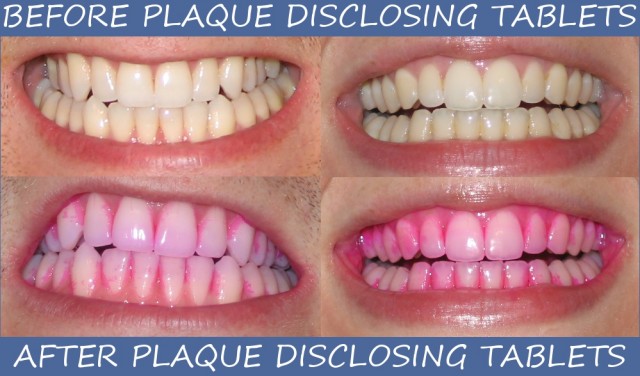
Third is a “treat” that wasn’t even candy at all.  No, it isn’t apples; people were paranoid enough by the 80’s so that everyone eschewed handing out anything that wasn’t wrapped.  I’m talking about toothbrushes and tooth capsules.  Handing out toothbrushes on Halloween is the equivalent of handing out copies of Richard Dawkins’ “The God Delusion” at the local church on Christmas morning.  The … tooth capsules were downright bizarre.  The Internet tonight informs me that they are called “plaque disclosing tablets.”  And, though they looked like they could be candy, their flavorless function was merely to stain your teeth in order to show you where you needed to brush more often.  I was always unfailingly polite to adults who handed these out (the result of a Catholic upbringing), and I always said “Thank you.”  What we all always wanted to ask, however, was, “If I cared about my teeth, why would I be carrying around a 20-pound bag of candy, mother@#$%er?!”

800px-Candy-Corn

Photo credit: “Candy-Corn” by Evan-Amos – Own work. Licensed under Public Domain via Commons.

Good-&-Plenty-Box-Small

Photo credit: “Good-&-Plenty-Box-Small” by Source. Licensed under Fair use via Wikipedia.

800px-Good_&_Plenty_licorice_candy

Photo credit: “Good & Plenty licorice candy” by Glane23 – Own work. Licensed under CC BY-SA 3.0 via Commons .

plaque_disclosing_tablets_on_teeth_before_after-640x376

A review of “Fear the Walking Dead,” Season 1 (2015)

I know that love for “Fear the Walking Dead” (2015) is not universal, but I needed to pipe in at least once to say that I thought that “Season 1” was terrific.  (I feel funny calling six episodes a “season,” but I’ve heard that de facto miniseries like this are a new trend in television.)  I’d give this apocalypse story a 9 out of 10.

For me, “Fear the Walking Dead” satisfied a longstanding itch.  If you grow up a fan of post-apocalyptic horror, you are constantly exposed to the aftermath of the end of the world.  In the vast majority of films and fiction, horror fans are treated to flashbacks, at best, of how it all went down.  Here we (partly, at least) get to see it all go down.

I’ll bet that stories so expansive in scope are a little harder to conceive and write convincingly.  Very few writers of prose or screenplays have expertise in disaster management, disease control, mass psychology or homeland security.  How much easier is it to have protagonists roam a landscape of burned out buildings, with only graffiti, snippets of conversation, and occasionally a blown newspaper offering hints of exactly how the end came about?

“Fear” deserves a hell of a lot of credit just for trying (as does “The Strain” over at FX).  It’s also why the globally plotted “Contagion” (2011) was such a frighteningly interesting thriller, and why Max Brooks’ stage-by-stage zombie pandemic easily made “World War Z” the greatest zombie novel ever written.  Through the eyes of an average family, “Fear” at least tries to show us meaningful glimpses into how police, emergency and military authorities would react.  The result is some interesting stories.  A nerdy high school student is the first to prepare, for example, due to his attention to the Internet’s alternative media.  And a doomed compact between a civilian neighborhood and their putative military protectors concludes in a particularly horrifying way.

Soooooo many viewers complained that there were “no zombies.”  Well, there were always a couple, at least — we got a great one in the first episode’s earliest minutes.  But that wasn’t the point.  The creators of “Fear” told us that this would be a different type of show, with a “slow burn” -type horror.  For me, that worked.  Look at it this way — we routinely see “zombie swarms” over at that other show (what was its name again?).  We’ve been seeing them for five whole seasons — the first repelled Rick Grimes’ ill advised solitary horseback exploration of Atlanta.  That’s fun for a zombie horror fan, but it’s nothing new.

“Fear” offers us something much different — a kind of “creeping horror.”  This seemed like the “Psycho” (1960) of onscreen zombie tales.  No, we don’t see zombies everywhere, but watching even one episode of “The Walking Dead” (2010) lets us know that these lackadaisical everyday people are in for a hell of a ride.  We, the viewers, know what they do not.  That’s what our high school English teachers taught us was “dramatic irony,” and it makes this a nice little companion show to “The Walking Dead.”  In fact, ALL the characters we see are probably doomed to die, given what we know of the statistics established by “The Walking Dead.”  That’s pretty dark stuff.

Other viewers complained about the characters being boring or unlikable.  I do get that.  Nobody here, I think, will ever gain the same viewer loyalty as Rick, Michonne or Daryl Dixon.  (If it were put to a vote among the women of the world, I’m pretty sure they’d rename “The Walking Dead” as “The Norman Reedus Show.”)  But “Fear’s” average (and, yes, sometimes boring) people seemed far more “real” to me — I think they functioned better as viewer surrogates, and better allowed me to imagine how I might react in a world like this.  I almost started viewing this as an end-of-the-world docudrama in the same manner as the BBC’s little known “End Day” (2005).

Besides, two characters in particular do show great promise.  I just can’t say who or why without spoiling that they survived.  Yet another character who appears suicidal in the final episode is one that I thought was pretty interesting, and we do not actually see this person’s death.

Sure, I had my own quibbles.  Los Angeles is remarkably empty for a city of nearly 4 million people.  I’m inclined to think that, even after an unlikely evacuation attempt, it would still be swamped either with people who still needed help, or with zombies.

Also … the sparse information we’re given about the zombie phenomenon here seems disappointingly contradictory.  We’ve established that a universal, invisible illness means people will return into undeath, regardless of how they died.  But we also see a flu-like illness affect some people (who are doomed to die shortly thereafter), but not all people.  Are these two different manifestations of the same disease?  Is it even technically a contagion, or is it an environmental illness?  (I know my questions here are absurdly silly, but this is precisely the sort of thing that horror nerds argue about over at the Internet Movie Database.)

Oh, well.  My recommendation here is to give this a chance, with the caveat that it definitely isn’t “The Walking Dead.”  It’s damn good.

Oh!  One more thing!  Keep an eye out for occasional homages to “28 Days Later” (2002).  And watch closely — one such plot arc is devilishly turned on its head in a subtle thematic twist.

tumblr_ntb25ok2ex1t7b5qro1_1280

A review of “Extinction” (2015)

I’d give “Extinction” (2015) a 6 out of 10; it’s a fairly average postapocalyptic horror movie.  And that’s kind of sad, as it seemed to have the ingredients for a great one.

We open with a delightfully scary nocturnal ambush on two school buses crowded with fleeing refugees.  The scene isn’t perfect.  (The soldiers here are both too stoical and too stupid.)  But it’s effective thanks to its claustrophobic setup.  The assailants actually aren’t zombies or “undead” — they’re vicious, fast-moving mutants that are far more interesting.  (Their monsteryness is contagious and catches quickly, a la 2002’s “28 Days Later.”  This predictably spells disaster for the busses’ passengers.)  The animalistic albino baddies actually reminded me a lot of the creatures from “Mutants” (2009).

Then we jump ahead nine years, where two men and a nine-year-old girl suspect that they are the last of the world’s survivors.  But three people are enough for conflict, human nature being what it is.  There is a creatively conceived and fresh idea for a particularly dark end-of-the-world drama.  Jeffrey Donovan and Matthew Fox are both very good; yet the incredibly talented young Quinn McColgan outshines them both.  (Seriously, that little girl is off the hook.  Her performance might be the best thing about the film.)  The makeup effects for the monsters (here only referred to as “they” or “them”) are surprisingly fantastic for what seems like a low-budget film.  And you can tell that a nice amount of thought went into this movie, even if its understanding of Darwin is a little puzzling.  (Why would blindness be an adaptive trait for the monsters?)

I’m just not sure why this movie didn’t work so well for me.  Its formula sure as hell worked for “28 Days Later” and “Maggie” (2015).

Here’s what I think the problem was — the conflict between the two men was a plot that just never advanced.  One hates the other.  We eventually find out why, and it’s a compelling plot point, rendered fairly well in flashback.  But … it’s a static situation that just doesn’t proceed anywhere.  I actually got bored.

The monsters often did little to advance the tension.  They are usually offscreen, absent entirely, or even (in much of the movie’s beginning) presumed extinct.  My attention really did wander.

Finally, the extremely cheesy musical score detracted greatly from the tension that the movie does manage to establish.  This horror movie sounded like a Lifetime Channel movie-of-the-week.  That is not a good thing.  If only those violin players had been victims of the initial apocalypse.

Oh, well.  This is still a fairly good end-of-the-world tale.  And the creepy-crawlies were nice, when we got to see them.

extinction art

Can a zombie movie be an Oscar contender? (A review of “Maggie.”)

I’m not even sure how to describe what I just saw.

It was a zombie movie.  It starred Arnold Schwarzenegger as a gentle, mild mannered father.  There is virtually no action.  It’s actually slow.  We see precisely three zombies, by my count, and one of those appears only in quick flashbacks.  Schwarzenegger doesn’t even raise his voice, much less raise hell.  Where I come from, that’s what we call “ALL OF THE INGREDIENTS FOR A BAD MOVIE.”

But “Maggie” (2015) was simply FANTASTIC.  It’s expertly made, and is like no other “zombie movie” I’ve ever seen before.  I’d give it a 9 out of 10.  It … actually isn’t really a horror movie, but rather a very, very dark family drama, cleverly housed inside a horror sub-genre. The movie is about terminal illness, and not monsters.

Schwarzenegger hands in a nuanced, understated but still quite touching performance.  He was perfect — I never knew he had it in him.  I KNOW he is the actor here; I recognize his face and read his name in the credits.  But I still have a hard time believing that this is the same man that starred in “The Running Man” (1987).  (Okay, cheap shot.)  Abigail Breslin was also perfect as the afflicted daughter.  And Bryce Romero was terrific in a supporting role.  They’re great young actors; Hollywood seems to be producing more of them these days.

Wait … is that kid’s last name actually “Romero?”  That’s SO meta.

The actor portraying Maggie’s primary care physician (is it Wayne Pere?) gave a great performance — he’s right on par with Schwarzenegger here.

And John Scott’s script is superb.  I love the way he crafts characters against stereotype — we have doctors who are neither omnipotent saints nor detached jerks.  The popular kids at school sweetly welcome their infected friends along on a night out, instead of ostracizing them.  An overzealous Jerk Cop character wants to round up all the infected without prejudice and quarantine them right away.  But, by the end of the movie, moral ambiguity suggests that he’s … probably right.

This movie falls just short of perfection with a few forgivable flaws:

1)  Its plot setup is ridiculous.  The government institutes quarantines for infected people, yet … politely allows people to return home for a few weeks until they are definitely dangerous?  And they then return voluntarily to quarantine after a phone call, even after it becomes well known that the quarantines are hellish places to die?  I’m … pretty sure no quarantine in history has ever worked like that.  Consider the recent Ebola outbreak, and how the quite healthy and asymptomatic Doctors Without Borders’ volunteers were sequestered immediately.  Maggie’s release to her home was quite obviously an overly convenient plot device.

2)  Whoever performed the radio voiceover in the opening scene really dropped the ball.  They needed a reshoot or a better actor.

3)  I honestly think a lot of horror fans will be disappointed with this.  Was it really necessary to include almost no action?  I personally feel that “28 Days Later” (2002) was a moving, touching, richly thematic film.  (It’s a favorite.)  Yet it still served up some racing, screaming hordes of “infected” that were goddam terrifying.  If “Maggie” had just one action set piece, it would have broader appeal.  And it would break up the movie’s slow pace.  A movie like this doesn’t have to be ABOUT exploding zombie heads, but … it wouldn’t hurt to include just one, just for fun.

4)  By the end, it is possible that the film pushes the drama just a little too far, depending on your taste.  By the time the “Mama’s garden” scene occurs toward the end, you might begin to wish the movie just reaches its conclusion.

Still, this is a great flick.  See it.  Tonight.

pdc_maggieposter1