Tag Archives: Mary Washington College

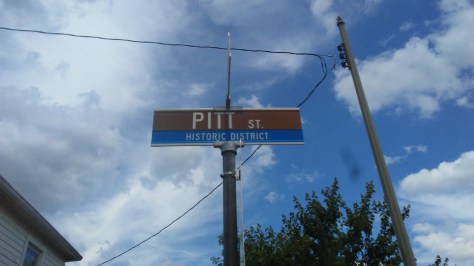
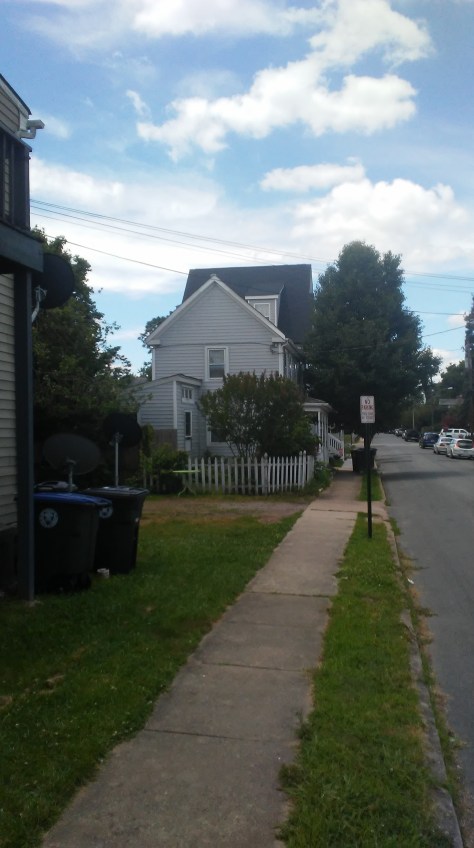
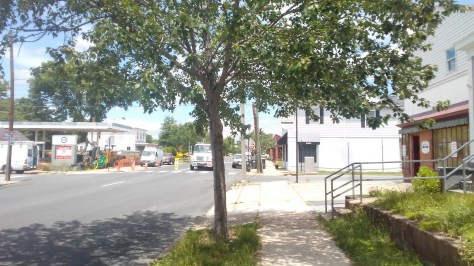
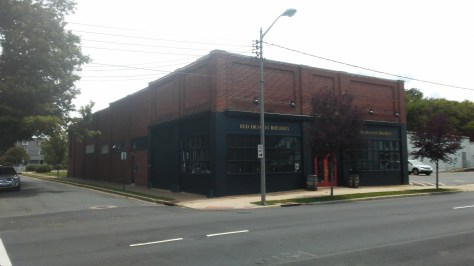
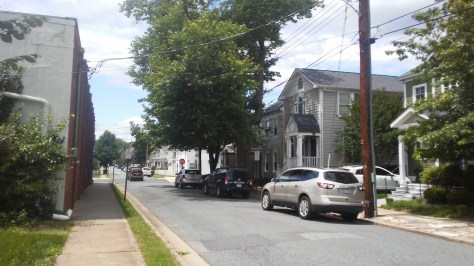
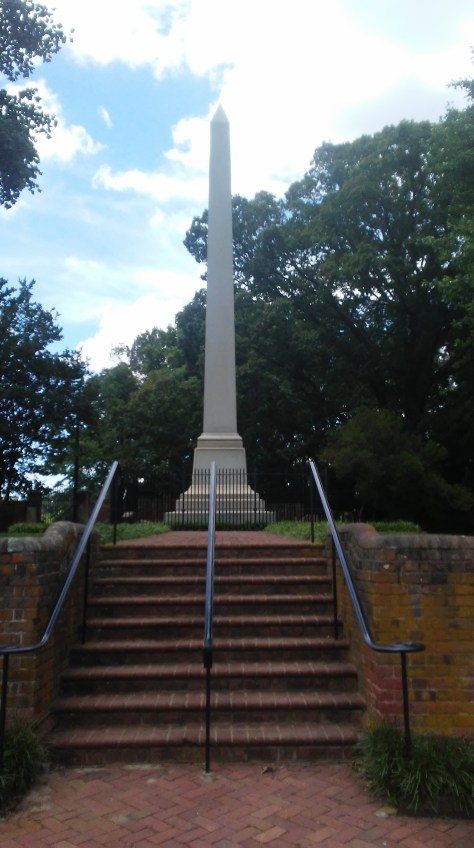
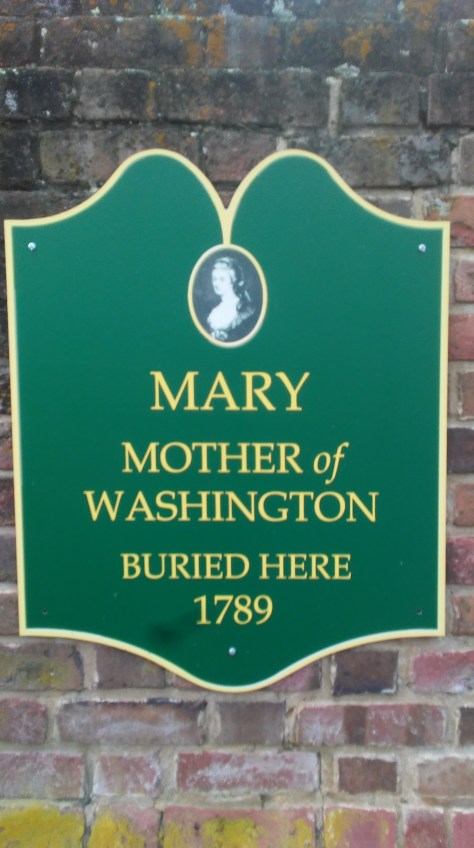
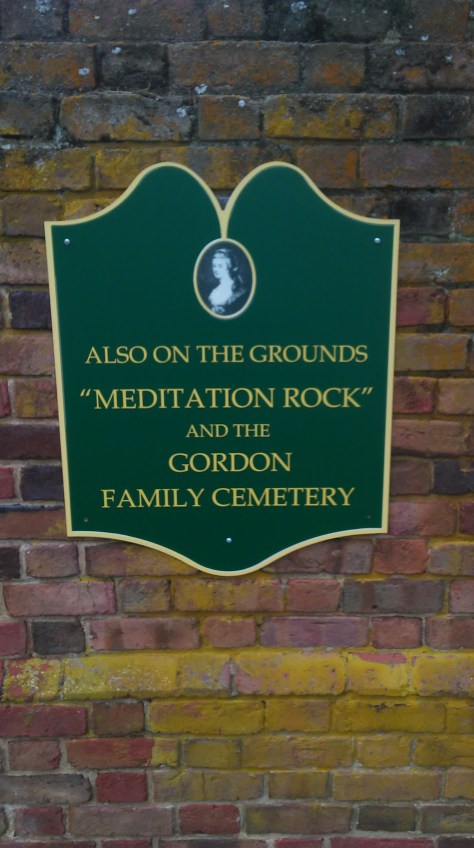
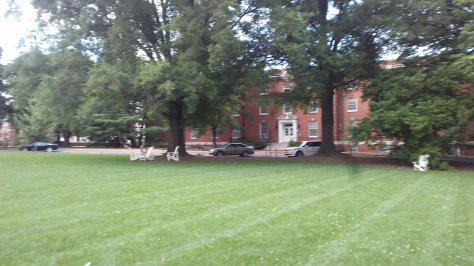
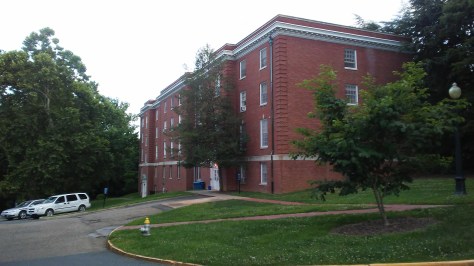
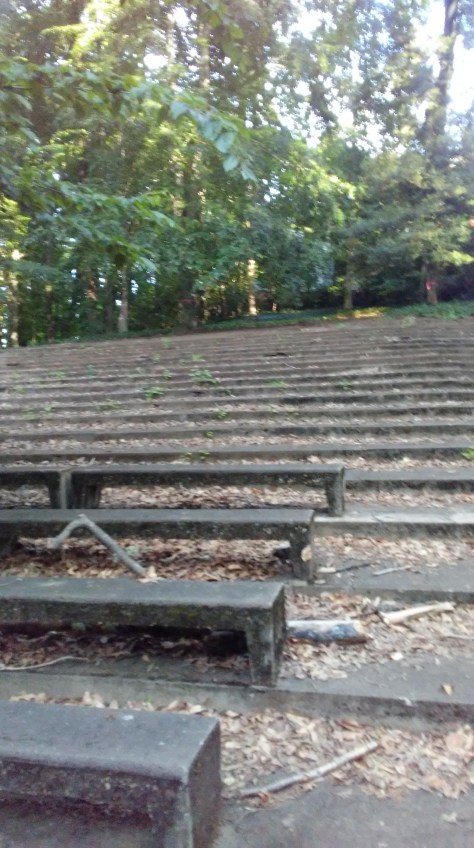
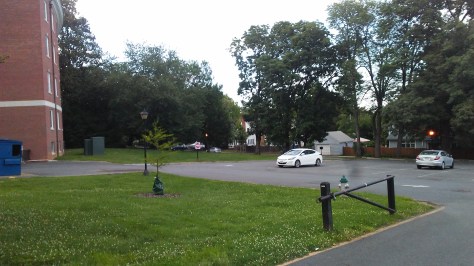
Downtown Fredericksburg, Virginia, June 2017

My Fredricksbud declined my offer to bring him an Official City of Roanoke, Virginia, commemorative mug.  (You’d figure those things would be in higher demand.)  So I brought him a … fidget spinner!!!  There it is, below … fidgety-spinning, I guess.  All jokes aside?  The allure of these (surprisingly pricey) fad toys is entirely lost on me.  That thing entertained me for less than two minutes.  (And it is generally agreed upon that I have the mind of a child.)


20170606_175733


Falmouth Bridge heading west into downtown.

20170606_181018


George Street looking north to Caroline Street.

20170606_181324


Caroline Street.  I must say that the entire town looks far better than when I last spent a lot of time here in 1995.  There are more and better stores, and the downtown area even looks better maintained.  Of course, the mid-1990’s economy wasn’t doing so well.

Pictured below is Goolrick’s Drugs.

20170606_181417

20170606_181459

20170606_181533

20170606_181547

The reopened Sammy T’s!

20170606_181608

Looking west up Hanover Street from Caroline Street.

20170606_181627

At Benny Vitali’s on Caroline Street.  The pizzas and individual slices there are twice the normal size.  It seems like a decent marketing device; how many Mary Washington College students wouldn’t want to order a giant pizza?  The pizza is cheap and damned good too.

20170606_183056


A mural on Sophia Street.

20170606_185616


The corner of William Street and Princess Anne Street, heading west.

20170606_185756


The Confederate Cemetery (and Fredericksburg City Cemetery) as seen from Washington Avenue.  My apologies for including this — for some reason, I’ve always really liked speeding car shots.

20170606_185912


Throwback Thursday: The Allman Brothers Band

Rest in peace, Gregg Allman.

I first got acquainted with music of The Allman Brothers Band as a first-semester freshman at Mary Washington College in 1990.  My cultural illiteracy as an 18-year-old was embarrassing — especially where music was concerned.  I’d arrived at the small, fairly conservative Virginia state school listening to … well, very little other than what I’d heard on the MTV countdown.  (I started loving Richard Wagner as a high school senior — but that niche interest was rare for someone my age, so far as I was aware.)  It was an ongoing issue when I was a college freshman that upperclassmen would roll their eyes or even occasionally hiss when I told them what music I was into.

Alumnus Steve Miller and his friends were the exception.  They showed me far more patience at their parties in “The Tunnel” between Mason and Randolph Halls — they exposed me to tons of The Allman Brothers, Pink Floyd, The Steve Miller Band, and The Beatles.  (No, the irony of a guy named Steve Miller coincidentally loving The Steve Miller Band was not lost on us.)  Steve and his friends were each, in varying degrees, an amalgam of Obi-Wan and a far mellower version one of the guys from “Animal House” (1978).

The Allman Brothers were really my first extended exposure to Southern rock.  (And, hey, you can’t get much more Southern than a band made up of guys named Berry Oakley or Butch Trucks.)  I listened to them whenever there was a party at Steve’s, even after he started hosting his soirees out of his apartment on Sunken Road. Everyone there loved The Allman Brothers.  I think “Ramblin’ Man” was probably the group’s favorite.

Today, “Midnight Rider” is by far and away my favorite Allman Brothers song.  Curiously enough, though, for the life of me, I do not remember hearing that one in college.  I actually started jamming to it after I heard Rob Zombie include it in the score for the opening montage of “The Devil’s Rejects” horror film in 2005.

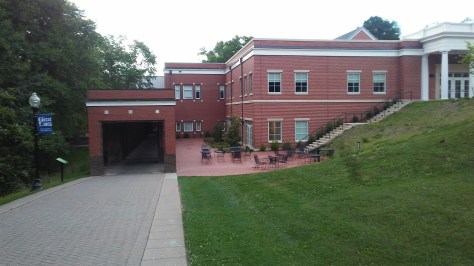
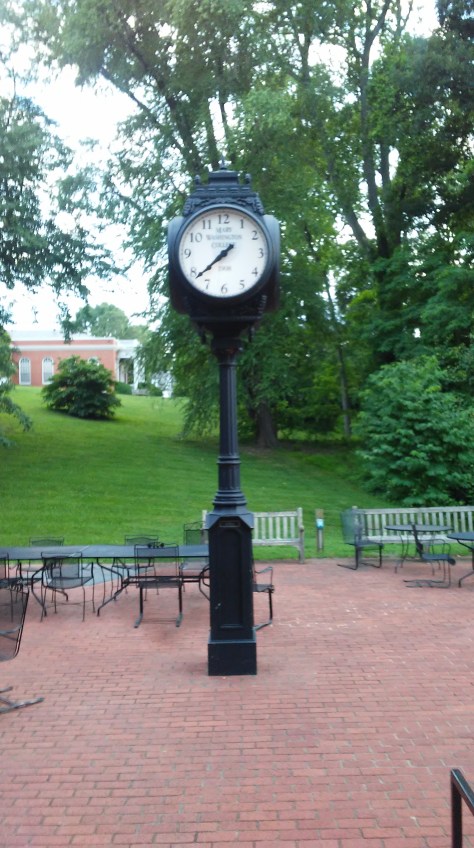
Anyway … “The Tunnel” at “Mary Washington College” has apparently now been remodeled into the above-ground “The Link” at “The University of Mary Washington.”

Well la-dee-DA.


A recommendation: The Blue Mountain Review

I’ve had the pleasure of getting acquainted recently with The Blue Mountain Review.  The poetry there is simply superb.  I suggest that it makes excellent summer reading — I know I’ll be bringing it along on the annual “River Trip” with the Mary Washington College kids.

Click here and peruse the newly published Issue 7:  The Blue Mountain Review, Issue 7.

For more information about the journal, you can find its Facebook page right here:  The Blue Mountain Review.


18342767_708788349306092_5656045051977865504_n

Throwback Thursday: MTV in the early 90’s (at Mary Washington College).

You are really getting old if you can remember when MTV was cool.  In the first half of the 1990’s, MTV had it all: weird, varying animated logos; Tabitha Soren; “MTV Unplugged,” which I still enjoy via Youtube today; “Liquid Television;” the sometimes priceless “Beavis and Butthead;” the always priceless “Aeon Flux;” and the bizarre promos featuring “Jimmy the Cab Driver.”  (The date on the embedded video below is incorrect; Jimmy was annoying his fares in the 90’s — not the 80’s.)

This was the age when non-music-video programming more or less began for the channel.  But it didn’t suck — it was actually quite good.

I think MTV’s greatness lasted until 1994 or 1995, around the time when my college career drew to a close.   We didn’t have cable in our dorm rooms at Mary Washington College … except when we did.  During my junior year, some intrepid, subversive genius had gotten into the vicinity of the Resident Director’s cable connection, and “split” it or something, in order to provide our entire floor with basic cable.  He was an anonymous hero … like Batman, except probably a lot more chill, we figured.  (He wasn’t the hero that Alvey Hall deserved, but he was the hero that Alvey Hall needed just then.)

God, did we all love it.  Frederickburg, VA, was a small, quiet town, and we didn’t have the Internet, or even cell phones.  We didn’t even have landlines in our room; we had two shared “hall phones” for local calls and a pay phone to call anywhere outside town.  (And I guess college kids today might be unfamiliar with the concept of “local” and “long-distance” calls.)

Here’s what I can’t figure out in retrospect, after 24 years …  I understand that cable can be “split;” New Yorkers do it all the time.  But … wouldn’t Batman need to lay cable down throughout the length of our dorm?  And wouldn’t he need to install cable jacks in each of our rooms?  Did he do it on a Saturday night, when we were all drunk?  How did he get in?

Maybe he came in the window.  Godspeed, Batman.


875_1.1384871086

tumblr_mursv0fC3B1r4jqhwo1_500

tabitha-soren-003

rs-237605-GettyImages-2225160

maxresdefault

beavis_and_butthead_by_laylaloves13-d7ahfkh

aeon-flux_L07

dd59bcc492bfbb539c51762c7ec514d5

donallogue

Mtvmoon

Because I worked hard for that doctorate.

The off-brand knock-off of Dr. Pepper is named “Dr. Perky” and, for some reason, that is very, very sad.

One of my Mary Washington College alums suggested that “Dr. Pervy” would be a catchier name, but I’m already using that for my Match.com profile name.

Do I LOOK any perkier?  I’m feeling more chagrined that I bought a 12 pack of this, even if it was only $2.35.  It tastes like water, sugar, and just a touch of peppermint-flavored cough syrup.


20170331_200513


“The Disappearance of Little Tommy Drummond,” By Eric Robert Nolan

[First published by Dead Beats Literary Blog, November 5, 2013]

A town could die from the inside out.

That was what Kira Manning thought as she gazed absently out from the wide front window of Manning Hardware in Willibee, Massachusetts. A single loss close to its heart can reverberate throughout a town, in the same manner that a malignant cancer flourishes throughout a body.

On the surface, things might look the same. Main Street beyond her window still held the same cars and passersby. Eddie Berenger, the town drunk, still ambled along with his big, dark green Army knapsack, ever laboring under the misconception that nobody knew it held a 12-pack. Anna Mirren walked smartly along with her arms full of choir notes for the Willibee First Baptist Church Adult Choir. And the prim Mrs. Bell still strolled like royalty along the sidewalk, her corgi keeping perfect pace with her like a diligent squire.

But that was the surface. Today, Willibee was a changed place. On a telephone pole just outside the store window, a poster broadcast a word in bold black letters:

MISSING

Below that was a photograph. A handsome 11-year-old boy with closely cropped black hair smiled broadly out at passersby. That smile suggested a soul who had never seen a rainy day in his life. If the boy himself had been standing there on the sidewalk, the smile would have been contagious.

But he wasn’t there on the sidewalk. Little Tommy Drummond had been missing since May 9th, 2013. He had been playing with two friends at Falcon’s Wing (or just “The Wing,” to many locals), a twisting ravine among the piney hills along Willibee’s western edge. The Wing had been a favorite place for the town’s children – a steep, sharp rift, full of thick vines, with a sandy trail winding along the bottom. Lined by coniferous ridges, it was actually quite close to town, running alongside it. Yet it was tucked firmly under the forest’s endless canopy of pines.

Tommy had been playing with two friends – John Paulson and Troy Bristol – and they were the last two people to see him alive. And now, as the calendar crept into the waning days of a humid June, a growing consensus held that they would always be the last to have seen him.

Tommy Drummond never returned home that night. And the only sign of him the following day had been a single, bright red, left sneaker, sitting askew in the ravine’s vines.

Kira turned away from the window. She was a slender 32-year-old in a red flannel shirt, with a cascade of curly walnut hair tied back in a ponytail. She had much work to do. It was inventory day at Manning Hardware, and she preferred to run a tight ship. Besides, she was only one woman, and the store was hers alone. She liked to run a tight ship because life had taught her that she needed to do so. She’d been orphaned by a car accident when she was 14, and she was far too independent to have ever married. She was one of those uncommon people who truly treated industry as a virtue. And so she resumed counting the rows of squat green Kohlemen Lanterns on an overhead shelf.
Still, like so many others in Willibee, her thoughts returned to what the newspapers had dubbed “The Drummond Case.” Willibee was a logging community of about 2,000 souls, and the possibility of a kidnapping or murder had monopolized – no, fundamentally altered – the town consciousness. Nobody could forget the pageant of grief that was the local news coverage: Cynthia Drummond, the mother, weeping openly on television; the worn, frightened look of Sean Drummond, that father; the shell-shocked expressions of his two younger sisters.

And nobody could forget the singular nature of the case’s strangest clue. On May 11, two days after the disappearance, someone in the search party noticed a single word carved into one of the great, tall pines lining The Wing:

NERO

Police determined that it had been made with a pocket knife, and neither of Tommy Drummond’s playmates had placed it there. And nobody had a firm idea how it might relate to the boy’s disappearance. Nearly all opined, however, that it had something to do with it. The tree sat at a high pass that overlooked nearly all of Falcon’s Wing; whoever had put the message there could easily see where Tommy and the other boys had been playing. The FBI had been called in from the Boston Field Office (kidnapping is a federal crime), and their forensics experts had determined that it had been carved at about the same time the boys had been there.

Nero. What did that mean? Was it a name? If so, was it a name the abductor called himself, or was it an appellation given to him by others? A minority in the town held that it wasn’t a name at all, but a reference – “Nero fiddled while Rome burned.” Was that how the message was intended?

But while Rome burned, a chill settled over Willibee. The effect on the town was difficult to fully describe. Certain changes were predictable: people locked their doors at night, schools cancelled outdoor activities, parents admonished their children never to talk to strangers. And, of course, children no longer played along Falcon’s Wing.

The real effect of the disappearance, however, ran far deeper; the chill over Willibee permeated its very bones. A sense of danger can invade a place. It can occupy a town like an opposing army. It can change the nature of every single subsequent moment for the people living there. Willibee was a small town, and like many small towns, it was no stranger to provincialism. Residents there had once credited themselves for living lives that were simpler and safer than those who lived in big cities. The Drummond Case robbed them of that. The sense of safety was gone now, leaving a gap that was as painful as a roughly extracted tooth. And the most venomous aspect to all of this was a suspicion – that the crime had been committed by one of Willibee’s own. The small town was not a tourist destination, and had few visitors. Some of the lumberjacks were seasonal workers from elsewhere, but the police had investigated them with no real leads.

The possibility – the very notion – that “Nero” could be a local was not only terrifying, it also destroyed the town’s sense of identity. It was a different place now – the old Willibee was dead, while this new and frightened community had fallen, trembling, in its place. With Tommy Drummond’s loss, the town had died from the inside out.
After a solid day’s work, Kira closed Manning Hardware just a little early at 4:50 PM. Skipping her usual cup of coffee at the Bumblebee Diner, she proceeded directly home. Her left turn on Willows Street took her past one of the immense and solid walls of pines that lined the town like ramparts. Not far away was Falcon’s Wing.

She too had played along The Wing as a girl, in those forever-ago days when she had parents. Her favorite game was hide and seek, and she had been good at it. She remembered how each tree seemed like a friend and a teammate, concealing her flight from her pursuers. She remembered how the fallen pine needles on the forest floor made her footfalls silent.

Now the trees felt like a presence once again. Here, in yet another humid June evening, they stood sentinel over the secret of Tommy Drummond’s fate.

A girlish, irrational thought crossed her mind – “Maybe the pine trees took him.” She could imagine them thinking, conspiring once again, but this time as confederates with whatever dark soul had stolen away with the lost boy.

Shivering a little, Kira continued home.

(c) Eric Robert Nolan, 2013


PuszczaBydgoska_night4_01-2015

Photo credit: By Pit1233 (Own work) [CC0], via Wikimedia Commons

“Fantasia” double-feature today!

I just finished watching Disney’s “Fantasia” (1940) this snowy afternoon with my girlfriend — she gave me the boxed set with “Fantasia 2000” (1999) this Christmas.  This is the first time I’ve seen the entire film in … 26 years?  If memory serves, I last saw it at Mary Washington College’s Dodd Auditorium when I was a freshman in 1990.

I loved it just now even more than I loved it then.  My favorite segment will always be the final one — Modest Mussorgsky’s “Night on Bald Mountain,” with a coda of Franz Schubert’s “Ave Maria.”  (The accompanying animation is Gothic horror; I’ve posted about it here at the blog before.)

I felt for sure that my second favorite would be Igor Stravinsky’s “Rite of Spring.”  Pictures of those animated dinosaurs startled and thrilled me as a tot after Christopher Finch’s “The Art of Walt Disney” (1975) somehow appeared magically among my baby books in Queens, New York.  As an adult, however, I liked the segment mostly because of its cool depiction of lower life-forms.  The dinosaurs were stylized and interesting to see, but I don’t think the quality of the animation has held up very well — especially considering what we know about the dinosaurs has changed so much in 80 years or so.

Instead, my second favorite was Ludwig von Beethoven’s “The Pastoral Symphony,” and its whimsical, beautiful depiction of centaurs, gods, and other figures from Greek mythology.

My girlfriend’s favorite segment was Pyotr Ilyich Tchaikovsky’s “Nutcracker Suite,” with its dancing fairies.  “Fantasia” was actually a favorite movie of hers growing up; she’s seen it several dozen times in her childhood.

There is some bizarre trivia about “Fantasia” from Wikipedia, which has a lengthy entry for the movie: “In the late 1960s, four shots from The Pastoral Symphony were removed that depicted two characters in a racially stereotyped manner. A black centaurette called Sunflower was depicted polishing the hooves of a white centaurette, and a second named Otika appeared briefly during the procession scenes with Bacchus and his followers.”  That’s so nuts.


fantasia-locandina-1940


fantasia-disneyscreencaps-com-4506-1


frost-fairies-fantasia


download


Well, Sammy T’s in Fredericksburg is closing …

See yesterday’s article in The Free Lance-Star linked below.

I do believe that all of the major Mary Washington College hangouts in the mid-1990’s are now gone … Unless I am mistaken, Spanky’s, The Irish Brigade and Mother’s Pub have all long since closed … I think not long after the Class of 1994 graduated.  (Correct me if I’m wrong — PLEASE.  It would make me feel better.)

It … just isn’t the same Fredericksburg any more.

What about that country bar on Princess Anne Street?  The one that was supposedly so rough — but fine to take your date on those “okay” nights when they had square dancing?  Was it “The San Antonio Rose?”  Or was it called “The Yellow Rose of Texas,” after the song?  Something like that?

http://www.fredericksburg.com/business/local_business/downtown-restaurant-sammy-t-s-to-close-this-weekend/article_1e7fb875-6824-5b43-b964-3f00d52af4ef.html

Throwback Thursday: “Star Trek,” the Original Series

I really missed the boat with last week’s Throwback Thursday — it was the 50th anniversary of the entire “Star Trek” franchise, with the first episode of the original series airing on September 8, 1966.  (And even the term “franchise” seems way too narrow to describe “Star Trek” in all of its incarnations — it’s really more like a permanent part of western popular culture.)  I’m not old enough to remember the show’s original run, which was a surprisingly scant three years.  But I remember it in syndication when I was not much more than a baby in the mid- to late 1970’s.

“Star Trek” was something that my older brother and maybe my father watched.  (I was fixated on programming that was more comprehensible for young kids, like “Land of the Lost” and reruns of “The Lone Ranger.”  Seriously, the original black-and-white serial western was still in reruns back then.)

But “Star Trek” was definitely something I was attracted to as a tot, doubtlessly resulting, in part, from the contagious ardor for it that I saw in my older brother.  (He might not admit it today, but he was a bit of a hard-core science fiction fan long before I was.)  The show was on at our tiny house in Woodhaven, Queens, quite a lot.  He also had toys and posters connected with it.  (And anything my older brother owned was something I endeavored to play with when he wasn’t looking.)

He had that Captain Kirk toy among the figures produced by Mego that you see in the bottom photo.  (Again, 1970’s “action figures” were often pretty much indistinguishable from dolls.)  In the early 1980’s, he had a totally sweet giant poster depicting diagrammed schematics for The Enterprise in surprising detail.  I’ve Google-searched for it, but found only similar pinups.  The one hanging in the room we shared was blue.

I remember him annoyedly correcting me because I called it “Star Track.”  (I did not yet know the word “trek.”  I myself was confused by my own mistake; I knew that there could be no “train tracks” in space, even if I studied the opening credits one time just to make sure.)

I was precisely the sort of pain-in-the-ass kid who fired off an incessant barrage of questions when I saw something on TV that I didn’t understand.  My father was patient to a fault when I punctuated his World War II movies with inane questions.  (I’m willing to bet I eventually acquired more knowledge of the war’s European theater than the average six-year-old.)  My brother was not always so forbearing.  I actually remember him changing the channel away from shows he was watching, like “Star Trek” or “MASH,” if I joined him at the little black-and-white television we had in our room.  (The poor guy needed me to lose interest and go away, so that he could at least hear the damn show.)

Certain “Star Trek” episodes remain memorable to this day, even if I understood maybe 15 percent of what transpired onscreen.  The was The One With The Domino-Face Men, which the Internet now tells me was actually titled “Let That Be Your Last Battlefield.”  Then there was The One Where Kids Ruled Themselves on a Deserted World, which made a really big impression on me.  (The Internet tells me this one was “Miri.”)

As I grew up, the show faded from prominence in my child’s psyche.  It was just never my fandom of choice.  Nor was it for many other kids I knew … by the 1980’s, it was already considered “an old TV show.”  The kids on my street were always excited about the feature films; even if we were underwhelmed by the “slow” first film in 1979.  Blockbuster movies were major events back then, and fewer, and they were enigmatic in a way that is impossible after the Internet’s arrival.  (I think that Millennials will never be able to understand that, in the same way that you and I can never appreciate the vintage “serials” that our parents watched before the main feature at a Saturday matinee.)

In the 1980’s, just about every boy I knew was preoccupied with the space-fantasy of “Star Wars.”  On television, we had cheesefests like the original “Battlestar Galactica” and “V.”  As we got older, we gravitated toward the “Alien” and “Predator” film franchises.  At home, I read Orson Scott Card and Harry Harrison, and as I approached college toward the end of the decade, I’d discovered Arthur C. Clarke.  If we’d known another kid who was really into “Star Trek,” I’m not sure we would have considered it “nerdy.”  It would just have been very weird, because it we viewed it as a campy tv show from maybe two decades prior, like “Bonanza” or something.  I don’t think I ever even thought of the franchise as really relevant or popular until I was at Mary Washington College in the 1990’s.  “Star Trek: the Next Generation” would regularly draw kids out of their dorm rooms into the lobby at New Hall.

Still, it’s hard not to develop an emotional attachment to something that stimulated your sense of wonder as a tot.  I … felt pretty damn sad when Captain Kirk died in 1994’s “Star Trek: Generations.”  I saw it in a theater in Manassas, Virginia, I think, with my girlfriend at the time.  She actually felt she had to console me after seeing how doleful I was on the drive home.


leonard_nimoy_william_shatner_spocks_brain_star_trek_1968

250fd1893dd8cc218f526b588ec00502

You can’t spell “ennui” without “EN.”

This was placed on my Facebook wall, courtesy of a Mary Washington College Alumnus.  Why did he select ME for this?

I am occasionally surprised at the weird or dark material that people send me with messages like, “Only you would get this,” “Seems like your thing,” or, the grandest caveat of all, “I can’t put this on my wall — maybe you can put it on yours.”

I’m just not sure what that says about how I am perceived by others.