Tag Archives: The Walking Dead

A review of “The Walking Dead” Season 7.

[THIS REVIEW CONTAINS GENERAL, MINOR SPOILERS FOR SEASON 7 OF “THE WALKING DEAD.”]  I loved Sunday’s season finale of “The Walking Dead” — it was well executed, well performed (especially by Andrew Lincoln), and well written.  It was even beautifully scored.  (The closing narration and montage, combined with the music, were surprisingly moving.)  It had some great twists, unexpectedly good CGI, and some nice callbacks to the original comics.  (One surprise we see actually occurs with respect to another major character in the books.)  Towards the end of the episode, I was riveted.

The finale, however, can’t really redeem Season 7 as a whole.  I would honestly rate the season a 7 out of 10.  This was definitely one of the lesser seasons; I believe it would be the one I liked the least, if not for the inexplicably poor Season 2.

Maybe I was a little grumpy about “The Walking Dead” even before the season started.  Like a lot of viewers, I felt that the “cliffhanger” where Season 6 left off was absolutely manipulative on the part of the writers.  It pissed me off, and I went into Season 7 with reservations.

Then I was reminded about some of the smaller complaints I had about the show in the past.  I strongly differ with my friends about this show’s character development — I think it’s inconsistent at best.  And “The Walking Dead” seems to have so many characters that it can’t seem to decide who is a major character and who is not.

There’s a bit too much cheesy melodrama, like the schoolyard dynamics among the good kids, Maggie and Jesus, and the meanie, Gregory.  (This subplot was drawn from the comics, too — but it played out there in a far more adult fashion.)

Then I had a new quibble or two — one was a lack of proper minimal exposition.  We know extremely little about Jadis and the survivors in the garbage dump, despite the major role they play in the story.  They seem … sort of like a cult, and sort of like a performance art group, but that’s all I could tell you about them.  (The Internet tells me that some fans refer to them as either “the Heapsters” or “the Garbage Pail Kids.”  I find both appellations pretty funny.)

My biggest complaints about Season 7, however, were that it was too much of a downer, and that it was too slow.

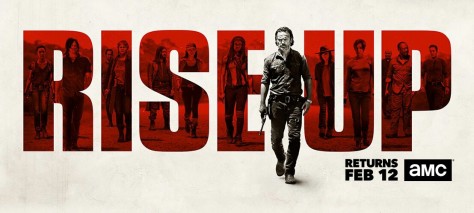
We start the season with a front seat to Negan’s gory, merciless punishment of Rick’s de facto family.  And then the victimization of our favorite characters simply … continues for the length of the season, until the last episode’s climax.  You see that cool image at the bottom of this blog post?  The advertisement depicting bad-ass Rick and his allies getting ready to “RISE UP?”  (It actually looks a lot like the posters for the “Walking Tall” films.)  Well … we don’t see much of that until the final episode. I told one friend that “The Walking Dead” was disappointing me because it had grown tiresome “seeing Negan beat everyone all the time.”

And some episodes felt like filler.  Yes, there were some nice “milieu” -type stories — it was actually a lot of fun expanding the show’s world, to see other settlements, like The Kingdom, The Sanctuary and Oceanside.  But I think the plot needed to move forward more quickly.  (For a far better discussion of these issues, check out Ryan Roschke’s excellent review over at Popsugar.)

Hey … I’m still a fan.  I’m just not as satisfied a fan as I used to be.  I certainly looked forward to “The Walking Dead” every week, and never missed an episode.

And this season did have its high points.  Dwight emerged as quite an interesting, compelling character, thanks in no small measure to Austine Amelio’s portrayal of him.  The character interaction among him, Daryl, Negan and Rick is great stuff — I find myself wishing that the lion’s share of the season was devoted to those four.  I am finally starting to understand that Norman Reedus is indeed a really good actor — his performances were strong throughout the entire season, but must notably upon his return to Alexandria and his embrace with Rick.

And there were moments of nice action and horror as well — the sand-buried walkers pursuing Tara and Health spring to mind, not to mention the neat trick Rick and his group use to dispatch an entire herd of zombies on the interstate.

Let’s hope that Season 8 will pick up a bit, now that “war” is underway.
 

tumblr_oi2yv4Y4U91vai2dso1_1280

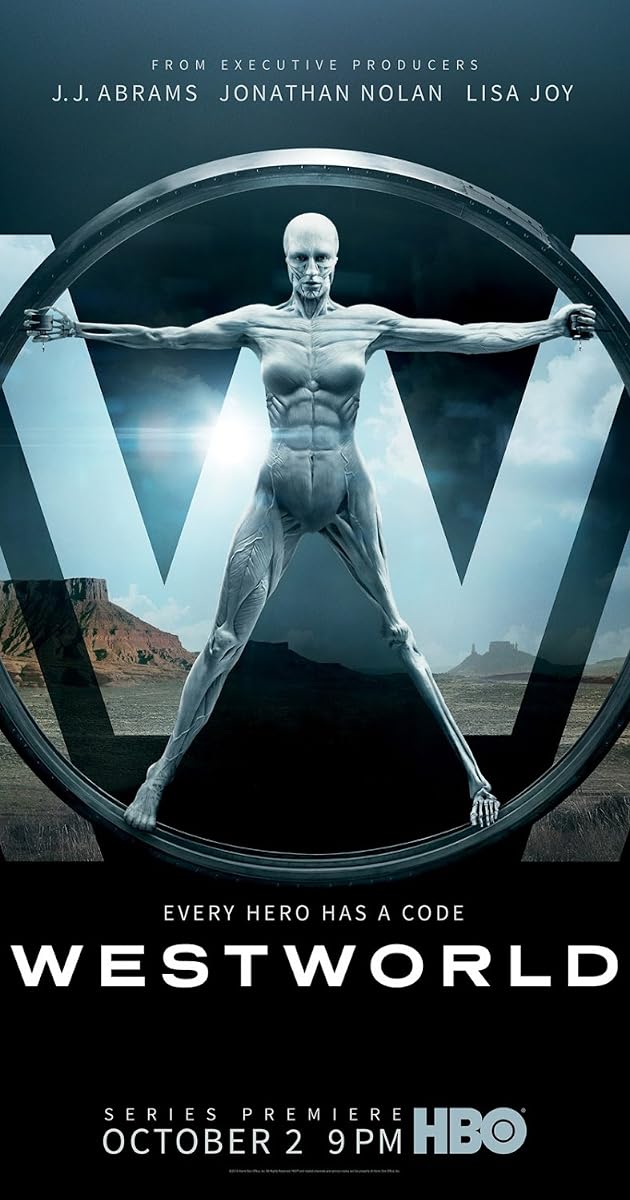
A review of the “Westworld” pilot (2016)

Blog Correspondent Pete Harrison suggested I give the Westworld” series (2016) a try, and I’m damn glad he did.  The first episode was superb, and it’s safe to say it’s reeled me in.  I’d give the pilot a 9 out of 10; this seems like it could be the best science fiction television show I’ve seen in a long time.

I still think the premise is just slightly cheesy — grown men and women spending a fortune to visit a western-themed amusement park with interactive android cowboys.  (I think maybe westerns were a more mainstream genre in 1973, when Michael Crichton’s original film was in theaters.)  And there are times when the show’s central western-themed motifs are a little annoying to me … even though I know the park is supposed to appear superficial and cliche.

But “Westworld” is a highly intelligent thriller — it looks like a hell of a lot of thought went into the script.  Just about every aspect of the show seems like it was well developed — everything from the actors’ performances to the set design.  And don’t let the gorgeous, idyllic, sunny landscapes fool you — there is no shortage of pathos here.  It’s brutally dark in its storytelling.  (By the way, if you happen to be a fan of this show, I must recommend 2014’s “Ex Machina” film — it is similarly cerebral and dark in its outlook.)

Anthony Hopkins is fantastic, as usual; Jeffrey Wright, James Marsden, Evan Rachel Wood and Thandie Newton are all very good.  They’re all overshadowed here, though, by two stellar performances.

The first is Ed Harris as a black-clad psychopathic visitor to the park — I had no idea he could be so frightening.  Dear God.  Has he played bad guys before?  I’ve always associated him with nice-guy roles — even his antagonist in 1996’s “The Rock” was misguided and sympathetic.  I’d love to see him get a role in an upcoming “The Dark Tower” film, maybe as one of the Big Coffin Hunters, if they are ever featured.

The second is Louis Herthum, the ostensible “father” of Wood’s heroine.  (They are both androids within the park — I don’t think that’s much of a spoiler, as it’s all over the show’s advertising.)  Herthum may be a lesser known actor, but he stole the show in a tour-de-force performance, in my opinion.  And that’s no small feat in a cast including Hopkins and this surprisingly vicious Harris.  I haven’t seen a performance that good on television since NBC’s “Hannibal” went off the air.

Anyway, I noticed something funny here.  Steven Ogg plays a bandit who invades people’s homes and murders them … this is basically the same role he plays as Negan’s chief henchman on “The Walking Dead.”  It must be weird to be typecast like that.

Hey … it is only just now that I realized the logo below is a riff on Da Vinci’s “Vitruvian Man.”


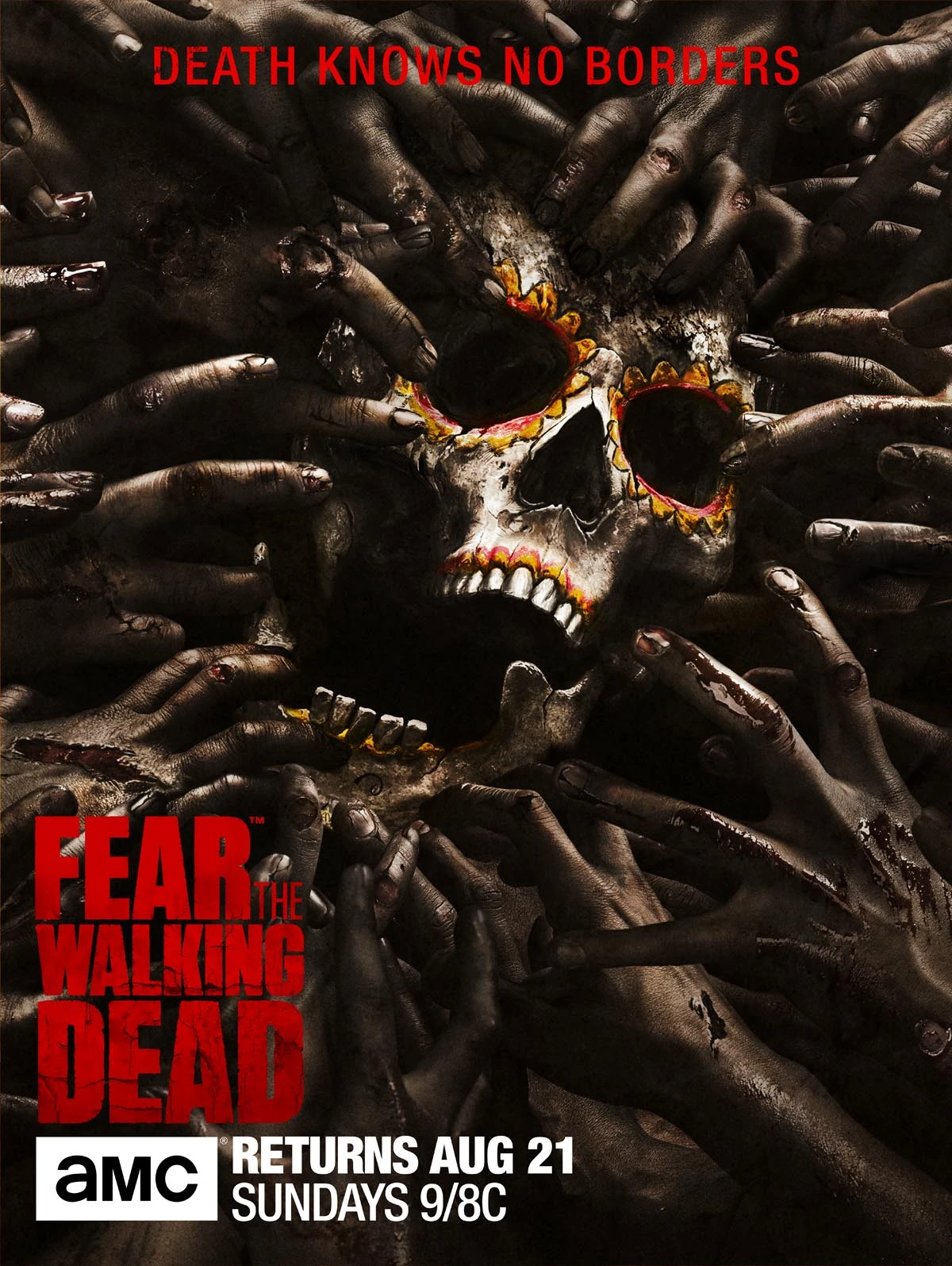
A short review of “Fear the Walking Dead” Season 2

I realize that “Fear the Walking Dead” is the show that so many people love to hate.  But I myself am just thrilled with it.  I’d give the second season a 9 out of 10 for being the show to which I looked forward to the most all week, and for arguably being more enjoyable than … that other zombie show.  (Its name escapes me at the moment.)

I suppose it feels smarter than it really is.  The pace is slower, there is far more background and context for the story, and I personally feel that there is far better characterization than in its predecessor.  (My fellow horror zombie fans strongly disagree, but I always thought that consistent characterization was a problem with “The Walking Dead.”)

As friends and reviewers have pointed out to me, though, it isn’t as smart as it feels.  People do dumb things; I’m not sure if it is laziness on the part of the screenwriters or just a lack of good judgement.  A typically egregious example is when our seafaring heroes deploy an unwieldy landing party to the beach while literally waiting to be attacked by pirates.  Another is the characters’ general apathy about the possibility of infection from blood splatters, from surfaces or from skin-to-dead-skin contact.  (We actually see a hero destroy a zombie by inserting his thumbs through its eye sockets into its brains.)

But the show is still damned enjoyable.  It has an epic feel.  Season 2 opens with a sweeping panorama of a ravaged Los Angeles, seen by a departing boat.  We have action by sea and by land, and show visits Mexico.  Radio transmissions and the accounts of minor characters further paint the apocalypse broadly.

I actually found the characters identifiable, if not always likable.  They just seemed more like real people than their counterparts on “The Walking Dead,” who lean closer to recognizable tropes (the good cop, the kid, the biker-with-a-heart-of-gold, the ninja).  The grounded, real-world drama among average, mundane people just made the show’s horror story context more real, and therefore more frightening.  (Let’s face it — you and I would probably be far more similar to “Fear’s” Travis, Madison or Alicia than to “The Walking Dead’s” Rick, Daryl or Michonne.)

And I think the subplots and story devices are often just genuinely creepy.  The hazards at sea, the boat-to-boat conflict, the outcome of the lighthouse storyline on the dock … a few of the show’s story arcs seemed like they were inspired by the kind of short stories you’d find in the best zombie anthologies.  Maybe I enjoyed “Fear” more than other viewers because I like the kind of varying, “situational” horror tales it served up every week.  This appealed to me more than the standard colony-vs.-colony stories seen that have grown routine on the show’s progenitor.

All in all, “Fear the Walking Dead” isn’t perfect, but its still a a great horror show.


A quick review of “Wolf Creek 2” (2013)

Is “Wolf  Creek 2” (2013) a well made film?  Yes.  It’s exceptionally well made.  Would  I recommend it?  I’m not sure.

I’d rate it a perfect 10.  Its technical expertise in undeniable.  The cast is roundly excellent.  John Jarratt is absolutely perfect in the role he seems born for.  He’s so effectively menacing as this film’s serial killer that I think I’d find it unnerving even meeting the actor in real life.  The only other actor I think I can say that about is Ted Levine, who so indelibly portrayed Buffalo Bill in “Silence of the Lambs” (1991).

Ryan Corr is damn perfect, as are the actors in smaller roles.  I think Shannon Ashlyn portrays terror better than any other actress I’ve seen.  She isn’t just a horror movie “scream queen;” her performance was so skilled that she rises above such a trite label.  (And I’ve seen a lot of horror movies, people.)

It’s extremely well directed.  The conclusion of an action sequence involving a truck must have looked downright stupid on the page, but damn if Greg McLean doesn’t make it plausible and shocking.

The entire movie is gorgeously shot.  It was enough to make me want to visit Australia … if the story didn’t make want to stay the hell away from Australia.

I just get the impression that some movie studio planned to produce a generic, derivative slasher movie … but just inexplicably employed the best creative talent available for all aspects of its creation.

Now, about my reluctance to recommend this …  Please understand that this film is incredibly dark, even by horror movie standards.  At times it was just too much for me.  I actually stopped playing this on Netflix several times to “take a break with something lighter” by watching “The Walking Dead.”  Yes, you read that right.

The story depicted is just brutal.  There are very few movies that are too dark for me … I think I could count them on one hand.  (And one was 2005’s original “Wolf Creek.”)  And this film is just so masterfully made that its victims seem like real people suffering — something at which the “Saw” films and various other slasher movies rarely succeeded.

I honestly think it might have been so “good” that it went past the point of entertaining me.  Can I honestly recommend a movie that I felt the need to switch off?

You make your own call.  Again — this is exceedingly dark material, even by horror movie standards.  But if you think you’re up to it, watch it.


images (1)

A review of “Goodbye World” (2013)

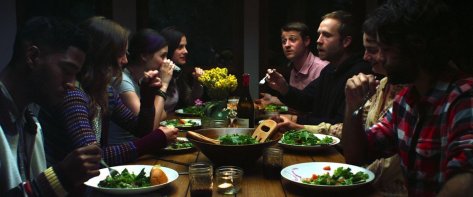
“Goodbye World” (2013) is technically a post-apocalyptic drama.  I say “technically” because this sometimes misguided movie contains little tension associated with its apocalyptic event.  (A cyber-attack destroys the technological infrastructure of America and possibly the world.)  Indeed, this catastrophe doesn’t even truly drive the plot — it’s more of a background subplot that fails to even affect the tone of the film.  (The poster you see below is misleading.)

Instead, the film scrutinizes the personal lives of a group of thirtyish college alumnae who have an informal reunion at a mountain cabin — one of their number is a plot-convenient intellectual-turned-survivalist.  They’re portrayed by an (admittedly quite good) ensemble cast.  I think a lot of my friends would smile at “Gotham’s” Jim Gordon (Ben Mckenzie) being a rather meek, feckless husband.  And Caroline Dhavernas here is no longer the alpha female we saw in NBC’s “Hannibal,” but is rather an insecure, overly sensitive young wife who immaturely pines that she was the student “everyone hated.”

And there lies a problem that the movie has … few of these characters are terribly likable.  Only Gaby Hoffmann’s surprisingly tough civil servant made me root for her.  And Kerry Bishe’s perfectly performed, chatty neo-hippy eccentric was also pretty cool … Bishe might have given the best performance in the film.  Finally, Linc Hand is a surprise standout, arriving halfway through in a menacing supporting role.  It’s a far smaller role, but damn if he doesn’t nail it.  (Please, Netflix, cast this guy as Bullseye in Season 3 of “Daredevil.”)

The others all seem either self-absorbed, self-righteous and preachy, or inscrutable and vaguely dumb.  Dhavernas’ character actually steals a child’s teddy bear (which she herself had brought as a gift) and … sets it free in the forest.  It was a belabored character metaphor when written.  Worse, it just seems jarringly weird when it plays out on the screen.

All the characters seem strangely detached about the watershed national or global crisis. Some cursory dialogue is devoted to the imagined welfare of their family, colleagues or other friends; the character interaction is devoted mostly to  marriage issues and personal emotional crises that I have mostly forgotten as of this writing.  And those seem maudlin and slightly selfish compared to the Fall of the United States.  The characters mostly failed at engendering viewer sympathy in me.

The screenwriters’ juxtaposition of personal matters and the end of the world also seemed tone deaf.  We follow what the writers hope are educated, successful and endearingly quirky fun people, and we’re asked to worry about their love triangles and spousal communication issues.  But … we’re then asked to view this in the context of a pretty frightening collapse of society, complete with plot elements that are interchangeable with those of AMC’s “The Walking Dead.”  (One secondary character turns violent over the issue of resources, then charismatically justifies his violence to  a crowd using a half-baked ideology that seems to channel “The Governor.”)

I felt like I was watching two movies at once, and not in a good way.  The opening motif is brilliantly creepy — the virus causes cell phones everywhere to receive a text reading the titular “Goodbye World.”  Our laconic, uniformly telegenic protagonists kinda just shrug at it.  And even when suspicions arise in the group about whether one character is connected to the cyber-attack, there is dry, dialogue-driven humor instead of any real consequent tension.  It was like John Hughes wrote a thirtysomething dramedy, but then tried unsuccessfully to sprinkle in the human pathos of one of George A. Romero’s more pessimistic zombie films.

But don’t get me wrong.  This wasn’t even really a bad movie.  I didn’t hate it.  It held my interest, its actors gave good performances, and I am a shameless fan of Dhavernas in particular.  The cinematography was very good too, and the story’s tonal differences were occasionally interesting.  (This is definitely a unique end-of-the-world tale, if nothing else.)

I’d honestly give “Goodbye World” a 7 out of 10.  I think my expectations sitting down with it were just unusually high, seeing Dhavernas attached to what looked like an independent, cerebral, apocalyptic science fiction thriller.  I might even recommend it if you’re in the mood for a really unusual doomsday movie.  Just don’t expect “28 Days Later” (2002) or “The Divide” (2012), and you might like this.


Goodbye_World_Theatrical_Poster

hero_GoodbyeWorld-2014-1

A review of the Season 2 premiere of “Fear the Walking Dead.”

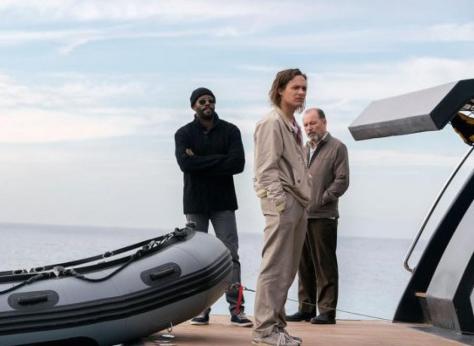
[THIS REVIEW CONTAINS SPOILERS FOR SEASON 1 OF “FEAR THE WALKING DEAD.”]  “Fear the Walking Dead” has done something interesting.  It’s taken two truly reprehensible characters, and made them the most attractive among an ensemble of protagonists in a survival-horror story.

I’m talking about Victor Strand and the young, troubled, drug-addicted Nick, who I’ve been reluctantly but undeniably rooting for since the closing episodes of last season.  They’re both expertly played, by Colman Domingo and Frank Dillane, respectively.  Colman is actually amazing: his deep voice and perfect line delivery should make him a leading man here or elsewhere, either as a hero or a villain.  In just a couple of episodes, he’s easily become one of the best things about the show.

But these aren’t “good guys.”  Or, at least I don’t think they are.  Are they?  Strand is openly a sociopath, and doesn’t even bother to hide it.  He appears to act nobly in rescuing the group.  But as Ruben Blades’ character, Salazar, shrewdly observes, he is almost certainly acting somehow according to his own self-interests.  (And Salazar has been right about these kinds of things so far.)

As for Nick?  No, I am definitely not judging the character about his addiction to illegal drugs.  That would make him a flawed protagonist, not a bad guy.  I’m talking about his demonstrated willingness in Season 1 to victimize the helpless in order to feed that addiction — he does nothing less than kill a sick, elderly man in order to get his “fix.”  (I did understand that scene, didn’t I?)

And what about Salazar himself?  He is easily the third most interesting character to me, and he’s perfectly portrayed by Blades.  I want him to survive this show’s zombie apocalypse, simply because I enjoy watching him so much.  He’s a former torturer for the El Salvadoran junta.  That’s … that’s pretty much as bad as you can get, isn’t it?  And this isn’t a character aspect that the viewer can easily put aside, as audiences did with the character of Sayid on “Lost.”  (He was a past torturer with Saddam Hussein’s Republican Guard.)  Salazar’s deplorable skills are front and center at the end of the show’s first season, driving the plot.)

There’s nothing pathological about my attraction to these characters.  (And I’m sure it’s shared by other viewers.)  It’s just that these are creatively conceived characters on a show that seems to bungle its efforts to create anything resembling or interesting likable good guys.  The remaining protagonists of “Fear the Walking Dead” are written to be utterly bland, even when they are very well portrayed by their actors.  Travis (Cliff Curtis) is a one-note altruist.  Madison (Kim Dickens) shows promise, but isn’t yet that interesting to watch.  Alycia (Alycia Debnam-Carey) is a boring nice-girl.  Ofelia (Mercedes Mason) is so forgettable that I can’t really remember how to describe her as I write this.

The worst offender, by far, though, is the character of Chris.  I can’t imagine how dreadful a job it must be for actor Lorenzo James Henrie to play him.  He’s an utterly punchable brat — an entitled, immature, self-absorbed teenager that makes you root for any zombies that pursuing him.  I can’t imagine the show’s writers created him to be sympathetic … surely they must be setting him up as zombie fodder.

All told, though, the Season 2 opener last Sunday was good stuff.  I’d rate it an 8 out of 10.  Fans who were frustrated with Season 1’s slow pace (I wasn’t) will be pleased to discover that the show opens with an action sequence and a pretty skilled depiction of the destruction of Los Angeles.  No, the show doesn’t have the same special effects budget as a major feature film.  But this was still impressive — we get to see some of the destruction and mayhem that’s only been alluded to or briefly, limitedly portrayed via flashback throughout six years of “The Walking Dead.”  (Remember the faraway shots of the bombing of Atlanta?)

The suspense is also quite good.  I can’t really say much more for fear of spoilers.  But I thought it was well written and intelligent, and I think it will please even seasoned fans of the zombie horror sub-genre.

This was pretty decent stuff.  I think Season 2 should be a fun ride.


fear-the-walking-dead-season-2-key-art-logo-400x600


victor-nick-and-daniel-prepare-for-the-journey

My review of “The Walking Dead” Season 6

Season 6 of “The Walking Dead” ended terribly last Sunday night, with a gimmicky, redundant, cartoonishly filmed cliffhanger that seemed like a power trip for the show’s writers and a shameless trick to ensure ratings for the Season 7 premiere.  Even that blunder, however, can only partially mar an otherwise great season of television; I’d still give the sixth season a 9 out of 10.

Seriously, Sunday night’s closing minutes were a big disappointment. We did not — I repeat, we did NOT — get to see which of our heroes would fall victim to new arch-villain Negan and his barbed-wire baseball bat, “Lucille.”  (I don’t think that I’m writing a spoiler here, as I’m informing the reader of an event that was not yet depicted.)  We get to see the dramatic and frightening events leading up our heroes’ capture — overall, the episode was pretty good, I think.  And we get to see some iconic images and hear dialogue that we remember from the original comic series.  And we finally get to see Jeffrey Dean Morgan appear as the new big-bad, something the show’s marketing suggests AMC believed fans would be happy with alone.

But the season ended with a cheesy point-of-view shot of the nameless individual who Negan executes, then a black screen along with the muffled screaming and shouting of those protagonists who are left to witness their friend’s murder.  (Check Youtube — some pretty ardent fans have actually analyzed the sounds and provided subtitles, supposedly providing clues as to who the victim was.)  And the manner in which it was filmed was kitsch — it reminded me of the over-the-top POV shots employed by Sam Raimi.

I think this is poor storytelling.  The Saviors storyline has been building for at least half a season (earlier if you consider the first encounter with Dwight), and the death of one of our heroes was the universally expected, logical conclusion of that.  The cliffhanger also felt like a little bit of a “f*&% you” to the fans.  The show’s creators know that its viewership was so eagerly anticipating an answer to the million-dollar question — “who dies?”  And they showed us that not only have they enjoyed stringing us along, they’re going to enjoy gratuitously stringing us along for another seven months until Season Seven.

And, hey, it looks as though this parsimonious storytelling will be the case with tie-in promotions as well.  I read today over at Hollywood Reporter that Robert Kirkman has produced a 48-page comic containing Negan’s backstory.  As you may read at the link below, however, only four pages at a time will be made available to fans, as they are released monthly in a comics preview catalog, “Image +.”  (And I’m unclear about whether readers will have to pay for that.)  C’mon.  Gimme a break:

http://www.hollywoodreporter.com/live-feed/walking-dead-see-first-page-881581

Furthermore, the final scene was a little problematic in other ways.  I liked Morgan’s performance, but I he didn’t knock my socks off as he apparently did for other fans.  The monologue scripted for him was far too long.  Much of it is lifted from the comics; I think that a lot of it did not translate well from page to screen.

Finally, the cliffhanger was redundant — didn’t the season’s penultimate episode also tease a major character death in its final seconds, employing a cheap visual trick to obscure this person’s fate?

Ah, well.  Like I said, I think Season 6 actually was stellar.  We hardcore fans tend to criticize our show a lot (hence my bitching above).  Our criticisms are often well deserved, but I think we might have been spoiled a bit by “The Walking Dead.”  After six years, five of which were downright addictive, it’s easy to lose sight of how groundbreaking the show has been.

There has never been anything else like it on television.  The fact that it’s the first real zombie apocalypse serialized horror show is obvious, along with its new levels of gore, pathos and goddam amazing makeup effects.  But think also about its breadth and scope — since Season One, I think it’s gone to great lengths to tell an epic story.  Budget constraints — including a limited range of shooting locations in rural southern Georgia — restrict it somewhat.  But like no other show before it, it portrays a horrifying apocalypse from the points of view of a very broad and constantly changing ensemble of characters.

Sometimes this broad and changing ensemble works against the show.  I think one of its weaknesses is that it sometimes doesn’t feel like a well crafted, deliberate story at all, but rather a kind of “reality show” like “Survivor” (2000 – 2016).  Instead of watching in suspense to see who is “voted off the island,” we instead watch in suspense to see whether our favorite fictional character meets a grisly end.  I wouldn’t be surprised if people placed bets.  (I’ve heard that people indeed used to bet on “Survivor” in Las Vegas.)  Consequently, it feels more like bread-and-circuses than real meaningful storytelling within a post-apocalyptic context.

But “The Walking Dead” still manages to be damned good.  Early on in Season 6, I commented to another fan that the show actually seems to be getting better.  It’s getting smarter, with more ideas, and greater attention to detail.  I honestly get the sense that its writers sit down and think about the plausibility and logistics of various elements of this imaginary world.

It has essentially become a war story, even when it’s often just a neverending war of attrition with a universal enemy.  The writers grasp this, and they pick up the ball and run with it.  Attention is paid to strategy, logistics, leadership, morale, levels of training and commitment — Rick’s grand plan to lead the newly released “herd” away from Alexandria in the season’s earliest episodes is a great example of this.

And there is far more world-building.  Based on my familiarity with the comic book series, I recently advised another fan that the entire structure of the show would change.  Instead of people moving place to place and negotiating the various threats there, we now see stationary groups of survivors either fighting or cooperating with one another’s societies — something we’ve previously only really seen with The Prison vs. Woodbury.  This creates a range of larger, more layered and interesting storytelling possibilities.  And there are more enclaves even than we’ve seen so far.  (I’m trying to keep this spoiler free.)

Complementing this new change in story structure are elements of the show that seem to have improved even further.  The action and suspense have increased greatly.  I found myself on the edge of my seat during a few episodes — the one that comes to mind is when our heroes invade the satellite station.

The horror elements are new and stronger.  Story arcs involving the Wolves were extremely unsettling.  (I myself wanted far more of that bizarre little clutch of psychopaths.  Are they a cult?  Do they have a coherent ideology?)  The Saviors, whose survival skills and competence match or exceed Rick’s group, are frightening, especially for those of us who are already acquainted with them through the comics.

I even find I like the show’s drama better in this and recent seasons — more so than in the show’s early years.  Yes, the sad, unsupported, inexplicable recent character change in Carol was a disastrous choice.  And Abraham’s love triangle was a mostly inscrutable nod to the comics.  But there were a lot of other good things to be found this season — Morgan’s backstory, Nicholas’ character arc, the arrival of Jesus and the outcome with Denise.

All told, it was a great season.  Maybe someday a DVD special edition can rectify its final minutes, and supply a necessary face for Negan’s anonymous victim.  Hey, the show obviously wants to milk each cow for all it’s worth, right?


daryl-will-be-back-to-face-off-against-the

“The … Stalking Dead?” (A review of “Daredevil” S2E1)

[THIS REVIEW CONTAINS ONE SPOILER.]  So the fantastic John Bernthal is now the Marvel Cinematic Universe’s “Punisher,” debuting (however briefly) in the first episode of Netflix’ “Daredevil” Season 2.  I just know that there is a great “Walking Dead” joke hiding around here somewhere; but I can’t seem to put my finger on it …  (Something about … Blind Grimes?  Disabled Rick?  Daredevil can’t see “stuff?”  Or “thangs?”)  You people work that out for me.

Bernthal’s arrival is dream casting, every bit as perfect as bagging the inimitable Robert Downey, Jr. as the MCU’s Iron Man.  Even though the actor speaks only a single word, it’s goddam beautiful.

That’s one of the better things about Season 2’s first outing, which, for me, fell into the category of “good, but not great.”  (I’d still give it an 8 out of 10, and I feel certain the season will get better.)  What we see in S2E1 is mostly setup.  The episode clearly tried to introduce tension by grooming the Punisher as a frightening antagonist, with limited success.  Even casual Marvel fans know that Frank Castle is a good guy, and nothing close to a Big Bad.  Yes, he’s an anti-hero who fatally shoots villains, and will be a foil for Matt Murdock’s Boy Scout restraint (as he was in the comics, back in the day).

But I doubt that the Punisher can be made scary or truly tension-inducing.  (Are we afraid of Wolverine?)  We know that his shoot-em-up tactics won’t leave Daredevil dead.  (This isn’t “Game of Thrones” or TWD.)  And I’d guess that most viewers, like me, aren’t too emotionally invested in this show’s minor characters.  (The only exception would be the quite interesting and three-dimensional Karen Page, still wonderfully portrayed by Deborah Ann Woll.)  Hell, I think the show would be better if the painfully annoying Foggy Nelson were made an early casualty.  Finally, if the show stays true to the original comics, then the Punisher has that most sympathetic of “origin stories” — a murdered nuclear family.

Both the Punisher and Bernthal have such devoted fanbases that a lot of viewers will probably root for him against Matt.  (Our very own Blog Correspondent Len Ornstein, for example, was known for firmly being on “Team Shane” for TWD.)  Looking back at my fervent comic-collecting days in the 1990’s, I seem to recall the Punisher having a far bigger fan following.  He was a mercenary and Vietnam veteran who simply shot up whatever corner of the Marvel Comics universe to which his quarry had tried in vain to escape.  Fans compared him to DC Comics’ iconic cash cow, Batman.  Matt Murdock, on the other hand, had niche appeal.  He was a liberal superhero if there ever was one — a Columbia-educated defense attorney who employed nonfatal force, and who fought for the “everyday man on the street.”  He was like a grownup, thoughtful, socially conscious Spider-Man.  If ever there was a comic book hero who would join the American Civil Liberties Union, it was Daredevil.

Moving forward, I think that Netflix will need an altogether different adversary than Castle to raise the stakes emotionally, and bring suspense to its second season.  Maybe the show will accomplish that with Elektra, who we know will also appear.  (And fans of the comics know that this integral character has far greater implications for our hero.)

The new season’s inaugural episode might have been slightly better if it had been tweaked elsewhere, as well.  Much ominous language is devoted to characterizing the Punisher as a killer with military proficiency.  We kinda don’t see that.  The largest action set piece shows no precision or professionalism, just a room full of gangsters being hosed down by gunfire from an offscreen shooter.  And while the sequence itself was dramatic, it seemed like something that could have been perpetrated by a (very well armed) street gang in a drive-by shooting.

We also see some of the dialogue problems that were so evident in the first season — as superb as the screenwriters are, they don’t do casual conversation among friends very well.  There’s the same forced banter and an embarrassing lack of chemistry among the three lead protagonists, this time on display during an awkwardly staged after-work barroom pool game.  (It’s particularly puzzling because Woll and Charlie Cox are both very good actors.)  This show scripts its villains, petty crooks and adversaries with such flair — why does it seem to fail so often with friendly conversation?  And why bother with these strange attempts at Scooby-Gang camaraderie in the first place?  I think it’s a weird creative choice.  These are serious characters leading serious lives.  It seems implausible to me that they should be so frequently upbeat anyway.

Hey — if I’m nitpicking a lot here, it’s only because I love the show, and consequently hold it to a very high standard.  It really is the best superhero adaptation on television.  My review of last season was absolutely glowing, and I honestly think that Season 2 will be just as good.  If you haven’t checked out “Daredevil” yet, you ought to.


12525571_1720957711473798_4489177249886597130_o

NEqq4plcdvfusz_3_b


“Emilie” (2015) is a superb, gut-wrenching thriller.

I’ll come straight to the point — “Emilie” is an exceptional horror-thriller that belongs on your list of films to see, provided you can stomach some disturbing content.  This movie hooked me in under a minute, even before its title appeared on screen.  Then it kept me glued to it throughout most of its running length.  It could have been an even better film — a classic on par with “Psycho” (1960) or “Fatal Attraction”(1987), were it not for some key creative choices about halfway through.

I’d give this movie a 9 out of 10.  It succeeds for two reasons — great acting and a script that perfectly employs dialogue that is at first subtle and nuanced, and then increasingly frightening.  The title character is a babysitter who is not what the parents expected, in more ways than one.  After some deliberately awkward character interaction with the departing parents, she proceeds to subject the children to a series of progressively more demented psychological games.  What follows is a thriller brimming with pathos.  The movie reminded me a lot of the critically acclaimed and controversial “Funny Games” (2007). That film also showed ostensibly innocent adversaries entering a family’s home after gaining their trust, and then doing awful things.

Emilie is played to perfection by Sarah Bolger, who has a beautiful, kind face, which only makes the character’s incongruous psychopathy even more unsettling for the viewer.  It took me a while to place the actress’ face, until I recognized her as the somewhat feckless protagonist of 2011’s “The Moth Diaries.”  I was impressed with her talent then as a hapless good guy, and I think her performance here was phenomenal.  She plays the innocent-looking, yet icy antagonist here with subtle, unnerving malice.  The rest of the cast is also uniformly quite good.  This is true even of the young child actors, but most especially of Joshua Rush.

The movie is briskly paced, but its sparing dialogue still manages to rattle and then shock.  It’s a sometimes obscene story of imperiled children that really gets under your skin.  Most of its directing is clean and clear.  Combined with the unusual score, it gives the story a dreamlike quality.

The movie loses its way just a little at about the 40-minute mark, when its perverse, moody dialogue and strictly psychological horror give way to the familiar elements of a boilerplate thriller.  An unnecessary backstory is given for our antagonist, delivered by an overly convenient, standard flashback sequence that feels out of place and that disrupts the pacing.  (“Her mind was shattered.”)  Then, other plot points also feel just a little by-the-numbers, moving “Emilie” away from true cinematic greatness and toward just being a very good horror flick.

Finally, Bolger’s villain is defanged a little when the script calls for her to lose her calm demeanor after the plucky, oldest child (Rush) defies her, in a well executed but entirely predictable David and Goliath story.  And her character’s reliance on a nameless, voiceless and superfluous confederate here also makes her a little less enigmatic.

How much greater would this movie have been if Emilie’s motivations remained a mystery?  What if, like “Funny Games” or “The Strangers” (2008), all we knew is that she was an highly intelligent sociopath acting for no discernible reason?  What if she were acting entirely alone?

And what if the horror remained strictly psychological, with no actual violence to up the ante until the closing minutes?  The most disturbing scenario I can think of is this — what if she were able to psychologically manipulate the children to violently turn against one another, or against their parents upon their return?  That could be an ambiguous, darker and far more thematic story than the second half of the film we see here.

Still, this was a damned effective scary movie, and that’s good enough.  I recommend it.

One more thing — there actually is a famous, heartwarming French romantic comedy entitled “Amelie” (2001), which I have not seen.  I think it would be blackly funny if some sentimental filmgoers wanted to rent that and accidentally picked up “Emilie.”


wjjgzh7t


1280x720-cOf


My sad, ironic “Daryl Dies” theory for “The Walking Dead”

[THIS POST CONTAINS SPOILERS FOR THE MID-SEASON PREMIERE OF “THE WALKING DEAD,” AS WELL AS THE ORIGINAL COMIC BOOK SERIES.]

Okay, I am almost always wrong in my TV prognostications, but I can’t resist sharing my newest “Walking Dead” fan theory, as it seems like something nobody else has picked up on.

In the (quite outstanding) Season 6 mid-season premiere this past Sunday, Daryl Dixon receives a minor knife wound from one of Negan’s men.  It isn’t a dramatic moment; it occurs off screen.  It also isn’t a plot point, as it affects nothing else that occurs during the episode’s story.

Yet the writers do make an effort to show that it happened.  We see it below his left shoulder, Sasha talks to him about it, and we see him being treated by Denise at the show’s ending.  It seems to have been placed there for a reason.

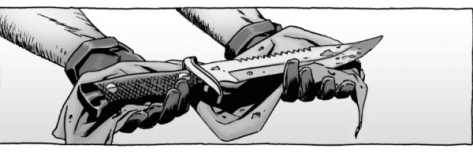
Well … in the comics, something similar happens to certain minor characters.  After a pitched battle with Negan’s forces, they succumb to the zombie contagion after receiving minor wounds from knives or crossbow bolts.  (Daryl isn’t a character in the comics, but a bad guy wields a crossbow.)  They die, to the surprise of their friends and the doctor treating them.  That’s because Negan has instructed his men to contaminate all of their blunt or bladed weapons with tissue from the zombies.  (It’s a particularly nasty plot development in a pretty brutal comic series.)

Of course, I am nearly always wrong on these things.  And it could just be a red herring — it wasn’t too long ago that we saw Rick nursing a wounded hand throughout an episode or two, leading to fan speculation that he’d been bitten and infected.


screen shot 2015-10-26 at 12.58.56 am

Infected-Knife-TWD

the-walking-dead-daryl-season-6