Tag Archives: 1990

Cover to “Batman: Legends of the Dark Knight” Vol. 1, #3, Ed Hannigan and George Pratt, 1990

DC Comics.

LODK_3 (1)

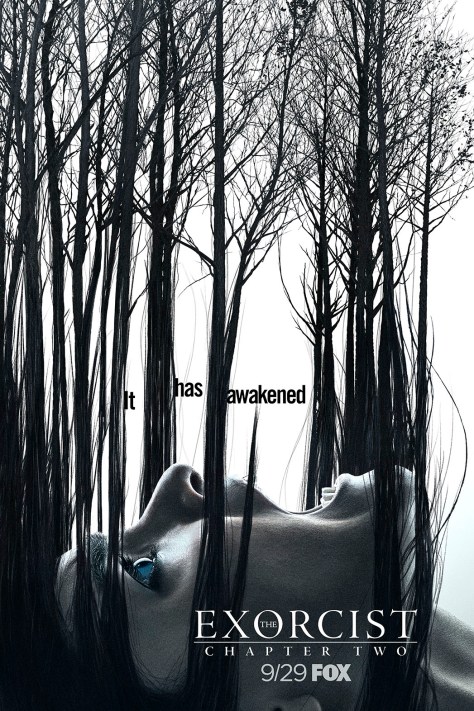
A review of Season 2 of “The Exorcist” (2017)

A show like “The Exorcist” must be difficult to write.  It stands in the shadow of some of horror’s greatest films (William Friedkin’s 1973 original and the third movie in 1990).  Its plot device is inevitably redundant.  (How many possessed innocents can we see strapped to beds while priests pray at them?)  It seems easy to stray into camp.  And it seems like a story concept that is tough to structure into a serialized format.

But the second season of “The Exorcist” was … fantastic.  It surpassed the first season, and I’d rate it a 9 out of 10.

The ten-episode arc wisely changes things up a bit from Season 1, which was maybe a bit too reminiscent of the films.  Our priestly dynamic duo are on the road in America’s northwest, and on the run from a Vatican that has been infiltrated by followers of the demon Pazuzu.  (As stupid as all of that sounds, the show actually depicts it quite well.)  As the story proceeds, there are a couple of surprise plot developments that will contradict most viewers’ expectations.  (I won’t spoil them here.)

The characters are all likable and all well played.  Ben Daniels remains possibly the show’s strongest asset as the senior priest; he’s just a superb actor.  John Cho also gives a fine performance as the head of a foster home where a demon runs amok.  Alfonso Herrera is quite good as the apprentice priest — his character is better written this time around, and isn’t saccharine to the point of annoyance.  And Herrera himself seems more comfortable in the role.  The kids are damned cool — all of them, and their interaction with their foster father was surprisingly sweet and funny — which raises the stakes emotionally when the entire household is besieged by a sadistic force.

The weaknesses here were minor.  I think the ten episodes could have been shortened to seven or eight, to make them tighter.  (I realize I write that about a lot of shows, and I’m not sure why.)  The first five episodes were tightly plotted, while the second five were a little loose.  I think better editing would have entirely excised the flashback scenes depicting Daniels’ character and this season’s new female exorcist, played by Zuleikha Robinson.  (Yes, that is indeed Yves Adele Harlow from “The Lone Gunmen” and “The X-Files.”)

The flashbacks were cheesy, even if they gave Daniels a chance to show his range.  They depict his tutelage of Robinson’s character decades prior, complete with some cliche pulp novel stuff.  (Ugh.)  We’re shown that the priest is younger because of his blond, surfer-esque haircut.  (Really?)  The flashbacks were out of place, and a little too campy.  They reminded me of the comic book style of the “Highlander” films and TV series — this show could have done without them.

I also found myself slightly annoyed by a dearth of exposition about the process of exorcism itself.  After the films and now two seasons of the show, I wanted to know more about the key actions here that affect the story’s resolution.  Do some prayers or methods work better than others?  Then why not use them all the time?  Why are some interventions more lengthy or difficult?  We are told that the demon attacking this family is different than Pazuzu, who we’ve seen in the past (though Pazuzu still puts in an appearance this season).  Can the demons coordinate their efforts, or at least communicate with each other?  If not, why not?  These seem like logical questions to ask, both for the characters and the viewers.

But there is something more that bothered me.  If a demon is intelligent and wants to harm people, then why make its presence known — and why torment or kill only a few people?  Why not remain undetected until it can commit a mass murder?  Or even perpetrate an act of terrorism, and harm far greater numbers of people by causing riots or wars?  That would suit evil’s purposes far more than the garish individual spectacles we find them performing in horror tales like these.  (Maybe I’m just analyzing too much.)

Anyway, I cheerfully recommend “The Exorcist.”  It might be the most grownup horror show on television.

And one more thing — there’s some fun to be had here recognizing actors from other roles.  Daniels was a member of the Rebel Alliance in “Rogue One: A Star Wars Story” (2016).  And there is actually another “The X-Files” alum here — even if it was only a small role.  I thought that Harper’s mother looked familiar — the actress playing her was Rochelle Greenwood.  She’s none other than the teenage waitress who witnessed Walter Skinner getting shot waaaaay back in 1996’s classic episode, “Piper Maru.”  (Can I remember faces or what?)


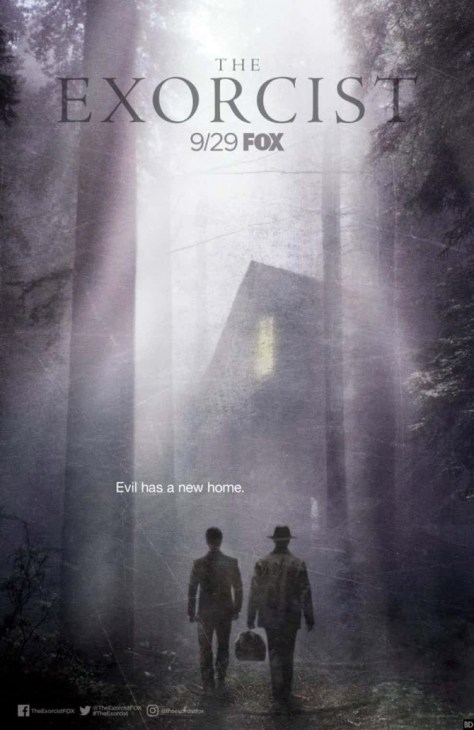
the-exorcist-season-2-poster

A short review of the Season 2 premiere of “The Exorcist”

I watched the first episode of Season 2 of “The Exorcist” series (2016), and I’m happy to report it was a fun, scary start.  (The season began this past September; its ten-episode arc concluded at the end of the year.)  I’d rate the premiere a 9 out of 10, and I’m on board for another demonic outing.

Alfonso Herrera and Ben Daniels return as a kind of dynamic duo of protagonist priests — all the more so because they appear to be on the run from a Roman Catholic Church that no longer sanctions their heroics.  (The show is actually well written, and this isn’t as stupid as I just made it sound.)  Herrera and Daniels are both terrific, even if an opening action chase scene reintroducing them here was unintentionally funny.  (They’re absconding by pickup truck with a possessed woman — her gun-toting country family, who is unaware of their intentions, is in pursuit.  I kept thinking this was a like a sequel to 1990’s “Nuns on the Run.”)

Herrera’s character feels a bit more interesting this time out.  Six months on the lam as exorcist-knight-errant has made him grim and unexpectedly arrogant — his darker character is more fun to watch than the slightly cloying, pretty-boy apprentice we sometimes saw in Season 1.

There are more things that make Season 2 seem promising, too.  It looks as though the afflicted woman that we see (nicely played by Zibby Allen) drives only this season’s prologue.  The demon antagonist has its sights set on a foster home staffed by a likable altruistic Dad (John Cho) and his equally likable five charges.  (One of them is Brianna Hildebrand, who comic fans might recognize as Negasonic Teenage Warhead from 2016’s “Deadpool.”  Is she here after being thrown out of Xavier’s School for Gifted Youngsters?)

This was fun.  I’m looking forward to the rest of the story.


the_exorcist_s02_key_art_poster

A review of Season 1 of “The Exorcist” (2016)

I liked the Fox’s take on “The Exorcist;” I just didn’t love it the way that I thought I would.

It has a lot going for it.  It’s easily the most intelligent horror show on television — its characters and plotting are detailed, thoughtful and well developed.  It actually occupies the same universe as the classic 1973 and 1990 horror films.  (We won’t mention the 1977 abomination here.)  And, like those movies, this is a skilled, methodical screen adaptation of the universe imagined in William Peter Blatty’s source material.  (This show establishes its continuity with the movies in ways that are interesting and surprising, too.)

The script takes archaic theology and otherworldly events and makes them seem plausible in its real-world setting.  It also succeeds in giving a distinct and frightening voice and personality to its demon.  I was impressed — I’ve seen a lot of movies with this plot device, but I’ve never seen this kind of antagonist so fully realized into a distinct character.  This owes a lot to Robert Emmet Lunney’s outstanding portrayal as the demon personified.

The rest of the cast is also roundly excellent.  Geena Davis shines as the mother of the afflicted girl; I had no idea that she was this good of an actress.  So, too, does Alan Ruck, who stars as her kindly father who is affected by a traumatic brain injury.  Ben Daniels is also very good as the experienced half of the duo of priests who serve as the story’s heroes.  By the end of this first season’s ten-episode arc, both priests seemed like three-dimensional characters that I could like and root for.  I was impressed again — priests in stories like this usually tend towards stock characters, and I can only imagine that it would be challenging for a screenwriter to make them relatable to the average viewer.

Why didn’t I love “The Exorcist?”  First, the show’s story elements felt too familiar.  Once again, we have a possessed young girl, a desperate mother beseeching the church for help, and a pair of priests, one of whom is experienced and one of whom requires instruction.  Once again, we see that the personal lives and the metaphorical demons of both clergymen can be used against them.  Once again, we find the girl secured to a bed while the story’s protagonists pray and shout at her possessor.  I do realize that these tropes are to be expected.  (This is “The Exorcist,” after all.  Do we really expect the writers to not depict an exorcism?)  I can’t deny, however, that my attention wandered.

Second, it was sometimes too slow for me.  I do understand that the show’s creators are probably being faithful to the storytelling pace and style originally established by Blatty, as well as William Friedkin, the director of 1973’s “The Exorcist.”  (Blatty actually wrote the screenplay for that seminal film, two years after his novel was published.)  The tension sometimes builds slowly in its realistic milieu, and events gather momentum over the course of the story.  The show also goes to great lengths to offer us more than its boilerplate exorcism story.  (There are some major demon-related events happening elsewhere in its troubled setting of Chicago.)

Still … I again found my attention wandering.  I might have enjoyed this more if it were edited down to six episodes instead on ten.  And I can’t write a glowing review for a show for which my interest occasionally waned.  (Admittedly, I have a terrible attention span when it comes to TV shows.)

All things considered,  I would rate “The Exorcist” an 8 out of 10 for being a smart, grown-up horror series, even if its slower pace and familiar story elements detracted slightly from my enjoyment of it.  I would recommend this show — especially to those who enjoyed the better “Exorcist” movies.


ordoguzo-1evad-kritika-1

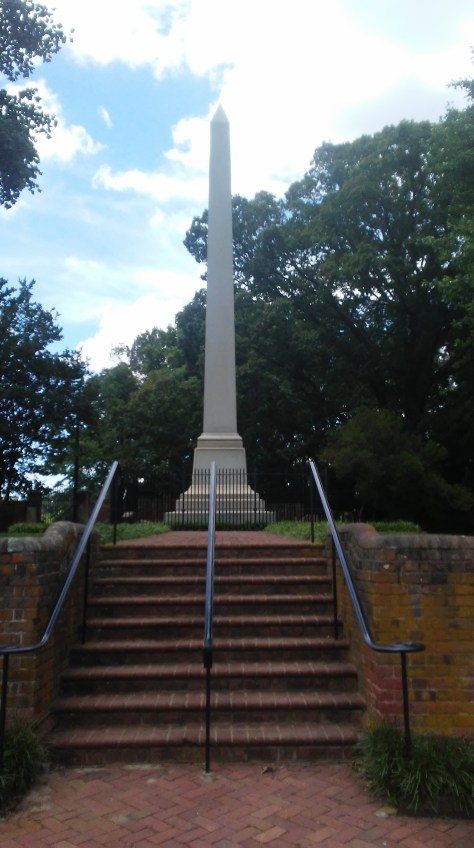
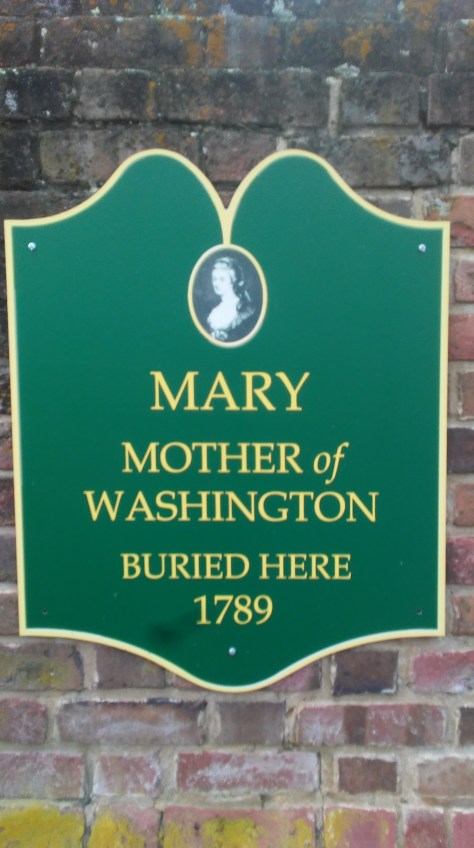
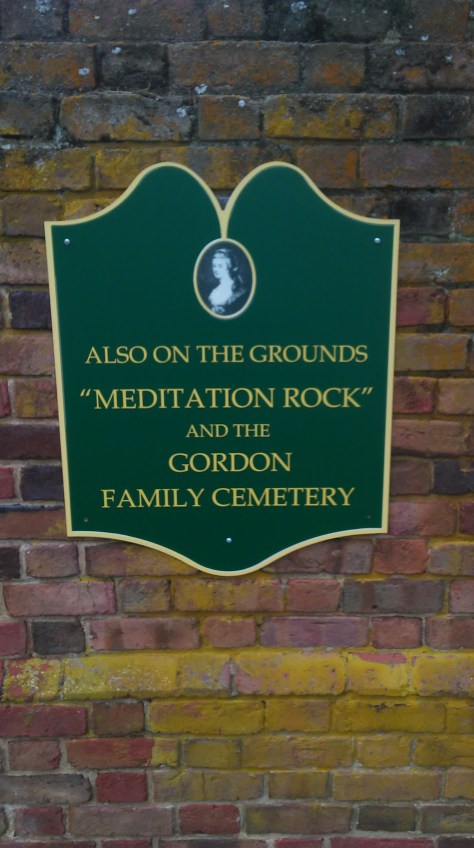
Mary Washington’s grave and the Gordon Family Cemetery, Fredericksburg, VA, June 2017

The entrance to Kenmore Park/Memorial Park on Washington Avenue.  The obelisk itself is the grave of Mary Washington, George Washington’s mother; right behind it is the Gordon Family Cemetery.  Although George’s father died when he was just 11 years old, his mother saw him ascend the presidency.  She died in 1789.

20170608_124317

20170608_124414

20170608_124436

20170608_124500


Looking east from the park’s entrance, you can see First Christian Church, on the intersection of Washington Avenue and Pitt Street.

20170608_124443


Washington Avenue looking south.

20170608_124519


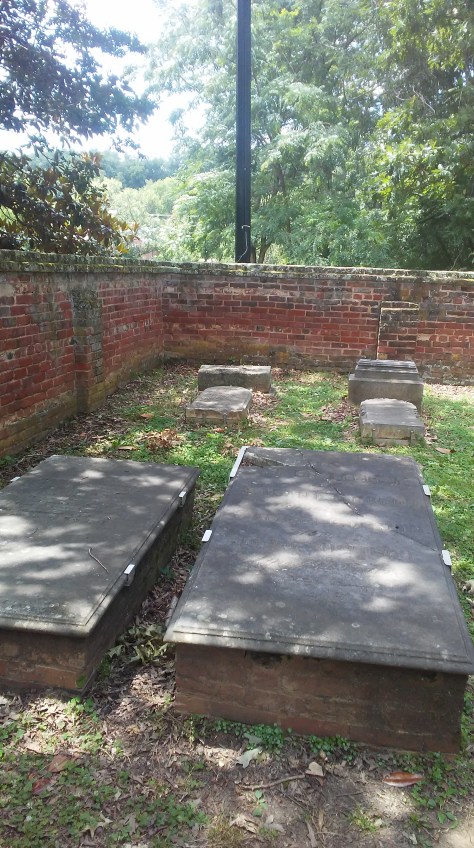
Gordon Family Cemetery.  The Gordons lived at Kenmore; the gravestones date from 1826 to 1872.

If you were a Mary Washington College student returning from a party downtown in the 1990’s, you could pass the cemetery on your way back to campus at night.  I saw a group of high school kids inside the cemetery one night; they scattered in a panic when they realized I’d noticed them.  (To my knowledge, no Mary Wash kids were involved in shenanigans like that here.)  I believe it is illegal to enter a cemetery like this at night … and I have it on good authority that Southern cops take such an offense very, very seriously.

20170608_124556

20170608_124605

20170608_124610

20170608_124628

20170608_124631


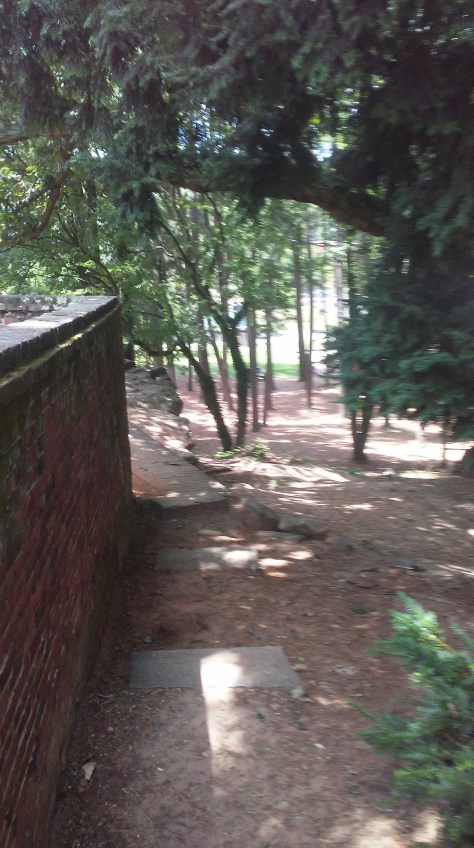
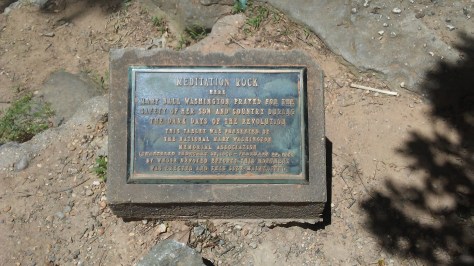
Behind the cemetery is Meditation Rock.  This was an occasional destination for college students out for a walk.  Shortly after I arrived at Mary Washington in 1990 from New York, a patient group of upperclassmen “adopted” me and kindly resolved to keep me out of trouble.  (One of them is still my “big brother” today.)  This is one of the first places they showed me when they gave me a tour of the town.

20170608_124701

20170608_124714


Am I a weird guy if I suggest that images of Meditation Rock can have Freudian undercurrents?  Is that wrong?  There is a whole “Picnic at Hanging Rock” vibe here.  (The sad thing is, I was actually studying Freud at about the time I first saw it, and it never occurred to me then.)  The juxtaposition with the nearby images associated with death and godliness is aesthetically striking.

20170608_124717

20170608_124723

20170608_124739

20170608_124750

20170608_124829


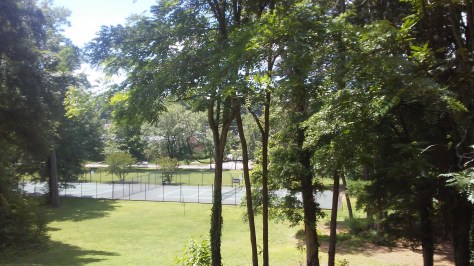
The Kenmore Apartments are still across Kenmore Avenue on the other side of the park.

20170608_124842


Mary Washington College, Fredericksburg, VA, June 2017 (4)

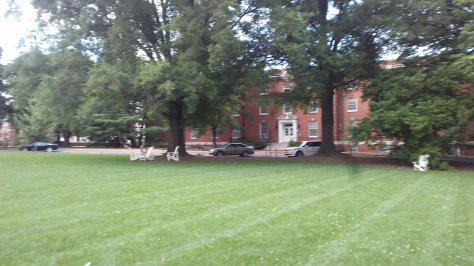
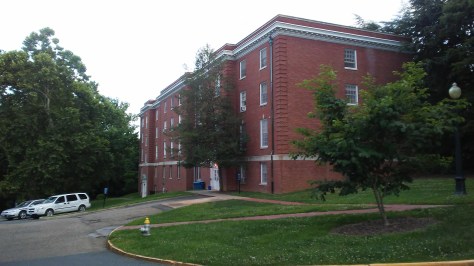
Pictured is Bushnell Hall at Mary Washington College in Fredericksburg, Virginia.  I lived here during the 1990-91 school year.  It was a freshman dorm then; I don’t know if that’s still the case.

I arrived here just before my 18th birthday; this was the first place I ever lived away from home.  I have never admitted it until this moment, but I was terrified watching my mother’s car pull away after I unloaded the last of my things.  That terror lasted … two hours?  Three?  After my first dinner with the other Bushnell kids at Seacobeck Dining Hall, Mary Washington College felt goddam perfect.  I never wanted to leave.
20170606_192711


My dorm room was on the bottom floor, second from the right in the picture below.  It was a suite — there were two rooms connected by a small bathroom.  And there were six 18-year-old boys living there — yes, that means three to a room.  Good lord, those were close quarters.  We were awakened twice a week by the BEEP-BEEP-BEEP of the garbage truck reversing to empty a dumpster outside our window.  And this was in a room without air conditioning, in Virginia, where teenagers were experiencing college-level academic stresses for the first time.  I helpfully eased tensions in the suite by playing Depeche Mode’s “Policy of Truth” 3,043 times.  The other five guys LOVED that.

There were even good-natured jabs connected with the North and the South.  I habitually and dryly referred to one of my suitemates as “South Virginia;” he addressed me just as dryly as “Long Island Piece of Shit,” (or just “L.I.P.S.,” for short).  He also took to calling me “Urban Spillover,” an appellation he derived from one of Dr. Bowen’s “Geography of North America” classes that mentioned Long Island.  For some reason, the latter nickname absolutely felt more pejorative.

Seeing those double white doors beside my room below, and that steep hill in the following photos, will always remind me of my 18th birthday.  A group of first-floor guys and fourth-floor girls had gathered inside that door just after moving in during the August of 1990, before classes started.  A polite debate stirred there about whether opening those doors would set off the fire alarm.  (They were clearly marked “Fire Doors” by an electric sign but … the LIGHT wasn’t on in the sign.  And surely the administration wouldn’t require the guys on my floor to walk up an entire flight to the lobby just to exit the building, right?)

Without a word of warning, one of the first-floor guys spontaneously decided to test this theory by just blasting right through it.  (No, it WASN’T me.)

The fire alarm went off.  Everyone panicked.  The guys and girls all shot down the hill outside Bushnell after the guy who’d triggered the alarm, and we all ran … right off campus.  We didn’t stop running until we’d reached somewhere along William Street, I think.

But not all of us escaped without injury.  One of my roommates was a tall, burly guy from right there in Fredericksburg, and he slipped in the sand and loose gravel that characterized that hill during that long ago August.  I still remember that dull, loud, discordant thump-and-rattle as his body hit the slope, while my own lungs were pounding.  When we reached the spot along William Street where our panic finally subsided, we all turned and gaped at his wound.  One of his legs had become a sepia Monet of sand-encrusted blood.  There were still pebbles clinging there, I’m sure of it.

He took it like a trooper.  I guess … he just walked it off.  And we walked around the ENTIRE town.  We were scared to return to campus, what with images of arrest and expulsion dancing in our teenage minds.  (We all might have overreacted a little.)  So we went on a truly lengthy hot summer trek that circled all of the historic downtown area.  (I think we wound up at Carl’s Ice Cream on Princess Anne Street at some point.)

That was really when I saw the City of Fredericksburg for the first time.  I remember thinking that the South seemed like some other world — or maybe the same world, but 100 years ago.  And I don’t mean that in any negative sense.  It genuinely confused me that this town was called a “city,” but it just seemed idyllic and old fashioned and beautiful.  I’m not sure if the average Fredericksburg resident realizes this, but their city indeed makes an impression on newcomers.

Somewhere along the way, I finally let it slip that the day was my birthday; I think heat exhaustion influenced my usual reticence on the subject.  A couple of the girls stole away to a card store on Caroline Street, I think, and bought a card for me.  My new friends all signed it for me upon our eventual return to Bushnell Hall that day (which was thankfully not occasioned by even a mention of the fire doors).  I went to bed that night thinking that my new friends were a pretty decent group.

Anyway — more on my roommate’s injury … he was a bit of an eccentric guy, and one of his eccentricities was that he did not like to go to the Campus Health Center.  He cleaned his long leg scrape himself, and then … bandaged it with duct tape.  That’s right — duct tape.  He’d apparently brought some along with him as an incoming freshman, just in case of an emergency.  You can’t say it was a needless precaution — here he was, using it in lieu of bandages.

He walked around campus like that for a while.  He looked a lot he was wearing part of an extremely low-budget “Robocop” Halloween costume.  I honestly don’t know what transpired when it came time to remove the duct tape, and I’m not sure I want to.

You can’t make this stuff up.
20170606_192055

20170606_192505

20170606_192424


This the dorm’s south side.  If you face Bushnell looking north, the southern cap of the rectangular campus will be at your back.  Today, it is is one the last places of the main campus’ 234 acres that remains undeveloped.

I’m not sure if there is any connection here, but there is a large mound of dirt among the trees and ivy that was rumored to be the remains of a Civil War fortification.  It makes sense — that hill commands a view of the city; that’s why I used to go there to have my once-a-day Newport menthol cigarettes around dusk.  And in the Nineteenth Century, before William Street’s more modern buildings were erected, I’ll bet you could see Marye’s Heights and the key sections of Sunken Road where the Battle of Fredericksburg raged.

I chatted with a girl on the steps of Bushnell once who told me she’d spoken with the ghost of a Civil War soldier.  She actually carried on a brief conversation with him.  She re-enacted the exchange after a some urging from me, but I wound up giving her story little credence.  I didn’t exactly believe in ghosts, and she sounded like an actress confused about a role.  (I wasn’t sure why her Confederate soldier would speak with a British accent.)

20170606_192538


Throwback Thursday: The Allman Brothers Band

Rest in peace, Gregg Allman.

I first got acquainted with music of The Allman Brothers Band as a first-semester freshman at Mary Washington College in 1990.  My cultural illiteracy as an 18-year-old was embarrassing — especially where music was concerned.  I’d arrived at the small, fairly conservative Virginia state school listening to … well, very little other than what I’d heard on the MTV countdown.  (I started loving Richard Wagner as a high school senior — but that niche interest was rare for someone my age, so far as I was aware.)  It was an ongoing issue when I was a college freshman that upperclassmen would roll their eyes or even occasionally hiss when I told them what music I was into.

Alumnus Steve Miller and his friends were the exception.  They showed me far more patience at their parties in “The Tunnel” between Mason and Randolph Halls — they exposed me to tons of The Allman Brothers, Pink Floyd, The Steve Miller Band, and The Beatles.  (No, the irony of a guy named Steve Miller coincidentally loving The Steve Miller Band was not lost on us.)  Steve and his friends were each, in varying degrees, an amalgam of Obi-Wan and a far mellower version one of the guys from “Animal House” (1978).

The Allman Brothers were really my first extended exposure to Southern rock.  (And, hey, you can’t get much more Southern than a band made up of guys named Berry Oakley or Butch Trucks.)  I listened to them whenever there was a party at Steve’s, even after he started hosting his soirees out of his apartment on Sunken Road. Everyone there loved The Allman Brothers.  I think “Ramblin’ Man” was probably the group’s favorite.

Today, “Midnight Rider” is by far and away my favorite Allman Brothers song.  Curiously enough, though, for the life of me, I do not remember hearing that one in college.  I actually started jamming to it after I heard Rob Zombie include it in the score for the opening montage of “The Devil’s Rejects” horror film in 2005.

Anyway … “The Tunnel” at “Mary Washington College” has apparently now been remodeled into the above-ground “The Link” at “The University of Mary Washington.”

Well la-dee-DA.


A short review of “The Belko Experiment” (2016)

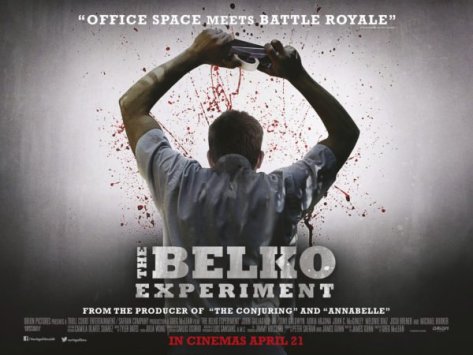
“The Belko Experiment” (2016) is a fairly gut-wrenching and potent horror film.  I was going to describe it as “Battle Royale” (2000) meets “The Office” (2005 – 2013).  But, from the looks of the poster, somebody more or less beat me to it.

As you can imagine, there is a sequence of blood-curdling events after the workers of an entire office building are forced to fight one another to the death.  It’s made all the more horrifying (and a bit sad) by a surprisingly effective early montage that shows these people are indeed likable and relatable.

I’m not sure how I feel about the ending.  There’s a twist that is nicely satisfying, I’ll grant the movie that.  But there was far too little exposition, and a closing shot that was a little too ambiguous and open-ended … maybe even abstract.  I’d be happier if the person doing the talking told us a lot more.  If you think about it, they mostly just reiterated what various characters had hypothesized earlier.

This film has a couple of “I swear I know that guy” actors.  These include Tony Goldwyn, who I last remember from 1990’s “Ghost.”  Turns out he’s a damn fine actor (in addition to being one of those people who weirdly appear to age little or not at all).  They also include John C. McGinley, Owain Yeoman and Michael Rooker.  And if you think you can recall the gentle giant played by Abraham Benrubi, the actor is none other than “Big Mike” from the classic “The X-Files” episode, “Arcadia.”

I was going to rate “The Belko Experiment” a 9 out of 10; it was exceptionally good.  But I was just too nonplussed by that rushed ending, and I think I’ll settle on an 8.


the-belko-experiment-600x450


“Fantasia” double-feature today!

I just finished watching Disney’s “Fantasia” (1940) this snowy afternoon with my girlfriend — she gave me the boxed set with “Fantasia 2000” (1999) this Christmas.  This is the first time I’ve seen the entire film in … 26 years?  If memory serves, I last saw it at Mary Washington College’s Dodd Auditorium when I was a freshman in 1990.

I loved it just now even more than I loved it then.  My favorite segment will always be the final one — Modest Mussorgsky’s “Night on Bald Mountain,” with a coda of Franz Schubert’s “Ave Maria.”  (The accompanying animation is Gothic horror; I’ve posted about it here at the blog before.)

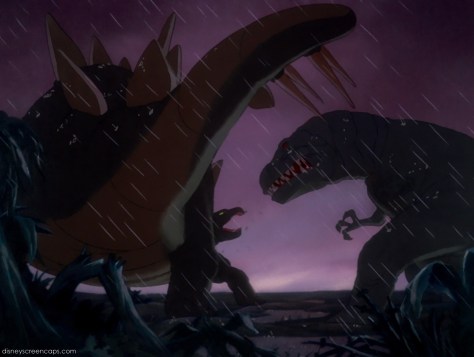
I felt for sure that my second favorite would be Igor Stravinsky’s “Rite of Spring.”  Pictures of those animated dinosaurs startled and thrilled me as a tot after Christopher Finch’s “The Art of Walt Disney” (1975) somehow appeared magically among my baby books in Queens, New York.  As an adult, however, I liked the segment mostly because of its cool depiction of lower life-forms.  The dinosaurs were stylized and interesting to see, but I don’t think the quality of the animation has held up very well — especially considering what we know about the dinosaurs has changed so much in 80 years or so.

Instead, my second favorite was Ludwig von Beethoven’s “The Pastoral Symphony,” and its whimsical, beautiful depiction of centaurs, gods, and other figures from Greek mythology.

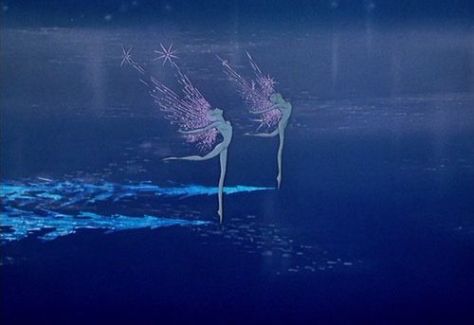
My girlfriend’s favorite segment was Pyotr Ilyich Tchaikovsky’s “Nutcracker Suite,” with its dancing fairies.  “Fantasia” was actually a favorite movie of hers growing up; she’s seen it several dozen times in her childhood.

There is some bizarre trivia about “Fantasia” from Wikipedia, which has a lengthy entry for the movie: “In the late 1960s, four shots from The Pastoral Symphony were removed that depicted two characters in a racially stereotyped manner. A black centaurette called Sunflower was depicted polishing the hooves of a white centaurette, and a second named Otika appeared briefly during the procession scenes with Bacchus and his followers.”  That’s so nuts.


fantasia-locandina-1940


fantasia-disneyscreencaps-com-4506-1


frost-fairies-fantasia


download


Angelo Badalamenti, Summer 1990

I’m relaxing with the “Twin Peaks” soundtrack this Sunday afternoon; it was a favorite for Kathleen Nolan.

Once upon a time, when she was preparing a quite difficult teenager in Lake-of-the Woods, VA, for college, it was one of the few things that we could agree on. (Another that year was Garrison Keillor’s “A Prairie Home Companion” on cassette tape.)

Click here:

“Twin Peaks” Soundtrack on Youtube


71TruxX5CrL._SL1215_