Tag Archives: 2012

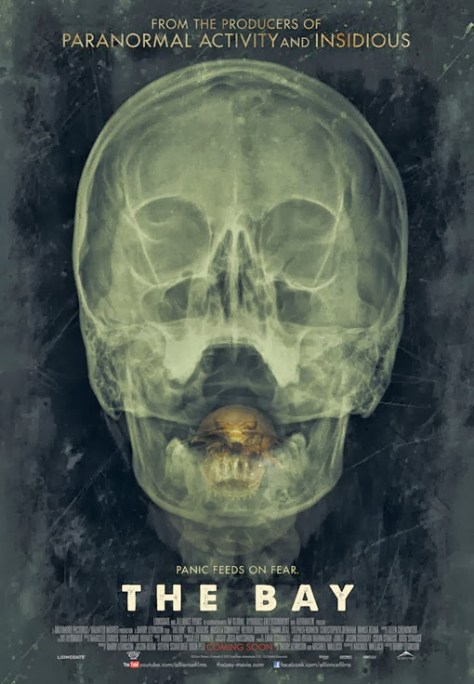
A short review of “The Bay” (2012)

“The Bay” (2012) deserves credit for its effort to give viewers a detailed and well developed, found-footage science fiction-horror movie.  In depicting a brutal parasitic infection eradicating a small coastal town, writers Barry Levinson and Michael Wallach appear familiar with the basics of epidemiology and public health.  And they make nice use of a time-honored sci-fi standby — pollutants causing small organisms to mutate into large ones.

Levinson and Wallach are ambitious too.  “The Bay” follows a number of intertwining narratives winding through the entire town,  making use of more than a dozen actors and innumerable extras.  Some of those actors are quite good — especially those portraying emergency professionals, like the local emergency room doctor, the staff for the Centers for Disease Control and the bureaucrat from the Department of Homeland Security.  I think a story with this scope, and with this many characters, would have made a fine ecological techno-thriller novel.  The filmmakers really do serve up a thoughtful, serious cautionary tale that is sometimes frightening.

Despite its strengths, however, “The Bay” is still encumbered by some noticeable flaws.  There’s little structure to it, the pacing feels off, and we follow so many characters that it is hard for the viewer to get to know any one of them.  There is a news reporter whose point of view serves as a framing device, but she’s performed with little energy by the main actress, and her character isn’t scripted to be terribly likable to begin with.  Parts of the film feel redundant, too.  Levinson (who is also the director here) keeps replaying footage and key dialogue, and it’s a poor choice.

All things considered, I’d rate “The Bay” a 7 out of 10.


TheBay

A very short review of “The Dead” (2010)

Take a look at the movie poster below for the Ford Brothers’ “The Dead” (2010).  It’s problematic for two reasons.

One, of course, is that it contains what is arguably the most unimaginative title in zombie movie history.

Two is its immediate recollection of the marketing art for Zack Snyder’s terrific 2004 “Dawn of the Dead” remake.  It is so similar in composition and color scheme that it makes the Ford Brothers’ film look like a “mockbuster,” whose cover is designed to fool hasty movie renters.

And that’s a shame, because “The Dead” is a fairly decent zombie movie in its own right — I’d rate it a 7 out of 10.  It’s a lower-budget feature, and some of the acting is a bit flat, but this is a movie that does a lot with a little.  The film wisely makes the most of its African setting, and has an intelligent, if slowly paced, story.  It focuses on its two military protagonists’ needs for food, sleep, shelter, fuel and vigilance, during the course of a lengthy overland trek.  That’s refreshing in an era of “Strippers vs. Zombies” (2012), and various fairly lackluster clones of “Shaun of the Dead” (2004).

Best of all, however, is the film’s skilled manner of evoking “slow burn” or “creeping” horror.  The zombies in “The Dead” usually move quite slowly.  They might be the slowest zombies I’ve ever seen.  This might be the anti-“28 Days Later” (2002).  But that makes the vibe here unique among the spate of modern zombie films — and maybe a little reminiscent of George A Romero’s pioneering early films.  If your reaction is like mine, you’ll find it a little unnerving to see them gather en masse at a snail’s pace.

I recommend this.

the-dead-1464333825197

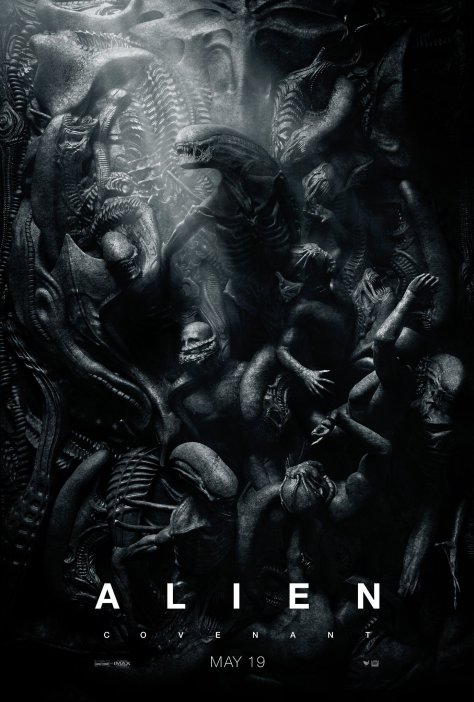
“Alien: Covenant” (2017) is a first-rate sci-fi horror show with lots of monstery goodness.

I am part of a happy minority where “Alien Covenant” (2017) is concerned — I keep hearing about “meh” or negative reactions from my friends, but I quite enjoyed it.  I’d rate it a 9 out of 10.

No, this second installment in the “Alien” prequel trilogy doesn’t bring much new to the table.  It often seems like a collection of common tropes, and borrows a bit from previous films in the franchise — especially the first movie in 1979.  Some aspects of it — like a predictable and slightly gimmicky development late in the story — even feel like horror movie cliches.  (I am doing everything I can to avoid spoilers, so forgive how vague I’m being here.)  “Alien: Covenant” isn’t groundbreaking, and it isn’t destined to be called a “classic.”

Here’s the thing, though — all of the movie’s common tropes are exactly what make fans happy.  Think about it … if you had to name two “Alien” movies as unique or the most divergent, they might be the heady, ambitious “Prometheus” (2012) and the baroquely experimental “Alien: Resurrection” (1997).  Whatever their failings, both of those movies deserve points for creativity.  And they are among the three films that fans hated the most.  (The third here is the smartest and most underappreciated installment, 1993’s brilliant “Alien 3.”)

With “Alien: Covenant,” Ridley Scott gives fans exactly what they were clamoring for — a frightening, gory, space-based horror film with creatively designed monsters and some nasty surprises.  It very much returns to the tone of the first film.  It is even jarringly darker than “Prometheus,” which was defined partly by its moments of cautious optimism.  And, more than any other sequel, it seems directly inspired by the grotesquerie of H. R. Giger’s original, nightmarish monster designs.  I feel certain this movie would have received the late artist’s blessing.  (I could name a certain scene and an excellent surprise story development, but I won’t.)

Michael Fassbender shined in his two roles here.  (He not only reprises his role as the android, “David,” but also portrays a newer model, “Walter.”)  The rest of the acting was roundly good too.

I also found the movie nice and scary.  I, for one, don’t think Scott’s direction of action scenes here is perfect.  (They are harder to follow here, for example, than his beautiful arena melees in 2000’s “Gladiator.”) But they were still effective.

So this return to form made me pretty happy.  I didn’t want another muddled attempt at profundity like “Prometheus.”  Nor did I want a winding, bizarre, arthouse-horror tale like “Resurrection” — that movie was like a poorly written, drug-fueled comic book.  I wanted a first-rate sci-fi horror show with lots of monstery goodness, and that’s what I got.

If I had to pick a criticism of “Alien: Covenant,” I’m surprised to have to point to some less-than-stellar CGI.  This was something I noticed from early trailers for the film, and I’m surprised I haven’t heard another reviewer mention in it yet.  One scene rendered a title baddie about as well as a modern video game, albeit a good one.  Another’s depiction of an upright “neomorph” seemed … fairly bad.  (Fans of decent creature features shouldn’t despair, however — there are still some outstanding monster moments, and no small amount of accompanying gore and goo.)  Have I just become spoiled by the amazing dinosaur effects of 2015’s “Jurassic World?”  I don’t think so … I suggest that the otherwise lamentable “Alien: Resurrection,” with its combination of CGI and practical effects, had far better creature effects than this newest outing.

Of course I recommend this movie.  Maybe I should only do so with the caveat that I am (obviously) a huge fan of the series.  It has been said that I’m easy to please, too — I actually gave a glowing review to “Prometheus” shortly after its release, before wiser minds pointed out to me its sometimes egregious flaws.  (A friend of mine shared with me one of those “Everything Wrong With” videos that CinemaSins produces … it’s a hilarious webseries, but it sure will dull the shine of some of your favorite movies, lemme tell ya.)  Your mileage may vary, especially depending on how much you enjoy horror movies, as opposed to more general science fiction.

Oh!  There is a mostly non-sequitur postscript that I can’t help but add here … yet another one of my movie prognostications was flat out wrong.  It isn’t a spoiler if it’s a far-out prediction that didn’t happen, so I’ll go ahead and share it here … during one of the ads for “Alien: Covenant,” I could swear I heard a character call out the name “ASH!!!!”  (I’ve evidently started hallucinating at the start of mid-life.)  I predicted that the new and robotic Walter would turn evil, and actually become the android named Ash in the 1979 original.  (And why not?  Androids do not age, and a web-based prologue for “Alien Covenant” suggests their faces can be easily swapped out.)  I further predicted that the more human David would be pitted against him in order to save humanity somehow from alienkind.  (These things do not happen.)

I still think that’s a pretty clever idea, though, even if I only accidentally arrived at it.  It would be great if that happened somehow in the planned “Alien: Awakening.”
 

IMG_20170323_0950491

A very short review of “Afflicted” (2014)

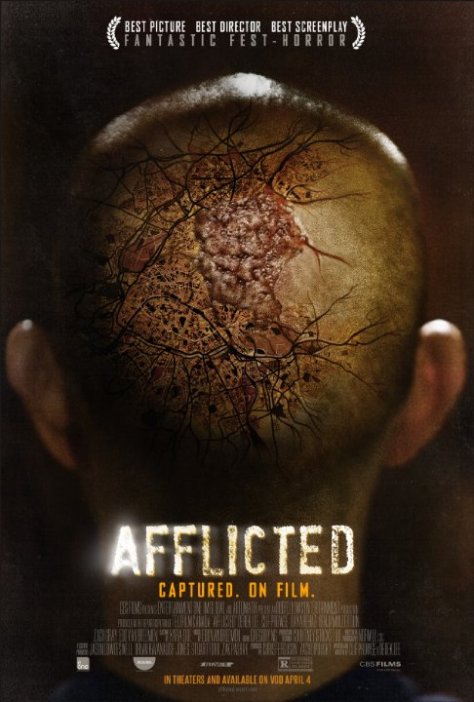
First, a clarification — there appear to be maybe a half dozen films or shorts entitled some variation of “Afflicted;” I am referring here to the outstanding 2014 found-footage vampire film.

Second, some advice — if you skip this because of an aversion to found-footage horror movies, you’re cheating yourself.  This was fantastic.  I’d give it a 9 out of 10.

It’s a creative tour-de-force for young filmmakers Clif Prowse and Derek Lee, who not only wrote and directed the movie, but also starred (quite capably) as its two leads.

It begins well, but not with brilliance.  It’s too reminiscent, at first, of a similar recent found-footage film in which affable young men develop superpowers with frightening consequences — 2012’s wonderful “Chronicle.”  Also, certain plot points are predictable.  (Gasp! Derek is suddenly burned by sunlight!)

Then we get an unexpected plot turn, and the film gets much, much better.  I won’t say much for fear of spoilers, but this is a fresh, entirely fun take on the vampire genre, with some special effects and action sequences that are pretty impressive for a low budget film.

And do watch through the entire credits.  There is both a mid-credits scene and a post-credits scene that are absolutely worth it. The latter casts the story in a completely new light.

Check this out, horror fans.  You won’t be disappointed.


MV5BMjEzOTczNzA0NF5BMl5BanBnXkFtZTgwMTgwNTYyMTE@._V1_SX640_SY720_

A review of “Goodbye World” (2013)

“Goodbye World” (2013) is technically a post-apocalyptic drama.  I say “technically” because this sometimes misguided movie contains little tension associated with its apocalyptic event.  (A cyber-attack destroys the technological infrastructure of America and possibly the world.)  Indeed, this catastrophe doesn’t even truly drive the plot — it’s more of a background subplot that fails to even affect the tone of the film.  (The poster you see below is misleading.)

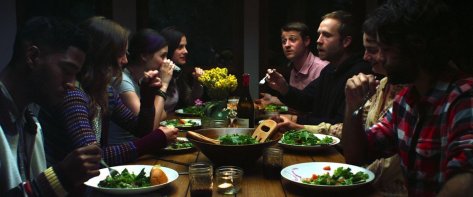
Instead, the film scrutinizes the personal lives of a group of thirtyish college alumnae who have an informal reunion at a mountain cabin — one of their number is a plot-convenient intellectual-turned-survivalist.  They’re portrayed by an (admittedly quite good) ensemble cast.  I think a lot of my friends would smile at “Gotham’s” Jim Gordon (Ben Mckenzie) being a rather meek, feckless husband.  And Caroline Dhavernas here is no longer the alpha female we saw in NBC’s “Hannibal,” but is rather an insecure, overly sensitive young wife who immaturely pines that she was the student “everyone hated.”

And there lies a problem that the movie has … few of these characters are terribly likable.  Only Gaby Hoffmann’s surprisingly tough civil servant made me root for her.  And Kerry Bishe’s perfectly performed, chatty neo-hippy eccentric was also pretty cool … Bishe might have given the best performance in the film.  Finally, Linc Hand is a surprise standout, arriving halfway through in a menacing supporting role.  It’s a far smaller role, but damn if he doesn’t nail it.  (Please, Netflix, cast this guy as Bullseye in Season 3 of “Daredevil.”)

The others all seem either self-absorbed, self-righteous and preachy, or inscrutable and vaguely dumb.  Dhavernas’ character actually steals a child’s teddy bear (which she herself had brought as a gift) and … sets it free in the forest.  It was a belabored character metaphor when written.  Worse, it just seems jarringly weird when it plays out on the screen.

All the characters seem strangely detached about the watershed national or global crisis. Some cursory dialogue is devoted to the imagined welfare of their family, colleagues or other friends; the character interaction is devoted mostly to  marriage issues and personal emotional crises that I have mostly forgotten as of this writing.  And those seem maudlin and slightly selfish compared to the Fall of the United States.  The characters mostly failed at engendering viewer sympathy in me.

The screenwriters’ juxtaposition of personal matters and the end of the world also seemed tone deaf.  We follow what the writers hope are educated, successful and endearingly quirky fun people, and we’re asked to worry about their love triangles and spousal communication issues.  But … we’re then asked to view this in the context of a pretty frightening collapse of society, complete with plot elements that are interchangeable with those of AMC’s “The Walking Dead.”  (One secondary character turns violent over the issue of resources, then charismatically justifies his violence to  a crowd using a half-baked ideology that seems to channel “The Governor.”)

I felt like I was watching two movies at once, and not in a good way.  The opening motif is brilliantly creepy — the virus causes cell phones everywhere to receive a text reading the titular “Goodbye World.”  Our laconic, uniformly telegenic protagonists kinda just shrug at it.  And even when suspicions arise in the group about whether one character is connected to the cyber-attack, there is dry, dialogue-driven humor instead of any real consequent tension.  It was like John Hughes wrote a thirtysomething dramedy, but then tried unsuccessfully to sprinkle in the human pathos of one of George A. Romero’s more pessimistic zombie films.

But don’t get me wrong.  This wasn’t even really a bad movie.  I didn’t hate it.  It held my interest, its actors gave good performances, and I am a shameless fan of Dhavernas in particular.  The cinematography was very good too, and the story’s tonal differences were occasionally interesting.  (This is definitely a unique end-of-the-world tale, if nothing else.)

I’d honestly give “Goodbye World” a 7 out of 10.  I think my expectations sitting down with it were just unusually high, seeing Dhavernas attached to what looked like an independent, cerebral, apocalyptic science fiction thriller.  I might even recommend it if you’re in the mood for a really unusual doomsday movie.  Just don’t expect “28 Days Later” (2002) or “The Divide” (2012), and you might like this.


Goodbye_World_Theatrical_Poster

hero_GoodbyeWorld-2014-1

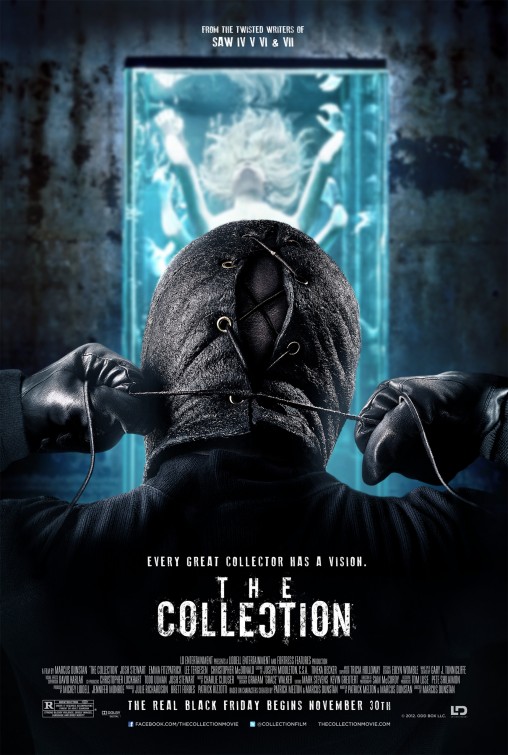
A short review of “The Collection” (2012)

I have to give “The Collection” an 8 out of 10.

No, it’s not a classic horror movie — it’s derivative of the “Saw” movies, and it seems to result from too little thought by the screenwriters.  The antagonist is a serial killer (and here a mass murderer) who employs extraordinary Rube Goldberg-esque machines to brutally trap his victims.

We know nothing about how he arrived at his expertise.  (He appears to be a demon-possessed Thomas Edison.)  His choice of victims is random.  His modus operandi is puzzling.  (Why bring a prior victim to a new crime scene?)  And we’re not even shown how these machines work — only CG’ed tracking shots of cables and pulleys.  Neither do we know why he has unarmed combat training that seems to approach the level of Batman’s.  And the question I was left with by the previous film (“The Collector,” 2009) is still the most egregious omission — how on earth does our bad guy have time to invade a house or building and set all these things up?!  There is SOME nice exposition about the killer’s motivations in some closing dialogue, and it’s wickedly interesting, but it’s cut short.

But, hey — this still got under my skin enough to be an effective horror movie.  The opening action set-piece (YEESH!) was not only frightening, it was also something completely surprising.  I knew bad things were afoot when we spot our horrible machinist lurking above, but … I didn’t expect THAT.

Even with almost no speaking lines, Randall Archer deserves credit for terrific physical acting throughout — not to mention some the best (worst?) crazy-evil eyes in horror film history.  (Just LOOK at this mamajama in the second picture below.)  Archer is a professional stuntman, and his movement and posture sell the role perfectly.

Even better is the presence of Josh Stewart, who returns as the first movie’s nuanced antihero.  I’ll say it again — I love this guy.  He’s a damned talented actor, and he deserves more leading roles in major films.  He was even frikkin’ awesome in his small role as Bane’s craven little henchman in “The Dark Knight Rises” (2012).

And Lee Tergeson, who I remember best as Beecher in HBO’s “Oz” (1997-2003), is also great to watch.

There are other nice touches too.  Like its predecessor, this movie could be smart and creative when it tried.  The use of a gun here is pretty clever, even if it seems obvious in retrospect.  (I wouldn’t have thought of that.)  And the fate of some of our bad guy’s past victims is both fresh and very disturbing.  If those ideas had been expanded on much further, this film would have risen above its status as a “Saw” imitator.

Finally, I love endings like the one we see here.  I won’t say more for fear of spoilers.

collection_ver2

The-Collection-e1364275552414

I’m just slightly underwhelmed by “The X Files” reboot trailer.

It really just seems to show us everything we’ve seen before: ominous dialogue; dire, vague warnings from sources; and flashbacks to urgent looking 50’s-era soldiers and government workers.  All of those things taken together were sufficient to entertain for, oh, say … eight years or so.  But by the time we reached Season 9, the show really suffered from what seemed like endlessly recycled tropes and story arcs.

If the show does take new directions, as it needed to before it was cancelled, then it will need time to develop.  The January “miniseries” will only be six episodes to start with.  And I thought I read elsewhere that Chris Carter intends some of those to go to the popular “monster-of-the-week” eps that had nothing to do with the overarching mythology.

Nor do I think our main characters will be reunited with the Cigarette Smoking Man.  We do not see the face of (priceless) actor William B. Davis.  It’s only a hand, and it looks like a young man’s hand.  I’m betting we see him only in flashback.

See what you think from the trailer below.  (It’s in two parts.)

I know this is probably non sequitur, but if you love Davis’ work the way I do, then please check out his supporting role in the criminally underrated thriller, “The Tall Man” (2012).

https://www.youtube.com/watch?t=30&v=kteho5bgxLI

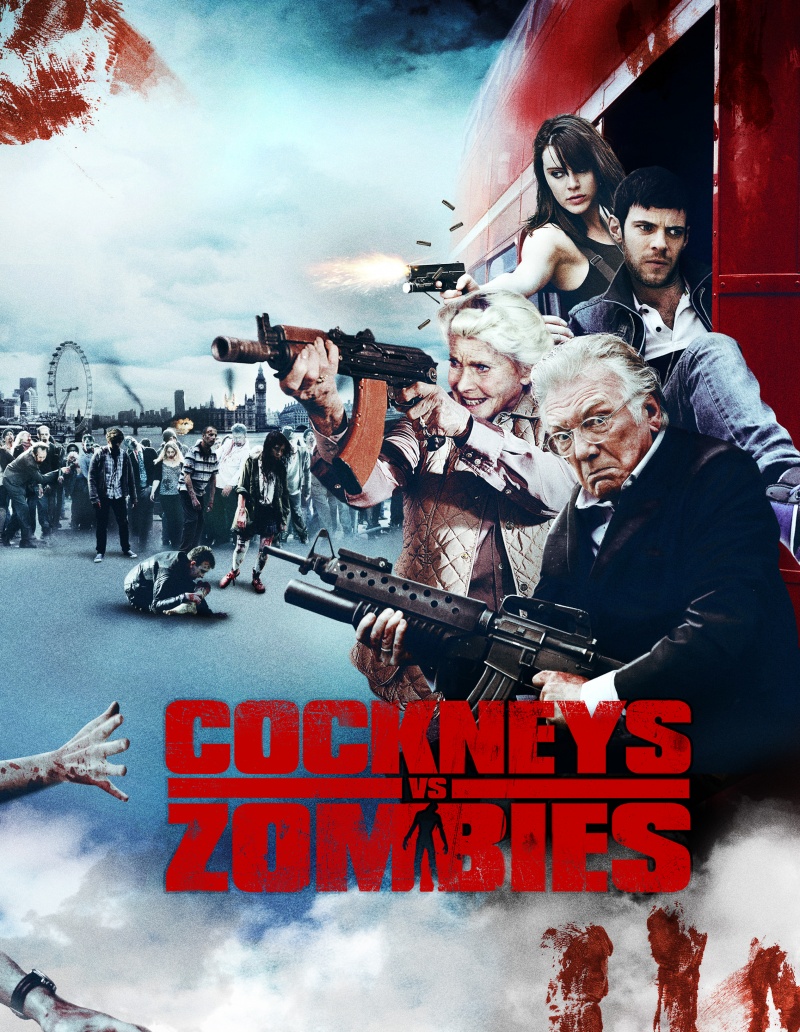
A very short review of “Cockneys vs. Zombies” (2012).

“Cockneys vs. Zombies” (2012) began with such promise — with cool, funny characters; capable comedic actors; an attempt at a decent story; and dry, witty British dialogue.  It looked like it could be a cool unauthorized companion film to “Shaun of the Dead” (2004).

Sadly, then, it didn’t pan out.  The offbeat, character-driven banter gave way to a lot of slapstick that didn’t really work for me.  And problems with pacing and tension prevented this from being an effective horror film.

I’d give this a 4 out of 10.  Oh well.

I have two questions after this film about British slang, with which I try to stay current.  (What can I say?  Some great horror movies come out of Britain.  I love it when Frank tells the crow in “28 Days Later” to “get out of it.”)

  1.  When someone gets mad at another, they call him a … mop-head?  Moppet?  Muppet?  They always say that word so fast.
  2.  If somebody says something stupid, you call them a “plum?”
kinopoisk.ru
kinopoisk.ru

A review of “Sinister” (2012). (With a caveat.)

It’s easy to see why “Sinister” (2012) came so highly recommended; this is a startlingly scary horror movie to which I’d give an 8 out of 10.  I was tempted to give it a 9, but some subjective personal tastes prevent me from giving this unusually disturbing film a higher rating.

It’s frightening.  The design of the supernatural Big Bad is quite good, despite its simplicity.  This film succeeds in giving us an intimidating bogeyman.  Far worse is his choice of victims and his modus operandi.  I won’t say much here … this is a movie where we learn about the story’s antagonist because the protagonist is an investigator — true-crime writer “Ellison Oswalt,” wonderfully played by Ethan Hawke.  I also won’t go into precisely how the baddie operates, because it’s just a little too dark to contemplate here.

It’s shot and scripted quite well … there are a number of nice touches, and the basic story is unsettling even by horror movie standards.  A late twist about how the violence is perpetrated is telegraphed in advance, but it still gets under your skin.  The directing by Scott Derrickson is spot on — the “jump moments” are cheap, but they still work.  Derrickson’s and C. Robert Cargill’s script is smartly unnerving — especially with respect to how these crimes are perpetrated.  (Yeesh.)  And the use of unusual and disturbing music is quite effective.  This film was the result of a lot of thought and effort.

Still, a few things suggested to me that this falls short of being a perfect horror movie:

  1.  Common tropes abound.  The most tired, to me, was the use of a horror writer as an ironic protagonist.  That’s an overused device.  The master himself, Stephen King, for example, has used this in no fewer than four novels and their subsequent film treatments, by my count.  (Yes, Hawke here is a nonfiction writer instead of a novelist, but the principle is the same.)
  2. Hawke’s protagonist, as scripted, is pretty damned unlikable.  “Deputy So-and-So” is his most important source, not to mention someone who shows him compassion when things get really tough.  Yet he sticks with that insulting appellation, and even screens his calls, throughout the entire movie.
  3. The bestselling nonfiction writer here has no idea how to cultivate a source.  (See above.)  I’ve been a writer, in some capacity, for my entire adult life, and I started out as a paper jockey.  You treat every source as important, even the crazy ones.  It’s both good manners and proper professional conduct.  And when you deal with any police officer, you’re especially conscientious if you’re smart — people in law enforcement are often (understandably) very sensitive about how they are portrayed in writing.
  4. Ellison Oswalt feels the need to move into a home where a multiple homicide was committed, in order to write about the crime?  That’s just nuts, even by eccentric writer standards.
  5. He chooses not to tell his wife?  I have never been married, but I know from both my personal and professional life that women get really, really pissed off when you neglect to tell them things that they think are important.
  6. Is Oswalt’s wife a Luddite who never googles anything?  I moved to Virginia a year ago, and I STILL google my address because I keep forgetting my zip code.
  7. Oswalt expects no neighbors to share such information with his wife?  (This is lampshaded a bit, as a child brings home the information from his school.)

Finally, there is one subjective matter that kept me from loving this movie — and it is admittedly a matter of taste.  Even as a devoted lover of dark stories, my enjoyment is sometimes affected by films in which children are victimized.  (I am referring here to the children depicted in the 8 MM (“Super 8”) film strips that are discovered by the main character.)

Yes, these are horror movies, and they are intended for adults, and we ourselves should be adult enough to recognize fiction as such.  (Otherwise we can buy a different ticket or click elsewhere among Netflix’ options.)  And plenty of great horror films feature imperiled children.  “28 Weeks Later” (2007) immediately springs to mind for me, probably because it is a favorite.  I think most other genre devotees would point to the universally recognized “The Exorcist” (1973).  But in those films and most others, things were depicted … differently.  (I’m being vague here for fear of spoilers all around.)

I’m a veteran horror-hound; I’ve routinely enjoyed films in which zombies or vampires wipe out humanity.  But what I saw in “Sinister” was too dark even for my taste.  This sort of reaction is rare on my part, but not unprecedented.  “The Devil’s Rejects” (2005) and “Wolf Creek” (2005) both took violence against the innocent too far for me to really enjoy or recommend them.  (Strangely, 1980’s legendary “Cannibal Holocaust” affected me little.)  Yes, zombie apocalypses tend to be gory affairs, but they are almost always faced by grownups, who are unbound, and armed, and generally able to fight back.

I would really  think twice recommending this to the casual filmgoer without a spoilerish hint about its content.  Your mileage may vary.

Hey … if you really want a scary story, check out The Internet Movie Database’s trivia section for “Sinister” after you see the movie.  Read how the “Pool Party” scene was filmed.  That’s … that’s nuts.  Nobody wants a director that committed.  Somebody should have called OSHA.  Seriously.

And here’s a joke for you.  Given the “Super 8” films we see in this movie, wouldn’t it be blackly funny if this film were  sequel to Steven Spielberg’s heartwarming “Super 8” (2011)?  It’s all about the kids, right?

Sinister

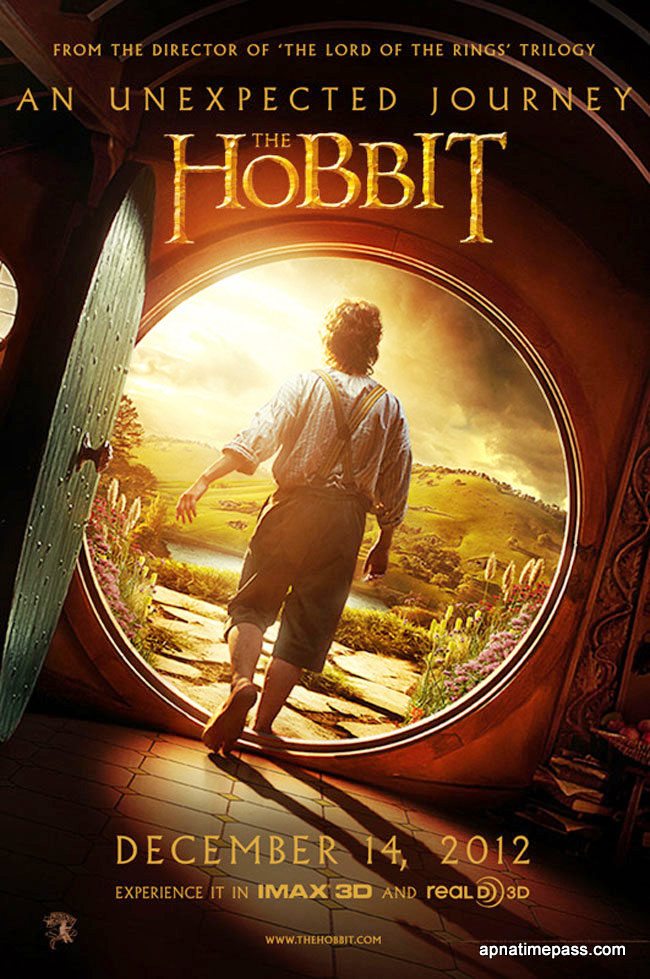
A short review of “The Hobbit: An Unexpected Journey” (2012).

I actually really liked “The Hobbit: An Unexpected Journey” (2012).  I’d give it an 8 out of 10.  And that’s even with my own admitted possible bias, as I am not a huge fan of traditional fantasy.  I certainly can’t claim to be a fan of the original books, because [downcast eyes], I’ve never read them. I tried “The Silmarillion” once, because I thought that was supposed to come first in J.R.R. Tolkien’s chronology … and I just couldn’t stay with it.  So I guess my take on this movie is that of an outsider, as it was with Peter Jackson’s “The Lord of the Rings” trilogy.

But this was enjoyable movie for anyone, I thought.  It’s a total immersion into an incredibly beautifully rendered fantasy world.  I thought the sets and backgrounds were more detailed than the first films, for example.  It’s a gorgeous movie to look at.  The acting is uniformly excellent throughout.  And the continuity is just great; there are well crafted segues into subplots that will eventually lead to the original trilogy.

I think the only thing that hampered my enjoyment was that it felt so much like a children’s story.  (I believe I read once that Tolkien actually began his novel as a bedtime story for his children, while his subsequent “Rings” epic was intended for adult, mainstream readers.)

Peter Jackson had his creative sensibilities planted firmly in childhood fairy tale when constructing this movie.  For an outsider, this seems like a standard (and sometimes predictable) quest movie.  We have a tremendous deus ex machina at the end that a child might not recognize, but this adult did.

The dialogue, monsters and action were often too cartoonish for me.  As a fan of creature features, I found the monsters were often too silly to be credible.  (I had this small quibble, as well, with the original film trilogy.)  With the outstanding exceptions of the Warg and the White Orc, they often seemed like CGI-rendered cartoons.  The three trolls who want to cook the dwarves, for example, were like something out of a silly Hanna-Barbera cartoon.  If this film was supposed to engage adult viewers, this creative approach was a pretty big misfire.

But I recommend this, even to people who don’t typically enjoy sword-and-sorcery fantasies.

Seriously, though … that deus ex machina at the end … if such an option is available to our heroes, why not employ it from the start of the movie?  Hell, why not employ it throughout the entire “Rings” trilogy?

the-hobbit-an-unexpected-journey-movie-poster-1